Part 1 of 1 · JLPT N2
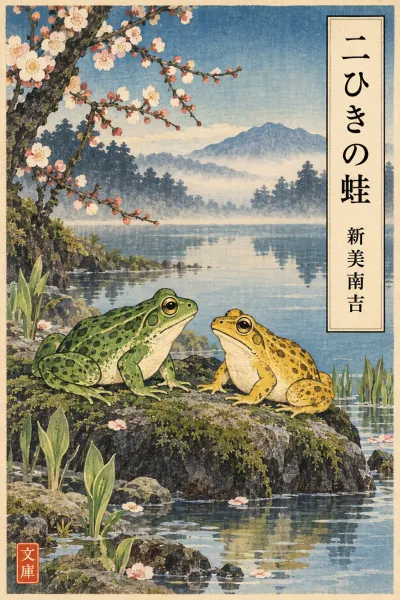
二ひきの蛙 Nihiki no Kaeru, part 1: A Quarrel Settled by Winter Sleep
In this part
A green frog and a yellow frog meet in a field, insult each other's colours and start fighting. A cold wind reminds them that winter is coming, so they burrow underground and promise to finish the fight in spring. When spring comes they wash off the mud in a fresh pond, admire each other's colours, and agree to stop quarrelling, because a good long sleep puts everyone in a better mood.
AI translation · independently checked
緑の蛙と黄色の蛙が、はたけのまんなかでばったりゆきあいました。A green frog and a yellow frog happened to run into each other in the middle of a field.
「やあ、きみは黄色だね。きたない色だ。」"Well now, you're yellow, aren't you? What an ugly colour."
と緑の蛙がいいました。said the green frog.
「きみは緑だね。きみはじぶんを美しいと思っているのかね。」And you're green, aren't you? Do you really think you're beautiful?
と黄色の蛙がいいました。said the yellow frog.
こんなふうに話しあっていると、よいことは起こりません。When people talk to each other like this, nothing good ever comes of it.
二ひきの蛙はとうとうけんかをはじめました。In the end, the two frogs started a fight.
緑の蛙は黄色の蛙の上にとびかかっていきました。The green frog pounced on the yellow frog.
この蛙はとびかかるのが得意でありました。This frog was very good at pouncing.
黄色の蛙はあとあしで砂をけとばしましたので、あいてはたびたび目玉から砂をはらわねばなりませんでした。The yellow frog kicked sand with its hind legs, so its opponent kept having to brush the sand out of its eyes.
するとそのとき、寒い風がふいてきました。Just then, a cold wind began to blow.
二ひきの蛙は、もうすぐ冬のやってくることをおもいだしました。The two frogs remembered that winter would soon be coming.
蛙たちは土の中にもぐって寒い冬をこさねばならないのです。Frogs must burrow into the earth to get through the cold winter.
「春になったら、このけんかの勝負をつける。」"When spring comes, we'll settle this fight once and for all."
といって、緑の蛙は土にもぐりました。With that, the green frog burrowed into the ground.
「いまいったことをわすれるな。」"Don't you forget what you just said!"
といって、黄色の蛙ももぐりこみました。With that, the yellow frog burrowed in too.
寒い冬がやってきました。The cold winter came.
蛙たちのもぐっている土の上に、びゅうびゅうと北風がふいたり、霜柱が立ったりしました。Above the earth where the frogs had burrowed, the north wind howled and columns of frost rose up.
そしてそれから、春がめぐってきました。And after that, spring came round again.
土の中にねむっていた蛙たちは、せなかの上の土があたたかくなってきたのでわかりました。The frogs sleeping in the earth could tell, because the soil on their backs had begun to grow warm.
さいしょに、緑の蛙が目をさましました。The green frog was the first to wake up.
土の上に出てみました。It came up out of the ground to have a look.
まだほかの蛙は出ていません。None of the other frogs had come out yet.
「おいおい、おきたまえ。もう春だぞ。」"Hey, hey, wake up! It's spring already!"
と土の中にむかってよびました。it called down into the earth.
すると、黄色の蛙が、Then the yellow frog,
「やれやれ、春になったか。」"Well, well, so it's spring, is it?"
といって、土から出てきました。it said, and came out of the ground.
「去年のけんか、わすれたか。」"You haven't forgotten last year's fight, have you?"
と緑の蛙がいいました。said the green frog.
「待て待て。からだの土をあらいおとしてからにしようぜ。」"Hold on, hold on. Let's wash the dirt off ourselves first."
と黄色の蛙がいいました。said the yellow frog.
二ひきの蛙は、からだから泥土をおとすために、池のほうにいきました。The two frogs went over to the pond to get the mud off their bodies.
池には新しくわきでて、ラムネのようにすがすがしい水がいっぱいにたたえられてありました。The pond was brimming with water that had freshly welled up, as crisp and refreshing as fizzy lemonade.
そのなかへ蛙たちは、とぶんとぶんととびこみました。Into it the frogs jumped, plop! plop!
からだをあらってから緑の蛙が目をぱちくりさせて、After washing itself, the green frog blinked its eyes and
「やあ、きみの黄色は美しい。」"Why, your yellow is beautiful!"
といいました。it said.
「そういえば、きみの緑だってすばらしいよ。」"Now that you mention it, your green is splendid too."
と黄色の蛙がいいました。said the yellow frog.
そこで二ひきの蛙は、And so the two frogs
「もうけんかはよそう。」"Let's not fight any more."
といいあいました。said to each other.
よくねむったあとでは、人間でも蛙でも、きげんがよくなるものであります。After a good sleep, humans and frogs alike tend to be in a better mood.
Vocabulary
| Word | Meaning | JLPT |
|---|---|---|
| ばったりばったり | unexpectedly, by chance (of meeting someone)Very often used with 会う or 出会う: ばったり会う, to bump into someone. | N3 |
| ゆきあいましたゆきあう | to meet by chance, come acrossdictionary form: 行き会うAlso read いきあう. A slightly old-fashioned word for 出会う. | — |
| とびかかってとびかかる | to leap at, pounce ondictionary form: 飛びかかる飛ぶ (jump) + かかる (set upon). | — |
| 得意とくい | good at, skilled in〜が得意だ means 'to be good at ~'. Its opposite is 苦手 (にがて). | N3 |
| けとばしましたけとばす | to kick away, kick updictionary form: 蹴飛ばす | N1 |
| はらわねばはらう | to brush off, sweep awaydictionary form: 払うBesides 'to pay', 払う also means to brush dust or dirt off something. | N4 |
| もぐってもぐる | to burrow into, dive underdictionary form: 潜るUsed for diving under water as well as burrowing into earth or under a blanket. | N2 |
| 勝負しょうぶ | contest, match; win or loss勝負をつける: to settle a contest, decide who wins. | N2 |
| 霜柱しもばしら | frost pillars, needle ice (ice columns pushing up from frozen soil)霜 (frost) + 柱 (pillar), with rendaku: はしら → ばしら. | — |
| めぐってめぐる | to come round again (of seasons)dictionary form: 巡るOften used for the cycle of the seasons: 季節がめぐる. | N2 |
| すがすがしいすがすがしい | refreshing, crisp and cleandictionary form: 清々しいUsed for fresh air, water or a clear morning, and also for a clear conscience. | N1 |
| たたえられてたたえる | to fill to the brim (passive たたえられる: to be filled with, e.g. water)dictionary form: 湛えるLiterary word. Do not confuse it with 称える (to praise), which has the same reading. | — |
| ぱちくりぱちくり | blinking (in surprise)Onomatopoeia. 目をぱちくりさせる means to blink one's eyes in surprise. | — |
| きげんきげん | mood, temperdictionary form: 機嫌機嫌がいい: in a good mood. 機嫌が悪い: in a bad mood. | N3 |
Grammar
〜ねばならない N2 must, have to
This is a literary form of 〜なければならない. The verb takes its negative stem (払う → はらわ) followed by ねば. It appears again in 冬をこさねばならない.
あいてはたびたび目玉から砂をはらわねばなりませんでした
its opponent kept having to brush the sand out of its eyes
〜たり〜たりする N4 doing things like A and B
This pattern lists typical actions or events without claiming the list is complete. Here it sketches what winter was like above the sleeping frogs.
びゅうびゅうと北風がふいたり、霜柱が立ったりしました
the north wind howled and frost pillars rose from the ground
〜たまえ N1 do ~ (casual, somewhat lordly command)
Verb masu-stem + たまえ gives a mild command with a somewhat superior tone, traditionally used by men toward equals or juniors. It now sounds old-fashioned.
おいおい、おきたまえ。
Hey, hey, wake up!
〜てからにする N4 to do it after ~ / let's wait until ~
〜てからにする means 'to do it after ~'. Here 〜てからにしようぜ means 'let's do it after ~', casually proposing that the fight wait until they have washed off the dirt. ぜ is a casual, masculine sentence-ending particle.
からだの土をあらいおとしてからにしようぜ。
Let's wash the dirt off ourselves first.
〜ものである N2 it is the nature of things that ~; ~ tends to happen
Attached to a plain-form verb, ものだ / ものである states a general truth or natural tendency. Here the formal ものであります gives the narrator's closing moral a gently old-fashioned tone.
よくねむったあとでは、人間でも蛙でも、きげんがよくなるものであります。
After a good long sleep, humans and frogs alike tend to be in a much better mood.