Part 1 of 4 · JLPT N1
忘れ形見 Wasuregatami, part 1: A Boy Remembers the Lord's Autumn Hunts
In this part
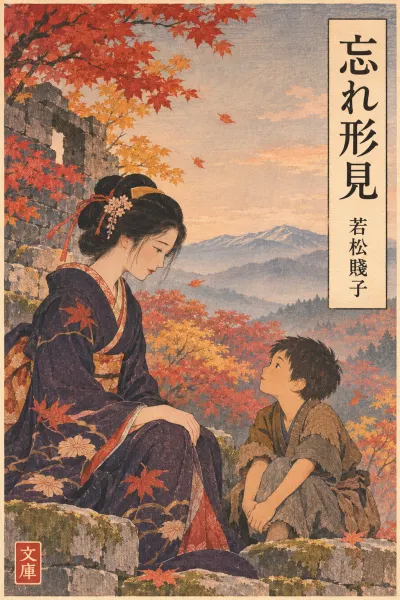
After a brief preface explaining that the story was inspired by Miss Procter's poem 'The Sailor Boy', a fourteen-year-old boy begins telling his life story. He will soon go to sea, but he grew up in the northern mountains with old Tokuzō, who kept the ruined castle of a former lord who came every autumn to hunt. The boy feared the proud lord, but he was enchanted by the beautiful, sorrowful lady, who strangely seemed to show little love for her own little son.
AI translation · independently checked
How kind, how fair she was, how good,How kind, how fair she was, how good,
I cannot tell you. If I could,I cannot tell you. If I could,
You too would love her.You too would love her.
Procter : "The Sailor Boy."— Procter, "The Sailor Boy."
ミス、プロクトルの“The Sailor Boy”という詩を読みまして、一方ならず感じました。When I read Miss Procter's poem "The Sailor Boy," I was moved more deeply than I can say.
どうかその心持をと思って物語ぶりに書綴って見ましたが、元より小説などいうべきものではありません。Hoping somehow to convey that feeling, I have tried writing it out in the manner of a tale, but of course it is nothing that deserves to be called a novel.
あなた僕の履歴を話せって仰るの?You want me to tell you my life story?
話しますとも、直き話せっちまいますよ。Of course I will, and I'll have it all told in no time.
だって十四にしかならないんですから。After all, I'm only fourteen.
別段大した悦も苦労もした事がないんですもの。I've never really had any great joys or great hardships, you see.
ダガネ、モウ少し過ぎると僕は船乗になって、初めて航海に行くんです。But you know, a little while from now I'm going to become a sailor and go on my very first voyage.
実に楽みなんです。I'm really looking forward to it.
どんな珍しいものを見るかと思って……段々海へ乗出して往く中には、為朝なんかのように、海賊を平らげたり、虜になってるお姫さまを助けるような事があるかも知れませんからね。I keep wondering what rare and wonderful things I'll see... As I sail farther and farther out to sea, who knows, I might put down pirates like Tametomo, or rescue a princess held captive.
それから、ロビンソン、クルーソーみたように難船に逢って一人ッきり、人跡の絶えた島に泳ぎ着くなんかも随分面白かろうと考えるんです。And then I think it would be great fun, too, to be shipwrecked like Robinson Crusoe and swim, all on my own, to an island where no human foot has ever trodden.
これまでは、ズット北の山の中に、徳蔵おじと一処にいたんですが、そのまえは、先の殿様ね、今では東京にお住いの従四位様のお城趾を番していたんです。Until now I've been living far to the north, deep in the mountains, with old Tokuzō, and before that we were keeping watch over the castle ruins of the former lord, you know, His Excellency of the Junior Fourth Rank, who now lives in Tōkyō.
足利時代からあったお城は御維新のあとでお取崩しになって、今じゃ塀や築地の破れを蔦桂が漸く着物を着せてる位ですけれど、お城に続いてる古い森が大層広いのを幸いその後鹿や兎を沢山にお放しになって遊猟場に変えておしまいなさり、また最寄の小高見へ別荘をお建てになって、毎年秋の木の葉を鹿ががさつかせるという時分、大したお供揃で猟犬や馬を率せてお下りになったんです。The castle, which had stood since the Ashikaga period, was pulled down by his order after the Restoration, and now there is little left but ivy and creepers barely managing to clothe the broken walls and earthen ramparts. But since the old forest adjoining the castle was so very large, he made good use of it: he released great numbers of deer and hares there and turned it into a hunting ground, and he also built a villa on a nearby rise. Every year in autumn, at the season when the deer set the fallen leaves rustling, he would come down with a grand retinue, with hunting dogs and horses led along behind.
いらっしゃれば大概二週間位は遊興をお尽しなさって、その間は、常に寂そりしてる市中が大そう賑になるんです。Once he arrived, he usually spent about two weeks in every kind of amusement, and all that time the usually hushed town became very lively.
お帰りのあとはいつも火の消たようですが、この時の事は、村のものの一年中の話の種になって、あの時はドウであった、コウであったのと雑談が、始終尽ない位でした。After he left it always felt as if a fire had gone out, but the events of those visits gave the village folk something to talk about all year round, and the chatter about how this had happened at that time and that had happened at another hardly ever ran dry.
僕はまだ少さかったけれど、あの時分の事はよく覚えていますよ。I was still little, but I remember those days well.
サアお出だというお先布令があると、昔堅気の百姓たちが一同に炬火をふり輝らして、我先と二里も三里も出揃って、お待受をするのです。When word came ahead that he was on his way, the old-fashioned farmers would all hold up blazing torches and, each trying to be first, turn out two or three ri down the road to wait and welcome him.
やがて二頭曳の馬車の轟が聞えると思うと、その内に手綱を扣えさせて、緩々お乗込になっている殿様と奥様、物慣ない僕たちの眼にはよほど豪気に見えたんです。Then, just as you heard the rumble of a two-horse carriage, the reins would be drawn in, and there were the lord and the lady riding slowly in. To our unworldly eyes they looked truly magnificent.
その殿様というのはエラソウで、なかなか傲然と構えたお方で、お目通りが出来るどころではなく、御門をお通りになる度ごとに徳蔵おじが「こわいから隠れていろ」といいいいしましたから、僕は急いで、木の蔭やなんかへかくれるんです。The lord was an important-looking person who carried himself very haughtily. Far from being allowed into his presence, every time he passed through the gate old Tokuzō would keep saying, "He's a fearsome man, so stay hidden," so I would hurry off and hide behind a tree or some such place.
ですがその奥さまというのが、僕のためにはナンともいえない好い方で、その方の事を考えても、話にしても、何だか妙に嬉しいような悲しいような心持がして来るんです。But the lady was a person more wonderful to me than words can say, and whenever I think of her, or even talk about her, a strange feeling comes over me, somehow both happy and sad.
美人といえばそれまでですが、僕はあんな高尚な、天人のような美人は見た事がないんです。You could just call her a beauty and leave it at that, but I have never seen a beauty so noble, so like a heavenly being.
先下々の者が御挨拶を申上ると、一々しとやかにお請をなさる、その柔和でどこか悲しそうな眼付は夏の夜の星とでもいいそうで、心持俯向いていらっしゃるお顔の品の好さ!First, when the humble folk offered their greetings, she would graciously acknowledge each one. Her gentle eyes, with a touch of sadness in them, were like stars on a summer night, you might say, and oh, the refinement of her face, bowed ever so slightly!
しかし奥様がどことなく萎れていらしって恍惚なすった御様子は、トント嬉かった昔を忍ぶとでもいいそうで、折ふしお膝の上へ乗せてお連になる若殿さま、これがまた見事に可愛い坊様なのを、ろくろくお愛しもなさらない塩梅、なぜだろうと子供心にも思いました。Yet the lady seemed somehow drooping and lost in a daze, as though, you might say, she were yearning for a happier past. And the young lord she sometimes brought along seated on her lap, such a splendidly sweet little boy, she hardly seemed to love him at all. Even with a child's mind I wondered why.
Vocabulary
| Word | Meaning | JLPT |
|---|---|---|
| 一方ならずひとかたならず | extraordinarily, more than usualLiterary set phrase; literally 'not in just one way'. | — |
| 履歴りれき | personal history, life storyToday mostly seen in 履歴書 (résumé). | N1 |
| 航海こうかい | sea voyage | N1 |
| 虜とりこ | captive, prisonerAlso used figuratively: 恋の虜 'a captive of love'. | — |
| 難船なんせん | shipwreck難船に逢う = to be shipwrecked; modern Japanese prefers 難破. | — |
| 城趾しろあと | castle ruins, site of a former castleNow usually written 城跡. | — |
| 維新いしん | the (Meiji) Restoration御維新 is the respectful way people of the time referred to it. | — |
| お供揃ともぞろい | a full retinue of attendantsdictionary form: 供揃いFrom 供 (attendant) + 揃い (assembled set). | — |
| 先布令さきぶれ | advance notice or herald announcing someone's arrival (先布令 is an old ateji spelling of 先触れ)dictionary form: 先触れ | — |
| 傲然ごうぜん | haughty, arrogant傲然と構える = to carry oneself haughtily. | — |
| 高尚こうしょう | noble, refined, lofty | N1 |
| 萎れてしおれる | to droop, to be dispiriteddictionary form: 萎れるLiterally used of wilting flowers. | — |
| 忍ぶしのぶ | to yearn for, recall fondly (the past)dictionary form: 偲ぶUsually written 偲ぶ in this sense; 忍ぶ more often means 'to endure' or 'to hide'. | — |
| 塩梅あんばい | manner, way things seemOriginally the balance of salt and plum vinegar in seasoning. | — |
Grammar
〜とも N2 of course, certainly
Attached to the end of a sentence, とも gives a strong, willing 'of course'. The boy is eagerly agreeing to tell his story.
話しますとも
Of course I'll tell you
〜ちまう N3 to finish doing; to go ahead and do (casual)
ちまう is a casual, slightly old-fashioned contraction of てしまう, like modern ちゃう. Here it stresses how quickly the story will be over.
直き話せっちまいますよ
I'll have it all told in no time
〜もの N3 because, you see (giving a reason)
Sentence-final もの (here んですもの) offers a reason in a soft, rather childlike or feminine way. It explains why his story will be short.
別段大した悦も苦労もした事がないんですもの。
I've never really had any great joys or great hardships, you see.
〜かも知れない N4 might, may
This expresses a possibility the speaker is unsure of. The boy imagines adventures that might happen at sea.
お姫さまを助けるような事があるかも知れませんからね
since I might rescue a princess, you know
お〜になる N4 honorific form of a verb
お + verb stem + になる raises the subject respectfully. The boy uses it for every action of the lord: お取崩しになって, お建てになって, お下りになった.
御維新のあとでお取崩しになって
was pulled down by his order after the Restoration
〜どころではない N2 far from ~; out of the question
This says something is completely impossible, and the reality is quite the opposite. Being allowed to meet the lord was unthinkable; in fact, the boy had to hide.
お目通りが出来るどころではなく
far from being allowed into his presence