 N3 · easy
Simplified retelling · JLPT N3
桃太郎 Momotarō in easy Japanese (N3)
This is our own simplified retelling of The Boy Who Came from a Peach, written for N3 learners and checked word by word against the N3 vocabulary list. A few story words and grammar patterns go beyond N3; the notes below give each one's level. It keeps the characters, events and ending of the original. When it feels easy, move on to the original text.
The story in brief
An old woman finds a huge peach in the river, and when it splits open a baby boy comes out, so the old couple name him Momotarō and raise him. When he is fifteen, he sets out to fight the ogres of Onigashima, and on the way a dog, a monkey and a pheasant each join him in return for a millet dumpling. Together they break into the ogres' castle, make the ogres surrender, and bring the treasure home to the delighted old couple.
AI translation · independently checked
むかし、あるところに、おじいさんとおばあさんが住んでいました。Long, long ago, in a certain place, there lived an old man and an old woman.
毎日、おじいさんは山へしばをとりに行きました。Every day, the old man went to the mountain to gather firewood.
おばあさんは川へせんたくに行きました。The old woman went to the river to do the washing.
ある日、おばあさんが川でせんたくをしていました。One day, the old woman was doing the washing at the river.
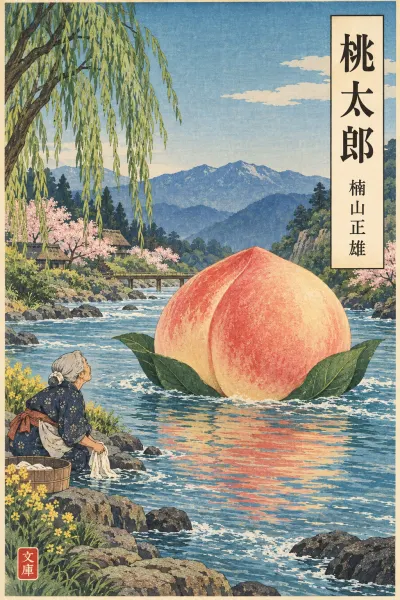
すると、大きなももが一つ、川の上の方から流れて来ました。Just then, one big peach came floating down from upstream.
「まあ、りっぱなももですね。おじいさんのおみやげに、家へ持って帰りましょう。」"My, what a splendid peach! I'll take it home as a present for the old man."
おばあさんは手をのばしましたが、遠くて手がとどきません。The old woman stretched out her hand, but the peach was too far away and she could not reach it.
そこで、手をたたきながら歌いました。So she clapped her hands and sang:
「あっちの水はからいよ。こっちの水はあまいよ。」"The water over there is salty! The water over here is sweet!"
すると、ももはおばあさんの前へ流れて来ました。And then the peach came floating right up in front of the old woman.
おばあさんはももをひろって、せんたくものといっしょに家へ持って帰りました。The old woman picked up the peach and carried it home along with the washing.
夕方、おじいさんがしばをせおって、山から帰って来ました。In the evening, the old man came back from the mountain with firewood on his back.
「おじいさん、いい物がありますよ。見てください。」"Old man, I have something nice here. Please take a look."
おばあさんは重いももを持って来ました。The old woman brought out the heavy peach.
「これはすごい。どこで買って来たのかね。」"Well, this is amazing. Wherever did you buy it?"
「いいえ、今日、川でひろったのですよ。」"Oh no, I picked it up at the river today."
おじいさんがももを手に持って見ていると、急にももが二つに割れました。As the old man held the peach in his hands and looked at it, the peach suddenly split in two.
そして、中から元気な赤ちゃんが生まれました。And out from inside was born a healthy baby.
二人はとてもびっくりしました。The two of them were very surprised.
「わたしたちは、いつも子供がほしいと言っていました。きっと神様がこの子をくださったのでしょう。」"We always said we wanted a child. Surely the gods have given us this little one."
おじいさんとおばあさんは、とても喜びました。The old man and the old woman were overjoyed.
ももから生まれた子なので、「ももたろう」という名前を付けました。Because he was a child born from a peach, they gave him the name Momotarō.
おじいさんとおばあさんは、ももたろうを大切に育てました。The old man and the old woman raised Momotarō with loving care.
ももたろうはほかの子供より体が大きく、力もとても強くなりました。Momotarō grew bigger than the other children, and very, very strong as well.
むらの中で、ももたろうに勝てる人は一人もいませんでした。In the whole village, there was not a single person who could beat Momotarō.
でも、心はとても優しくて、おじいさんとおばあさんを大切にしました。Yet his heart was very kind, and he took good care of the old man and the old woman.
ももたろうが十五さいになったころ、外国のしまを回って帰って来た人が、こんな話をしました。When Momotarō was about fifteen years old, a man who had come back from travelling around foreign islands told this story:
「遠い海の向こうに、おにがしまという島がある。そこには悪いおにたちが住んでいる。おにたちは、いろいろな国からぬすんだたからものを、大きなしろで守っている。」"Far across the sea there is an island called Onigashima. Wicked ogres live there. In a great castle, the ogres guard treasures they have stolen from all sorts of lands."
ももたろうはこの話を聞いて、おにがしまへ行きたくなりました。When Momotarō heard this story, he wanted to go to Onigashima.
「おにがしまへ、おにと戦いに行きます。」"I will go to Onigashima to fight the ogres."
ももたろうがそう言うと、おじいさんは「それはすばらしい。行っておいで。」と言いました。When Momotarō said this, the old man said, "That's splendid. Off you go."
おばあさんは、おべんとうにきびだんごを作ってくれました。The old woman made millet dumplings for him to take as his packed lunch.
ももたろうはかたなを持って、きびだんごのふくろをこしに下げました。Momotarō took his sword and hung the bag of millet dumplings from his waist.
「では、行ってまいります。」"Well then, I am off."
ももたろうはていねいに頭を下げて、出かけました。Momotarō bowed his head politely and set out.
おじいさんとおばあさんは、もんの外でいつまでも見送りました。The old man and the old woman stood outside the gate and watched him go for a long, long time.
山の上に来ると、犬が一ぴき走って来ました。When he came to the top of the mountain, a dog came running up.
「ももたろうさん、どこへ行くのですか。」"Mr. Momotarō, where are you going?"
「おにがしまへ、おにと戦いに行くのだ。」"To Onigashima, to fight the ogres."
「こしに下げている物は何ですか。」"What is that you have hanging at your waist?"
「日本一のきびだんごだ。」"The best millet dumplings in Japan."
「一つください。いっしょに行きます。」"Please give me one. I will come with you."
犬はきびだんごを一つもらって、ついて行きました。The dog was given one millet dumpling and followed along.
もりの中では、さるが木の上から下りて来ました。In the forest, a monkey came climbing down from a tree.
さるも同じように、きびだんごを一つもらって、ついて行きました。The monkey, too, was given one millet dumpling in the same way, and followed along.
広い野原に出ると、空からきじが飛んで来ました。When they came out onto a wide field, a pheasant came flying down from the sky.
きじもきびだんごを一つもらって、家来になりました。The pheasant, too, was given one millet dumpling and became one of his followers.
三びきの家来といっしょに進んで行くと、広い海に出ました。As he went on with his three followers, they came out to the wide sea.
そこには船が一つありました。There was a boat there.
みんなで船に乗ると、犬が船をこぎました。They all got into the boat, and the dog rowed.
さるは船の方向を決めて、きじは前を見る役をしました。The monkey steered the boat, and the pheasant took the job of lookout.
天気がよくて、海はとても静かでした。The weather was fine, and the sea was very calm.
船はとても速く走りました。The boat sped along very fast.
しばらくすると、きじが「あっ、しまが見える。」と言って、空へ飛んで行きました。After a while, the pheasant cried, "Oh! I can see an island!" and flew up into the sky.
遠くに、だんだんしまの形が見えてきました。Far off, little by little, the shape of an island came into view.
おにがしまです。It was Onigashima.
しまに着くと、もんの前にいたおにたちはびっくりしました。When they reached the island, the ogres in front of the gate were astonished.
おにたちはしろの中へ逃げて、もんをかたく閉めてしまいました。The ogres ran away into the castle and shut the gate tight.
犬はもんをたたいて、「開けろ、開けろ。」と大きな声で言いました。The dog pounded on the gate and shouted in a loud voice, "Open up! Open up!"
きじは空から下りて来て、もんを押さえているおにの目をつつきました。The pheasant came down from the sky and pecked at the eyes of the ogres holding the gate shut.
おにたちが逃げている間に、さるが高いかべを登って、中からもんを開けました。While the ogres were running away, the monkey climbed the high wall and opened the gate from inside.
ももたろうたちは、しろの中へ入って行きました。Momotarō and his band went into the castle.
おにたちは体が大きいですが、とても弱かったです。The ogres had big bodies, but they were very weak.
犬に足をかまれ、さるに顔を引っかかれて、おにたちは泣きながら降参しました。Bitten on the legs by the dog and scratched on the face by the monkey, the ogres surrendered in tears.
最後まで戦っていたのは、いちばん強いおにでした。The one who kept fighting to the very end was the strongest ogre of all.
ももたろうはそのおにの背中に乗って、強く押さえました。Momotarō climbed onto that ogre's back and held him down hard.
「どうだ、まだ降参しないか。」"Well? Do you still not give up?"
おには大きななみだを流して言いました。The ogre shed big tears and said:
「降参します。命だけは助けてください。その代わりに、たからものを全部さし上げます。」"I give up. Please, only spare my life. In return, I will present you with all the treasure."
おには約束のとおり、世界でいちばんすばらしいたからものを、車にたくさん積んで出しました。Just as he had promised, the ogre loaded the most wonderful treasures in the world onto a cart, piled high, and brought them out.
ももたろうたちはたからものを船に積んで、日本へ帰りました。Momotarō and his band loaded the treasure onto the boat and went home to Japan.
帰りの船は、行きよりももっと速く走りました。On the way home, the boat sped along even faster than on the way there.
りくに着くと、犬が車を引いて、きじもなわを引きました。When they reached land, the dog pulled the cart, and the pheasant pulled on a rope too.
さるは後ろから押しました。The monkey pushed from behind.
家では、おじいさんとおばあさんが、ももたろうの帰りを待っていました。At home, the old man and the old woman were waiting for Momotarō to return.
ももたろうが元気に帰って来たので、二人はとても喜びました。Because Momotarō came home safe and sound, the two of them were overjoyed.
「えらいぞ。本当に日本一だ。」"Well done! You really are the best in Japan."
「けががなくて、本当によかった。」"You're not hurt at all. I'm so glad!"
ももたろうは家来たちに、「おにとの戦いはおもしろかったなあ。」と言いました。Momotarō said to his followers, "That fight with the ogres was fun, wasn't it!"
犬はうれしそうにほえました。The dog barked happily.
さるは白い歯を見せて笑いました。The monkey showed his white teeth and laughed.
きじは空でくるくる回りました。The pheasant flew round and round in the sky.
空は青く晴れて、庭にはさくらの花がさいていました。The sky was clear and blue, and in the garden the cherry blossoms were in bloom.
Vocabulary
| Word | Meaning | JLPT |
|---|---|---|
| しばしば | brushwood, small sticks for firewooddictionary form: 柴しばを刈る/とる is the classic job of the old man in folk tales. | — |
| 流れてながれる | to flow; to float along (on water)dictionary form: 流れるIntransitive. The transitive 流す appears in なみだを流す, 'to shed tears'. | N3 |
| とどきませんとどく | to reach (with the hand)dictionary form: 届く手がとどく = 'can reach it'. Also used for letters and parcels arriving. | N3 |
| せおってせおう | to carry on one's backdictionary form: 背負う背 (back) + 負う (to bear). | N2 |
| 育てましたそだてる | to raise, to bring up (a child)dictionary form: 育てるTransitive; the intransitive partner is 育つ, 'to grow up'. | N4 |
| きびだんごきびだんご | millet dumpling (a small sweet dumpling; in the folktale made with millet, 黍)dictionary form: 黍団子A small round dumpling made from millet flour; the famous food Momotarō shares with the animals. | — |
| 見送りましたみおくる | to see someone off, to watch someone leavedictionary form: 見送る見る + 送る. The noun 見送り means 'a send-off'. | N2 |
| 家来けらい | follower, retainer, vassalOld-fashioned word for a loyal servant of a lord or hero. | N1 |
| 守ってまもる | to guard, to protectdictionary form: 守るAlso 'to keep' a promise or rule: 約束を守る. | N3 |
| 逃げてにげる | to run away, to escapedictionary form: 逃げる | N4 |
| 降参こうさん | surrender, giving upUsed as 降参する. 降 'come down' + 参 'come humbly'. | — |
| 命いのち | life命を助ける = 'to spare someone's life'. | N3 |
| 積んでつむ | to load (onto a vehicle); to pile updictionary form: 積む車に積む = 'load onto a cart'. | N2 |
Grammar
〜に行く N5 go (somewhere) in order to do
A verb stem or an action noun plus に before 行く/来る shows the purpose of going. Here しばをとり (stem of とる) + に行く means 'went to gather firewood'. せんたくに行く in the next sentence uses a noun the same way.
毎日、おじいさんは山へしばをとりに行きました。
Every day, the old man went to the mountain to gather firewood.
〜ながら N4 while doing (two actions at once)
Verb stem + ながら links two actions done at the same time by the same person. The main action comes last: she sang, clapping all the while.
そこで、手をたたきながら歌いました。
So she clapped her hands and sang.
〜と (discovery) N4 when ~, (then something happened)
Dictionary form + と followed by a past-tense clause describes what happened or was found as soon as the first action took place. It is used again and again in this story to move the journey forward.
山の上に来ると、犬が一ぴき走って来ました。
When he came to the top of the mountain, a dog came running up.
〜てくる (gradual change) N3 to gradually become / start to
て-form + くる can show a change or state that develops and comes into being over time. With だんだん, 見えてきました means the island gradually came into view.
遠くに、だんだんしまの形が見えてきました。
Far off, little by little, the shape of an island came into view.
〜てしまう N4 to do completely; to end up doing
て-form + しまう stresses that an action was done completely, often with a final result or a sense of regret. Here the ogres shut the gate tight, closing it completely.
おにたちはしろの中へ逃げて、もんをかたく閉めてしまいました。
The ogres ran away into the castle and shut the gate tight.
Passive 〜れる/〜られる (suffering passive) N4 to have something done to one
The passive puts the person affected as the subject and marks the one who does the action with に. かまれ and 引っかかれて show what the ogres suffered: bitten by the dog, scratched by the monkey.
犬に足をかまれ、さるに顔を引っかかれて、おにたちは泣きながら降参しました。
Bitten on the legs by the dog and scratched on the face by the monkey, the ogres surrendered in tears.