 N4 · easy
Simplified retelling · JLPT N4
桃太郎 Momotarō in easy Japanese (N4)
This is our own simplified retelling of The Boy Who Came from a Peach, written for N4 learners and checked word by word against the N4 vocabulary list. A few story words and grammar patterns go beyond N4; the notes below give each one's level. It keeps the characters, events and ending of the original. When it feels easy, move on to the N3 version or the original text.
The story in brief
An old woman finds a huge peach in the river, and a baby boy comes out of it. The couple name him Momotarō, and he grows up strong and kind. At fifteen he sets off with millet dumplings, wins a dog, a monkey and a pheasant as his followers, defeats the ogres of Onigashima, and brings their treasure home to his happy parents.
AI translation · independently checked
むかし、むかし、あるところに、おじいさんとおばあさんが住んでいました。Long, long ago, in a certain place, there lived an old man and an old woman.
毎日、おじいさんは山へ木をとりに行きました。Every day, the old man went to the mountain to gather wood.
おばあさんは川へせんたくに行きました。The old woman went to the river to do the washing.
ある日、おばあさんが川でせんたくをしていました。One day, the old woman was doing the washing at the river.
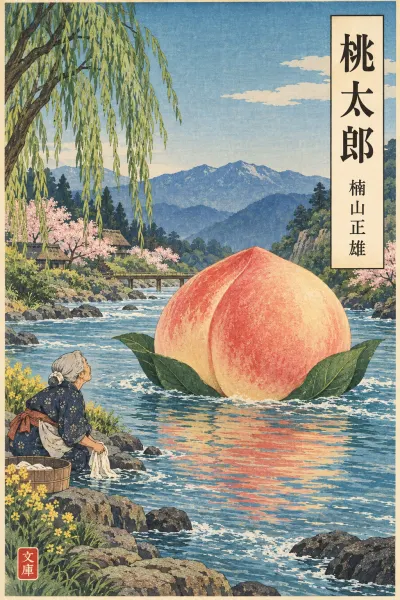
すると、大きなももが一つ、川の上のほうから来ました。Just then, one big peach came floating down from upstream.
「まあ、りっぱなももですね。おじいさんへのおみやげにしましょう。」"My, what a splendid peach! I'll take it home as a present for the old man."
おばあさんはももをひろって、家へ持って帰りました。The old woman picked up the peach and carried it back home.
夕方、おじいさんが山から帰って来ました。In the evening, the old man came back from the mountain.
おばあさんは、おじいさんにももを見せました。The old woman showed the peach to the old man.
「どこでこんなももを買ったのかい。」"Where did you buy a peach like this?"
「買ったのではありません。川でひろったのですよ。」"I didn't buy it. I picked it up at the river, you know."
おじいさんがももを手に持って見ていると、ももが二つにわれました。As the old man was holding the peach in his hands and looking at it, the peach split in two.
そして、中から元気な男の赤ちゃんが出て来ました。And out from inside came a healthy baby boy.
二人はとてもびっくりしました。The two of them were very surprised.
「子どもが一人ほしいと、いつも言っていましたね。」"We always used to say we wanted a child, didn't we?"
二人はとてもよろこびました。The two of them were overjoyed.
ももから生まれたので、この子に「ももたろう」という名前をつけました。Because he was born from a peach, they gave the child the name "Momotarō."
おじいさんとおばあさんは、ももたろうを大切にそだてました。The old man and the old woman raised Momotarō with great care.
ももたろうは体が大きくて、力がとても強い子どもになりました。Momotarō grew into a child with a big body and great strength.
むらの中で、ももたろうにかつ人は一人もいませんでした。In the whole village, there was not a single person who could beat Momotarō.
でも、心はとてもやさしくて、二人を大切にしました。But his heart was very kind, and he took good care of the old couple.
ももたろうは十五さいになりました。Momotarō turned fifteen.
そのころ、外国のしまから帰って来た人が、こんな話をしました。Around that time, a man who had come back from an island in a foreign land told this story.
「とおい海のむこうに、おにがしまというしまがあります。悪いおにたちが、黒くて大きなおしろに住んでいます。いろいろな国からぬすんだたからものを持っています。」"Far away, across the sea, there is an island called Onigashima. Wicked ogres live there in a big black castle. They have treasures they have stolen from all sorts of countries."
ももたろうは、おにがしまへ行きたくなりました。Momotarō began to want to go to Onigashima.
「おにがしまへ行って、悪いおにたちにかって来ます。」I'll go to Onigashima, defeat the wicked ogres, and come back.
「それはりっぱだ。行っておいで。」とおじいさんは言いました。"That's a fine thing to do. Off you go," said the old man.
おばあさんは、おべんとうにきびだんごを作りました。The old woman made millet dumplings for his packed lunch.
ももたろうは、きびだんごを持って、「行ってまいります。」とていねいにあたまを下げました。Momotarō took the millet dumplings, bowed his head politely, and said, "I am off now."
おじいさんとおばあさんは、もんの外に立って、いつまでも見ていました。The old man and the old woman stood outside the gate and watched him for a long, long time.
ももたろうが山を歩いていると、犬が来ました。As Momotarō was walking over the mountain, a dog came along.
「ももたろうさん、どこへ行きますか。」Momotarō-san, where are you going?
「おにがしまへ行くのだ。」"I'm going to Onigashima."
「持っているものは何ですか。」"What is that you are carrying?"
「日本一のきびだんごだ。」"The best millet dumplings in Japan."
「一つください。いっしょに行きます。」"Please give me one. I will go with you."
犬はきびだんごを一つもらって、ついて来ました。The dog received one millet dumpling and followed along behind him.
もりの中では、さるが来ました。In the forest, a monkey came along.
ひろいところでは、きじがとんで来ました。In an open field, a pheasant came flying.
さるときじも、同じようにきびだんごを一つずつもらって、けらいになりました。The monkey and the pheasant, too, each received one millet dumpling in the same way and became his followers.
海に着くと、ふねがありました。When they reached the sea, there was a boat.
犬はふねを動かしました。The dog made the boat move.
さるはうしろに座りました。The monkey sat at the back.
きじは前に立って、むこうを見ました。The pheasant stood at the front and looked out ahead.
ふねはとてもはやく走りました。The boat sped along very fast.
すぐに、きじが「しまが見えます。」と言って、空へとんで行きました。Soon the pheasant said, "I can see an island," and flew off into the sky.
だんだん、おにがしまが見えて来ました。Little by little, Onigashima came into view.
しまに着くと、もんの前にいたおにたちはびっくりしました。When they reached the island, the ogres who were in front of the gate were startled.
そして、おしろの中へにげて、黒いもんをしめました。Then they ran away into the castle and shut the black gate.
犬は大きなこえで「日本のももたろうさんが来たぞ。開けろ。」と言って、もんをたたきました。The dog shouted in a loud voice, "Momotarō of Japan has come! Open up!" and banged on the gate.
きじはやねの上からとんで来て、おにの目をつつきました。The pheasant came flying down from the roof and pecked at the ogres' eyes.
その間に、さるが高いかべをのぼって、中からもんを開けました。Meanwhile, the monkey climbed the high wall and opened the gate from the inside.
ももたろうたちはおしろの中へ入りました。Momotarō and his band went into the castle.
いちばん強いおにが、たくさんのおにといっしょに来ました。The strongest ogre came out together with a great many ogres.
けれども、おにたちは体が大きいだけで、よわかったのです。But the ogres were only big; in fact they were weak.
犬に足をかまれて、さるにかおをひっかかれて、みんなないてにげました。Bitten on the legs by the dog and scratched on the face by the monkey, they all ran away crying.
いちばん強いおにも、ももたろうにはかてませんでした。Even the strongest ogre could not beat Momotarō.
おにはないて言いました。The ogre wept and said:
「こうさんします。もう悪いことはしません。たからものをぜんぶさし上げます。」"I surrender. I will never do bad things again. I humbly give you all the treasure."
おには、たくさんのたからものを車にのせて出しました。The ogre loaded a great deal of treasure onto a cart and brought it out.
ももたろうとけらいたちは、ふねで日本へ帰りました。Momotarō and his followers went back to Japan by boat.
帰りは、行きよりももっとはやかったです。The way back was even faster than the way there.
犬が前で車をひいて、きじもいっしょにひきました。The dog pulled the cart at the front, and the pheasant pulled along with him.
さるはうしろからおしました。The monkey pushed from behind.
家では、おじいさんとおばあさんが待っていました。At home, the old man and the old woman were waiting.
ももたろうが帰って来たので、二人はとてもよろこびました。Because Momotarō had come back, the two of them were overjoyed.
「すごいぞ。日本一だ。」とおじいさんは言いました。"Wonderful! You're the best in Japan!" said the old man.
「けががなくて、ほんとうによかった。」とおばあさんは言いました。"I'm so glad you weren't hurt," said the old woman.
ももたろうは、けらいたちに「おもしろかったなあ。」と言いました。Momotarō said to his followers, "Wasn't that fun!"
犬はワンワン、さるはキャッキャッ、きじはケンケンと、うれしそうになきました。The dog went bow-wow, the monkey went eek-eek, and the pheasant went ken-ken, crying out happily.
空は青くはれて、にわにはきれいな花がさいていました。The sky was clear and blue, and lovely flowers were blooming in the garden.
Vocabulary
| Word | Meaning | JLPT |
|---|---|---|
| せんたくせんたく | washing, laundrydictionary form: 洗濯せんたくをする = to do the washing. In old stories, clothes were washed in the river. | N5 |
| ひろってひろう | to pick up (something found)dictionary form: 拾うWritten 拾う in kanji. | N4 |
| われましたわれる | to split, to break apartdictionary form: 割れるIntransitive: the peach split by itself. Transitive partner: 割る (to split something). | N4 |
| そだてましたそだてる | to raise, to bring up (a child)dictionary form: 育てるIntransitive partner: 育つ (to grow up). | N4 |
| ぬすんだぬすむ | to stealdictionary form: 盗む | N4 |
| たからものたからもの | treasuredictionary form: 宝物宝 (treasure) + 物 (thing); もの becomes the second part without sound change. | — |
| きびだんごきびだんご | millet dumplingsdictionary form: 黍団子Small round dumplings made from millet flour; the famous food of the Momotarō story. | — |
| けらいけらい | follower, retainer, servantdictionary form: 家来Someone who serves a master; slightly old-fashioned, common in folk tales. | N1 |
| にげてにげる | to run away, to escapedictionary form: 逃げる | N4 |
| つつきましたつつく | to peck, to pokedictionary form: 突くOften used for birds pecking with their beaks. | N1 |
| こうさんこうさん | surrender, giving updictionary form: 降参こうさんします = I give up / I surrender. | — |
| さし上げますさしあげる | to give (humble)dictionary form: 差し上げるHumble form of あげる, used when giving to someone of higher status. | N4 |
| ひいてひく | to pulldictionary form: 引くOpposite: 押す (おす, to push), which appears in the next sentence. | N5 |
| けがけが | injury, wounddictionary form: 怪我けががない = to be unhurt. | N4 |
Grammar
〜に行く (purpose) N5 go (somewhere) to do …
The verb stem or a noun of action plus に, followed by 行く, shows the purpose of going. とりに行く = go to gather; せんたくに行く = go to do the washing.
毎日、おじいさんは山へ木をとりに行きました。
Every day, the old man went to the mountain to gather wood.
〜ていると N4 while (someone) was doing …, (something happened)
Verb て-form + いる + と describes an ongoing action, and the next clause tells what happened unexpectedly during it.
おじいさんがももを手に持って見ていると、ももが二つにわれました。
As the old man was holding the peach in his hands and looking at it, the peach split in two.
〜のではありません/〜のです N4 it's not that …; it's that …
The explanatory の(ん)です gives or corrects a reason or situation. Here the old woman denies one explanation (buying) and gives the true one (finding).
買ったのではありません。川でひろったのですよ。
I didn't buy it. I picked it up at the river, you know.
〜たくなる N4 come to want to …
〜たい (want to) becomes 〜たく before なる (become), showing a change of feeling: a wish that was not there before appears.
ももたろうは、おにがしまへ行きたくなりました。
Momotarō began to want to go to Onigashima.
〜ずつ N4 … each, … at a time
Attached to a number or amount, ずつ shows that the same amount goes to each person or thing.
きびだんごを一つずつもらって、けらいになりました。
Each received one millet dumpling and became his followers.
Passive 〜(ら)れる with に N4 be (bitten, scratched) by …
The passive form shows the ogres suffered the action; the doer is marked with に. かむ → かまれる, ひっかく → ひっかかれる.
犬に足をかまれて、さるにかおをひっかかれて、みんなないてにげました。
Bitten on the legs by the dog and scratched on the face by the monkey, they all ran away crying.