Part 1 of 2 · JLPT N2
虫の生命 Mushi no Seimei, part 1: A Dream Saves an Insect in the Kiln
In this part
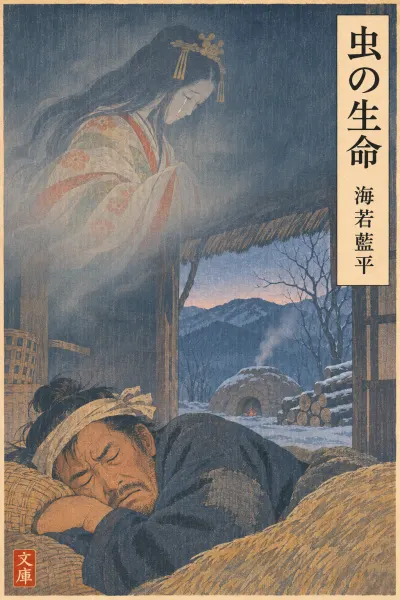
Kantarō, a lonely charcoal burner, dreams on the second morning of the New Year of a weeping princess who sings that the insects in his kiln will burn with the oak trees. Troubled by the dream, he breaks open the kiln and finds a single tiny insect hole in a great oak log. He carries the log deep into the mountains so the insect can live. Afterwards he no longer wants to burn charcoal, and while wondering what to do he loses his way in the mountains.
AI translation · independently checked
炭焼きの勘太郎は妻も子も無い独身者で、毎日毎日奥山で炭焼竈の前に立って煙の立つのを眺めては、淋しいなあと思っておりました。Kantarō the charcoal burner was a man alone, with neither wife nor child. Day after day he stood before his charcoal kiln deep in the mountains, watching the smoke rise and thinking, "How lonely it is."
今年も勘太郎は炭焼竈に楢の木や樫の木を一パイ詰めて、火を点けるばかりにして正月を迎えましたが、丁度二日の朝の初夢に不思議な夢を見ました。This year, too, Kantarō packed his charcoal kiln full of oak and evergreen oak, had everything ready to light, and welcomed the New Year. But on the very morning of the second day, in his first dream of the year, he had a strange dream.
勘太郎は睡っているうちに、どこからともなく悲しい小さい声で歌う唱い声が聞こえて来ました。As Kantarō slept, a singing voice, small and sad, came to him from somewhere he could not tell.
街には人の冬ごもりIn the town the people winter in,
明るい楽しい美しいbright and merry, fair and fine;
樹々には虫の冬ごもりin the trees the insects winter in,
暗い悲しいたよりないdark and sorrowful, forlorn.
冬の夜すがら鳴る風やAll the winter night the wind will moan,
降る雪霜のしみじみとthe snow will fall, the frost bite deep;
たよりに思う樫の樹はthe oak tree we had trusted in
伐りたおされて枯らされてis felled and left to wither dry,
炭焼竈に入れられてand shut inside the charcoal kiln;
明日は深山に立つけぶりtomorrow, smoke on the mountain high.
その樫の樹ともろ共にAnd with that oak tree, side by side,
灰か煙りかかた炭かas ash, as smoke, as charcoal hard,
あとかたもなく消えて行くwe pass away and leave no trace.
悲しい悲しいそのいのちSad, so sad, this little life;
たれがあわれと思おうかwho would ever pity it?
小さい小さい虫一つOne little, little insect;
たれがあわれと思おうかwho would ever pity it?
このうたがだんだん耳に近くに聞こえて来ましたから、勘太郎はフッと眼を開いて見ましたら、真暗な中に美しいお姫様が一人突立って、奇麗な両袖を顔に当て、さめざめと泣いている姿がありありと見えました。The song came nearer and nearer to his ears, so Kantarō suddenly opened his eyes. There in the pitch dark he saw, as plain as day, a beautiful princess standing all alone, her lovely sleeves pressed to her face, weeping bitterly.
勘太郎は驚いてはね起きますと、これは夢で、もう夜が明けていて、表には一パイ雪が降り積っているのが見えました。Kantarō sprang up in alarm, but it had been a dream. Day had already broken, and he could see that outside the snow had fallen and lay thick on the ground.
勘太郎は寝過ぎたと思って、急いで竈の前に行って火を入れようとしましたが、どうしても昨夜の夢が気になってたまりません。Thinking he had overslept, Kantarō hurried to the kiln to light the fire, but he could not stop worrying about last night's dream.
カマドの中には樫の樹も沢山に入れてあるのですから、その中には虫が一匹もいないという事はありません。He had put a great deal of oak into the kiln, so it could not be that there was not a single insect among it.
又樫の樹に限らず他の樹にも虫が住んでいない筈はありませんから、どちらにしても虫共が今日その住居ごと焼き殺される事を知ったら、きっと悲しがるに違いありません。And not only the oak: there was sure to be insects living in the other wood too. Either way, if the insects knew that today they would be burned to death along with their homes, they would surely be grieving.
「ちいさいちいさい虫一つ"One little, little insect;
たれが憐と思おうか」who would ever pity it?"
という夢の中の歌が、雪に包まれた竈の中から勘太郎の耳に聞こえて来るように思われました。It seemed to Kantarō that the song from his dream was reaching his ears from inside the snow-covered kiln.
勘太郎は思い切って、折角築いた竈を打ち破りました。Kantarō made up his mind and broke open the kiln he had taken such trouble to build.
そうして一本一本積んだ樹を取り出して、隅から隅まで調べはじめましたが、不思議な事には、今度積み込んだ樹に限って一本も虫穴の明いたのがありません。Then he took out the wood he had stacked, one piece after another, and began to examine every corner of it. Strangely enough, of all the wood he had packed in this time, not one piece had an insect hole in it.
勘太郎は馬鹿馬鹿しい事をしたと思いました。Kantarō thought he had done something foolish.
これを焼かなければ御飯を食べる事が出来ないのに、つまらない夢なんぞを本当にして残念なことをしたと思いました。Unless he burned this wood he would have nothing to eat, and yet he had taken a silly dream for the truth. What a waste, he thought.
そのうちにだんだん調べて来て、一番おしまいに一本の丸太が残りました。Meanwhile he went on checking, and at the very end a single log was left.
それは大きな樫の丸太で、その幹の真中あたりに小さな虫穴が一つやっと見付かりました。It was a large oak log, and at last, near the middle of the trunk, he found one small insect hole.
勘太郎は、扨はこれが昨夜の虫の住居かと思いましたが、中を覗いても何も知れませんし、又斧で割ったり何かして、中にいる虫まで殺すような事があっては、折角助けた甲斐がありません。"So this must be the home of last night's insect," Kantarō thought. But peering inside told him nothing, and if he split it with his axe or some such thing and ended up killing the insect inside, all his trouble to save it would be for nothing.
勘太郎は仕方なしにお弁当を作って、この樫の丸太を荷いて、山奥の山奥のその又山奥のとても人間の来そうにもない処に持って行って、只ある岩の間へそっと立てかけて置きました。Having no other choice, Kantarō made himself a packed lunch, shouldered the oak log, and carried it deep into the mountains, and deeper still, and deeper even than that, to a place where no person was ever likely to come. There he gently leaned it between some rocks.
その中には春が来て、虫がはい出して、蝶か何かになって飛びまわる事が出来るだろうと思ったからです。For he thought that before long spring would come, and the insect would crawl out, turn into a butterfly or some such thing, and be able to fly about.
虫の方は助ける事が出来ましたが、勘太郎はもう炭焼きなんぞはする気になりませんでした。He had managed to save the insect, but Kantarō no longer had any wish to burn charcoal.
しかし生れて炭焼きしかした事のない勘太郎は他の仕事を一つも知りませんでした。Yet Kantarō, who had never done anything but burn charcoal his whole life, knew no other trade at all.
何をしようかといろいろ考えて帰るうちに道を見失って、だんだん山深く迷い入ってしまいました。As he made his way home, turning over all sorts of ideas about what he might do, he lost the path and wandered deeper and deeper into the mountains.
Vocabulary
| Word | Meaning | JLPT |
|---|---|---|
| 炭焼きすみやき | charcoal burning; charcoal burnerCan mean the work or the person who does it. | — |
| 独身者ひとりもの | single person; someone living aloneNormally read どくしんしゃ; the reading ひとりもの (usually 独り者) stresses being alone. | — |
| 竈へっつい | kiln; cooking stoveOld word; the same kanji is also read かまど or かま. | — |
| 初夢はつゆめ | first dream of the New YearTraditionally the dream on the night of the 1st or 2nd of January, thought to foretell the year. | — |
| 冬ごもりふゆごもり | staying shut in for the winter; hibernationFrom こもる 'to shut oneself in'. | — |
| 夜すがらよすがら | all night longPoetic and old-fashioned; the ordinary word is 一晩中. | — |
| あわれあわれ | pitiful; something to pitydictionary form: 哀れあわれと思う means 'to feel pity for'. | N3 |
| さめざめとさめざめと | (weeping) bitterly, quietly and at lengthUsed almost only with 泣く. | — |
| ありありとありありと | vividly; clearly | — |
| 折角せっかく | with great effort; speciallyHints that the effort is wasted or not rewarded. | N2 |
| 丸太まるた | log | — |
| 甲斐かい | worth; result (of an effort)Often used in 〜甲斐がない 'not worth it'. | — |
| 荷いてになう | to carry on the shoulderdictionary form: 荷うNow usually written 担う. | N1 |
| 迷い入ってまよいいる | to stray into; to wander deep intodictionary form: 迷い入る迷う 'get lost' + 入る 'go in'. | — |
Grammar
〜ばかりにする N2 to get everything ready so that only ~ remains
The plain form plus ばかり means that only that action is left to do. Here the kiln is fully prepared, and the only thing left is to light it.
火を点けるばかりにして正月を迎えましたが
had everything ready to light, and so he greeted the New Year
〜という事はない N2 it is not the case that ~
This denies a statement as a whole. Combined with the negative 一匹もいない, it means 'there must be at least one insect'.
その中には虫が一匹もいないという事はありません。
it could not be that there was not a single insect among it.
〜筈はない N3 there is no way that ~
はずはない firmly rules out a possibility. After a negative verb (住んでいない筈はない), it gives a strong double negative: insects must be living there.
他の樹にも虫が住んでいない筈はありませんから
there was sure to be insects living in the other wood too
〜に違いない N3 must surely ~
This shows that the speaker is strongly convinced. Kantarō is sure the insects would grieve.
きっと悲しがるに違いありません。
they would surely be grieving.
〜に限って N2 only in the case of ~ (unexpectedly)
This picks out one case where something surprising or contrary happens. Of all wood, just this load had no insect holes.
今度積み込んだ樹に限って一本も虫穴の明いたのがありません。
of all the wood he had packed in this time, not one piece had an insect hole in it.
〜甲斐がない N1 there is no point in having ~
A verb in the past plus 甲斐がない means the effort would bring no reward. Killing the insect would undo the effort of saving it.
折角助けた甲斐がありません。
all his trouble to save it would be for nothing.