Part 2 of 2 · JLPT N2
虫の生命 Mushi no Seimei, part 2: From Lost Wanderer to Mountain God
In this part
Kantarō wanders lost and starving through the mountains until he finally collapses. He wakes to a heavenly song and finds himself white-haired and godlike, cared for by celestial maidens and the princess from his dream, but their home turns out to be a tiny insect hole in the oak log he once spared. Flying back to his old hut, he sees a man exactly like his former self, who scoffs at the dream and lights the kiln, and Kantarō can no longer tell whether he is dreaming or awake.
AI translation · independently checked
行っても行っても山ばかりで、食べ物も何もありません。However far he went, there was nothing but mountains, and nothing at all to eat.
日が暮れ夜が明けても同じ事です。Whether the sun set or the night gave way to dawn, it was always the same.
しまいには飢え凍えて死にそうになりましたから、勘太郎は草の根を掘って食べたり、枯れ葉を綴って身体に着たりして、仙人のようになって、自分の家の在る方へと山又山を越えて行きました。In the end he was so starved and frozen that he was close to death, so Kantarō dug up grass roots to eat and stitched dead leaves together to wear on his body, until he looked like a mountain hermit, and crossed mountain after mountain in the direction where his own home lay.
雪に降られ雨風に打たれて、木の皮や草の根を食べながら行く苦しさはたとえようもありません。The misery of going on like that, snowed on, beaten by wind and rain, and eating tree bark and grass roots, was beyond words.
これというのも、たった虫一匹の生命を助けたため、その虫を助けたのは初夢を本当にしたためと思えば、勘太郎は口惜しいやら情ないやら涙をポロポロコボして行きました。And all of this was because he had saved the life of just one insect, and he had saved that insect because he had made his first dream come true; when Kantarō thought of that, he felt so bitter and so wretched that big tears rolled down his cheeks as he went along.
その中に春が来たらしく、雪も降らず風もあたたかくなって、勘太郎が行く山道を横切る雪も白くふわふわとして来ました。Meanwhile spring seemed to have come: no more snow fell, the wind grew warm, and even the snow that drifted across the mountain path where Kantarō walked became white and soft and fluffy.
あたたかい太陽の下の木々には芽が萌え出し、楽しげな鳥の声が方々から聞こえるようになりました。Buds began to sprout on the trees under the warm sun, and cheerful birdsong could be heard on every side.
しかし勘太郎はもうすっかり飢え疲れて、眼が見えなくなって来ました。But Kantarō was by now utterly starved and exhausted, and his eyes began to fail him.
あっちへ行っては石に引っかかり、こっちへよろけては樹にぶっつかり、ヒョロヒョロして行くうちに、とうとうどこだかわからぬ処でバッタリ行きたおれてしまいました。Going this way, he tripped over stones; staggering that way, he bumped into trees; and as he tottered on, at last, in some place he did not know, he fell down flat by the roadside and collapsed.
小さな虫を救うてもThough you save a tiny insect,
救うた生命は只一つthe life you save is only one;
象の生命を助けてもthough you save an elephant's life,
助けた生命は只一つthe life you save is only one.
虫でも象でも救われたBe it insect, be it elephant, for the one that is saved
その有り難さは変らないthe blessing is no less the same.
虫でも象でも同様にInsect or elephant, all alike,
助けた心の美しさhow fair the heart that saves a life.
人の生命を助くるはWho saves the life of a human being
人の心を持った人is one who bears a human heart;
虫の生命を助くるはwho saves the life of an insect
神の心を持った人is one who bears a heart divine.
みんな仕えよ神様にCome, all of you, and serve the gods,
御礼申せよ神様にand give your thanks unto the gods.
こんな歌がどこからともなく晴れやかに聞こえて来ましたので、勘太郎は不思議に思って眼を開きますと、自分はいつの間にか見事な寝台の上に寝かされて、傍には大勢の美しい天女が寄ってたかって介抱しています。A song like this came ringing out brightly from nowhere in particular, so Kantarō wondered at it and opened his eyes, and he found that at some point he had been laid on a splendid bed, and beside him a great crowd of beautiful celestial maidens had gathered round and were tending him.
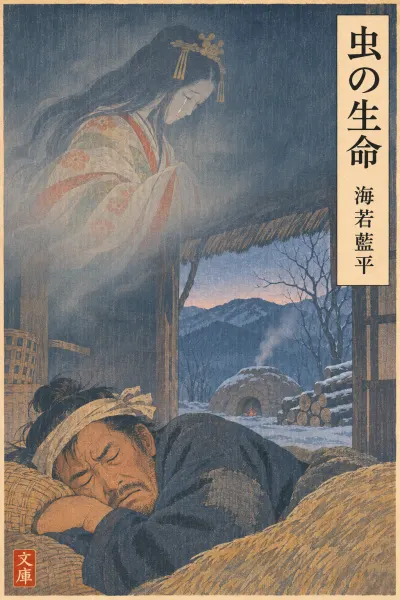
勘太郎は又夢を見ているなと思って眼を閉じようとしますと、不図自分の枕元にこの間夢で見たお姫様がニッコリ笑って立っているのに気が付きました。Thinking, "I'm dreaming again," Kantarō was about to close his eyes, when he suddenly noticed that the princess he had seen in his dream the other day was standing by his pillow, smiling sweetly.
勘太郎は驚いてはね起きますと、どうでしょう。Kantarō sprang up in surprise, and what do you think?
自分はいつの間にか髪から髯まで真白になって、神様のような白い大きな着物を着ています。At some point he had turned pure white, from the hair on his head to his beard, and he was wearing a large white robe like a god's.
それと一所に気持ちまでも神々しく清らかになって、今までの苦しかった事も悲しかった事もすっかり忘れてしまいました。Together with that, even his heart had become holy and pure, and he had completely forgotten all the painful things and sad things that had happened until then.
「そら、神様のお眼ざめだ」"Look, our god has awakened!"
と大勢の天女たちは皆一時にひれ伏しました。cried the crowd of celestial maidens, and they all bowed down to the ground at once.
勘太郎はそのまま神様の気持ちになってそこに止まりました。Kantarō simply took on the heart of a god and stayed there.
もう何も食べる事も心配する事もありません。He no longer needed to eat anything or worry about anything.
只毎日天女たちの春の歌を聞き、面白い春の舞を見ているばかりでした。Every day he did nothing but listen to the maidens' spring songs and watch their delightful spring dances.
或る日、勘太郎は大勢の天女たちと一所に住居を飛出しました。One day Kantarō flew out of their dwelling together with the crowd of celestial maidens.
門口を出てからふり返って見ると、自分達の住居はこの間山奥の岩の間に立てかけた樫の丸太の中程にある小さな小さな虫の穴でした。When he passed through the entrance and looked back, he saw that their dwelling was a tiny, tiny insect hole in the middle of the oak log he had leaned between the rocks deep in the mountains the other day.
勘太郎は何より先に自分の昔の住家の処に来て見ました。Before anything else, Kantarō went to take a look at the place where his old home stood.
見るとそこには昔の通りに自分の家があって、前にはこれも昔の通りに炭焼竈があります。When he looked, there was his house just as it used to be, and in front of it, also just as it used to be, was the charcoal kiln.
オヤ、今度は誰が炭を焼いているのだろうと思って見ていますと、間もなく家の中から出て来たものは昔の勘太郎そっくりの男で、着物までも同じ事です。"Oh? I wonder who's burning charcoal here now," he thought, and as he watched, before long a man came out of the house who was the very image of the old Kantarō, right down to his clothes.
その男は神様の勘太郎の姿を見てこう云いました。That man saw Kantarō the god and said this:
「ああ、蝶が沢山飛んで来たな。今年の正月、あの夢を本当にしてあの樫の木の虫を助けておりゃあ、今頃はあんな蝶になって飛びまわっているかも知れない。"Well, look at all the butterflies flying in. If I'd made that dream come true at New Year and saved the bug in that oak log, maybe I'd be one of those butterflies by now, flitting around.
その代りおれの方は日干しになって死んでいるだろう。馬鹿馬鹿しい事だ。こっちの生命と虫の生命と換えられるもんか。Mind you, I'd be dried out and dead instead. What a load of nonsense. As if I'd swap my own life for a bug's!
どれ一つ炭を焼き初めようか。今度のは特別に虫の穴が多かったようだぞ」Right, let's get this charcoal burning. Seems this batch had an awful lot of bug holes."
と云いながら炭焼竈に火を入れましたので、やがて煙が濛々と大空に向って湧き出しました。As he said this he lit the fire in the charcoal kiln, and soon thick smoke came billowing up toward the wide sky.
神様の勘太郎はまだ夢を見ているのか、それとも本当の事なのかさっぱり訳がわからなくなりました。Kantarō the god could no longer make out at all whether he was still dreaming or whether it was all real.
Vocabulary
| Word | Meaning | JLPT |
|---|---|---|
| 飢えうえる | to starve, go hungrydictionary form: 飢えるOften paired with 凍える (to freeze): 飢え凍える, 'starving and freezing'. | N2 |
| 綴ってつづる | to stitch together, binddictionary form: 綴るAlso means 'to spell' or 'to write' (compose sentences). | — |
| 仙人せんにん | mountain hermit, immortal sageA Taoist recluse who lives in the mountains, eats almost nothing and wears rough clothing. | — |
| 口惜しいくやしい | bitter, mortified, frustratingOlder spelling of 悔しい. | N2 |
| 情ないなさけない | miserable, wretched, pitifuldictionary form: 情けないUsually written 情けない today. | — |
| 萌え出しもえだす | to begin to sproutdictionary form: 萌え出す萌える is used for buds and shoots, not 燃える (to burn). | — |
| 行きたおれていきだおれる | to collapse and fall by the roadsidedictionary form: 行き倒れるThe noun 行き倒れ means a person who dies or collapses on the road. | — |
| 天女てんにょ | celestial maiden, heavenly nymphNote the reading にょ for 女, as in 女房 (にょうぼう). | — |
| 介抱かいほう | nursing, looking after (a sick or injured person) | N1 |
| 枕元まくらもと | bedside, by the pillow | — |
| 神々しくこうごうしい | holy, divine, sublimedictionary form: 神々しいIrregular reading こうごう for 神々. | — |
| ひれ伏しましたひれふす | to prostrate oneself, bow to the grounddictionary form: ひれ伏す | — |
| 日干しひぼし | dried out in the sun; starved to death日干しになる is a colloquial way of saying 'to starve to death'. | — |
| 濛々もうもう | billowing, thick (of smoke, steam or dust) | — |
Grammar
〜ても〜ても N3 no matter how much (one does)
Repeating the same verb in the て-form plus も stresses that the action goes on and on without changing the result. Here walking further and further still brings only more mountains.
行っても行っても山ばかりで、食べ物も何もありません。
However far he went, there was nothing but mountains, and nothing at all to eat.
〜たり〜たりする N4 doing things such as A and B
Lists representative actions, implying there were others like them. Kantarō survives by things like digging roots and wearing leaves.
草の根を掘って食べたり、枯れ葉を綴って身体に着たりして
dug up grass roots to eat and stitched dead leaves together to wear on his body
〜やら〜やら N2 what with A and B; both A and B
Lists mixed, often overwhelming feelings or circumstances. Here it shows a jumble of bitterness and misery at once.
勘太郎は口惜しいやら情ないやら涙をポロポロコボして行きました。
Kantarō felt so bitter and so wretched that big tears rolled down his cheeks as he went along.
〜ようとする N3 to try to; to be about to
The volitional form plus とする shows an action someone is on the point of doing. Combined with と, it sets up what interrupts that action.
眼を閉じようとしますと、不図自分の枕元に
he was about to close his eyes when suddenly, by his pillow
〜ておりゃあ (=〜ていれば) N1 if (I) had done…
おりゃあ is a rough, colloquial contraction of おれば, the conditional of おる (〜ておる = 〜ている). With a past situation it expresses an unreal 'if I had…', followed by speculation such as かも知れない.
あの樫の木の虫を助けておりゃあ、今頃はあんな蝶になって飛びまわっているかも知れない。
If I'd saved the bug in that oak log, maybe I'd be one of those butterflies by now, flitting around.
〜もんか N2 as if…!; there's no way…
A casual form of ものか, used to strongly deny something by posing it as a rhetorical question. The speaker flatly rejects trading his life for an insect's.
こっちの生命と虫の生命と換えられるもんか。
As if I'd swap my own life for a bug's!