Part 1 of 2 · JLPT N3
野ばら Nobara, part 1: Two Soldiers Guarding a Quiet Border
In this part
A large country and its smaller neighbour are at peace, and each sends one soldier to guard the border stone on a lonely mountain: an old man from the large country and a young man from the small one. Beside a wild rose, the two become close friends, and they spend their days greeting each other and playing shogi together. When winter comes, the old man longs to go home to his family in the south, but the young man asks him to stay a little longer.
AI translation · independently checked
大きな国と、それよりはすこし小さな国とが隣り合っていました。There was once a large country, and next to it lay a country a little smaller.
当座、その二つの国の間には、なにごとも起こらず平和でありました。For the time being, nothing at all happened between those two countries, and all was peaceful.
ここは都から遠い、国境であります。This place is the border, far away from the capital.
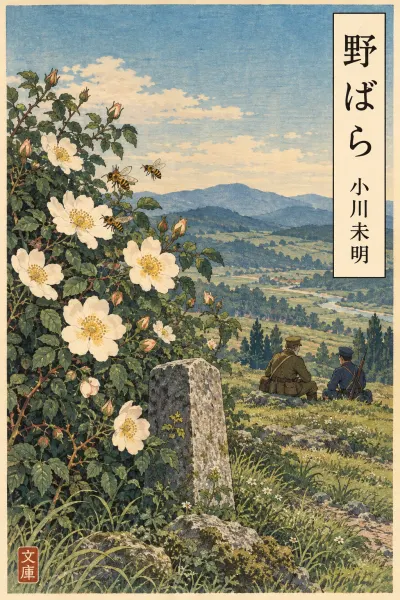
そこには両方の国から、ただ一人ずつの兵隊が派遣されて、国境を定めた石碑を守っていました。Each of the two countries had sent just one soldier there, and the two of them guarded the stone monument that marked the border.
大きな国の兵士は老人でありました。The soldier from the large country was an old man.
そうして、小さな国の兵士は青年でありました。And the soldier from the small country was a young man.
二人は、石碑の建っている右と左に番をしていました。The two kept watch on the right and the left of the stone monument.
いたってさびしい山でありました。It was a very lonely mountain.
そして、まれにしかその辺を旅する人影は見られなかったのです。Only rarely was the figure of a traveller to be seen passing through that area.
初め、たがいに顔を知り合わない間は、二人は敵か味方かというような感じがして、ろくろくものもいいませんでしたけれど、いつしか二人は仲よしになってしまいました。At first, while they did not yet know each other's faces, the two felt as though they must be enemy or ally, and they hardly spoke a word; but before long the two had become good friends.
二人は、ほかに話をする相手もなく退屈であったからであります。This was because the two of them had no one else to talk to and were bored.
そして、春の日は長く、うららかに、頭の上に照り輝いているからでありました。It was also because the spring days were long and bright, and the sun shone brilliantly over their heads.
ちょうど、国境のところには、だれが植えたということもなく、一株の野ばらがしげっていました。Right there at the border, though no one could say who had planted it, a single wild rose bush grew thick and full.
その花には、朝早くからみつばちが飛んできて集まっていました。From early in the morning, honeybees came flying to its flowers and gathered there.
その快い羽音が、まだ二人の眠っているうちから、夢心地に耳に聞こえました。Even while the two were still asleep, the pleasant hum of their wings reached their ears as if in a dream.
「どれ、もう起きようか。あんなにみつばちがきている。」と、二人は申し合わせたように起きました。"Well now, shall I get up? Look how many bees have come." And the two got up as if they had agreed on it beforehand.
そして外へ出ると、はたして、太陽は木のこずえの上に元気よく輝いていました。When they went outside, sure enough, the sun was shining cheerfully above the treetops.
二人は、岩間からわき出る清水で口をすすぎ、顔を洗いにまいりますと、顔を合わせました。When the two went to rinse their mouths and wash their faces in the clear spring water that welled up between the rocks, they met face to face.
「やあ、おはよう。いい天気でございますな。」"Well, good morning. Fine weather we're having, eh?"
「ほんとうにいい天気です。天気がいいと、気持ちがせいせいします。」"It truly is fine weather. When the weather is good, I feel so refreshed."
二人は、そこでこんな立ち話をしました。The two stood there and chatted like this.
たがいに、頭を上げて、あたりの景色をながめました。Both of them raised their heads and gazed at the scenery around them.
毎日見ている景色でも、新しい感じを見る度に心に与えるものです。Even scenery one sees every day gives the heart a fresh feeling each time one looks at it.
青年は最初将棋の歩み方を知りませんでした。At first the young man did not know how the shogi pieces move.
けれど老人について、それを教わりましてから、このごろはのどかな昼ごろには、二人は毎日向かい合って将棋を差していました。But after he had learned it from the old man, the two of them now sat facing each other every day around the peaceful hours of noon and played shogi.
初めのうちは、老人のほうがずっと強くて、駒を落として差していましたが、しまいにはあたりまえに差して、老人が負かされることもありました。At the beginning, the old man was far stronger and played with some of his pieces removed as a handicap, but in the end they played on even terms, and sometimes the old man was even beaten.
この青年も、老人も、いたっていい人々でありました。This young man and the old man were both thoroughly good people.
二人とも正直で、しんせつでありました。Both of them were honest and kind.
二人はいっしょうけんめいで、将棋盤の上で争っても、心は打ち解けていました。Though the two fought with all their might on the shogi board, their hearts were open to each other.
「やあ、これは俺の負けかいな。こう逃げつづけでは苦しくてかなわない。ほんとうの戦争だったら、どんなだかしれん。」と、老人はいって、大きな口を開けて笑いました。"Well, well, I suppose this is my loss, is it? Running away like this, over and over, is more than I can bear. If this were a real war, who knows what would become of me!" said the old man, and he opened his mouth wide and laughed.
青年は、また勝ちみがあるのでうれしそうな顔つきをして、いっしょうけんめいに目を輝かしながら、相手の王さまを追っていました。The young man, glad to see a chance of winning once again, wore a happy expression, and with his eyes shining eagerly he chased after his opponent's king.
小鳥はこずえの上で、おもしろそうに唄っていました。Little birds sang merrily on the treetops.
白いばらの花からは、よい香りを送ってきました。From the white rose flowers a sweet fragrance drifted over.
冬は、やはりその国にもあったのです。Winter, after all, came to that country too.
寒くなると老人は、南の方を恋しがりました。When it grew cold, the old man longed for the south.
その方には、せがれや、孫が住んでいました。His son and his grandchildren lived in that direction.
「早く、暇をもらって帰りたいものだ。」と、老人はいいました。"How I wish I could get my leave soon and go home," said the old man.
「あなたがお帰りになれば、知らぬ人がかわりにくるでしょう。やはりしんせつな、やさしい人ならいいが、敵、味方というような考えをもった人だと困ります。どうか、もうしばらくいてください。そのうちには、春がきます。」と、青年はいいました。"If you go home, some stranger will come in your place. It would be fine if he were a kind and gentle person like you, but it would be hard if he were someone who thinks in terms of enemies and allies. Please, stay a little longer. Before long, spring will come," said the young man.
Vocabulary
| Word | Meaning | JLPT |
|---|---|---|
| 国境こっきょう | national border国 (country) + 境 (boundary); also read くにざかい in older texts. | N3 |
| 派遣はけん | dispatch, sending (someone) on dutyHere used in the passive: 派遣される 'to be sent'. | N1 |
| 石碑せきひ | stone monument, marker stoneHere the stone that marks the border line. | — |
| 番ばん | watch, guard duty番をする = to keep watch; compare 交番 (police box). | N3 |
| ろくろくろくろく | (not) properly, hardly (at all)Used with a negative verb: ろくろく〜ない. | — |
| 敵てき | enemyPaired with 味方 (ally) as a key theme of the story. | N3 |
| 味方みかた | ally, one's own side | N3 |
| 退屈たいくつ | bored; boredom | N3 |
| しげってしげる | to grow thickly, be lushdictionary form: 茂るUsually written 茂る. | N2 |
| 夢心地ゆめごこち | dreamlike state, as if in a dream心地 becomes ごこち by rendaku. | — |
| 将棋しょうぎ | shogi, Japanese chessThe verb used for playing it is 差す (指す). | N2 |
| 駒こま | (game) piece駒を落とす = to play with pieces removed as a handicap. | — |
| 打ち解けてうちとける | to open up, become friendly and at easedictionary form: 打ち解けるDescribes hearts or people becoming close and relaxed. | — |
| せがれせがれ | (my) sondictionary form: 倅Old-fashioned, humble way to refer to one's own son. | N1 |
Grammar
〜であります N2 is / was (formal, literary)
A formal, old-fashioned equivalent of です, used by the narrator to give a storytelling tone. でありました is its past form.
当座、その二つの国の間には、なにごとも起こらず平和でありました。
For the time being, nothing at all happened between those two countries, and all was peaceful.
まれにしか〜ない N4 only rarely
しか with a negative verb means 'only'. Combined with まれに (rarely), it stresses how seldom something happened.
まれにしかその辺を旅する人影は見られなかったのです。
Only rarely was the figure of a traveller to be seen passing through that area.
〜からであります N3 it is because ~
〜からだ (here in formal であります form) gives the reason for something stated earlier. The narrator explains why the two became friends.
二人は、ほかに話をする相手もなく退屈であったからであります。
This was because the two of them had no one else to talk to and were bored.
〜たように N3 as if ~ had happened
Past form + ように compares an action to something else. Here the two get up at the same moment, as if they had arranged it.
二人は申し合わせたように起きました。
The two got up as if they had agreed on it beforehand.
〜てかなわない N2 unbearably ~, can't stand ~
Attached to the te-form of an adjective or verb, it expresses that something is too much to bear. The old man complains that constantly fleeing is unbearable.
こう逃げつづけでは苦しくてかなわない。
Running away like this, over and over, is more than I can bear.
〜たいものだ N2 I really wish I could ~
Adding ものだ to 〜たい expresses a heartfelt, longing wish. The old man speaks wistfully of going home.
早く、暇をもらって帰りたいものだ。
How I wish I could get my leave soon and go home.