 N4 · easy
Simplified retelling · JLPT N4
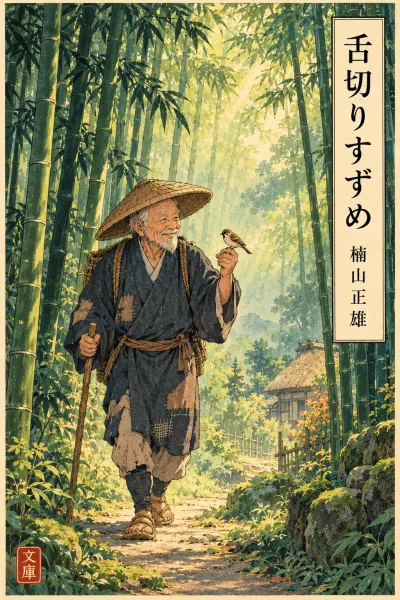
舌切りすずめ Shitakirisuzume in easy Japanese (N4)
This is our own simplified retelling of The Sparrow with the Snipped Tongue, written for N4 learners and checked word by word against the N4 vocabulary list. A few story words and grammar patterns go beyond N4; the notes below give each one's level. It keeps the characters, events and ending of the original. When it feels easy, move on to the original text.
The story in brief
A cruel old woman cuts the tongue of the sparrow her kind husband loves, and the bird flies away. The old man finds the sparrow's house in a thicket, is welcomed with a feast, and modestly takes home the light basket, which is full of treasure. The greedy old woman rushes off and demands the heavy basket, but when she opens it on the way home, frightening monsters jump out, and she swears never to go back.
AI translation · independently checked
一One
むかし、ある村におじいさんとおばあさんが住んでいました。Long ago, an old man and an old woman lived in a certain village.
子どもがいなかったので、おじいさんは小さなすずめを大切にしていました。They had no children, so the old man took great care of a little sparrow.
すずめはかごの中で育てていました。He raised the sparrow in a cage.
ある日、おじいさんは山へ仕事に行きました。One day, the old man went to the hills to work.
おばあさんは外でせんたくをしていました。The old woman was outside doing the washing.
そのとき、すずめがかごから出てきました。Just then, the sparrow came out of its cage.
そして、せんたくに使うのりを全部食べました。And it ate up all the starch she was using for the washing.
おばあさんはとてもおこりました。The old woman was very angry.
おばあさんはやさしくない人でした。The old woman was not a kind person.
「このしたが悪いことをしたのか。」"So this tongue is what did the bad thing, is it?"
おばあさんは、はさみですずめのしたを切りました。The old woman cut the sparrow's tongue with a pair of scissors.
「さあ、どこへでも出ていけ。」"There. Now get out and go wherever you like!"
すずめは「いたい、いたい。」と鳴きながら、とんでいきました。Crying "It hurts, it hurts!", the sparrow flew away.
夕方、おじいさんが山から帰ってきました。In the evening, the old man came back from the hills.
でも、かごの中にすずめはいませんでした。But the sparrow was not in its cage.
「すずめはどこへ行ったのかな。」とおじいさんは聞きました。"I wonder where the sparrow has gone," the old man asked.
「のりを食べたから、したを切って、外に出しましたよ。」とおばあさんは答えました。"It ate my starch, so I cut its tongue and put it out of the house," the old woman answered.
「なんてひどいことを。」"What a cruel thing to do!"
おじいさんはとてもかなしくなりました。The old man became very sad.
二Two
次の日の朝、おじいさんはすずめをさがしに出かけました。The next morning, the old man set out to look for the sparrow.
「すずめさん、すずめさん、どこにいますか。」"Little sparrow, little sparrow, where are you?"
おじいさんは、よびながら歩きました。The old man walked along, calling out.
山をいくつも歩いて、大きなやぶに着きました。He walked over hill after hill and came to a big thicket.
すると、やぶの中からこえが聞こえました。Then he heard a voice from inside the thicket.
「すずめはここですよ。」"The sparrow is here!"
やぶの中に、かわいい赤い家がありました。Inside the thicket stood a pretty little red house.
すずめがもんの前で待っていました。The sparrow was waiting in front of the gate.
「おじいさん、よく来てくださいました。」"Grandfather, how very kind of you to come."
「元気でよかった。とても会いたかったよ。」"I'm so glad you're well. I wanted to see you so much."
すずめはおじいさんを家の中に入れました。The sparrow brought the old man into the house.
「だまってのりを食べて、すみませんでした。」"I am truly sorry for eating the starch without asking."
「いや、わたしがいなかったから、いたい目にあったね。また会えて、本当にうれしいよ。」"No, no. You got hurt because I wasn't there. I'm really happy that I could see you again."
すずめは兄弟や友だちをたくさん集めました。The sparrow gathered together many brothers, sisters and friends.
おいしいごちそうを出して、歌に合わせてみんなでおどりました。They served a delicious feast, and everyone danced along to songs.
おじいさんはとても楽しくて、時間を忘れました。The old man was having such a good time that he forgot all about the time.
だんだん暗くなってきました。Little by little it grew dark.
「今日は楽しかった。そろそろ帰ります。」"I've had a lovely day. I'll be going home soon."
「今夜はここにとまってください。」とすずめたちはたのみました。"Please stay here tonight," the sparrows begged.
「おばあさんが待っているから、今日は帰るよ。また来ますね。」"My old wife is waiting, so I'll go home today. I'll come again."
「では、プレゼントをどうぞ。」"Then please accept a present."
すずめはつづらを二つ持ってきました。The sparrow brought out two wicker baskets.
「重いつづらと、かるいつづらがあります。好きな方を持って帰ってください。」"There is a heavy basket and a light basket. Please take home whichever you like."
「わたしは年を取っているし、道もとおい。かるい方をもらいます。」"I'm getting old, and the road is long. I'll take the light one."
おじいさんはかるいつづらを持って、家に帰りました。The old man carried the light basket and went home.
三Three
「こんな時間まで、どこにいたんですか。」とおばあさんはおこりました。"Where have you been until this hour?" the old woman said angrily.
おじいさんは、すずめの家の話をしました。The old man told her about the sparrow's house.
そして、つづらを開けました。Then he opened the basket.
中には、きれいなたからがたくさん入っていました。Inside it was full of beautiful treasures.
おじいさんが二つのつづらの話をすると、おばあさんはまたおこりました。When the old man told her about the two baskets, the old woman got angry again.
「どうして重い方をもらわなかったのですか。重い方には、もっとたからが入っていたはずです。」"Why didn't you take the heavy one? There must have been even more treasure in the heavy one."
「そんなに欲しがってはいけないよ。これで十分だ。」"You mustn't want so much. This is plenty."
「わたしが重い方をもらってきます。」"I'll go and get the heavy one myself."
おばあさんは、おじいさんが止めるのも聞きませんでした。The old woman would not listen, even when the old man tried to stop her.
夜なのに、急いで家を出ました。Even though it was night, she hurried out of the house.
おばあさんも山をいくつも歩いて、やぶに着きました。The old woman, too, walked over hill after hill and came to the thicket.
「すずめはここですよ。」とこえが聞こえました。"The sparrow is here!" called a voice.
すずめはもんを開けて、おばあさんを家に入れました。The sparrow opened the gate and brought the old woman into the house.
やさしく「よく来てくださいました。」と話しました。"How very kind of you to come," it said gently.
でも、おばあさんはゆっくり休みませんでした。But the old woman would not sit and rest.
「話はいいから、早くプレゼントをください。」"Never mind the talk. Hurry up and give me my present."
すずめはびっくりしましたが、つづらを二つ持ってきました。The sparrow was startled, but it brought out two baskets.
「重い方と、かるい方と、どちらがいいですか。」"The heavy one or the light one: which would you like?"
「もちろん、重い方です。」"The heavy one, of course."
おばあさんは重いつづらを持って、あいさつもしないで帰りました。The old woman picked up the heavy basket and went home without even saying goodbye.
帰る道で、つづらはどんどん重くなりました。On the way home, the basket grew heavier and heavier.
おばあさんはとてもつかれました。The old woman became very tired.
「重いから、たからがたくさん入っているはずだ。少し見てみよう。」"It's so heavy, there must be lots of treasure inside. I'll just take a little look."
おばあさんは道のそばで休んで、つづらを開けました。The old woman rested by the roadside and opened the basket.
すると、中からこわいおばけがたくさん出てきました。Then out came a crowd of frightening monsters.
目が三つのおばけや、目が一つのおばけもいました。There were monsters with three eyes, and monsters with only one eye.
「この悪いおばあさんめ。」"You wicked old woman!"
おばけたちはこわい目でおばあさんを見ました。The monsters glared at the old woman with fearsome eyes.
長いしたを出して、おばあさんのかおにさわりました。They stuck out their long tongues and touched her face.
「たすけて。」"Help!"
おばあさんは大きなこえを出して、急いでにげました。The old woman screamed and ran away as fast as she could.
家に着いたとき、おばあさんのかおは死んだ人のように白くなっていました。When she got home, her face had turned as white as a dead person's.
おじいさんはびっくりして、「どうしたの。」と聞きました。The old man was startled and asked, "What happened?"
おばあさんは話をして、「もう二度と行きません。」と答えました。The old woman told him the story and answered, "I'll never go there again."
「それは大変だったね。人にひどいことをしたり、たくさん欲しがったりしてはいけないよ。」"That must have been terrible. You mustn't do cruel things to others, or want too much."
おじいさんは、そう話しました。That is what the old man said.
Vocabulary
| Word | Meaning | JLPT |
|---|---|---|
| 大切たいせつ | precious, important; 大切にする = to take good care ofな-adjective. 〜を大切にする is a very common set phrase. | N5 |
| かごかご | cage; basketHere a birdcage. Kanji: 籠. | N3 |
| せんたくせんたく | washing, laundryKanji: 洗濯. せんたくをする = to do the laundry. | N5 |
| のりのり | starch (paste for stiffening washed cloth)Old-style starch was made from rice, so a sparrow would eat it. のり also means glue, or seaweed (海苔). | N2 |
| はさみはさみ | scissorsはさみで切る = to cut with scissors; で marks the tool. | N3 |
| やぶやぶ | thicket (especially of bamboo), bushKanji: 藪. In this story it is a bamboo thicket. | — |
| ごちそうごちそう | a feast, special foodSame word as in ごちそうさまでした, said after a meal. | N4 |
| とまってとまる | to stay (the night)dictionary form: とまるKanji: 泊まる. Not the same as 止まる (to stop), which has the same reading. | N5 |
| つづらつづら | wicker basket (a woven box with a lid)An old-fashioned storage basket woven from vines or bamboo; the famous prize in this tale. | — |
| たからたから | treasureKanji: 宝. | N3 |
| 欲しがってほしがる | to want (said of someone else); to be greedy fordictionary form: 欲しがる欲しい + がる. Use がる to describe another person's feelings. | — |
| おばけおばけ | monster, ghostA child-friendly word for spooky creatures. | — |
| にげましたにげる | to run away, to escapedictionary form: にげるKanji: 逃げる. | N4 |
| 忘れましたわすれる | to forgetdictionary form: 忘れる時間を忘れる = to lose track of time. | N5 |
Grammar
〜ながら N4 while doing ~
Attach ながら to the ます-stem to show two actions happening at the same time. The main action comes last (flying away); the ながら action (crying) goes with it.
すずめは「いたい、いたい。」と鳴きながら、とんでいきました。
Crying "It hurts, it hurts!", the sparrow flew away.
〜はずだ N4 should be / must be (a strong expectation)
はず shows what the speaker firmly expects to be true based on reasoning. With a past verb (入っていた), it means 'there must have been'.
重い方には、もっとたからが入っていたはずです。
There must have been even more treasure in the heavy one.
〜てはいけない N5 must not ~
て-form + はいけない forbids an action. The old man uses it with よ to gently scold his wife.
そんなに欲しがってはいけないよ。
You mustn't want so much.
〜なのに N4 even though ~
のに joins two ideas where the second is surprising after the first. After a noun, use なのに.
夜なのに、急いで家を出ました。
Even though it was night, she hurried out of the house.
〜のように N4 like ~, as ~ as
Noun/verb + のように compares something to something else. Here the old woman's face is compared to that of a dead person.
おばあさんのかおは死んだ人のように白くなっていました。
Her face had turned as white as a dead person's.
〜たり〜たりする N4 doing things like ~ and ~
た-form + り lists example actions without giving a complete list. Combined with てはいけない, it means 'you mustn't do things like this or that'.
人にひどいことをしたり、たくさん欲しがったりしてはいけないよ。
You mustn't do cruel things to others, or want too much.