 N4 · easy
Simplified retelling · JLPT N4
赤い蝋燭と人魚 Akai Rōsoku to Ningyo in easy Japanese (N4)
This is our own simplified retelling of Red Candles on the Shrine Hill, written for N4 learners and checked word by word against the N4 vocabulary list. A few story words and grammar patterns go beyond N4; the notes below give each one's level. It keeps the characters, events and ending of the original. When it feels easy, move on to the original text.
The story in brief
A mermaid leaves her newborn daughter near a seaside town, and a kind old couple who run a candle shop raise the girl. Her painted candles are said to keep ships safe, but a southern trader persuades the couple to sell her, and she leaves behind a few candles painted all red. That night a mysterious woman buys one red candle, a great storm sinks many ships, and from then on red candles bring only storms and death until the town itself disappears.
AI translation · independently checked
北の つめたい 海に、女の 人魚が すんで いました。In the cold northern sea there lived a mermaid.
ある ばん、人魚は 海の 上に 出て、月を 見ながら 休んで いました。One night the mermaid came up to the surface of the sea and rested there, gazing at the moon.
人魚は 考えました。The mermaid thought to herself.
「海の 中は くらくて、さびしいです。話す 友だちも いません。人魚の かおや 体の 上の はんぶんは、人間に よく にて います。人間は とても やさしいと 聞きました。」"It is dark and lonely in the sea. I have no friends to talk to, either. A mermaid's face and the upper half of her body are very like a human being's. I have heard that human beings are very kind."
人魚の おなかには 子どもが いました。The mermaid was carrying a child.
「私は もう この 子に 会えません。でも、この 子には 人間の 町で、にぎやかに 楽しく 生きて ほしいです。」人魚は 夜の 海を およいで、山の 上に じんじゃが ある 町へ 行って、子どもを 生みました。"I shall never be able to see this child again. But I want this child to live a merry, happy life in a town of human beings." The mermaid swam through the night sea to a town with a shrine on the hill above it, and there she gave birth to her child.
その 町に、小さな ろうそくの 店が ありました。In that town there was a small candle shop.
おじいさんが ろうそくを 作って、おばあさんが 店で 売って いました。The old man made the candles, and the old woman sold them in the shop.
町の 人や 魚を とる 人たちは、じんじゃへ 行く まえに、この 店で ろうそくを 買いました。Before going up to the shrine, the townspeople and the fishermen bought their candles at this shop.
ある 月の きれいな 夜、おばあさんは じんじゃへ かみさまに おれいを しに 行きました。One night when the moon was beautiful, the old woman went to the shrine to give thanks to the god.
帰る と中、山の 近くで 赤んぼうが ないて いました。On her way home, she heard a baby crying near the hill.
「私たちには 子どもが いませんから、かみさまが くださったのでしょう。」おばあさんは 赤んぼうを 家へ つれて 帰りました。"We have no children of our own, so the god must have given her to us." The old woman took the baby home with her.
その 子は 女の子でした。The child was a girl.
でも、体の 上の はんぶんは 人間で、あとの はんぶんは 魚の かたちでした。But while the upper half of her body was human, the other half had the shape of a fish.
二人は「人魚の 子だ」と 思いましたが、とても 大事に そだてました。The two of them thought, "She is a mermaid's child," but they raised her with great care.
むすめは 大きく なって、黒い 目の、うつくしくて やさしい 子に なりました。The daughter grew up into a beautiful, gentle girl with black eyes.
むすめは はずかしくて、店には 出ませんでした。The daughter was shy and never came out into the shop.
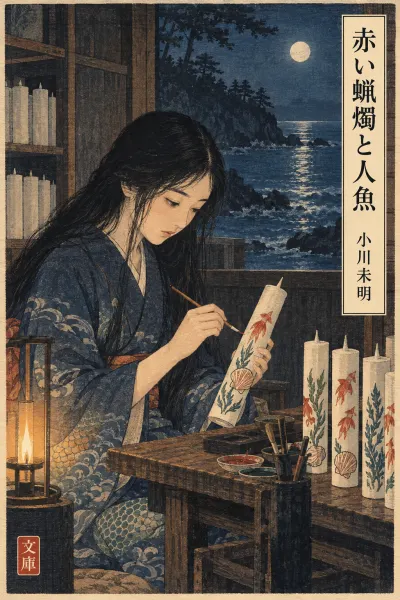
ある 日、むすめは 白い ろうそくに 赤い 色で、魚や 貝や 海の くさの えを かきました。One day the daughter painted pictures of fish, shells and seaweed in red on some white candles.
だれにも 習いませんでしたが、とても 上手でした。No one had ever taught her, yet she painted very well.
えの ある ろうそくは 大好きだと、みんなが 買いに 来ました。Everyone loved the painted candles and came to buy them.
そして、こんな 話が 有名に なりました。And a story like this became well known.
「この ろうそくを じんじゃで 使って、それを 持って 海へ 出ると、あらしの 日も ふねは 大丈夫だ。」とおい むらからも 人が 来て、じんじゃには 毎ばん 火が つきました。"If you use one of these candles at the shrine and take it with you when you go out to sea, your boat will be safe even on a stormy day." People came even from faraway villages, and every night lights burned at the shrine.
むすめは 手が つかれても、毎日 えを かきました。Even when her hands grew tired, the daughter painted pictures every day.
そだてて くれた 二人に、おれいを したかったのです。She wanted to repay the two who had raised her.
でも、むすめの ことを 考える 人は いませんでした。But no one gave any thought to the daughter herself.
ときどき むすめは まどから 北の 青い 海を 見て、ないて いました。Sometimes the daughter would look out of the window at the blue northern sea and weep.
ある 日、南の 国から 男が 来ました。One day a man came from the southern lands.
めずらしい 物を 集めて、南の 国で 売る 男です。He was a man who gathered rare things and sold them in the south.
男は むすめが 人魚だと 知って、「たくさん お金を はらいますから、あの むすめを 売って ください」と 二人に 話しました。When the man learned that the daughter was a mermaid, he said to the two of them, "I will pay you a great deal of money, so please sell me that girl."
二人は はじめ、「かみさまが くださった 子です」と 答えました。At first the two answered, "She is a child the god gave us."
でも 男は また 来て、「人魚は 悪い ことを 持って 来ます」と 話しました。But the man came again and said, "Mermaids bring bad luck."
二人は その 話を ほんとうだと 思いました。The two came to believe that what he said was true.
お金も ほしくて、やくそくを しました。They wanted the money as well, and so they made the bargain.
むすめは とても おどろいて、ないて たのみました。The daughter was terribly shocked, and she begged them in tears.
「もっと はたらきますから、南の 国へ 売るのは やめて ください。」でも 二人は もう むすめの 話を 聞きませんでした。"I will work even harder, so please do not sell me to the southern lands." But the two would no longer listen to her.
月の きれいな 夜、むすめは 一人で なみの 音を 聞いて いました。On a night when the moon was beautiful, the daughter sat alone, listening to the sound of the waves.
とおくで だれかが よんで いるようでした。It seemed as if someone far away were calling to her.
そこへ 男が、動物を 入れる 大きな おりを 車に のせて 来ました。Just then the man arrived, with a great cage for animals loaded on a cart.
おじいさんと おばあさんは「さあ、行くんだ」と、むすめを つれて 行こうと しました。"Come now, off you go," said the old man and the old woman, and they tried to lead the daughter away.
むすめは いそいで いたので、えが かけませんでした。The daughter was in such a hurry that she could not paint any pictures.
手に 持って いた ろうそくを ぜんぶ 赤く ぬりました。She painted the candles she was holding red all over.
そして 赤い ろうそくを 二、三本 店に おいて、行きました。Then she left two or three red candles in the shop and went away.
その 夜おそく、トン、トンと 音が しました。Late that night there came a knock, knock.
おばあさんが 出ると、色の 白い 女が 立って いました。When the old woman went to the door, a pale-skinned woman was standing there.
女の 長い 黒い かみは、水に ぬれて いました。The woman's long black hair was wet with water.
女は 赤い ろうそくを 一本 えらんで、お金を はらって 帰りました。The woman chose one red candle, paid for it, and went away.
あとで 見ると、それは お金では ありませんでした。When the old woman looked afterwards, it was not money at all.
貝がらでした。It was seashells.
おばあさんは おこって 外に 出ましたが、女は もう どこにも いませんでした。The old woman ran outside in anger, but the woman was nowhere to be seen.
その 夜、空が 急に くらく なって、大きな あらしが 来ました。That night the sky suddenly grew dark, and a great storm came.
むすめを のせた ふねは、ちょうど 海の 上でした。The ship carrying the daughter was out on the sea at that very moment.
その 夜、たくさんの ふねが こわれました。That night many ships were wrecked.
それから、じんじゃに 赤い ろうそくの 火が つくと、いつも あらしが 来るように なりました。From then on, whenever a red candle burned at the shrine, a storm would always come.
おじいさんと おばあさんは「かみさまが おこったのだ」と 思って、店を やめました。The old man and the old woman thought, "The god is angry," and they closed the shop.
でも、だれが 持って 来るのか、毎ばん 赤い ろうそくが じんじゃに つきました。Yet every night, though no one knew who brought them, red candles burned at the shrine.
その 火を 見た 人は、海で 死にました。Anyone who saw that light died at sea.
もう だれも じんじゃへ 行きませんでした。No one went to the shrine any more.
雨の くらい 夜に、海の 上から 火が 山の じんじゃへ のぼって 行くのを 見た 人も います。There are also people who have seen, on dark, rainy nights, a light rise from the sea and climb up to the shrine on the hill.
そして 何年か あとに、その 町は きえて、もう どこにも ありません。And some years later the town vanished, and now it is nowhere to be found.
Vocabulary
| Word | Meaning | JLPT |
|---|---|---|
| 人魚にんぎょ | mermaidLiterally 'human fish': 人 (person) + 魚 (fish). | — |
| にてにる | to resemble, to look likedictionary form: 似るUsually used as 〜に似ている: 'looks like ~'. | N4 |
| ろうそくろうそく | candledictionary form: 蝋燭Counted with 本 (いっぽん, にほん, さんぼん). | N2 |
| じんじゃじんじゃ | (Shinto) shrinedictionary form: 神社Here the shrine to the god of the sea on the hill. | N4 |
| おれいおれい | thanks, gratitudedictionary form: お礼おれいを する = to give thanks, to repay a kindness. | N4 |
| そだてましたそだてる | to raise, to bring updictionary form: 育てるTransitive; the intransitive 育つ means 'to grow up'. | N4 |
| はずかしくてはずかしい | shy; embarrasseddictionary form: 恥ずかしい | N4 |
| あらしあらし | stormdictionary form: 嵐 | N3 |
| めずらしいめずらしい | rare, unusualdictionary form: 珍しい | N4 |
| はらいますはらう | to paydictionary form: 払うお金を はらう = to pay money. | N4 |
| やくそくやくそく | promise; agreementdictionary form: 約束やくそくを する = to make a promise or deal. | N4 |
| たのみましたたのむ | to ask, to beg (someone to do something)dictionary form: 頼む | N5 |
| おりおり | cage (for animals)dictionary form: 檻 | N1 |
| こわれましたこわれる | to break, to be wreckeddictionary form: 壊れるIntransitive; the transitive form is 壊す. | N4 |
Grammar
〜ながら N4 while doing ~
Attach ながら to the verb's ます-stem to show two actions happening at the same time. The main action comes last; here the mermaid rests, and looks at the moon as she does so.
月を 見ながら 休んで いました
she was resting while looking at the moon
〜て ほしい N4 want someone else to do ~
The て-form plus ほしい expresses a wish for another person's action. The person you want to act is marked with に: この子には … 生きて ほしい.
この 子には 人間の 町で、にぎやかに 楽しく 生きて ほしいです
I want this child to live a merry, happy life in a human town
〜て くれる N4 (someone) does ~ for me/us
The て-form plus くれる shows that someone does something that benefits the speaker or the person the story follows. It shows the daughter's gratitude to the old couple.
そだてて くれた 二人に、おれいを したかったのです
She wanted to thank the two who had raised her.
〜ようだ N4 it seems that ~; as if ~
Plain form plus ようだ gives an impression based on what one senses. The daughter is not sure, but it feels as if someone is calling to her.
とおくで だれかが よんで いるようでした
It seemed as if someone far away were calling.
〜(よ)うと する N3 try to ~; be about to ~
The volitional form plus とする means someone attempts or is just about to do something. Here the old couple start to take the girl away.
むすめを つれて 行こうと しました
they tried to take the daughter away
〜ように なる N4 come to ~; it became the case that ~
Dictionary form plus ようになる describes a change into a new, lasting situation. After that night, storms began to follow the red candles every time.
いつも あらしが 来るように なりました
a storm would always come