 N5 · easy
Simplified retelling · JLPT N5
赤い蝋燭と人魚 Akai Rōsoku to Ningyo in easy Japanese (N5)
This is our own simplified retelling of Red Candles on the Shrine Hill, written for N5 learners and checked word by word against the N5 vocabulary list. A few story words and grammar patterns go beyond N5; the notes below give each one's level. It keeps the characters, events and ending of the original. When it feels easy, move on to the N4 version or the original text.
The story in brief
A mermaid leaves her baby near a shrine, and an old candle-making couple raise the girl. Her painted candles become famous as charms against drowning, but the couple sell her to a man from the south for money. After she is taken away, a pale woman buys a red candle, storms sink many ships, and some years later the town is gone.
AI translation · independently checked
北の うみに、女の にんぎょが すんで いました。In the northern sea there lived a mermaid.
うみの 中は くらくて、さむくて、とても しずかでした。Under the sea it was dark and cold, and very quiet.
にんぎょは つきの あかるい よるに、うみの 上で 休みました。On nights when the moon was bright, the mermaid rested on the surface of the sea.
「うみの 中は いやです。人の まちは あかるくて、きれいです。人は やさしいです。」"I do not like it under the sea. The towns of people are bright and beautiful. And people are kind."
にんぎょの おなかには 子どもが いました。There was a child in the mermaid's belly.
「この 子どもには、あかるい まちに すんで ほしいです。」"I want this child to live in a bright town."
ある よる、にんぎょは 山の じんじゃの ちかくに 行きました。One night the mermaid went near the shrine on the hill.
そして、そこに あかちゃんを おいて、ひとりで うみに かえりました。There she laid down her baby, and she went back to the sea alone.
山の ちかくに、小さな ろうそくの みせが ありました。Near the hill there stood a small candle shop.
おじいさんが ろうそくを つくって、おばあさんが みせで うって いました。The old man made the candles, and the old woman sold them in the shop.
その よる、おばあさんは じんじゃに 行きました。That night the old woman went to the shrine.
かえりの みちで、あかちゃんが ないて いました。On the way home, a baby was crying.
女の あかちゃんでした。It was a baby girl.
からだの 半ぶんは さかなでした。Half of her body was a fish.
「にんぎょの あかちゃんです。かみさまからの 子どもです。」おじいさんも 「たいせつに しましょう」と いいました。"This is a mermaid's baby. She is a child sent to us by the gods." The old man said too, "Let us take good care of her."
二人は 女の子を たいせつに しました。The two of them cherished the girl.
女の子は 大きく なって、とても きれいに なりました。The girl grew up and became very beautiful.
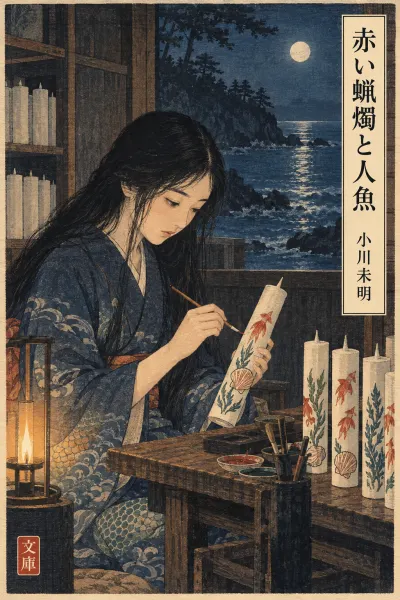
女の子は 白い ろうそくに、あかい いろで さかなや かいの えを かきました。On the white candles, the girl painted pictures of fish and shells in red.
とても じょうずでした。She painted them very well.
子どもも 大人も、毎日 たくさん かいに 来ました。Children and grown-ups alike came every day to buy a great many.
「えの ある ろうそくを じんじゃで つけたら、うみで 死にません。」みんなが そう いいました。"If you light a candle with a picture on it at the shrine, you will not die at sea." That is what everyone said.
とおい むらからも、人が 来ました。People came even from faraway villages.
じんじゃは ゆうめいに なりました。The shrine became famous.
女の子は 毎日 えを かいて、とても つかれました。The girl painted pictures every day, and she grew very tired.
手が 痛かったですが、かきました。Her hands hurt, but still she painted.
でも、女の子を 見て いる 人は いませんでした。But there was no one who was watching over the girl.
ときどき、女の子は まどから 北の あおい うみを 見て、ないて いました。Sometimes the girl would look out of the window at the blue northern sea and weep.
ある よる、南の 国から 男が 来ました。One night a man came from a southern country.
「その にんぎょを わたしに うって ください。お金を たくさん 出します。」"Please sell that mermaid to me. I will pay a great deal of money."
はじめ、二人は 「いいえ」と いいました。At first the two of them said, "No."
でも、男は また 来ました。But the man came again.
「にんぎょは 悪い ものです。いえに おいたら、あぶないですよ。」二人は お金が ほしかったです。"A mermaid is a wicked thing. If you keep one in your house, it is dangerous, you know." The two of them wanted money.
それで、女の子を 男に うりました。And so they sold the girl to the man.
女の子は ないて、「たくさん はたらきます。南の 国へ 行きたく ないです」と いいました。The girl wept and said, "I will work very hard. I do not want to go to the southern country."
でも、二人は 聞きませんでした。But the two of them would not listen.
男が 大きな はこを 車で もって 来ました。The man brought a big box on a cart.
おばあさんが 「さあ、行きますよ」と いいました。The old woman said, "Come now, it is time to go."
女の子は えが かけなくて、ろうそくを ぜんぶ あかい いろに しました。The girl could not paint pictures, so she made all the candles red.
そして、あかい ろうそくを 二本、三本 おいて、行きました。Then she left two or three red candles behind, and went away.
その よる おそく、いえの 外に だれか いました。Late that night, someone was outside the house.
「どなた?」おばあさんが あけたら、いろの 白い 女が たって いました。"Who is there?" When the old woman opened the door, a pale-skinned woman was standing there.
あたまが 水で ぬれて いました。Her hair was wet with water.
女は あかい ろうそくを 一本 かって、かえりました。The woman bought one red candle and went away.
でも、女の お金は かいでした。But the woman's money was seashells.
おばあさんは 外に 出ましたが、女は もう いませんでした。The old woman went outside, but the woman was already gone.
その よる、大きな あらしが 来ました。That night a great storm came.
男の ふねは うみの 上に いました。The man's ship was out on the sea.
二人は 「あの ふねは もう かえりません」と いいました。The two of them said, "That ship will never come back."
たくさんの ふねが うみに 消えました。Many ships vanished into the sea.
それから、じんじゃに あかい ろうそくが ついた よるは、いつも あらしに なりました。From then on, on any night when a red candle was lit at the shrine, there was always a storm.
二人は 「わたしたちが 悪かったです」と いって、みせを 閉めました。The two of them said, "We did wrong," and they closed the shop.
でも、毎ばん、だれかが じんじゃに あかい ろうそくを つけました。But every night, someone lit a red candle at the shrine.
あかい ろうそくを 見た 人は、みんな うみで 死にました。Everyone who saw the red candle died at sea.
もう だれも じんじゃに 行きませんでした。No one went to the shrine any more.
雨の よる、うみから 小さな ろうそくが 山の じんじゃへ 登って 行きました。On rainy nights, a small candle went climbing up from the sea to the shrine on the hill.
それを 見た 人も いました。There were people who saw it.
何年か 後に、その まちは 消えました。Some years later, that town was gone.
Vocabulary
| Word | Meaning | JLPT |
|---|---|---|
| すんですむ | to live (in a place)dictionary form: 住むUsed with に for the place: うみに すむ. すんで いる = 'lives / is living'. | N5 |
| じんじゃじんじゃ | (Shinto) shrinedictionary form: 神社A shrine for Japanese gods; here, the god of the sea. | N4 |
| あかちゃんあかちゃん | babydictionary form: 赤ちゃんFrom あかい 'red', because newborns look red. | N4 |
| ろうそくろうそく | candledictionary form: 蝋燭Counted with 本 (ほん/ぼん/ぽん), the counter for long, thin things. | N2 |
| かみさまかみさま | god, the godsdictionary form: 神様さま is a very polite ending, like さん but more respectful. | N2 |
| たいせつにたいせつ | precious; たいせつに する = to take good care of, cherishdictionary form: 大切A な-adjective; に turns it into an adverb. | N5 |
| かいかい | shell, shellfishdictionary form: 貝Do not confuse with かう 'to buy' (かいに 来ました = came to buy). | N2 |
| つけたらつける | to light (a candle); to turn ondictionary form: 点けるAlso used for lights and TVs: でんきを つける. | N2 |
| つかれましたつかれる | to get tireddictionary form: 疲れるつかれました = 'became tired'; つかれて います = 'is tired'. | N5 |
| うりましたうる | to selldictionary form: 売るThe opposite of かう 'to buy'. | N5 |
| ぬれてぬれる | to get wetdictionary form: 濡れるぬれて いました = 'was wet'. The cause takes で: 水で ぬれる. | N4 |
| あらしあらし | stormdictionary form: 嵐A strong storm with wind and rain. | N3 |
| 消えましたきえる | to vanish, disappeardictionary form: 消えるAlso 'to go out' for a light or fire. | N5 |
Grammar
〜に 〜て ほしい N4 to want someone else to do something
ほしい after a て-form expresses a wish that another person does something. The person is marked with に; here the mother wants her child to live in a bright town.
この 子どもには、あかるい まちに すんで ほしいです。
I want this child to live in a bright town.
〜く なる / 〜に なる N5 to become ~
い-adjectives change い to く before なる; な-adjectives and nouns take に. Here 大きい → 大きく なって and きれい → きれいに なりました show the girl changing as she grows.
女の子は 大きく なって、とても きれいに なりました。
The girl grew up and became very beautiful.
〜たら N4 if / when ~
The past form plus ら makes a condition: when the first thing happens, the second follows. Here: if you light the candle, you will not die.
えの ある ろうそくを じんじゃで つけたら、うみで 死にません。
If you light a candle with a picture on it at the shrine, you will not die at sea.
〜て いました N5 was doing ~ / was in a state of ~
The て-form plus いました describes an action going on, or a state, at a moment in the past. The baby was in the middle of crying when the old woman passed.
かえりの みちで、あかちゃんが ないて いました。
On the way home, a baby was crying.
〜たく ないです N5 do not want to ~
The verb stem plus たい means 'want to'; changing たい to たく ない makes it negative. 行きたい → 行きたく ないです.
南の 国へ 行きたく ないです
I do not want to go to the southern country.
〜ですが、〜 N5 ~, but ~
が at the end of a clause means 'but' and links two contrasting ideas. Her hands hurt, but she kept painting.
手が 痛かったですが、かきました。
Her hands hurt, but still she painted.