 N4 · easy
Simplified retelling · JLPT N4
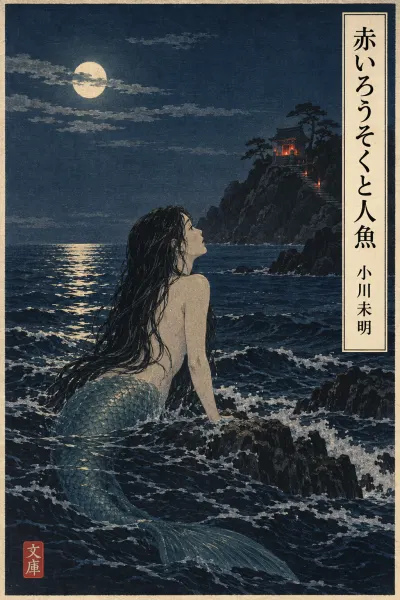
赤いろうそくと人魚 Akai Rōsoku to Ningyo in easy Japanese (N4)
This is our own simplified retelling of The Mermaid and the Crimson Candles, written for N4 learners and checked word by word against the N4 vocabulary list. A few story words and grammar patterns go beyond N4; the notes below give each one's level. It keeps the characters, events and ending of the original. When it feels easy, move on to the original text.
The story in brief
A mermaid leaves her baby on the steps of a hill shrine, hoping the child will live happily among humans, and an old couple who make candles raise her. The girl's pictures painted on the candles make the shrine famous, but the couple sell her to a showman for money. After she is taken away, a strange woman buys red candles, a great storm wrecks ships, and the town eventually vanishes.
AI translation · independently checked
北の海に、女の人魚が住んでいました。In the northern sea there lived a mermaid.
北の海は青くて、つめたくて、くらい所でした。The northern sea was a blue, cold and dark place.
月の明るい夜、人魚はいわの上で休みながら考えました。One night when the moon was bright, the mermaid rested on a rock and thought.
「私たちは、かおも体の上の方も、人とよくにています。それなのに、どうしてくらい海の中に住まなければならないのでしょう。」"Our faces, and the upper part of our bodies too, are very like those of people. And yet why must we live in the dark sea?"
人魚のおなかには、赤ちゃんがいました。There was a baby in the mermaid's belly.
「人の町は明るくて、きれいだと聞きました。人はやさしくて、弱いものをいじめないそうです。この子だけは、明るい町で楽しく生きてほしいです。もう会えないかもしれません。でも、それでいいです。」"I have heard that the towns of people are bright and beautiful. They say people are kind and do not bully the weak. I want this child, at least, to live happily in a bright town. I may never be able to see the child again. But that is all right."
ある夜、人魚は山の上のじんじゃの火を見ながら、町の方へおよいでいきました。One night, watching the lights of the shrine on top of the hill, the mermaid swam toward the town.
海の近くの小さな町に、ろうそくの店がありました。In a small town near the sea there was a candle shop.
おじいさんがろうそくを作って、おばあさんが店で売っていました。The old man made the candles, and the old woman sold them in the shop.
町の人は、山のじんじゃへ行く時、この店でろうそくを買いました。When the people of the town went to the shrine on the hill, they bought candles at this shop.
ある月の夜、おばあさんはじんじゃへおれいを言いに行きました。One moonlit night, the old woman went to the shrine to give thanks.
帰りに、かいだんの下で、赤ちゃんがないていました。On her way home, at the foot of the stone steps, a baby was crying.
「かみさまが、子どものいない私たちにくださったのでしょう。」おばあさんは赤ちゃんを家につれて帰りました。"The gods must have given her to us, who have no children." The old woman took the baby home with her.
赤ちゃんは女の子でしたが、体の下の方は魚でした。The baby was a girl, but the lower part of her body was a fish.
「人の子ではないな。」とおじいさんは言いました。"She is no human child," said the old man.
「でも、なんてかわいいかおでしょう。」とおばあさんは言いました。"But what a lovely face she has," said the old woman.
二人は、この子を大切にそだてました。The two of them raised the child with great care.
むすめは大きくなって、とてもきれいになりました。The daughter grew up and became very beautiful.
でも、体が人とちがうので、はずかしくて外に出ませんでした。But because her body was different from other people's, she was ashamed and did not go outside.
ある日、むすめは白いろうそくに、赤いえのぐで魚や海の中の絵をかきました。One day, the daughter painted fish and scenes from under the sea on white candles in red paint.
だれにも習わなかったのに、とても上手でした。Though no one had taught her, she painted very well.
絵のあるろうそくは、よく売れました。The candles with pictures sold very well.
そして、町でふしぎな話が始まりました。And then a strange story began to spread in the town.
「絵のあるろうそくをじんじゃに上げて、そののこりを持って海に出ると、ふねはあぶなくない。」とおいむらからも、たくさんの人が買いに来ました。"If you offer a painted candle at the shrine and take what is left of it out to sea with you, your boat will come to no harm." Hearing this, many people came even from faraway villages to buy them.
じんじゃは有名になりました。The shrine became famous.
むすめは手がいたくなっても、朝からばんまで絵をかきました。Even when her hands began to hurt, the daughter painted from morning until night.
でも、むすめのことを考える人はいませんでした。But there was no one who gave any thought to the daughter.
むすめは時々、まどから北の青い海を見て、ないていました。Sometimes the daughter looked out of the window at the blue northern sea and wept.
ある日、南の国から男が来ました。One day, a man came from a southern land.
めずらしい物を人に見せて、お金をもらう男でした。He was a man who showed rare and curious things to people and took their money.
男は「人魚を売ってください。お金をたくさん出します。」と言いました。The man said, "Please sell me the mermaid. I will pay you a great deal of money."
初め、二人は売りませんでした。At first, the two of them would not sell her.
でも男は「人魚は悪い物です。家においておくと、悪いことが起きますよ。」と言いました。But the man said, "A mermaid is an evil thing. If you keep one in your house, bad things will happen, you know."
二人はそれをほんとうだと思いました。The two of them believed that this was true.
そして、お金もほしくなって、むすめを売ることにきめました。And, beginning to want the money as well, they decided to sell the daughter.
むすめはないて、「何でもしますから、南の国へ売らないでください。」とたのみました。The daughter wept and begged them, "I will do anything, so please do not sell me to the southern land."
でも、二人はもうむすめの言うことを聞きませんでした。But the two of them no longer listened to what the daughter said.
月の明るい夜、男がてつのおりを車にのせて、むすめをとりに来ました。On a bright moonlit night, the man loaded an iron cage onto a cart and came to take the daughter away.
むすめはろうそくに絵をかいていましたが、いそがされて、絵がかけませんでした。The daughter had been painting pictures on candles, but she was rushed and could not paint any pictures.
それで、ろうそくをぜんぶ赤くぬってしまいました。So she painted the candles entirely red.
むすめは赤いろうそくを二、三本のこして、行ってしまいました。The daughter left behind two or three red candles and went away.
その夜おそく、だれかが店の入口をトントンとたたきました。Late that night, someone knocked, tap-tap, at the door of the shop.
おばあさんが開けると、色の白い女が立っていました。When the old woman opened it, a pale-skinned woman was standing there.
女の長い黒いかみは、水でぬれていました。The woman's long black hair was wet with water.
女は赤いろうそくを買って帰りました。The woman bought red candles and went home.
あとでおばあさんがお金を見ると、それはお金ではなく、かいがらでした。Later, when the old woman looked at the money, it was not money at all, but seashells.
おばあさんはおこって外に出ましたが、女はもうどこにもいませんでした。The old woman went outside in anger, but the woman was nowhere to be seen.
その夜、急に大きなあらしになりました。That night, a great storm suddenly arose.
ちょうど男が、むすめをおりに入れて、ふねで南へ行くところでした。The man had just put the daughter in the cage and was about to head south by ship.
その夜、たくさんのふねがこわれました。That night, many ships were wrecked.
それから、赤いろうそくがじんじゃについた夜は、いつも大きなあらしになりました。From then on, on any night when a red candle was lit at the shrine, there was always a great storm.
おじいさんとおばあさんは、かみさまがおこったのだと思って、店をやめました。The old man and the old woman thought the gods were angry, and they closed their shop.
でも、だれかが時々、赤いろうそくをじんじゃにつけました。Yet from time to time, someone would light a red candle at the shrine.
赤いろうそくを見た人は、海で死にました。Those who saw the red candle died at sea.
もう、だれもじんじゃへ行かなくなりました。No one went to the shrine anymore.
雨のくらい夜、海の上から赤い火が、山のじんじゃの方へ上っていくのを見た人もいます。Some people have seen a red light rising from the sea toward the shrine on the hill on dark, rainy nights.
そして何年もたたないうちに、その町はなくなってしまいました。And before many years had passed, that town was gone.
Vocabulary
| Word | Meaning | JLPT |
|---|---|---|
| 人魚にんぎょ | mermaidLiterally 'person-fish' (人 + 魚). | — |
| にていますにる | to resemble, to look likedictionary form: 似るUsually used as 〜に似ている / 〜と似ている for a state of resembling. | N4 |
| いじめないいじめる | to bully, to be cruel todictionary form: いじめる | N4 |
| じんじゃじんじゃ | (Shinto) shrinedictionary form: 神社A shrine to the native gods (かみさま); a temple is お寺. | N4 |
| おれいおれい | thanks, gratitudedictionary form: お礼おれいを言う = to say thank you. | N4 |
| そだてましたそだてる | to raise, to bring up (a child)dictionary form: 育てるIntransitive partner: 育つ (to grow up). | N4 |
| はずかしくてはずかしい | ashamed, embarrassed, shydictionary form: 恥ずかしい | N4 |
| えのぐえのぐ | paint, coloursdictionary form: 絵の具 | N2 |
| ふしぎふしぎ | strange, mysteriousdictionary form: 不思議A な-adjective: ふしぎな話. | N3 |
| めずらしいめずらしい | rare, unusual, curiousdictionary form: 珍しい | N4 |
| たのみましたたのむ | to ask, to beg (someone to do something)dictionary form: 頼む | N5 |
| おりおり | cage (for animals)dictionary form: 檻 | N1 |
| ぬってぬる | to paint over, to coat with colourdictionary form: 塗る塗る covers a surface; for drawing pictures use 描く (かく). | N4 |
| あらしあらし | stormdictionary form: 嵐 | N3 |
Grammar
〜なければならない N4 must, have to
The ない-form with ければ + ならない expresses obligation. Here the mermaid asks why her kind must live in the dark sea.
どうしてくらい海の中に住まなければならないのでしょう。
Why must we live in the dark sea?
〜そうです (hearsay) N4 I hear that…, they say that…
Plain form + そうです reports something heard from others. The mermaid has only heard that people are kind; she has not seen it herself.
人はやさしくて、弱いものをいじめないそうです。
They say people are kind and do not bully the weak.
〜てほしい N4 to want someone (else) to do something
て-form + ほしい expresses a wish about another person's action. The mermaid wants her child to live happily.
この子だけは、明るい町で楽しく生きてほしいです。
This child, at least, I want to live happily in a bright town.
〜のに N4 even though, despite
Joins two facts where the second is surprising given the first. No one taught her, yet she painted very well.
だれにも習わなかったのに、とても上手でした。
Though no one had taught her, she painted very well.
〜ことにきめる N4 to decide to do something
Dictionary form + ことにきめる (like ことにする) states a decision. The couple decide to sell the girl.
むすめを売ることにきめました。
They decided to sell the daughter.
〜るところでした N4 was just about to do
Dictionary form + ところ means 'about to do'. 〜ところでした means 'was just about to do' (when something else happened). Here, the man had put the daughter in the cage and was just about to sail south.
ちょうど男が、むすめをおりに入れて、ふねで南へ行くところでした。
It was just when the man had put the daughter in the cage and was about to go south by ship.