 N5 · easy
Simplified retelling · JLPT N5
赤いろうそくと人魚 Akai Rōsoku to Ningyo in easy Japanese (N5)
This is our own simplified retelling of The Mermaid and the Crimson Candles, written for N5 learners and checked word by word against the N5 vocabulary list. A few story words and grammar patterns go beyond N5; the notes below give each one's level. It keeps the characters, events and ending of the original. When it feels easy, move on to the N4 version or the original text.
The story in brief
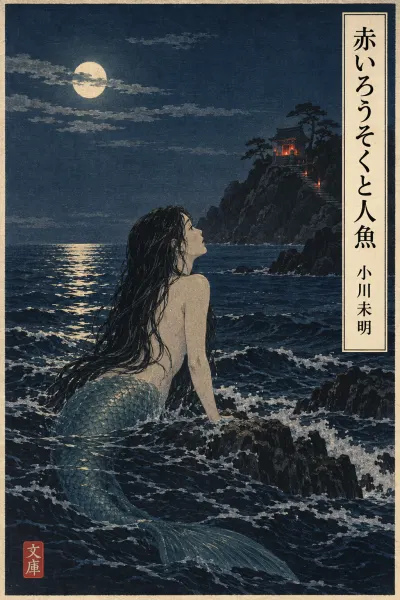
A lonely mermaid leaves her baby near a hilltop shrine, hoping people will be kind to it. An old couple who sell candles raise the girl, and her painted candles become famous, but they sell her to a man from the south for money. Before she leaves she paints some candles plain red; a pale woman buys them with seashells, storms follow, and the town is finally left empty.
AI translation · independently checked
北の うみに、にんぎょが すんで いました。In the northern sea there lived a mermaid.
うみの 中は くらくて、つめたかったです。Under the sea it was dark and cold.
話す 友だちも いませんでした。She had no friends to talk with, either.
ある ばん、にんぎょは うみの 上に 出て、とおくの あかるい まちを 見ました。One night the mermaid came up to the surface of the sea and looked at a bright town far away.
「人は やさしいと 聞きました。わたしの こどもは、あの あかるい まちに すんだ ほうが いいです。」"I have heard that people are kind. It is better for my child to live in that bright town."
にんぎょの おなかには、こどもが いました。There was a baby in the mermaid's belly.
にんぎょは 山の 上の じんじゃの ちかくに こどもを おいて、うみへ かえりました。The mermaid left her child near the shrine on top of the hill and went back to the sea.
山の ちかくに、小さな ろうそくの みせが ありました。Near the hill there was a small candle shop.
おじいさんが ろうそくを つくって、おばあさんが うって いました。The old man made the candles, and the old woman sold them.
ある ばん、おばあさんは じんじゃへ 行きました。One night the old woman went to the shrine.
そのかえりに、小さな 女の子が ないて いました。On her way back, a little girl was crying.
女の子は にんぎょでした。The little girl was a mermaid.
二人には こどもが いませんでした。The two of them had no children.
「かみさまが くれた こどもです。」と、二人は 話しました。"She is a child the gods have given us," the two of them said.
そして、女の子を たいせつに しました。And they took great care of the girl.
女の子は 大きく なって、とても きれいに なりました。The girl grew up and became very beautiful.
ある ばん、女の子は 白い ろうそくに あかい えを かきました。One night the girl painted red pictures on white candles.
さかなや うみの えでした。They were pictures of fish and of the sea.
とても じょうずでした。They were very skilfully done.
「この ろうそくを じんじゃに あげると、うみの 上で だいじょうぶです。」と、まちの 人は 話しました。"If you offer one of these candles at the shrine, you will be safe out on the sea," said the people of the town.
とおくの 国からも、たくさんの 人が かいに 来ました。Many people came to buy them, even from faraway lands.
女の子は 毎ばん、てが いたく なるまで、えを かきました。Every night the girl painted pictures until her hands hurt.
でも、つかれて いました。But she was tired.
よる、まどから 北の あおい うみを 見て、ないて いました。At night she would look out of the window at the blue northern sea and weep.
ある ばん、南の 国から 男が 来ました。One night a man came from a southern land.
「その 女の子は にんぎょですね。たくさん お金を 出します。わたしに うって ください。」はじめ、二人は「いいえ。」と こたえました。"That girl is a mermaid, isn't she? I will pay a great deal of money. Please sell her to me." At first the two of them answered, "No."
でも、男は また 来ました。But the man came again.
「にんぎょは わるい ものを よびますよ。」二人は お金が ほしく なりました。"Mermaids call up evil things, you know." The two of them began to want the money.
そして、女の子を 男に うりました。And so they sold the girl to the man.
女の子は ないて たのみました。The girl wept and begged them.
「たくさん はたらきます。南の 国へ 行きたく ないです。」でも、二人は 聞きませんでした。"I will work very hard. I do not wish to go to the southern land." But the two of them would not listen.
よる、男が 大きな はこと いっしょに 来ました。At night the man came with a large box.
女の子は もう えを かけませんでした。The girl could no longer paint pictures.
ろうそくに あかい 色だけを つけました。She put only red colour on the candles.
そして、あかい ろうそくを 二本か 三本、へやに おいて 行きました。Then she left two or three red candles in her room and went away.
その よる、だれかが みせに 来ました。That night, someone came to the shop.
おばあさんが ドアを あけると、白い 女の 人が 立って いました。When the old woman opened the door, a pale white woman was standing there.
長い くろい かみのけから、水が 出て いました。Water was running from her long black hair.
女の 人は あかい ろうそくを かって、かえりました。The woman bought a red candle and went home.
お金を 見ると、それは かいがらでした。When the old woman looked at the money, it was seashells.
その よる、大きな あらしが 来ました。That night a great storm came.
女の子の ふねも うみの 上に いました。The ship carrying the girl was out on the sea, too.
たくさんの ふねが かえって 来ませんでした。Many ships did not come back.
それから、じんじゃで あかい ろうそくに 火が ついた よるは、いつも あらしが 来ました。After that, on any night when red candles were burning at the shrine, a storm always came.
だれが あげたか、だれも 知りません。No one knows who offered them.
あかい ろうそくを 見た 人は、うみで しにました。Anyone who saw the red candles died at sea.
おじいさんと おばあさんは みせを しめました。The old man and the old woman closed their shop.
もう だれも じんじゃへ 行きませんでした。No one went to the shrine any more.
そして 何年か 後、この まちに すむ 人は 一人も いませんでした。And some years later, not a single person lived in this town.
Vocabulary
| Word | Meaning | JLPT |
|---|---|---|
| にんぎょにんぎょ | mermaiddictionary form: 人魚Kanji: 人 (person) + 魚 (fish). | — |
| すんですむ | to live (in a place)dictionary form: 住むUsed with に: うみに すむ = to live in the sea. | N5 |
| つめたかったつめたい | cold (to the touch, like water)dictionary form: 冷たいFor cold weather, use さむい instead. | N5 |
| じんじゃじんじゃ | (Shinto) shrinedictionary form: 神社A place where gods (かみさま) are worshipped. | N4 |
| おいておく | to put; to leave (something somewhere)dictionary form: 置く | N5 |
| ろうそくろうそく | candledictionary form: 蝋燭 | N2 |
| かみさまかみさま | god; the godsdictionary form: 神様さま is a very respectful form of さん. | N2 |
| たいせつにたいせつ | precious; with caredictionary form: 大切〜を たいせつに する = to take good care of, to treasure. | N5 |
| じょうずじょうず | skilful; good at somethingdictionary form: 上手 | N5 |
| つかれてつかれる | to get tireddictionary form: 疲れるつかれて いる = to be tired (the state after getting tired). | N5 |
| たのみましたたのむ | to ask; to beg (someone to do something)dictionary form: 頼む | N5 |
| かいがらかいがら | seashelldictionary form: 貝殻かい (shellfish) + から (shell); がら is a sound change. | N1 |
| あらしあらし | stormdictionary form: 嵐 | N3 |
| しめましたしめる | to close; to shut (a shop, a door)dictionary form: 閉める | N5 |
Grammar
〜く なる / 〜に なる N5 to become ~
い-adjectives change い to く before なる; な-adjectives and nouns take に. Here 大きい becomes 大きく and きれい becomes きれいに.
女の子は 大きく なって、とても きれいに なりました。
The girl grew up and became very beautiful.
Verb stem + に 来る N5 to come (in order) to do ~
The ます-stem of a verb plus に shows the purpose of coming or going. かいに 来ました means 'came to buy'.
とおくの 国からも、たくさんの 人が かいに 来ました。
Many people came to buy them, even from faraway lands.
〜まで N5 until ~
After a plain-form verb, まで shows the point up to which an action continues. The girl kept painting until her hands started to hurt.
女の子は 毎ばん、てが いたく なるまで、えを かきました。
Every night the girl painted pictures until her hands hurt.
〜た ほうが いい N4 it is better to ~
The past form of a verb plus ほうが いい gives advice or says which choice is better. The mermaid thinks living in the town is better for her child.
わたしの こどもは、あの あかるい まちに すんだ ほうが いいです。
It is better for my child to live in that bright town.
〜と (when / if) N4 when ~ ; if ~
Plain form + と links a first event to what happens or is found right after it. Here, as soon as the old woman opened the door, she saw the woman standing there.
おばあさんが ドアを あけると、白い 女の 人が 立って いました。
When the old woman opened the door, a pale white woman was standing there.
だれも / 一人も + negative N5 no one; not a single person
だれも and 一人も are used with a negative verb to mean 'nobody'. 一人も is stronger: 'not even one person'.
もう だれも じんじゃへ 行きませんでした。
No one went to the shrine any more.