Part 1 of 3 · JLPT N2
張紅倫 Chōkōrin, part 1: The Major in the Old Well
In this part
One night, a few days before the great Battle of Hōten, Major Aoki is inspecting his sentries when he falls into a deep, dry well in a field. Afraid that Russian scouts will hear him, he does not call out at first and waits for morning. The whole next day passes with no rescue, and as night falls again he begins to fear he will die there pointlessly instead of in battle.
AI translation · independently checked
一I
奉天大戦争(一九〇五年)の数日まえの、ある夜中のことでした。It happened one night, a few days before the great Battle of Hōten (1905).
わがある部隊の大隊長青木少佐は、畑の中に立っている歩哨を見まわって歩きました。Major Aoki, battalion commander of one of our units, was making his rounds of the sentries standing out in the fields.
歩哨は、めいぜられた地点に石のようにつっ立って、きびしい寒さと、ねむさをがまんしながら、警備についているのでした。Each sentry stood stock-still like a stone at the spot he had been ordered to, enduring the bitter cold and his own sleepiness as he kept guard.
「第三歩哨、異状はないか」"Third sentry, anything out of the ordinary?"
少佐は小さく声をかけました。The major called out softly.
「はっ、異状ありません」"Sir! Nothing out of the ordinary, sir!"
歩哨のへんじが、あたりの空気に、ひくく、こだましました。The sentry's reply echoed low through the surrounding air.
少佐は、また、歩きだしました。The major set off walking again.
頭の上で、小さな星が一つ、かすかにまたたいています。Overhead, a single small star was twinkling faintly.
少佐はその光をあおぎながら、足音をぬすんで歩きつづけました。Gazing up at its light, the major kept walking with quiet, stealthy steps.
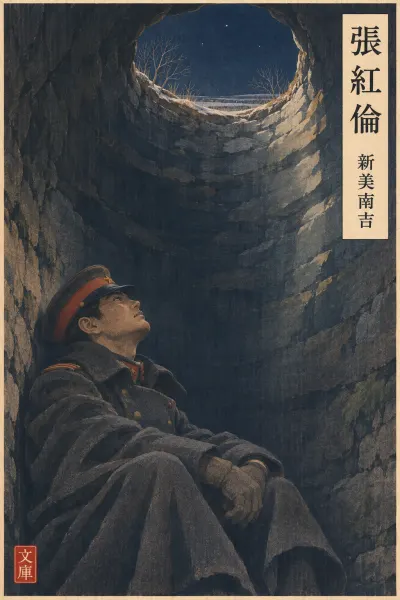
もうすこしいくと、つぎの歩哨のかげが見えようと思われるところで、少佐はどかりと足をふみはずして、こおった土くれをかぶりながら、がたがたがた、どすんと、深いあなの中に落ちこみました。At about the place where he thought the shadow of the next sentry should come into view a little further on, the major suddenly missed his footing, and with clods of frozen earth falling on top of him, rattle, rattle, rattle, thump! he tumbled down into a deep hole.
ふいをくった少佐は、しばらくあなのそこでぼんやりしていましたが、あたりのやみに目もなれ、気もおちついてくると、あなの中のようすがうすうすわかってきました。Caught off guard, the major sat dazed at the bottom of the hole for a while, but as his eyes got used to the darkness and he calmed down, he began to make out dimly what the inside of the hole was like.
それは四メートル以上の深さで、そこのほうがひろがっている、水のかれた古井戸だったのです。It was an old, dried-up well, more than four meters deep and wider toward the bottom.
少佐は、声を出して歩哨をよぼうとしましたが、まてまて、深い井戸の中のことだから、歩哨のいるところまで、声がとおるかどうかわからない、それに、もし、ロシアの斥候にききつけられたら、むざむざところされるにきまっている、と思いかえし、そのまま、だまってこしをおろしました。The major was about to shout for the sentry, but then he thought better of it: wait, wait, this is a deep well, so there is no telling whether my voice will even reach the sentry; besides, if a Russian scout heard me, I would surely be killed for nothing. So he sat down right where he was and kept silent.
あすの朝になったら、だれかがさがしあてて、ひきあげてくれるだろうと考えながら、まるい井戸の口でしきられた星空を見つめていました。Thinking that when morning came someone would find him and pull him out, he gazed up at the starry sky framed by the round mouth of the well.
そのうちに、井戸の中があんがいあたたかなので、うとうととねむりだしました。Before long, because it was surprisingly warm inside the well, he dozed off.
ふとめざめたときは、もう夜があけていました。When he suddenly woke up, night had already given way to dawn.
少佐はううんとあくびをしながら、赤くかがやいた空を見あげたのち、The major gave a long, loud yawn and looked up at the sky glowing red, and then
「ちょっ、どうしたらいいかな」"Tch. What am I supposed to do now?"
と、心の中でつぶやきました。he muttered to himself.
まもなく、朝やけで赤かった空は、コバルト色になり、やがて、こい水色にかわっていきました。Soon the sky, red with the morning glow, turned cobalt, and then gradually changed to a deep sky blue.
少佐は、だれかさがし出してくれないものかと、待ちあぐんでいましたが、だれもここに井戸があることさえ、気がつかないらしいけはいです。The major waited and waited, wishing someone would come and find him, but there was no sign that anyone even knew there was a well here.
上を見ると、長いのや、みじかいのや、いろいろの形をしたきれぎれの雲が、あとから、あとからと、白く通っていくきりです。When he looked up, all he could see were ragged white clouds of every shape, long ones and short ones, drifting past one after another.
とうとうお昼近くになりました。At last it was nearly noon.
青木少佐ははらもへり、のどがかわいてきました。Major Aoki was growing hungry, and his throat was getting dry.
とてもじれったくなって、大声で、オーイ、オーイと、いくどもどなってみました。Unable to stand it any longer, he tried shouting at the top of his voice again and again: "Hey! Hey there!"
しかし、じぶんの声がかべにひびくだけで、だれもへんじをしてくれるものはありません。But his own voice only echoed off the walls, and no one answered.
少佐は、しかたなく、むだだとは知りながら、なんどもなんども、井戸の口からさがったつる草のはしにとびつこうとしました。With nothing else for it, and though he knew it was useless, the major tried over and over to jump up and catch the end of a vine hanging down from the mouth of the well.
やがて、「あああ」と、つかれはてて、べったりと井戸のそこにすわりこんでしまいました。Finally, with a weary "Ahh," he was utterly exhausted and slumped down flat on the bottom of the well.
そのうちに、とうとう日がくれて、寒いよいやみがせまってきました。Meanwhile the sun at last went down, and the cold darkness of evening closed in.
ゆうべの小さな星が、おなじところでさびしく光っています。The little star from the night before was shining lonely in the same place.
「おれは、このまま死んでしまうかもしれないぞ」"I might just die down here like this."
と、少佐は、ふと、こんなことを考えました。That was the thought that suddenly came to the major.
「じぶんは、いまさら死をおそれはしない。しかし、戦争に加わっていながら、こんな古井戸の中でのたれ死にをするのは、いかにもいまいましい。死ぬなら、敵のたまにあたって、はなばなしく死にたいなあ」"I'm not afraid of death, not at this point. But to be serving in a war and then die like a stray dog in an old well like this — that's truly galling. If I have to die, I'd rather go out in glory, struck by an enemy bullet."
Vocabulary
| Word | Meaning | JLPT |
|---|---|---|
| 歩哨ほしょう | sentry, lookoutMilitary term for a soldier posted on guard duty. | — |
| 少佐しょうさ | major (military rank)少 (lesser) + 佐 (field officer); 中佐 is lieutenant colonel, 大佐 is colonel. | — |
| 見まわってみまわる | to make the rounds, to patroldictionary form: 見まわるUsually written 見回る. | — |
| 警備けいび | guard duty, security警備につく means 'to go on guard duty'. | N2 |
| 異状いじょう | something wrong, anything unusual異状なし ('nothing to report') is a set phrase in military and police reports. | — |
| ふみはずしてふみはずす | to miss one's footingdictionary form: ふみはずす踏み外す: 踏む (step) + 外す (miss). | — |
| 古井戸ふるいど | old wellKun reading ふる for 古 combines with 井戸 (well). | — |
| 斥候せっこう | scout, reconnaissance soldierOld-fashioned military word. | — |
| むざむざむざむざ | helplessly, pointlesslyUsed for losing or dying without being able to do anything about it. | — |
| 待ちあぐんでまちあぐむ | to grow weary of waitingdictionary form: 待ちあぐむLiterary; 〜あぐむ adds the sense of being tired of doing something without result. | — |
| じれったくじれったい | frustrating, maddeningly impatientdictionary form: じれったいThe feeling when things will not go the way you want. | — |
| のたれ死にのたれじに | dying miserably by the roadside, dying like a dogRendaku: し becomes じ. | — |
| いまいましいいまいましい | galling, infuriating忌々しい; expresses bitter annoyance. | — |
| はなばなしくはなばなしい | glorious, brilliantdictionary form: はなばなしい華々しい; often used of a dramatic, honourable death in battle. | N1 |
Grammar
〜かどうか N4 whether or not
Turns a yes/no question into part of a larger sentence. Here 声がとおるかどうか ('whether his voice will carry') is the object of わからない.
歩哨のいるところまで、声がとおるかどうかわからない
there is no telling whether my voice will reach where the sentry is
〜にきまっている N3 is sure to, is bound to
Expresses the speaker's strong conviction that something will certainly happen. The major is sure he would be killed if a scout heard him.
もし、ロシアの斥候にききつけられたら、むざむざところされるにきまっている
if a Russian scout heard me, I would surely be killed for nothing
〜てくれないものか N2 if only someone would…, I wish…
A negative question with ものか expresses a strong, slightly desperate wish for someone else's action. Here it shows the major hoping someone will find him.
だれかさがし出してくれないものかと、待ちあぐんでいました
he waited and waited, wishing someone would come and find him
〜きり N2 only, nothing but
Attached to a verb or noun, きり limits the situation to that one thing. Here it means all the major can see is clouds drifting by.
いろいろの形をしたきれぎれの雲が、あとから、あとからと、白く通っていくきりです
all there was were ragged white clouds of every shape drifting past one after another
〜ながら (concessive) N2 although, despite
Besides 'while doing', ながら after a state or stative verb can mean 'even though'. Here the contrast is between taking part in a war and dying uselessly in a well.
戦争に加わっていながら、こんな古井戸の中でのたれ死にをするのは、いかにもいまいましい
to be serving in a war and yet die like a dog in an old well like this is truly galling
〜かもしれない N4 might, may
Expresses possibility. Combined with 〜てしまう, it shows the major's fear that he might end up dying there.
おれは、このまま死んでしまうかもしれないぞ
I might just die down here like this.