Upper intermediate · JLPT N2
張紅倫Chōkōrin — A Boy Named Chō Kōrin
- JLPT N2
- 4,428 characters
- 3 parts
- about 37 minutes
- 3 easier versions
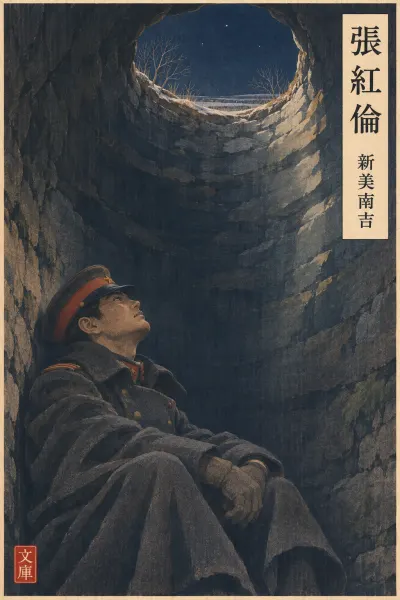
Chō Kōrin is a short children's story set during the Russo-Japanese War, a few days before the great battle at Hōten (Mukden) in 1905. Major Aoki, a Japanese battalion commander, falls into a deep, dry well while inspecting his sentries at night. He dares not shout, because Russian scouts may be near. What follows is a quiet story about a debt of kindness between a Japanese officer and the son of a poor Chinese farmer, and about what that kindness means when their paths cross again years later. Niimi Nankichi tells it in a gentle です/ます narrator's voice, written largely in hiragana for young readers. The drama is emotional rather than military: hunger and fear at the bottom of the well, warmth in a poor farmhouse, and a small mystery in a city office. The narration is approachable, but the text is rated N2. The hiragana-heavy writing makes word boundaries hard to spot. The major speaks in brisk, masculine Japanese, Kōrin's later speech is deliberately broken, and the story closes with a very humble, formal letter. Each voice teaches a different register.
Contents
Easier versions
This story is also retold in simpler Japanese. Reading an easier version first makes the original much more approachable.
Before you read
- The narration is written mostly in hiragana, so read aloud slowly and watch for particles (は, が, を, に) to find where words end. A few key kanji words are worth learning first: 井戸 (well), 少佐 (major), 時計 (watch), and 手紙 (letter).
- Learn to recognise the three voices. The narrator uses polite です/ます. Major Aoki uses plain masculine speech such as おれ, わし, きみ, and commands with 〜たまえ ("do ~", said by a superior). Kōrin's letter uses humble, formal language.
- The adult Kōrin speaks intentionally broken Japanese. 「わたし、張紅倫ない」 means "I am not Chō Kōrin", using ない in place of ではありません. Don't try to parse it as standard grammar.
- In the well scenes, watch for expressions of guessing and hoping: 〜かどうか (whether or not), 〜にきまっている (surely, must be), 〜かもしれない (might), and 〜てくれないものか (if only someone would…). They carry the major's shifting hopes and fears.
- Note 〜ながら used concessively ("although", not "while doing") and 〜のために marking a cause. In the ending, these help you follow Kōrin's reasons for what he did.
Words to know
The most useful words from the notes across the story.
| Word | Meaning | JLPT |
|---|---|---|
| 古井戸ふるいど | old wellKun reading ふる for 古 combines with 井戸 (well). | — |
| 警備けいび | guard duty, security警備につく means 'to go on guard duty'. | N2 |
| かかわるかかわる | to affect, to harmdictionary form: 関わる名前にかかわる means 'to damage one's reputation'. | N2 |
| はなばなしくはなばなしい | glorious, brilliantdictionary form: はなばなしい華々しい; often used of a dramatic, honourable death in battle. | N1 |
| 空腹くうふく | hunger, an empty stomachLiterally 'empty belly'. It is more formal than おなかがすく. | N1 |
| 地獄じごく | HellIts opposite is 極楽 'Paradise'. | N1 |
| みすぼらしいみすぼらしい | shabby, wretched-looking | N1 |
| 看護かんご | nursing, caring for the sickCompare 看護師 'nurse'. | N1 |
| 始末しまつ | putting in order, tidying upIn other contexts it can also mean 'outcome' or 'dealing with a problem'. | N1 |
| 歩哨ほしょう | sentry, lookoutMilitary term for a soldier posted on guard duty. | — |
| 少佐しょうさ | major (military rank)少 (lesser) + 佐 (field officer); 中佐 is lieutenant colonel, 大佐 is colonel. | — |
| 見まわってみまわる | to make the rounds, to patroldictionary form: 見まわるUsually written 見回る. | — |
| 異状いじょう | something wrong, anything unusual異状なし ('nothing to report') is a set phrase in military and police reports. | — |
| ふみはずしてふみはずす | to miss one's footingdictionary form: ふみはずす踏み外す: 踏む (step) + 外す (miss). | — |
| 斥候せっこう | scout, reconnaissance soldierOld-fashioned military word. | — |
Plot summary
Show the full summary (contains spoilers)
Days before the Battle of Hōten, Major Aoki falls into a dry well at night. Fearing Russian scouts, he stays silent. A whole day passes, and he begins to dread a pointless death. Half-conscious from hunger, he is pulled out by a Chinese farmer and his son, Chō Kōrin. Kōrin nurses him in their poor home, and the two talk about Japan and the major's own son. When the father warns that the villagers plan to sell the major to the Russians, Aoki thanks the family, gives Kōrin his pocket watch, and slips away. Ten years later, a young Chinese peddler selling pens visits the major's company. Aoki recognises the watch, but the young man denies being Kōrin. The next day a letter arrives. It was Kōrin, who hid his identity so that the major's reputation would not suffer for having been saved by a Chinese boy.
About the author
Niimi Nankichi was a Japanese writer of children's stories, poems and songs from Handa in Aichi Prefecture. The countryside of that area is widely thought to lie behind the village and hills of Gongitsune. He began writing as a young man. Gongitsune appeared in the children's magazine Akai Tori (The Red Bird), edited by Suzuki Miekichi. Niimi later worked as a teacher at a girls' school while continuing to write. His health was poor, and he died of tuberculosis while still in his twenties. Many of his works were published and became widely known only after his death. Besides Gongitsune, he is especially remembered for Tebukuro wo Kai ni (Buying Mittens).