Part 2 of 3 · JLPT N2
張紅倫 Chōkōrin, part 2: Rescued from the Well
In this part
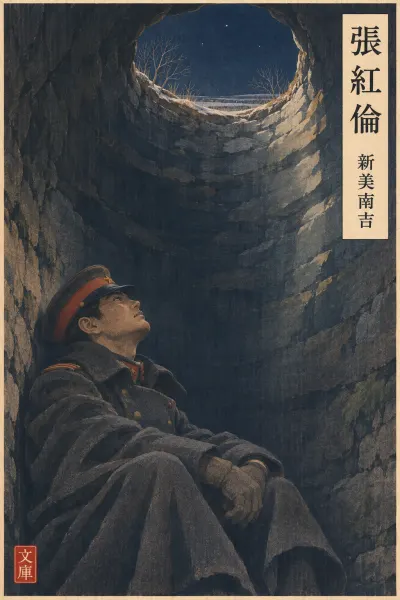
Exhausted and starving, Major Aoki drifts out of consciousness at the bottom of the well until a Chinese farmer and his son, Chō Kōrin, pull him out. In their poor farmhouse Kōrin nurses him, and the two talk about Japan and the major's own son. A few days later the guns fall silent, and the father, Chō Gyogai, rushes in to warn that the villagers plan to sell the major to the Russians that very night.
AI translation · independently checked
と、こうも思いました。That was another thing he thought.
まもなく少佐は、つかれと空腹のために、ねむりにおちいりました。Before long, worn out and hungry, the major fell asleep.
それは、ねむりといえばねむりでしたが、ほとんど気絶したもおなじようなものでした。It was sleep, if you could call it that, but it was really much closer to fainting.
それからいく時間たったでしょう。How many hours passed after that, no one could say.
少佐の耳に、ふと、人の声がきこえてきました。Suddenly the major heard a human voice.
しかし、少佐はまだ半分うとうとして、はっきりめざめることができませんでした。But he was still half dozing and could not properly wake up.
「ははあ、地獄から、おにがむかえにきたのかな」"Aha, so a demon has come up from Hell to fetch me, has it?"
少佐は、そんなことを、ゆめのように考えていました。That was the kind of thing the major was thinking, as if in a dream.
すると、耳もとの人声がだんだんはっきりしてきました。Then the voice close to his ear grew clearer and clearer.
「しっかりなさい」"Pull yourself together!"
と、中国語でいいます。it said, in Chinese.
少佐は、中国語をすこし知っていました。The major knew a little Chinese.
そのことばで、びっくりして目をひらきました。Startled by those words, he opened his eyes.
「気がつきましたか。たすけてあげます」"You've come round? I'm going to help you."
と、そばに立っていた男が、こういってだきおこしてくれました。So said the man standing beside him, and he helped the major sit up.
「ありがとう、ありがとう」"Thank you, thank you."
と、少佐はこたえようとしましたが、のどがこわばって、声が出ません。The major tried to answer with these words, but his throat was stiff and no voice came out.
男は、井戸の口からつりさげたなわのはしで、少佐の胴体をしばっておいて、じぶんがさきにそのなわにつかまってのぼり、それから、なわをたぐって、少佐を井戸の外へひきあげました。The man tied the end of a rope, which hung down from the mouth of the well, around the major's body; then he gripped the rope and climbed up first himself, and after that he hauled in the rope hand over hand and pulled the major out of the well.
少佐は、ぎらぎらした昼の天地が目にはいるといっしょに、ああ、たすかったと思いましたが、そのまま、また、気をうしなってしまいました。The moment the dazzling midday world met his eyes, the major thought, "Ah, I'm saved!" but then and there he lost consciousness again.
二Two
少佐がかつぎこまれたのは、ほったて小屋のようにみすぼらしい、中国人の百しょうの家で、張魚凱というおやじさんと、張紅倫というむすことふたりきりの、まずしいくらしでした。The place the major was carried into was the home of a Chinese farmer, as shabby as a hastily built shack; there an old man named Chō Gyogai and his son, Chō Kōrin, lived a poor life, just the two of them.
あい色の中国服をきた十三、四の少年の紅倫は、少佐のまくらもとにすわって、看護してくれました。Kōrin, a boy of thirteen or fourteen in indigo Chinese clothes, sat by the major's pillow and nursed him.
紅倫は、大きなどんぶりに、きれいな水をいっぱいくんでもってきて、いいました。Kōrin filled a big bowl to the brim with clean water, brought it over and said:
「わたしが、あの畑の道を通りかかると、人のうめき声がきこえました。おかしいなと思ってあたりをさがしまわっていたら、井戸のそこにあなたがたおれていたので、走ってかえって、おとうさんにいったんです。それから、おとうさんとわたしとで、なわをもっていって、ひきあげたのです」"I was going along the path by that field when I heard someone groaning. I thought it was strange and searched all around, and there you were, lying at the bottom of the well, so I ran home and told my father. Then my father and I took a rope there and pulled you up."
紅倫はうれしそうに目をかがやかしながら話しました。Kōrin told the story with his eyes shining happily.
少佐はどんぶりの水をごくごくのんでは、うむうむと、いちいち感謝をこめてうなずきました。The major gulped down the water in the bowl, nodding "Mm, mm" each time, full of gratitude.
それから、紅倫は、日本のことをいろいろたずねました。After that, Kōrin asked him all sorts of things about Japan.
少佐が、内地に待っている、紅倫とおない年くらいのじぶんの子どものことを話してやると、紅倫はたいへんよろこびました。When the major told him about his own child waiting back home in Japan, about the same age as Kōrin, Kōrin was overjoyed.
わたしも日本へいってみたい、そして、あなたのお子さんとお友だちになりたいと、いいました。He said that he wanted to go to Japan too, and make friends with the major's child.
少佐はこんな話をするたびに、日本のことを思いうかべては、小さなまどから、うらの畑のむこうを見つめました。Every time they talked like this, the major would picture Japan and gaze out of the little window, past the field behind the house.
外では、遠くで、ドドン、ドドンと、砲声がひっきりなしにきこえました。Outside, far away, the boom, boom of the guns sounded without a pause.
そのまま四、五日たった、ある夕がたのことでした。It was one evening, after four or five days had passed like that.
もう戦いもすんだのか、砲声もぱったりやみました。Perhaps the fighting was already over, for the guns had suddenly stopped.
まどから見える空がまっかにやけて、へんにさびしいながめでした。The sky seen from the window burned bright red; it was a strangely lonely sight.
いちんち畑ではたらいていた張魚凱が、かえってきました。Chō Gyogai, who had been working in the fields all day, came home.
そして少佐のまくらもとにそそくさとすわりこんで、Then he hurriedly sat down by the major's pillow and said,
「こまったことになりました。村のやつらが、あなたをロシア兵に売ろうといいます。こんばん、みんなで、あなたをつかまえにくるらしいです。早くここをにげてください。まだ動くにはごむりでしょうが、一刻もぐずぐずしてはいられません。早くしてください。早く」"Something bad has happened. The village people are saying they'll sell you to the Russian soldiers. It seems they're all coming to catch you tonight. Please get away from here, quickly. It's probably too much for you to move yet, but we can't waste a single moment. Please hurry. Quickly!"
Vocabulary
| Word | Meaning | JLPT |
|---|---|---|
| 空腹くうふく | hunger, an empty stomachLiterally 'empty belly'. It is more formal than おなかがすく. | N1 |
| 気絶きぜつ | fainting, losing consciousnessUsed with する: 気絶する 'to faint'. | — |
| うとうとうとうと | dozing, drowsyA mimetic word for light, nodding sleep. | — |
| 地獄じごく | HellIts opposite is 極楽 'Paradise'. | N1 |
| こわばってこわばる | to stiffen, to go rigiddictionary form: こわばるUsed for muscles, faces and throats. Here it shows his throat is too dry and stiff to speak. | — |
| たぐってたぐる | to haul in (a rope) hand over handdictionary form: 手繰る | — |
| 胴体どうたい | torso, trunk of the body | — |
| みすぼらしいみすぼらしい | shabby, wretched-looking | N1 |
| ほったて小屋ほったてごや | a crude shack, a hutdictionary form: 掘っ建て小屋This is a hut with its posts sunk straight into the ground, with no foundation. | — |
| 看護かんご | nursing, caring for the sickCompare 看護師 'nurse'. | N1 |
| 内地ないち | the home country (Japan proper)This is a historical term for the Japanese homeland, as opposed to colonies or overseas fronts. | — |
| ひっきりなしにひっきりなし | without a break, constantlydictionary form: ひっきりなし | — |
| ぱったりぱったり | suddenly and completely (of stopping)This word is often used with やむ or 止まる. | — |
| 一刻いっこく | a moment, an instantIn the pattern 一刻も〜ない it means 'not even a moment'. | — |
Grammar
〜のために (cause) N3 because of, due to
After a noun, のために can give a cause rather than a purpose. Here, tiredness and hunger are the reason he falls asleep.
つかれと空腹のために、ねむりにおちいりました
Worn out and hungry, he fell asleep.
AといえばAだが N2 it is A, if you call it that, but…
Repeating the noun around といえば grants that the label fits, but only loosely. The が clause then gives a more accurate description.
それは、ねむりといえばねむりでしたが、ほとんど気絶したもおなじようなものでした
It was sleep, if you could call it that, but it was really much closer to fainting.
〜てくれる N4 do something for (me / the person in focus)
This pattern marks an action as a kindness done for the major. The narrator views it from the major's side, showing gratitude toward his rescuers.
こういってだきおこしてくれました
So he said, and he helped him sit up.
〜ておく N4 do something in advance / in preparation
The man ties the rope around the major first. This sets things up so that he can climb out and then haul the major up.
少佐の胴体をしばっておいて
having tied the rope around the major's body first
〜たびに / 〜ては N3 every time… / would do… (repeatedly)
たびに means 'each time'. The て-form + は marks an action that happens over and over, so together they describe a habit: each time they talked, he would picture Japan and gaze outside.
少佐はこんな話をするたびに、日本のことを思いうかべては、小さなまどから、うらの畑のむこうを見つめました
Every time they talked like this, the major would picture Japan and gaze out of the little window, past the field behind the house.
〜てはいられない N2 cannot afford to keep doing…
This pattern says the situation does not allow the action. Paired with 一刻も, it stresses that there is not a single moment to waste.
一刻もぐずぐずしてはいられません
We can't waste a single moment.