Part 3 of 3 · JLPT N2
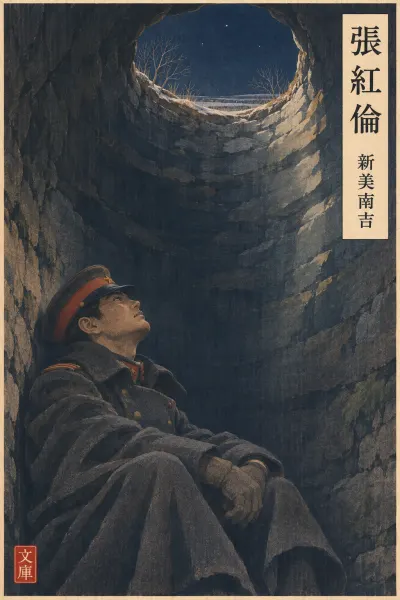
張紅倫 Chōkōrin, part 3: The Major Meets the Pen Seller
In this part
The major thanks the Chō family, gives Kōrin his pocket watch and slips back toward Hōten. Ten years later a young Chinese peddler comes to the major's company to sell pens, and the major recognises the watch, but the young man denies being Kōrin. The next day a letter arrives: it was Kōrin, who hid the truth so that the major's good name would not suffer for having been saved by a Chinese boy.
AI translation · independently checked
と、せきたてます。he urged him.
少佐は、もうどうやら歩けそうなので、これまでの礼をあつくのべ、てばやく服装をととのえて、紅倫の家を出ました。By now the major felt he could probably walk, so he thanked them warmly for all they had done, quickly put his clothes in order and left Kōrin's house.
畑道に出て、ふりかえってみると、紅倫がせど口から顔を出して、さびしそうに少佐のほうを見つめていました。When he reached the path through the fields and looked back, he saw Kōrin peeking out of the back door, gazing after him with a lonely look.
少佐はまた、ひきかえしていって、大きな懐中時計をはずして、紅倫の手ににぎらせました。The major turned back once more, took off his big pocket watch and pressed it into Kōrin's hand.
だんだん暗くなっていく畑の上を、少佐は、身をかがめて、奉天をめあてに、野ねずみのようにかけていきました。Over the fields, which were growing darker and darker, the major ran bent low, heading for Hōten, like a field mouse.
三Three
戦争がおわって、少佐も内地へかえりました。The war ended, and the major went home to Japan too.
その後、少佐は退役して、ある都会の会社につとめました。Later the major retired from the army and went to work for a company in a certain city.
少佐は、たびたび張親子を思い出して、人びとにその話をしました。The major often thought of Chō and his son, and he told people their story.
張親子へはなんべんも手紙を送りました。He sent letter after letter to Chō and his son.
けれども、先方ではそれが読めなかったのか、一どもへんじをくれませんでした。But perhaps they could not read them, for not once did they send a reply.
戦争がすんでから、十年もたちました。Ten whole years passed after the war was over.
少佐は、その会社の、かなり上役になり、むすこさんもりっぱな青年になりました。The major rose to quite a high position in the company, and his son grew into a fine young man.
紅倫もきっと、たくましいわかものになったことだろうと、少佐はよくいいいいしました。"Kōrin must have grown into a strong young man too," the major would say again and again.
ある日の午後、会社の事務室へ、年わかい中国人がやってきました。One afternoon a young Chinese man came into the company office.
青い服に、麻のあみぐつをはいて、うでにバスケットをさげていました。He wore blue clothes and woven hemp shoes, and he had a basket hanging from his arm.
「こんにちは。万年筆いかが」"Hello. You want fountain pen?"
と、バスケットをあけて、受付の男の前につきだしました。he said, opening the basket and holding it out in front of the man at the reception desk.
「いらんよ」"Don't need any."
と受付の男は、うるさそうにはねつけました。The receptionist brushed him off, looking annoyed.
「墨いかが」"You want ink stick?"
「墨も筆もいらん。たくさんあるんだ」"No ink sticks, no brushes either. We've got plenty."
と、そのとき、おくのほうから青木少佐が出てきました。Just then, Major Aoki came out from the back.
「おい、万年筆を買ってやろう」"Hey, I'll buy a fountain pen from you."
と、少佐はいいました。said the major.
「万年筆やすい」"Fountain pen cheap."
あたりで仕事をしていた人も、少佐が万年筆を買うといいだしたので、ふたりのまわりによりたかってきました。When they heard the major say he would buy a pen, the people working nearby came and crowded around the two of them.
いろんな万年筆を少佐が手にとって見ているあいだ、中国人は、少佐の顔をじっと見まもっていました。While the major picked up one pen after another to look at them, the Chinese man kept his eyes fixed on the major's face.
「これを一本もらうよ。いくらだい」"I'll take one of these. How much?"
「一円と二十銭」"One yen and twenty sen."
少佐は金入れから、銀貨を出してわたしました。The major took some silver coins from his purse and handed them over.
中国人はバスケットの始末をして、ていねいにおじぎをして、出ていこうとしました。The Chinese man put his basket in order, bowed politely and started to leave.
そのとき、中国人は、ポケットから懐中時計をつまみ出して、時間を見ました。At that moment he took a pocket watch out of his pocket and checked the time.
少佐は、ふとそれに目をとめて、The major happened to notice it, and
「あ、ちょっと待ちたまえ。その時計を見せてくれないか」"Ah, wait a moment. Would you let me see that watch?"
「とけい?」"Watch?"
中国人は、なぜそんなことをいうのか、ふにおちないようすで、おずおずさし出しました。Puzzled as to why he would ask such a thing, the Chinese man timidly held it out.
少佐が手にとってみますと、それは、たしかに、十年まえ、じぶんが張紅倫にやった時計です。When the major took it in his hand, it was, without a doubt, the very watch he had given Chō Kōrin ten years before.
「きみ、張紅倫というんじゃないかい」"Your name wouldn't be Chō Kōrin, would it?"
「えっ!」と、中国人のわかものは、びっくりしたようにいいましたが、すぐ、「わたし、張紅倫ない」"Eh!" said the young Chinese man, as if startled, but at once he said, "Me, not Chō Kōrin,"
と、くびをふりました。and shook his head.
「いや、きみは紅倫君だろう。わしが古井戸の中に落ちたのを、すくってくれたことを、おぼえているだろう? わしは、わかれるとき、この時計をきみにやったんだ」"No, you're Kōrin, aren't you? You remember saving me when I fell into the old well, don't you? When we parted, I gave you this watch."
「わたし、紅倫ない。あなたのようなえらい人、あなに落ちることない」"Me, not Kōrin. Great man like you, never fall in hole."
といってききません。he said, and would not budge.
「じゃあ、この時計はどうして手に入れたんだ」"Then how did you come by this watch?"
「買った」"Bought."
「買った? 買ったのか。そうか。それにしてもよくにた時計があるもんだな。ともかくきみは紅倫にそっくりだよ。へんだね。いや、失礼、よびとめちゃって」"Bought it? You bought it. I see. Still, fancy there being a watch so very like it. Anyway, you're the image of Kōrin. Strange. Well, excuse me for stopping you."
「さよなら」"Goodbye."
中国人はもう一ぺん、ぺこんとおじぎをして、出ていきました。The Chinese man gave one more quick bow and went out.
そのよく日、会社へ、少佐にあてて無名の手紙がきました。The next day an unsigned letter addressed to the major arrived at the company.
あけてみますと、読みにくい中国語で、When he opened it, he found, in Chinese that was hard to read,
『わたくしは紅倫です。あの古井戸からおすくいしてから、もう十年もすぎましたこんにち、あなたにおあいするなんて、ゆめのような気がしました。'I am Kōrin. Now that ten whole years have passed since I helped you out of that old well, meeting you today felt like a dream.
よく、わたくしをおわすれにならないでいてくださいました。わたくしの父はさく年死にました。How kind of you not to have forgotten me. My father died last year.
わたくしはあなたとお話がしたい。けれど、お話したら、中国人のわたくしに、軍人だったあなたが古井戸の中からすくわれたことがわかると、今の日本では、あなたのお名まえにかかわるでしょう。I want to talk with you. But if I did, people would learn that you, a former soldier, were rescued from the old well by a Chinese like me, and in Japan as it is now, that would harm your good name.
だから、わたくしはあなたにうそをつきました。わたくしは、あすは、中国へかえることにしていたところです。さよなら、おだいじに。さよなら』That is why I lied to you. I had already arranged to go back to China tomorrow. Goodbye, and please take care of yourself. Goodbye.'
と、だいたい、そういう意味のことが書いてありました。That, more or less, was what was written.
Vocabulary
| Word | Meaning | JLPT |
|---|---|---|
| せきたてますせきたてる | to hurry someone along, to urgedictionary form: 急き立てるUsed when you press someone to act quickly. | — |
| 礼をあつくのべれいをのべる | to express one's thanksdictionary form: 礼を述べるあつく (厚く) means 'warmly, deeply'. It is a formal phrase. | — |
| せど口せどぐち | back doordictionary form: 背戸口Old-fashioned word for the rear entrance of a house. | — |
| 懐中時計かいちゅうどけい | pocket watch懐中 means 'in one's pocket or bosom'. 時計 becomes どけい here by rendaku. | — |
| 退役たいえき | retirement from military service | — |
| 先方せんぽう | the other party, theyA polite, rather formal way to refer to the people one is dealing with. | — |
| 上役うわやく | superior, senior positionNote the reading うわ, not うえ. | — |
| はねつけましたはねつける | to refuse flatly, to brush offdictionary form: 撥ね付ける | — |
| よりたかってよりたかる | to gather around, to crowd arounddictionary form: 寄りたかる | — |
| 始末しまつ | putting in order, tidying upIn other contexts it can also mean 'outcome' or 'dealing with a problem'. | N1 |
| ふにおちないふにおちない | puzzled, unable to make sense of somethingdictionary form: 腑に落ちない腑 means 'guts'. The idea is that something doesn't settle in your stomach. | — |
| おずおずおずおず | timidly, hesitantly | — |
| 古井戸ふるいど | old wellThis is the old well the major fell into earlier in the story. | — |
| かかわるかかわる | to affect, to harmdictionary form: 関わる名前にかかわる means 'to damage one's reputation'. | N2 |
Grammar
〜そう (appearance / likelihood) N4 looks like, seems likely to
Attached to a verb stem or adjective stem, そう expresses how something looks or seems likely. 歩けそう means 'it looked as if he could walk', and さびしそう means 'looking lonely'.
少佐は、もうどうやら歩けそうなので
By now the major felt he could probably walk, so
〜ことだろう N3 must have…, surely…
ことだろう after a plain verb expresses a confident guess or heartfelt imagining about something the speaker cannot see. Here the major pictures how Kōrin has grown up.
紅倫もきっと、たくましいわかものになったことだろう
Kōrin must have grown into a strong young man too
〜たまえ N1 do… (command from a superior)
Attached to the verb stem, たまえ is an old-fashioned masculine command that a man of higher status uses toward someone below him. It fits the major's slightly paternal manner.
あ、ちょっと待ちたまえ。
Ah, wait a moment.
〜のか (guessing a reason) N3 perhaps because…
A clause ending in のか placed in the middle of a sentence offers a possible reason that the speaker is unsure of. Here it suggests why no reply ever came.
先方ではそれが読めなかったのか、一どもへんじをくれませんでした。
But perhaps they could not read them, for not once did they send a reply.
〜ことにしていたところです N3 had (already) decided to…
ことにする means 'to decide to do'. ことにしている shows that the decision is already settled, and ところです adds that the plan was in place at exactly that moment.
わたくしは、あすは、中国へかえることにしていたところです。
I had already arranged to go back to China tomorrow.
〜ちゃう (〜てしまう) N4 casual form of 〜てしまう
ちゃって is the spoken contraction of てしまって. Here it adds a note of regret: the major apologises for having stopped the young man for nothing.
いや、失礼、よびとめちゃって
Well, excuse me for stopping you.