 N3 · easy
Simplified retelling · JLPT N3
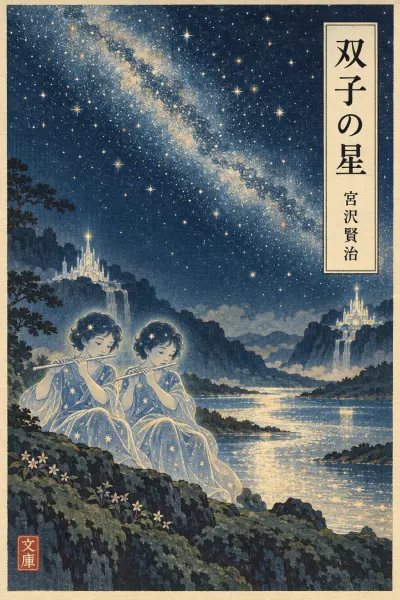
双子の星 Futago no Hoshi in easy Japanese (N3)
This is our own simplified retelling of The Star Twins by the Silver River, written for N3 learners and checked word by word against the N3 vocabulary list. A few story words and grammar patterns go beyond N3; the notes below give each one's level. It keeps the characters, events and ending of the original. When it feels easy, move on to the original text.
The story in brief
The twin stars Chunse and Pōse save a crow and a scorpion that have wounded each other in a fight, then help the scorpion walk home until Pōse collapses from exhaustion. The scorpion repents, and the lightning brings the King's medicine, so the twins return in time to play their flutes. Later a lying comet drops them into the sea, but an old sea-serpent and the kind King of the Sea send them home on a waterspout, and the comet falls to become a sea cucumber.
AI translation · independently checked
天の川の西に、小さな青いほしが二つ見えます。West of the Milky Way, two small blue stars can be seen.
チュンセとポウセという、ふたごのほしです。They are twin stars, called Chunse and Pōse.
二人は小さなおみやに住んでいます。The two of them live in a little shrine-palace.
毎晩おみやに座って、ほしめぐりの歌に合わせて、銀のふえを吹きます。Every night they sit in their shrine and play silver flutes in time with the Star-Circling Song.
それが二人の仕事でした。That was the two boys' work.
ある朝、二人は空のいずみへ遊びに行きました。One morning the two went to play at the spring in the sky.
そこへ大きなからすが来て、いずみの水を飲みました。Just then a great crow came along and drank the water from the spring.
すると、さそりが歌を歌いながら来ました。And then a scorpion came along, singing a song.
「わたしを知らない者は、ばかな鳥だ」という歌です。It was a song that went, "Whoever does not know me is a stupid bird!"
からすはとても怒りました。The crow grew very angry.
さそりも水を飲みながら、からすの悪口を言いました。The scorpion, too, drank the water while saying nasty things about the crow.
二人は止めようとしましたが、からすとさそりはけんかを始めました。The two boys tried to stop them, but the crow and the scorpion began to fight.
からすはさそりの頭をつつきました。The crow pecked at the scorpion's head.
さそりはどくのあるしっぽで、からすのむねをさしました。The scorpion stung the crow in the breast with its poisonous tail.
そして、両方とも倒れてしまいました。And then both of them fell down.
チュンセは急いでからすのきずに口をつけて、どくを吸って出しました。Chunse hurried to put his mouth to the crow's wound and sucked out the poison.
すると、からすは気がつきました。At that, the crow came to.
二人はきずを洗ってやって、「もうけんかをしてはいけません」と言いました。The two boys washed its wound for it and said, "You must never fight again."
からすは何度もお礼を言って、帰って行きました。The crow thanked them again and again, and went off home.
次に二人は、さそりのきずも洗いました。Next, the two boys washed the scorpion's wound as well.
昼ごろ、さそりは目を開けました。Around noon, the scorpion opened its eyes.
「家まで送ってください」とさそりは頼みました。"Please take me all the way home," the scorpion begged.
二人は両方からさそりをささえて、歩き始めました。The two boys held the scorpion up from either side and began to walk.
さそりの体は二人の十ばいぐらいあって、とても重いです。The scorpion's body was about ten times the size of theirs, and it was terribly heavy.
二人はかたがとても痛くなりました。The boys' shoulders began to hurt very much.
でも、何も言わずに一歩ずつ歩きました。Yet they walked on, one step at a time, without saying a word.
六時間たっても、まだ着きません。Even after six hours had passed, they still had not arrived.
とうとう日が西の山にしずみました。At last the sun sank behind the western mountains.
二人はもうおみやに帰らなければなりません。The two boys had to go back to their shrine now.
ポウセは疲れて、倒れてしまいました。Pōse was so tired that he collapsed.
さそりはないて言いました。The scorpion wept and said:
「許してください。わたしはばかでした。これから心を変えます。」"Please forgive me. I have been a fool. From now on I shall change my heart."
そのとき、いなずまが飛んで来ました。Just then, a flash of lightning came flying toward them.
「王様に言われて、迎えに来ました。王様はとても喜んでいらっしゃいます。」いなずまは、王様の薬をさそりにわたしました。"The King told me to come and fetch you. His Majesty is very pleased." The lightning handed the King's medicine to the scorpion.
二人は「さっきの約束を忘れないでください」と言って、いなずまにつかまりました。The two boys said, "Please don't forget the promise you just made," and took hold of the lightning.
二人はいずみで体を洗って、新しい着物と靴をもらいました。They bathed in the spring and were given new clothes and new shoes.
痛みも疲れも、すっかりなくなりました。Their pain and their weariness vanished completely.
そして、ちょうど間に合って、ふえを吹き始めました。And so, just in time, they began to play their flutes.
ある雨の夜、二人がふえを吹いていると、大きなすいせいが来ました。One rainy night, while the two were playing their flutes, a great comet came along.
「今夜はくもで、だれもほしを見ていない。旅に行こう。王様もいいとおっしゃったよ。」二人は少ししんぱいでした。"Tonight it's cloudy, so no one's watching the stars. Let's go on a journey. The King said it's fine, you know." The two boys felt a little uneasy.
でも、すいせいが王様にやくそくしたので、しっぽにつかまりました。But because the comet had made a promise to the King, they took hold of its tail.
遠くまで来たとき、すいせいは急に笑って、二人を落としてしまいました。When they had come a long way, the comet suddenly laughed and shook the two of them off.
「さっきのやくそくは、みんなうそだ。」二人はしっかり手をつないで、暗い海に落ちました。"That promise just now was all a lie!" Holding each other's hands tightly, the two boys fell into the dark sea.
海のそこには、赤いひとでがたくさんいました。On the bottom of the sea there were many red starfish.
「ひとではもと、悪いことをしたほしだ。お前たちも新しいひとでだ。」二人は悲しくなって、空の王様にさよならを言いました。"Starfish used to be stars that did bad things. You two are new starfish too." The two boys grew sad and said goodbye to the King of the Sky.
そこへ大きなくじらが来ました。Just then a huge whale came along.
「天から出された書き付けを見せろ。持っていないなら、飲んでしまうぞ。」"Show me your pass from Heaven! If you haven't got one, I'll swallow you whole!"
そのとき、年を取ったうみへびが来ました。At that moment an old sea-serpent arrived.
うみへびは二人の頭の上の光を見て、「このお二人は悪いほしではない」と言いました。The sea-serpent saw the light above the two boys' heads and said, "These two honoured gentlemen are not wicked stars."
そして、二人を海の王様の所へあんないしました。Then it guided the two of them to the King of the Sea.
白いひげの王様は、にこにこして言いました。The white-bearded King smiled warmly and said:
「あなた方がさそりの心を直した話は、ここでも有名です。すぐにたつまきに、空へ送らせましょう。」海の王様は、空の王様を自分の先生だと言いました。"The story of how you set the scorpion's heart right is famous even here. I shall have a waterspout carry you back to the sky at once." The King of the Sea said that the King of the Sky was his own teacher.
二人はたつまきの頭に乗って、空へ高く上って行きました。The two boys rode on the head of the waterspout and rose high into the sky.
ひとでたちは「空の王様によろしく」と頼みました。The starfish asked them, "Please give our regards to the King of the Sky."
途中で、すいせいがばらばらになって、海へ落ちて行くのが見えました。On the way, they saw the comet break into pieces and fall down into the sea.
「あいつはなまこになりますよ」とたつまきが言いました。"That fellow is going to become a sea cucumber," said the waterspout.
二人はおみやに帰って、空の王様に言いました。The two boys returned to their shrine and spoke to the King of the Sky.
「仕事を休んで、すみませんでした。海の王様がよろしくと言っていました。ひとでたちと、できればなまこも、許してあげてください。」そして二人は、また銀のふえを吹き始めました。"We are sorry for leaving our work. The King of the Sea sends his regards. Please forgive the starfish, and, if you can, the sea cucumber too." And then the two began once more to play their silver flutes.
東の空が、だんだん明るくなってきました。Little by little, the eastern sky grew bright.
Vocabulary
| Word | Meaning | JLPT |
|---|---|---|
| おみやおみや | shrine; small sacred dwellingdictionary form: お宮Usually a Shinto shrine; here the twins' little star-palace. Kanji 宮 as in 宮沢. | N1 |
| ほしめぐりほしめぐり | the circling of the starsdictionary form: 星めぐりめぐり comes from 巡る (to go round, to tour). | — |
| いずみいずみ | spring (of water)dictionary form: 泉 | N3 |
| 悪口わるぐち | nasty remarks, insultsUsed as 〜の悪口を言う: to speak ill of someone. | N3 |
| さしましたさす | to sting, to stabdictionary form: 刺すWritten 刺す for stinging or piercing; different from 指す (to point). | N2 |
| 気がつきましたきがつく | to come to, regain consciousnessdictionary form: 気がつくAlso commonly means 'to notice'. | — |
| ささえてささえる | to hold up, supportdictionary form: 支える | N3 |
| ばいばい | times (as much)dictionary form: 倍十倍 = ten times; 二倍 = double. | N4 |
| しずみましたしずむ | to sink, to set (of the sun)dictionary form: 沈む | N3 |
| 許してゆるす | to forgivedictionary form: 許す | N3 |
| 間に合ってまにあう | to be in timedictionary form: 間に合う | N4 |
| すいせいすいせい | cometdictionary form: 彗星 | — |
| 書き付けかきつけ | written pass, documentSomewhat old-fashioned word for an official note or certificate. | — |
| たつまきたつまき | waterspout, tornadodictionary form: 竜巻Literally 'dragon coil'; at sea it is a waterspout. | — |
Grammar
〜ようとする N3 try to ~, attempt to ~
The volitional form 止めよう plus とする shows an attempt. Followed by が, it signals that the attempt did not succeed.
二人は止めようとしましたが、からすとさそりはけんかを始めました。
The two boys tried to stop them, but the crow and the scorpion began to fight.
〜ずに N3 without doing ~
The negative stem 言わ plus ずに is a written equivalent of 言わないで. It describes how the main action is done.
何も言わずに一歩ずつ歩きました。
They walked on, one step at a time, without saying a word.
〜てしまう N4 end up ~; do completely (often with regret)
Attached to the te-form, it stresses that something happened completely or unfortunately. In the whale's threat 飲んでしまうぞ, it means 'I'll swallow you whole.'
そして、両方とも倒れてしまいました。
And then both of them fell down.
〜なければならない N4 must ~, have to ~
The negative stem plus なければならない expresses duty. The twins must return in time for their nightly work.
二人はもうおみやに帰らなければなりません。
The two boys had to go back to their shrine now.
Causative 〜せる/させる N4 make or have someone do ~
送らせる is the causative of 送る. The person made to act is marked with に, so たつまきに送らせましょう means 'I will have the waterspout carry you.'
すぐにたつまきに、空へ送らせましょう。
I shall have a waterspout carry you back to the sky at once.
Honorific いらっしゃる / おっしゃる N4 respectful forms of いる and 言う
喜んでいらっしゃいます is the respectful form of 喜んでいます. The speaker uses it to show respect for the King. The comet likewise uses おっしゃった for the King's words.
王様はとても喜んでいらっしゃいます。
His Majesty is most pleased with you.