 N4 · easy
Simplified retelling · JLPT N4
双子の星 Futago no Hoshi in easy Japanese (N4)
This is our own simplified retelling of The Star Twins by the Silver River, written for N4 learners and checked word by word against the N4 vocabulary list. A few story words and grammar patterns go beyond N4; the notes below give each one's level. It keeps the characters, events and ending of the original. When it feels easy, move on to the N3 version or the original text.
The story in brief
The twin stars Chunse and Pōse stop a fight between the Great Crow and the Scorpion, nurse them both, and nearly fail at their nightly flute-playing to help the Scorpion home until the King sends help. Later a lying comet drops them into the sea, where a whale threatens them, but the sea-serpent king recognises their good deeds and sends them back to the sky. The comet falls into the sea and becomes sea cucumbers, and the twins return in time to play their flutes at dawn.
AI translation · independently checked
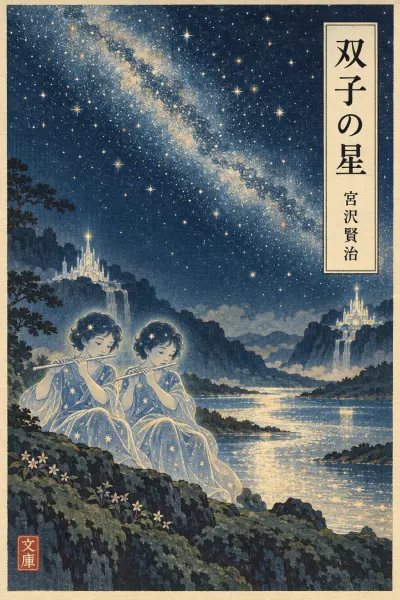
空の西のほうに、小さな青いほしが二つ見えます。Toward the west of the sky, two small blue stars can be seen.
ふたごのほしの、チュンセとポウセです。They are the twin stars, Chunse and Pōse.
二人は毎ばん、空のほしの歌といっしょに、ふえをふきます。Every night the two of them play their flutes along with the song of the stars in the sky.
それが二人の大切な仕事でした。That was the two boys' important work.
ある朝、二人は空のいけへ遊びに行きました。One morning, the two of them went to play at the pond in the sky.
そこへ大ガラスが来て、水をたくさん飲みました。Just then the Great Crow came along and drank a great deal of water.
すると、さそりが歌いながら来ました。Then the Scorpion came along, singing.
それは大ガラスをわらう歌でした。It was a song that mocked the Great Crow.
大ガラスはとてもおこりました。The Great Crow grew very angry.
二人は止めましたが、大ガラスとさそりはけんかを始めました。The two boys tried to stop them, but the Great Crow and the Scorpion began to fight.
さそりは頭に、大ガラスは体に、ひどいけがをしました。The Scorpion was badly hurt on the head, and the Great Crow on the body.
そして、二人ともたおれました。And then both of them fell to the ground.
チュンセは大ガラスのけがから、悪いちをすって出しました。Chunse sucked the bad blood out of the Great Crow's wound.
大ガラスは目を開けて、何度もお礼をいいました。The Great Crow opened his eyes and thanked him again and again.
「もうけんかはしません。」そして、家へ帰りました。"I won't fight any more." And then he went home.
二人は水で、さそりの頭をあらいました。The two boys washed the Scorpion's head with water.
昼に、さそりは目を開けました。At noon, the Scorpion opened its eyes.
「家まで送ってください。」"Please take me home."
さそりは二人の十ばいも大きくて、とても重いです。The Scorpion was ten times as big as the two of them, and very heavy.
二人は顔を赤くして、少しずつ歩きました。Their faces turning red, the two boys walked on little by little.
何時間も歩いて、体がとてもいたくなりました。They walked for hours and hours, and their bodies ached terribly.
日が西の山に入りました。The Sun sank behind the western mountains.
もう夜の仕事におくれます。Soon they would be late for their night's work.
ポウセはとうとうたおれました。At last Pōse collapsed.
さそりはなきました。The Scorpion wept.
「わたしが悪かったです。これからはよいさそりになります。やくそくします。」"It was my fault. From now on I will be a good scorpion. I promise."
その時、おうさまが、ひかる人を送りました。At that moment the King sent a shining messenger.
さそりはおうさまのくすりをもらいました。The Scorpion received the King's medicine.
二人は新しい服をもらって、仕事に間に合いました。The two boys were given new clothes and were in time for their work.
そして、ふえをふきました。And so they played their flutes.
あるばん、雨がふって、空は黒いくもでいっぱいでした。One night rain was falling, and the sky was full of black clouds.
そこへ、大きなほうきぼしが来ました。Just then a great comet came along.
「少し旅行に行こう。おうさまもいいといったよ。」"Let's go on a little trip. The King said it's all right, you know."
チュンセは「ほんとうですか」と聞きました。"Is that really true?" asked Chunse.
ほうきぼしは「うそなら、わたしの体が三つにわかれて、海におちてもいい」といいました。"If it's a lie, then let my body split into three and fall into the sea," said the comet.
二人はほうきぼしの後ろを、手で強く持ちました。The two boys held tight to the comet's tail with their hands.
遠くまで来た時、ほうきぼしはわらいました。When they had come a long way, the comet laughed.
「ははは、今のは全部うそだ。」そして、二人をおとしました。"Ha, ha, ha! All of that was a lie!" And he dropped the two of them.
二人はいっしょに、黒い海の中におちました。Together, the two boys fell down into the black sea.
でも、水の中でも、二人は大丈夫でした。But even in the water, the two of them were all right.
海の下には、赤いひとでがたくさんいました。At the bottom of the sea there were many red starfish.
「おまえたちも、悪いことをしておちて来たんだな。」二人はかなしくなって、空のおうさまに、おわかれのあいさつをしました。"So you've fallen down here for doing something bad too, eh?" The two boys grew sad and said their farewells to the King of the sky.
そこへ、大きなくじらが来ました。Just then a huge whale came along.
「空から来た紙を出せ。ないなら、食べるぞ。」くじらは口を大きく開けました。"Hand over the paper you brought from the sky! If you haven't got one, I'll eat you!" The whale opened its mouth wide.
その時、小さなうみへびが来ました。At that moment a small sea serpent came.
くじらはびっくりして、口を閉めました。The whale was startled and shut its mouth.
うみへびはいいました。The sea serpent said:
「この方たちの頭の上には、よいひかりがあります。悪い人ではありません。」"Above these gentlemen's heads there is a good light. They are not bad people."
うみへびのおうさまは、二人を知っていました。The king of the sea serpents knew the two boys.
「あなたたちがさそりの心をなおした話は、ここでも有名です。」おうさまは強い風で、二人を空へ送りました。"The story of how you mended the Scorpion's heart is well known even here." The king sent the two of them back to the sky on a strong wind.
ひとでたちは「わたしたちも、いつか空へ帰れるように、おうさまにたのんでください」といいました。The starfish said, "Please ask the King for us too, so that someday we may go back to the sky."
空へ行く時、ほうきぼしが三つにわかれて、海におちて行くのが見えました。As they rose toward the sky, they saw the comet split into three and fall down into the sea.
「あれは、なまこになります。」と風がいいました。"Those will become sea cucumbers," said the wind.
二人はうちに帰って、見えないおうさまに話しました。The two boys went back home and spoke to the unseen King.
「海のおうさまが、あいさつをつたえてほしいといっていました。ひとでとなまこも、いつか空に帰れるようにしてください。」"The King of the sea asked us to pass on his greetings. And please let the starfish and the sea cucumbers go back to the sky someday, too."
そして、二人はふえを取りました。And then the two of them took up their flutes.
東の空は、もう黄色くなっていました。The eastern sky had already turned yellow.
Vocabulary
| Word | Meaning | JLPT |
|---|---|---|
| ふたごふたご | twinsdictionary form: 双子双 means 'pair'; the title 双子の星 is 'The Twin Stars'. | N3 |
| ふえふえ | flute, pipedictionary form: 笛A flute is 'blown': ふえをふく (笛を吹く). | N3 |
| けんかけんか | fight, quarreldictionary form: 喧嘩けんかをする / けんかを始める. Used for both arguments and physical fights. | N4 |
| けがけが | injury, wounddictionary form: 怪我けがをする = to get hurt. | N4 |
| たおれましたたおれる | to fall down, collapsedictionary form: 倒れるUsed for people fainting or collapsing from exhaustion or injury. | N4 |
| おくれますおくれる | to be late (for)dictionary form: 遅れるThe thing you are late for takes に: 仕事におくれる. | N4 |
| やくそくやくそく | promisedictionary form: 約束やくそくする = to promise. | N4 |
| 間に合いましたまにあう | to be in time (for)dictionary form: 間に合うThe opposite of おくれる; also takes に. | N4 |
| ほうきぼしほうきぼし | cometdictionary form: 箒星Literally 'broom star', from the shape of its tail. The standard word is 彗星 (すいせい). | — |
| うそうそ | liedictionary form: 嘘うそをつく = to tell a lie. | N4 |
| ひとでひとで | starfishdictionary form: 海星Usually written in kana; in the story they are fallen stars. | — |
| くじらくじら | whaledictionary form: 鯨 | — |
| うみへびうみへび | sea serpent, sea snakedictionary form: 海蛇海 + へび (snake); へ becomes voiced as べ in some words, but not here. | — |
| つたえてつたえる | to pass on (a message), conveydictionary form: 伝えるあいさつをつたえる = to pass on someone's greetings. | N4 |
Grammar
〜ながら N4 while doing ~
Attached to the verb stem (歌い), it shows that one action happens at the same time as the main action. The main action here is 来ました.
さそりが歌いながら来ました。
The Scorpion came along, singing.
い-adjective 〜く + する N4 to make something ~
Changing an い-adjective to its く form and adding する means 'to make it that way'. 顔を赤くして means their faces became red from the effort.
二人は顔を赤くして、少しずつ歩きました。
Their faces turning red, the two boys walked on little by little.
〜なら / 〜てもいい N4 if ~ / it's all right if ~
なら sets up a condition ('if it is a lie'). 〜てもいい here expresses that the speaker is willing to accept the outcome ('I wouldn't mind if ~'), rather than giving permission. Together they form an oath: the comet swears he will accept punishment if he is lying.
うそなら、わたしの体が三つにわかれて、海におちてもいい
If it's a lie, then let my body split into three and fall into the sea.
〜んだな N4 so it's that ~, eh (explanatory)
んだ (のだ) gives an explanation or draws a conclusion from what the speaker sees, and な adds a rough, self-assured tone. The starfish assume the twins fell for doing something wrong.
おまえたちも、悪いことをしておちて来たんだな。
So you've fallen down here for doing something bad too, eh?
〜ように N4 so that ~
After a potential or plain verb, ように expresses a goal or hoped-for result. The starfish want the twins to ask the King so that they will be able to return to the sky.
わたしたちも、いつか空へ帰れるように、おうさまにたのんでください
Please ask the King for us too, so that someday we may go back to the sky.
〜てほしい N4 to want someone to do ~
The て-form plus ほしい expresses wanting another person to do something. Here the sea king wanted the twins to pass on his greetings, reported with といっていました.
海のおうさまが、あいさつをつたえてほしいといっていました。
The King of the sea asked us to pass on his greetings.