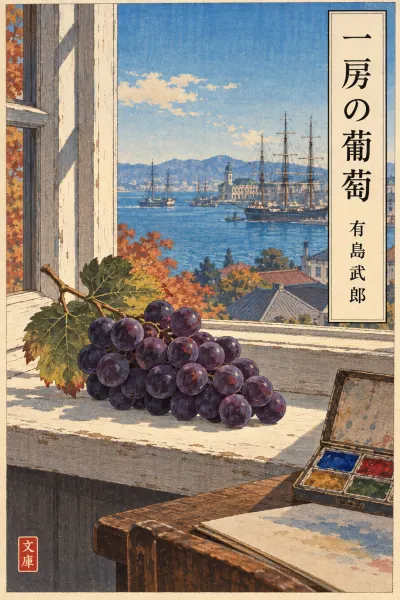
 N4 · easy
Simplified retelling · JLPT N4
一房の葡萄 Hitofusa no Budō in easy Japanese (N4)
This is our own simplified retelling of Grapes from the Teacher's Window, written for N4 learners and checked word by word against the N4 vocabulary list. A few story words and grammar patterns go beyond N4; the notes below give each one's level. It keeps the characters, events and ending of the original. When it feels easy, move on to the original text.
The story in brief
A boy at a school in a seaside town longs for his foreign classmate Jim's beautiful paints and secretly steals the blue and the red. The other children catch him and take him to his kind young teacher, who does not scold him but gives him a bunch of grapes from the vine outside her window. The next day she makes him and Jim friends and shares more grapes with them, and the narrator still remembers her beautiful white hands.
AI translation · independently checked
子供のぼくは、えを書くのがすきでした。When I was a child, I loved to draw pictures.
ぼくの学校は、海の近くの町にありました。My school was in a town near the sea.
その町には外国人がたくさん住んでいて、学校の先生も外国人ばかりでした。A great many foreigners lived in that town, and the teachers at my school were all foreigners too.
学校へ行く道から、青い海と大きなふねがたくさん見えました。From the road to school I could see the blue sea and many big ships.
とてもきれいでした。It was very beautiful.
ぼくは家に帰ると、その海のえを書きました。When I got home, I painted a picture of that sea.
でも、ぼくのえのぐでは、海のきれいな青と、ふねの赤い色が出せませんでした。But with my paints I could not make the lovely blue of the sea or the red colour of the ships.
クラスにジムがいました。There was a boy called Jim in my class.
ジムはぼくより二つ上の外国人の男の子で、体の大きい子でした。Jim was a foreign boy two years older than me, and he was big for his age.
ジムは外国のいいえのぐを持っていました。Jim had a set of fine paints from abroad.
とくに青と赤が、とてもうつくしかったです。The blue and the red, above all, were very beautiful.
ジムはえが下手でしたが、そのえのぐを使うと、えがきれいに見えました。Jim was bad at drawing, but when he used those paints, his pictures looked lovely.
ぼくはジムのえのぐがほしくなりました。I began to want Jim's paints.
毎日そのことばかり考えました。Every day I thought of nothing else.
でも、両親に頼むことはできませんでした。But I could not ask my parents for them.
ある秋の日でした。It was a day in autumn.
天気がよくて、空がとても青い日でした。The weather was fine, and the sky was very blue.
でも、ぼくの心は暗かったです。But my heart was dark.
心がいたいほど、えのぐがほしかったです。I wanted the paints so much that it made my heart ache.
昼ご飯の後、ほかの子供たちはみんな外で遊びました。After lunch, all the other children went outside to play.
でも、ぼくは一人で教室にいました。But I stayed in the classroom by myself.
ぼくはときどきジムのつくえを見ました。Every now and then I looked over at Jim's desk.
ベルが鳴りました。The bell rang.
ぼくはジムのつくえの所へ行って、つくえを開けました。I went over to Jim's desk and opened it.
だれも見ていません。No one was watching.
ぼくは青と赤のえのぐをとって、ポケットに入れました。I took the blue and the red paints and put them in my pocket.
じゅぎょうの間、ぼくはジムのほうを見られませんでした。All through the lesson, I could not look towards Jim.
わかい女の先生の話も、ぜんぜん頭に入りませんでした。I did not take in a single word the young woman teacher said, either.
じゅぎょうの後、クラスでいちばん大きい生徒が、ぼくを外へつれて行きました。After the lesson, the biggest boy in the class took me outside.
「ジムのえのぐを持っているだろう。出しなさい。」ぼくは「持っていない。」とうそを言いました。"You've got Jim's paints, haven't you? Hand them over." "I haven't got them," I lied.
ジムが言いました。Jim said,
「昼休みの前は、ぜんぶあったよ。でも、昼休みの後、二つなくなっていた。教室にいたのは君だけだ。」"They were all there before lunch break. But after lunch break, two were gone. You were the only one in the classroom."
一人がぼくのポケットに手を入れました。One of the boys put his hand into my pocket.
中から二つのえのぐが出てきました。Out came the two paints.
みんなはこわい目でぼくを見ました。Everyone looked at me with angry eyes.
ぼくはかなしくなって、なき出しました。I felt miserable and began to cry.
みんなはぼくを、上にある先生のへやへつれて行きました。They all took me upstairs to the teacher's room.
大きい生徒が、ぼくのしたことを先生に話しました。The big boy told the teacher what I had done.
先生は「ほんとうですか。」と聞きました。The teacher asked, "Is that true?"
ぼくはすきな先生に知られたくなくて、答えないでなきました。I did not want the teacher I loved to know, so I only cried and did not answer.
先生はほかの生徒たちを帰しました。The teacher sent the other pupils away.
そして、ぼくのそばに来て、小さい声で聞きました。Then she came to my side and asked me in a soft voice,
「えのぐはもうかえしましたか。」ぼくは「はい。」と答えました。"Have you given the paints back already?" "Yes," I answered.
「自分のしたことを、悪いことだと思いますか。」ぼくはもっとなきました。"Do you think that what you did was wrong?" I cried even harder.
先生は言いました。The teacher said,
「もうなかなくてもいいですよ。つぎのじゅぎょうには出なくていいから、私が帰るまで、ここにいなさい。」そして、まどの外のぶどうの木から、ぶどうをひとふさとって、ぼくの前においてくれました。"You need not cry any more. You need not come to the next lesson, so stay here until I come back." Then she picked a bunch of grapes from the vine outside the window and set it down in front of me.
それから、先生はへやを出て行きました。After that, the teacher left the room.
ぼくは一人でずっとなきました。I cried and cried, all alone.
あんなにすきな先生をこまらせたと思うと、とても悪いことをしたと思いました。When I thought that I had troubled the teacher I loved so dearly, I felt I had done something truly bad.
ぶどうは食べられませんでした。I could not eat the grapes.
ぼくはなきながら、ねむりました。I fell asleep crying.
先生が笑いながら、ぼくを起こしました。The teacher woke me, smiling.
「もうみんな帰りましたよ。あなたも帰りなさい。明日はかならず学校に来てくださいね。あなたのかおを見ないと、私はかなしいですから。」先生はぼくのかばんに、ぶどうを入れてくれました。"Everyone has gone home now. You go home too. Be sure to come to school tomorrow, won't you? I'll be sad if I don't see your face." The teacher put the grapes into my school bag for me.
ぼくは家に帰って、ぶどうを食べました。I went home and ate the grapes.
つぎの日、ぼくは学校に行きたくありませんでした。The next day, I did not want to go to school.
おなかがいたくなればいいと思いました。I wished I would get a stomach ache.
でも、どこもいたくありませんでした。But nothing hurt at all.
ぼくはゆっくり歩きながら考えました。I walked slowly, thinking as I went.
でも、先生のやさしい目をもう一度見たいと思って、学校のもんに入りました。But I wanted to see the teacher's kind eyes once more, and so I went in through the school gate.
すると、ジムが走って来て、ぼくの手をとりました。Then Jim came running and took my hand.
そして、ぼくを先生のへやへつれて行きました。And he led me to the teacher's room.
ぼくはどうしてだか、わかりませんでした。I could not understand why.
先生は笑って言いました。The teacher smiled and said,
「ジム、あなたはいい子ですね。ジムは、もうあやまらなくてもいいと言っています。二人は今から、いい友だちになりなさい。あくしゅをしましょう。」ジムはぼくの手をとって、強くあくしゅをしてくれました。"Jim, you are a good boy. Jim says you need not apologise any more. From now on, you two must be good friends. Let us shake hands." Jim took my hand and shook it firmly.
ぼくはうれしくて、はずかしくて、笑いました。I was happy and I was embarrassed, and I laughed.
ジムも笑っていました。Jim was laughing too.
先生はぼくに「昨日のぶどうはおいしかったですか。」と聞きました。The teacher asked me, "Were yesterday's grapes nice?"
ぼくは赤いかおで「はい。」と答えました。Red in the face, I answered, "Yes."
先生はまどから、ぶどうをもうひとふさとりました。The teacher picked another bunch of grapes from the vine outside the window.
そして、はさみで二つに切って、ジムとぼくにくれました。Then she cut it in two with a pair of scissors and gave it to Jim and me.
先生の白い手の上のむらさき色のぶどうは、とてもうつくしかったです。The purple grapes on the teacher's white hand were very beautiful.
ぼくは今でもそれを思い出します。Even now I remember them.
ぼくはそれから、前より少しいい子になりました。After that, I became a slightly better boy than before.
あの先生は、今どこにいるでしょうか。I wonder where that teacher is now.
もう会えないと知っていますが、ぼくは今でも先生に会いたいと思います。I know I can never see her again, but even now I wish I could meet her.
秋になると、ぶどうは毎年むらさき色になります。Every year when autumn comes, the grapes turn purple.
でも、あの白いうつくしい手は、どこにもありません。But those beautiful white hands are nowhere to be found.
Vocabulary
| Word | Meaning | JLPT |
|---|---|---|
| えのぐえのぐ | paints (for pictures)dictionary form: 絵の具Written 絵の具: 絵 (picture) + 具 (tool). Often 絵の具を使う. | N2 |
| 下手へた | bad at, unskillfulOpposite of 上手. Used as 〜が下手です. | N5 |
| 両親りょうしん | (one's) parents両 means 'both'. | N5 |
| 頼むたのむ | to ask (for something), to requestThe person asked takes に: 両親に頼む. | N5 |
| 暗かったくらい | dark; gloomy (of feelings)dictionary form: 暗いHere it describes a sad, heavy heart, not a lack of light. | N5 |
| じゅぎょうじゅぎょう | lesson, classdictionary form: 授業 | N5 |
| うそうそ | a liedictionary form: 嘘'To tell a lie' is うそを言う or うそをつく. | N4 |
| つれて行きましたつれていく | to take (a person) alongdictionary form: 連れて行くFor people and animals; for things use 持って行く. | — |
| 帰しましたかえす | to send (someone) home (not to be confused with 返す 'to give back', which appears a little later in the story)dictionary form: 帰すTransitive partner of 帰る. Don't confuse with 返す 'to give back' in the next sentence (かえしました). | N2 |
| こまらせたこまる | to be troubled; (causative) to trouble someonedictionary form: 困るこまらせる is the causative form: 'make someone troubled'. | N5 |
| あやまらなくてもあやまる | to apologise, to say sorrydictionary form: 謝る | N4 |
| あくしゅあくしゅ | handshakedictionary form: 握手Used as あくしゅをする 'to shake hands'. | N3 |
| ひとふさひとふさ | one bunch (of grapes)dictionary form: 一房房 is the counter for bunches of grapes or bananas; it is in the story's title. | — |
| むらさき色むらさきいろ | purpledictionary form: 紫色 | — |
Grammar
〜ほど N4 so much that…, to the point of…
ほど after a plain form shows how strong a feeling is. Here the wish for the paints was so strong that his heart hurt.
心がいたいほど、えのぐがほしかったです。
I wanted the paints so much that it made my heart ache.
Passive + 〜たくない N4 not want to have something done (to oneself)
知られる is the passive of 知る, 'to be known about'. With たくない it means he did not want the teacher to find out, and the person who finds out is marked with に.
ぼくはすきな先生に知られたくなくて、答えないでなきました。
I did not want the teacher I loved to know, so I only cried and did not answer.
〜なくてもいい N4 you don't have to…
The ない form changes to なくて, and then you add もいい. The teacher uses it to gently release him from crying and from going to the next lesson. The same pattern appears again later: あやまらなくてもいい.
もうなかなくてもいいですよ。
You need not cry any more.
〜てくれる N4 (someone) does something for me
Adding くれる to a て-form shows that another person did something kind for the speaker. It expresses the narrator's gratitude to the teacher, and later to Jim.
ぶどうをひとふさとって、ぼくの前においてくれました。
She picked a bunch of grapes and set it down in front of me.
〜ながら N4 while doing…
Attach ながら to the masu-stem to show two actions happening at the same time by the same person. The main action comes last.
ぼくはなきながら、ねむりました。
I fell asleep crying.
〜ばいい(と思う) N4 I wish…; it would be good if…
The ば conditional plus いい expresses a wish. The boy hoped he would get a stomach ache so that he could stay home.
おなかがいたくなればいいと思いました。
I wished I would get a stomach ache.