 N5 · easy
Simplified retelling · JLPT N5
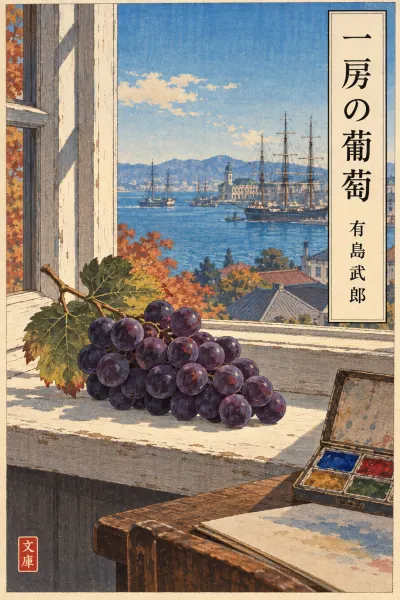
一房の葡萄 Hitofusa no Budō in easy Japanese (N5)
This is our own simplified retelling of Grapes from the Teacher's Window, written for N5 learners and checked word by word against the N5 vocabulary list. A few story words and grammar patterns go beyond N5; the notes below give each one's level. It keeps the characters, events and ending of the original. When it feels easy, move on to the N4 version or the original text.
The story in brief
A small boy who loves to paint the sea steals blue and red paints from his classmate Jim, is caught, and is taken to his beloved young teacher. Instead of scolding him, she leaves him a bunch of grapes and asks him to come back the next day. When he returns, she makes him and Jim friends and shares grapes with them both, a kindness he never forgets.
AI translation · independently checked
わたしは小さい男の子でした。I was a little boy.
えをかくのが大すきでした。I loved drawing pictures.
わたしはいつも、あおいうみとふねを見ました。I always looked at the blue sea and the ships.
でも、わたしのえのぐでは、きれいないろが出ませんでした。But with my paints, the lovely colours would not come out.
友だちのジムは、外国のいいえのぐをもっていました。My friend Jim had good paints from abroad.
あおとあかが、とてもきれいでした。The blue and the red were ever so beautiful.
わたしは、それがとてもほしかったです。I wanted them terribly.
ひるごはんの後、わたしは一人できょうしつにいました。After lunch, I was alone in the classroom.
ジムのつくえをあけて、あおとあかのえのぐをとりました。I opened Jim's desk and took the blue and red paints.
そして、ポケットに入れました。Then I put them in my pocket.
じゅぎょうの後、大きなせいととジムが来ました。After lessons, a big pupil and Jim came up to me.
「えのぐを出してください。」"Hand over the paints."
「もっていません。」"I haven't got them."
「休みの間、きょうしつにいたのは、あなただけです。」とジムはいいました。"You were the only one in the classroom during the break," said Jim.
一人が、わたしのポケットから、えのぐを出しました。One of them pulled the paints out of my pocket.
わたしはなきました。I cried.
みんなは、わたしを二かいのへやへひいて行きました。They all dragged me to a room on the second floor.
わたしの大すきな、わかい女の先生のへやです。It was the room of the young woman teacher I loved so dearly.
大きなせいとが、先生にぜんぶ話しました。The big pupil told the teacher everything.
先生は「もういいですよ。」とみんなにいいました。"That will do now," the teacher said to them all.
先生は、わたしに聞きました。The teacher asked me,
「えのぐは、もうかえしましたか。」"Have you given the paints back yet?"
「はい。」"Yes."
「わるかったと、わかりますか。」"Do you understand that it was wrong?"
わたしは、また大きなこえでなきました。I began to cry loudly all over again.
「もうだいじょうぶですよ。つぎのじゅぎょうの間、ここにいてください。」"It's all right now. Please stay here during the next lesson."
先生は、まどの外のぶどうを一ふさとって、わたしの前におきました。The teacher picked a bunch of grapes from outside the window and set it down in front of me.
そして、へやを出ました。Then she left the room.
わたしはかなしくて、ぶどうを食べませんでした。I was so sad that I did not eat the grapes.
たくさんないて、ねました。I cried and cried, and fell asleep.
先生のこえで、おきました。I woke up at the sound of the teacher's voice.
「もうかえっていいですよ。あしたも学校に来てくださいね。」"You may go home now. Do come to school tomorrow as well, won't you?"
先生は、ぶどうをわたしのかばんに入れました。The teacher put the grapes into my school bag.
わたしはいえでぶどうを食べました。I ate the grapes at home.
おいしかったです。They were delicious.
つぎのあさ、わたしは学校に行きたくありませんでした。The next morning, I did not want to go to school.
でも、先生にあいたかったです。But I wanted to see the teacher.
学校に行くと、ジムがはしって来て、わたしのてをとりました。When I got to school, Jim came running up and took my hand.
先生はわらっていいました。The teacher smiled and said,
「二人は今日から、いい友だちですよ。」ジムとわたしは、あくしゅをしました。"From today, you two are good friends." Jim and I shook hands.
「きのうのぶどうは、おいしかったですか。」"Were yesterday's grapes nice?"
「はい。」"Yes."
先生は、まどからぶどうを一ふさとって、二つにきりました。The teacher picked a bunch of grapes from the window and cut it in two.
そして、ジムとわたしにわたしました。Then she handed the halves to Jim and me.
白いての上のむらさきのぶどうは、とてもきれいでした。The purple grapes on her white hand were so very beautiful.
その後、わたしは前よりすこしいい男の子になりました。After that, I became a slightly better boy than I had been before.
あの先生は、今どこにいるでしょうか。I wonder where that teacher is now.
今もあいたいです。Even now, I wish I could see her.
Vocabulary
| Word | Meaning | JLPT |
|---|---|---|
| えのぐえのぐ | paints (for pictures)dictionary form: 絵の具Written 絵の具: 絵 'picture' + 具 'tool'. | N2 |
| ほしかったほしい | to want (a thing)dictionary form: ほしいAn い-adjective; the thing you want takes が: それがほしい. | N5 |
| きょうしつきょうしつ | classroomdictionary form: 教室 | N5 |
| とりましたとる | to take; to pickdictionary form: とるAlso used later for picking grapes and taking someone's hand. | N5 |
| ポケットぽけっと | N5 | |
| なきましたなく | to crydictionary form: なくWritten 泣く. Do not confuse with 鳴く (animals making a sound). | N4 |
| かえしましたかえす | to give back, to return (something)dictionary form: かえすかえる means 'to go home'; かえす means 'to give something back'. | N2 |
| ぶどうぶどう | grapesdictionary form: 葡萄This is the key word of the story's title. | N4 |
| ふさふさ | bunch (counter for grapes, bananas)dictionary form: 房一ふさ is read ひとふさ, 'one bunch'. | — |
| おきましたおく | to put, to placedictionary form: おくWritten 置く. Do not confuse it with おきる (to wake up) in a later sentence. | N3 |
| あいたかったあう | to meet, to see (a person)dictionary form: あうThe person takes に: 先生にあう. | N5 |
| あくしゅあくしゅ | handshakedictionary form: 握手あくしゅをする means 'to shake hands'. | N3 |
| むらさきむらさき | purpledictionary form: 紫 | N2 |
Grammar
〜のが大すき N5 to love doing ~
の turns the verb phrase えをかく into a noun, so it can be the thing that you love. The same pattern works with すき and きらい.
えをかくのが大すきでした。
I loved drawing pictures.
〜てください N5 please do ~
The て-form of a verb plus ください makes a polite request. Here the older boy uses it firmly as a demand.
えのぐを出してください。
Hand over the paints.
〜たい / 〜たくありません N5 want to ~ / don't want to ~
Add たい to the verb stem (行き→行きたい) to say what you want to do. It changes like an い-adjective: たくありません is the negative, and たかった is the past.
わたしは学校に行きたくありませんでした。
I did not want to go to school.
〜てもいい / 〜ていい N4 may ~, it's all right to ~
The て-form plus いい gives permission. The teacher is gently telling the boy he may leave.
もうかえっていいですよ。
You may go home now.
〜くて (reason) N5 because ~, so ~
The て-form of an い-adjective (かなしい→かなしくて) can give the reason for what comes next.
わたしはかなしくて、ぶどうを食べませんでした。
I was so sad that I did not eat the grapes.
〜より / 〜になる N5 than ~ / to become ~
より marks what is being compared (前より, 'than before'). A noun + になる means 'to become' that noun.
その後、わたしは前よりすこしいい男の子になりました。
After that, I became a slightly better boy than I had been before.