 N4 · easy
Simplified retelling · JLPT N4
いちょうの実 Ichō no Jitsu in easy Japanese (N4)
This is our own simplified retelling of Departure Morning on the Ginkgo Tree, written for N4 learners and checked word by word against the N4 vocabulary list. A few story words and grammar patterns go beyond N4; the notes below give each one's level. It keeps the characters, events and ending of the original. When it feels easy, move on to the original text.
The story in brief
Before dawn on a frosty morning, the thousand yellow ginkgo nuts on a bare tree wake up and realise that today is the day they must leave their mother. They worry, share food and coats, make up for old quarrels, and dream of becoming stars or rescuing a princess. At sunrise the cold north wind blows, and all the children call goodbye and fall from the branches like rain while the sun shines on the sad mother tree.
AI translation · independently checked
まだ 朝に なる 前です。It is not yet morning.
空は とても つめたくて、ほしが たくさん 見えます。The sky is very cold, and a great many stars can be seen.
でも、東の 空は 少しずつ 色が かわって きました。But little by little, the eastern sky has begun to change colour.
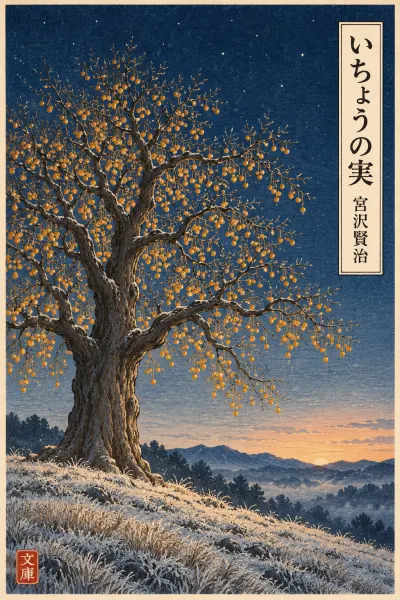
山の 上に、一本の いちょうの 木が 立って います。On top of a hill stands a single ginkgo tree.
いちょうの みは みんな いっしょに 目を 開けました。The ginkgo nuts all opened their eyes at the same time.
そして、びっくりしました。And then they gave a start.
今日は 旅行に 出る 日なのです。For today is the day they set out on their journey.
きのうの 夕方、二わの からすも そう 話して いました。Yesterday evening, two crows had been saying so, too.
「ぼく、おちる とちゅうで 気分が 悪く ならないかな。」"I wonder if I'll feel sick on the way down."
「目を 開けなければ だいじょうぶだよ。」"You'll be all right as long as you keep your eyes shut."
「あ、わすれて いた。水を 用意しなければ。」"Oh, I forgot! I must get some water ready."
「ぼくは 水の ほかに、とくべつな 飲み物も 持って いるよ。少し あげようか。気分が 悪く なったら、飲むと いいって。お母さんが そう 話して いたよ。」"Besides water, I've got a special drink, too. Shall I give you a little? If you start to feel sick, it's good to drink some — that's what Mother told me."
「どうして お母さんは ぼくには くれないんだろう。」"Why won't Mother give me any, I wonder?"
「だから、ぼくが あげるよ。お母さんを 悪く 思っては だめだよ。」"That's why I'm giving you some. You mustn't think badly of Mother."
この いちょうの 木は、お母さんでした。This ginkgo tree was the mother.
今年、千人の きいろい 子どもが 生まれました。This year, a thousand yellow children were born to her.
そして 今日、子どもたちは みんな いっしょに 旅行に 出かけるのです。And today, the children were all setting off on their journey together.
お母さんは とても かなしくて、きのうまでに きいろい かみの けを ぜんぶ おとしました。Mother was so very sad that by yesterday she had let all her yellow hair fall.
いちょうの 女の子が 空を 見て、小さな こえで 話しました。A little ginkgo girl looked up at the sky and spoke in a small voice.
「ねえ、わたしたち、どこへ 行くのかしら。」"Say, where do you suppose we're going?"
「わたしも 分からないわ。どこへも 行きたくないわね。」"I don't know either. I don't want to go anywhere."
「わたしは お母さんの そばに いたいわ。」"I want to stay close to Mother."
「でも、だめなんですって。風が 毎日 そう 話して いたわ。」"But they say we can't. The wind was saying so every day."
「そして、わたしたちも みんな 別れるのね。」"And then all of us will be parted from each other, too, won't we?"
「ええ。わたし、あなたに たくさん 悪い ことを したわ。あやまるわ。」"Yes. I was so often unkind to you. I'm sorry."
「いいえ、わたしこそ 悪かったわ。」"No, it was I who was in the wrong."
東の 空が だんだん 白く なって、ほしが 一つずつ きえて いきます。Gradually the eastern sky grows pale, and the stars go out one by one.
木の いちばん 高い ところに、男の子が 二人 いました。At the very top of the tree there were two boys.
「ほら、朝に なったぞ。うれしいなあ。ぼくは きっと きいろい ほしに なるんだ。」"Look, it's morning! Oh, I'm so happy. I'm sure I'm going to become a yellow star."
「ぼくも なるよ。北風が 空へ つれて いって くれるかな。」"Me too. Do you think the North Wind will carry us up into the sky?"
「北風は 親切じゃないよ。きっと からすさんだよ。からすさんは とおくまで 一度に とんで いくからね。」"The North Wind isn't kind. It'll be Mr Crow, I'm sure. Mr Crow can fly a long way all in one go, you know."
「たのんで みようか。もうすぐ 来ると いいな。」"Shall we try asking him? I hope he comes soon."
その 近くで、また 二人が 話して います。Close by, two more were talking.
「ぼくは おうさまの おしろへ 行くんだ。そして、おひめさまを つれて いった ばけものに かつんだ。」"I'm going to the king's castle. And I'm going to beat the monster that carried off the princess."
「でも、あぶないよ。ばけものは 大きいんだよ。」"But it's dangerous. Monsters are big, you know."
「だいじょうぶ。いい 物を 持って いるんだ。ほら。」"It's all right. I've got something good. Look."
「あ、お母さんの かみの けで 作った あみだね。」"Oh, it's a net made from Mother's hair!"
「そうだよ。こわい ことが あったら、この 中に 入りなさいって。ぼくは ばけものに のまれて、おなかの 中で この あみを 出すんだ。それから、おなかの 中を ぜんぶ こわすんだよ。」"That's right. If anything frightening happens, get inside this, she said. I'll let the monster swallow me, and then inside its belly I'll bring out this net. After that I'll smash up everything in its belly."
「ばけものは 病気に なって 死ぬ。ぼくは おひめさまを つれて、おしろに 帰る。そして、おひめさまと けっこんするんだ。」"The monster will fall ill and die. I'll take the princess back to the castle. And then I'll marry the princess."
「いいね。ぼくも おきゃくに なって 行っても いいかい。」"That's grand. May I come too, as your guest?"
「もちろん。国を 半分 あげるよ。お母さんには 毎日 おかしを たくさん あげるんだ。」"Of course. I'll give you half the kingdom. And I'll give Mother lots of sweets every day."
ほしは もう ぜんぶ きえました。By now the stars had all gone out.
木が 急に ゆれはじめました。Suddenly the tree began to sway.
もうすぐ 出発です。It will soon be time to leave.
「ぼくの くつ、小さいなあ。」"My shoes are so small."
「じゃあ、ぼくのと とりかえよう。ぼくのは 少し 大きいんだ。」"Then let's swap with mine. Mine are a little big."
「あ、ちょうど いい。どうも。」"Oh, they fit just right. Thanks."
「こまったわ。お母さんに もらった 新しい コートが 見つからないの。」"Oh dear, what shall I do? I can't find the new coat Mother gave me."
「どの えだに おいたの。」"Which branch did you put it on?"
「わすれたわ。」"I've forgotten."
「これから とても さむく なるのよ。さがさないと。」"It's going to get very cold from now on. You'll have to look for it."
別の 子は、ともだちに パンを わたして います。Another child is handing a friend some bread.
「ほら、おいしい パンだよ。かばんに 入れて。」"Here, it's nice bread. Put it in your bag."
「どうも。いっしょに 行こうね。」"Thanks. Let's go together, all right?"
「やっぱり ないわ。わたし、どう したら いいの。」"It's no use, it isn't here. Whatever shall I do?"
「わたしと 二人で 行きましょう。わたしの コートを 時々 貸して あげるわ。さむくて 死ぬなら、いっしょに 死にましょう。」"Come with me, just the two of us. I'll lend you my coat now and then. And if we must die of the cold, let's die together."
東の 空が とても 白く なって、ゆれはじめました。The eastern sky grew very white and began to quiver.
お母さんの 木は 動かないで、立って います。The mother tree stands without moving.
急に、たくさんの ひかりが 一度に とんで きました。All at once, a great many rays of light came flying in together.
子どもたちは きいろく ひかりました。The children shone yellow.
北から、とても つめたい 強い 風が ふいて きました。From the north came blowing a very cold, strong wind.
「さようなら、お母さん。」"Goodbye, Mother!"
「さようなら、お母さん。」"Goodbye, Mother!"
子どもたちは みんな 一度に、雨のように えだから おちて いきました。All the children fell from the branches at once, like rain.
北風は わらって、「今年も これで さようならだ。」と 話して、むこうへ 行きました。The North Wind laughed and said, "So that's goodbye for this year too," and went off into the distance.
お日さまが 東の 空に 出ました。The Sun rose in the eastern sky.
そして、かなしい お母さんの 木と、出かけた 子どもたちに、たくさんの ひかりを おくりました。And he sent a great deal of light to the sad mother tree and to the children who had set off.
Vocabulary
| Word | Meaning | JLPT |
|---|---|---|
| とちゅうとちゅう | on the way, partway throughdictionary form: 途中Often 〜とちゅうで: 'in the middle of doing something'. | N4 |
| 用意ようい | preparation; getting something readyUsed as 用意する: 'to prepare, to get ready'. | N4 |
| とくべつなとくべつ | specialdictionary form: 特別A な-adjective; also used as an adverb, とくべつに. | N4 |
| 別れるわかれる | to part, to separate from each otherSame kanji as 別 'other, separate' in sentence 52. | N4 |
| あやまるあやまる | to apologisedictionary form: 謝るUsually written 謝る. | N4 |
| だんだんだんだん | gradually, little by littledictionary form: 段々Often used with 〜なる to describe a slow change. | N1 |
| 親切しんせつ | kind, helpfulA な-adjective; 親切じゃない means 'not kind'. | N4 |
| ばけものばけもの | monster, goblindictionary form: 化け物From 化ける 'to transform'; a typical word in folk tales. | — |
| あみあみ | netdictionary form: 網Here a net woven from the mother's hair (the fallen leaves). | N1 |
| ゆれはじめましたゆれる | to sway, to shakedictionary form: 揺れるUsed for trees, boats and earthquakes alike. | N4 |
| 出発しゅっぱつ | departure, setting offUsed as 出発する: 'to depart'. | N4 |
| とりかえようとりかえる | to exchange, to swapdictionary form: 取り替えるAとBをとりかえる: 'swap A for B'. | N4 |
| わたしてわたす | to hand over, to passdictionary form: 渡すNot the same as 渡る 'to cross'. | N5 |
Grammar
〜なければ N4 must, have to
The full form is 〜なければならない ('if one does not do it, it won't do'). In casual speech the ending is often dropped, leaving just 〜なければ, which still means 'I must'.
水を 用意しなければ。
I must get some water ready.
〜たら、〜と いい N4 if ..., it is good to ...; one should ...
〜たら sets up a condition, and Verb + といい gives advice: 'it would be good to do'. The って that follows marks the advice as something Mother said.
気分が 悪く なったら、飲むと いいって。
If you start to feel sick, it's good to drink some, she said.
〜かしら N3 I wonder ...
A soft sentence ending used mainly by women and girls to wonder aloud. It works like 〜かな, the ending the boys use.
ねえ、わたしたち、どこへ 行くのかしら。
Say, where do you suppose we're going?
〜んですって N3 they say ..., I hear ...
って is a casual form of と言っていた and passes on what someone else said. Adding んです makes it a gentle, explanatory report, here of what the wind said.
でも、だめなんですって。
But they say we can't.
〜てみる N4 try doing ...
The て-form plus みる means doing something to see what happens. In the volitional form 〜てみようか, it becomes a suggestion: 'shall we try ...?'
たのんで みようか。
Shall we try asking him?
Nのように N4 like N, as if N
Noun + のように compares how an action happens with something else. Here the children fall all together, like rain.
子どもたちは みんな 一度に、雨のように えだから おちて いきました。
All the children fell from the branches at once, like rain.