 N5 · easy
Simplified retelling · JLPT N5
いちょうの実 Ichō no Jitsu in easy Japanese (N5)
This is our own simplified retelling of Departure Morning on the Ginkgo Tree, written for N5 learners and checked word by word against the N5 vocabulary list. A few story words and grammar patterns go beyond N5; the notes below give each one's level. It keeps the characters, events and ending of the original. When it feels easy, move on to the N4 version or the original text.
The story in brief
On a cold autumn morning, a thousand golden ginkgo nuts wake up on their mother tree, knowing they must all leave that day. They talk about their fears and dreams, share shoes, bread and coats, and help each other get ready. At sunrise the north wind blows, and the children say goodbye to their mother and jump from the tree together while the sun watches warmly.
AI translation · independently checked
あきの おわりの あさです。It is a morning at the end of autumn.
そらは とても つめたいです。The sky is very cold.
ほしが たくさん 出て います。A great many stars are out.
東の そらが すこし あかるく なりました。The eastern sky has grown a little brighter.
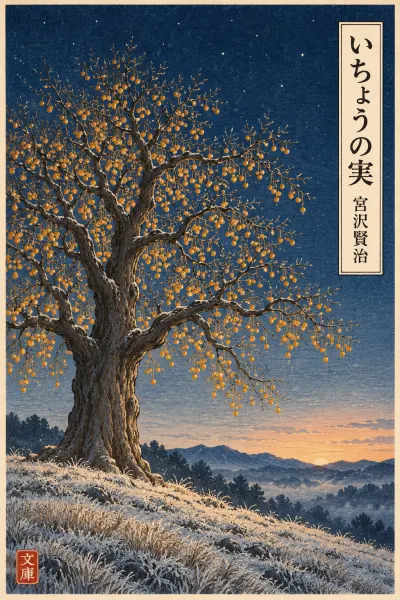
山の 上に 大きな いちょうの 木が 一本 あります。On top of the hill there stands one big ginkgo tree.
この 木は お母さんです。This tree is a mother.
今年、千人の 子どもが 生まれました。This year, a thousand children were born to her.
子どもは きいろい いちょうの みです。The children are yellow ginkgo nuts.
今日、子どもたちは みんな いっしょに 旅行に 出ます。Today, all the children are setting off on a journey together.
お母さんは それが とても いやでした。Mother did not like that at all.
きいろい かみのけは、きのうまでに ぜんぶ なくなりました。By yesterday, every bit of her yellow hair had fallen away.
みは みんな おきました。All the nuts woke up.
きのうの ゆうがた、二わの からすも いいました。Yesterday evening, the two crows had said so too.
「あしたは みんな 出かけるよ。」"Tomorrow we're all going away."
「下に とぶのは だいじょうぶかな。」"Will we be all right when we jump down, I wonder?"
「だいじょうぶだよ。」"We'll be all right."
「ぼく、のみものを もって いるよ。お母さんが いったよ。げんきが ない 人は すこし のみなさいって。」"I've got something to drink. Mother told me: if anyone feels weak, have them drink a little."
「ぼくは もって いないよ。」"I haven't got any."
「じゃあ、ぼくが あげるよ。」"Then I'll give you some."
女の子たちも 話して います。The girls are talking too.
「わたしたち、どこへ 行くのかな。」"Where do you suppose we're going?"
「わからないわ。どこへも 行きたくないわ。お母さんの そばに いたいわ。」"I don't know. I don't want to go anywhere. I want to stay by Mother."
「でも、行かなくては いけないの。かぜが 毎日 いったわ。」"But we have to go. The wind told us so every day."
「いやね。みんな 一人に なるのね。」"How horrid. We'll each be all alone, won't we?"
「いつも わたしが わるかったわ。」"I was always the one in the wrong."
「いいえ、わたしの ほうが わるかったわ。」"No, I was the one in the wrong."
ほしが 一つずつ きえます。One by one, the stars go out.
木の いちばん 上で、男の子が 二人 話して います。At the very top of the tree, two boys are talking.
「あかるく なった。たのしいな。ぼくは きいろい ほしに なるよ。」"It's getting light. What fun! I'm going to become a yellow star."
「ぼくも なるよ。からすさんに たのもう。からすさんは つよいよ。ぼくたち 二人を あおい そらまで もって 行くよ。」"Me too! Let's ask Mister Crow. Mister Crow is strong. He'll carry the two of us all the way up to the blue sky."
「はやく 来ないかな。」"I wish he'd hurry and come."
すこし 下でも 二人が 話して います。A little lower down, two more are talking.
「ぼくは ばけものの ところへ 行くよ。おひめさまを とった わるい ばけものだ。」"I'm going to go where the monster lives. It's a wicked monster that carried off a princess."
「あぶないよ。ばけものは 大きいよ。」"That's dangerous! The monster is huge."
「だいじょうぶ。いい ものを もって いるよ。」"Don't worry. I've got something good."
「これは お母さんの かみのけの あみだね。」"That's a net made of Mother's hair, isn't it?"
「うん。お母さんが わたしたんだ。ぼくは ばけものに いうよ。『ぼくを のめないでしょう。』ばけものは すぐ ぼくを のむよ。ぼくは おなかの 中で あみに 入るんだ。ばけものは びょうきに なって しぬよ。それから おひめさまと かえって、けっこんするよ。」"Yes. Mother gave it to me. I'll say to the monster, 'You can't swallow me, can you?' Then the monster will swallow me straight away. Inside its tummy I'll get into the net. The monster will fall sick and die. Then I'll go home with the princess and marry her."
「いいね。ぼくも 行っても いい?」"How wonderful. May I come too?"
「いいよ。国を 半ぶん あげるよ。お母さんにも 毎日 おかしを たくさん あげるんだ。」"Of course. I'll give you half the kingdom. And I'll give Mother lots of sweets every single day."
ほしが ぜんぶ きえました。All the stars had gone out.
木が うるさく なりました。The tree grew noisy.
もう すぐ 出かけます。Very soon they will set off.
「くつが 小さいな。」"My shoes are too small."
「ぼくの くつは すこし 大きいよ。ぼくのを はいて。」"Mine are a bit big. Put mine on."
「ちょうど いい。どうも。」"They're just right. Thanks."
「お母さんの あたらしい コートが ないの。どこに おいたか わすれたわ。」"I can't find Mother's new coat. I've forgotten where I put it."
「これから とても さむく なるのよ。」"It's going to get very cold from now on, you know."
「この パンを あげるよ。おいしいよ。かばんに 入れて。」"I'll give you this bread. It's tasty. Put it in your bag."
「どうも。いっしょに 行こうね。」"Thanks. Let's go together, shall we?"
「コートが どこにも ないわ。どう しよう。」"My coat isn't anywhere. What shall I do?"
「わたしと 二人で 行きましょう。わたしの コートを 二人で きましょう。さむくて しんでも、いっしょよ。」"Come with me, just the two of us. We'll both wear my coat. Even if we die of cold, we'll be together."
東の そらが 白く なりました。The eastern sky turned white.
お母さんの 木は しずかに たって います。The mother tree stands quietly.
たいようが 出ました。The sun came up.
子どもたちは とても きれいに なりました。The children became very beautiful.
北から つめたい かぜが ふいて きました。A cold wind came blowing from the north.
「さよなら、お母さん。」「さよなら、お母さん。」"Goodbye, Mother." "Goodbye, Mother."
子どもたちは みんな いっしょに 木から とびました。All the children leapt from the tree together.
北かぜは 「今年も さよならだね。」と いって、むこうへ 行きました。The north wind said, "Goodbye again this year," and went on its way.
たいようは 東の そらから、お母さんの 木と 旅行に 出た 子どもたちを あたたかく 見て いました。From the eastern sky, the sun was gazing warmly down on the mother tree and on the children who had set off on their journey.
Vocabulary
| Word | Meaning | JLPT |
|---|---|---|
| つめたいつめたい | cold (to the touch; of air, water, wind)dictionary form: 冷たいFor cold weather in general, さむい is more common; つめたい suggests a chill you can feel. | N5 |
| あかるくあかるい | bright, lightdictionary form: 明るいあかるく なる = to get light (as dawn comes). | N5 |
| いちょういちょう | ginkgo treedictionary form: 銀杏Its leaves turn bright yellow in autumn; the nuts are called ぎんなん. | — |
| 旅行りょこう | journey, trip旅行に 出る = to set off on a journey. | N5 |
| いやいや | unpleasant; something you don't wantdictionary form: 嫌A な-adjective. いやね in the girls' talk means 'how horrid'. | N5 |
| からすからす | crowdictionary form: 烏 | — |
| きえますきえる | to go out, to disappeardictionary form: 消えるHere the stars fade away as the sky grows light. | N5 |
| ばけものばけもの | monsterdictionary form: 化け物Common in folk tales and children's stories. | — |
| おひめさまおひめさま | princessdictionary form: お姫様 | — |
| けっこんするけっこんする | to marrydictionary form: 結婚するUse と for the partner: おひめさまと けっこんする. | — |
| はいてはく | to put on, to wear (shoes, trousers)dictionary form: 履くUse きる for coats and shirts, as in sentence 51. | N5 |
| わすれたわすれる | to forgetdictionary form: 忘れる | N5 |
| ふいてふく | to blow (of wind)dictionary form: 吹くかぜが ふいて くる = the wind comes blowing. | N5 |
| あたたかくあたたかい | warm; warmly (kindly)dictionary form: 暖かい/温かいThe く form turns the adjective into an adverb: あたたかく 見る = to look on warmly. | — |
Grammar
〜く なる N5 to become ~
An い-adjective drops い and takes く before なる to show a change of state. With な-adjectives and nouns, に なる is used instead, as in きいろい ほしに なる.
東の そらが すこし あかるく なりました。
The eastern sky has grown a little brighter.
〜て いる N5 is ~ing (ongoing action or state)
The て-form plus いる describes an action in progress, here the boys talking right now. With verbs like 出る or もつ, it describes a resulting state: stars are out, I have it.
木の いちばん 上で、男の子が 二人 話して います。
At the very top of the tree, two boys are talking.
〜たい / 〜たくない N5 want to ~ / don't want to ~
Add たい to the verb stem to say what the speaker wants to do. It behaves like an い-adjective, so the negative is たくない.
どこへも 行きたくないわ。お母さんの そばに いたいわ。
I don't want to go anywhere. I want to stay by Mother.
〜なくては いけない N4 must ~, have to ~
Literally 'if one does not ~, it will not do'. Here it says that leaving is unavoidable.
でも、行かなくては いけないの。
But we have to go.
〜ても いい N4 may ~, it's all right to ~
The て-form plus もいい gives or asks for permission. As a question, it means 'May I ~?'
ぼくも 行っても いい?
May I come too?
〜ましょう N5 let's ~
The polite volitional form invites someone to do something together. Its plain form is 〜よう, as in 行こうね and たのもう.
わたしの コートを 二人で きましょう。
We'll both wear my coat.