 N3 · easy
Simplified retelling · JLPT N3
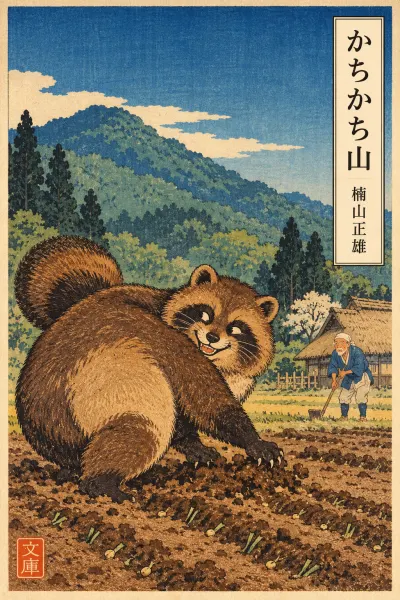
かちかち山 Kachikachi Yama in easy Japanese (N3)
This is our own simplified retelling of Click-Clack Mountain, written for N3 learners and checked word by word against the N3 vocabulary list. A few story words and grammar patterns go beyond N3; the notes below give each one's level. It keeps the characters, events and ending of the original. When it feels easy, move on to the original text.
The story in brief
An old man catches a raccoon dog that has been ruining his field. The raccoon dog tricks the old woman into untying it, kills her, and serves her to the old man as soup. A white rabbit takes revenge: it sets fire to the brushwood on the raccoon dog's back, rubs red-pepper miso into the burns, and finally tricks him into going out to sea in a boat made of mud, which falls apart and sinks.
AI translation · independently checked
むかし、ある山の近くに、おじいさんとおばあさんが住んでいました。Long, long ago, an old man and an old woman lived near a certain mountain.
おじいさんは毎日はたけで働いていました。Every day the old man worked in his field.
でも、山から古いたぬきが出てきて、はたけのやさいをだめにしてしまいます。But an old raccoon dog would come down from the mountain and ruin the vegetables in the field.
そして、おじいさんの後ろから石や土を投げます。Then it would throw stones and dirt at the old man from behind.
おじいさんが怒って追いかけると、たぬきはすぐに逃げてしまいます。Whenever the old man got angry and chased it, the raccoon dog ran off right away.
おじいさんは困って、わなを作りました。The old man did not know what to do, so he made a trap.
ある日、たぬきはとうとうわなに掛かりました。One day, the raccoon dog was finally caught in the trap.
おじいさんは大喜びで、たぬきの足をなわでむすんで、家に持って帰りました。The old man was overjoyed. He tied the raccoon dog's legs with a rope and carried him home.
そして、たぬきを高い所に下げました。Then he hung the raccoon dog up in a high place.
「逃げないように見ていておくれ。晩までにたぬきじるを作っておいてね。」"Keep an eye on him so he doesn't get away. And have raccoon-dog soup ready for me by evening."
おじいさんはおばあさんにそう言って、またはたけへ出かけました。That is what the old man told the old woman, and then he went out to the field again.
おばあさんは、たぬきの下で仕事をしていました。The old woman was working underneath the raccoon dog.
しばらくして、「ああ、疲れた。」と言いました。After a while she said, "Oh, I'm tired."
すると、たぬきが上から言いました。Then the raccoon dog spoke from above.
「おばあさん、わたしが手伝いましょう。だから、このなわを解いてください。」"Granny, let me help you. So please untie this rope."
「だめだよ。なわを解いたら、すぐ逃げるだろう。」"No, you don't. If I untie the rope, you'll run away at once."
「いいえ、もう捕まったのですから、逃げませんよ。」"No, no. I've been caught now, so I won't run away."
たぬきがあまり何度も頼むので、おばあさんは信じて、なわを解いてしまいました。The raccoon dog begged so many times that the old woman believed him and untied the rope.
たぬきは手伝うと言って、木のぼうを持ちました。Saying he would help, the raccoon dog picked up a wooden stick.
そして突然、そのぼうでおばあさんの頭を強く打ちました。Then, all of a sudden, he struck the old woman hard on the head with the stick.
おばあさんは倒れて、死んでしまいました。The old woman fell down and died.
たぬきはおばあさんを料理して、しるを作りました。The raccoon dog cooked the old woman and made soup.
そして、自分はおばあさんのすがたになって、おじいさんを待っていました。Then he took on the old woman's appearance himself and waited for the old man.
夕方、何も知らないおじいさんが帰ってきました。In the evening, the old man came home, knowing nothing of what had happened.
「おかえりなさい。たぬきじるができていますよ。」"Welcome home. The raccoon-dog soup is ready."
「それはありがたい。」"Oh, how wonderful."
おじいさんは「おいしい、おいしい。」と言って、何度も食べました。"Delicious, delicious!" said the old man, and he ate helping after helping.
それを見て、たぬきは思わず笑って、元のたぬきのすがたに戻りました。Seeing this, the raccoon dog could not help laughing, and he changed back into his own raccoon-dog shape.
「おばあさんを食べたおじいさん、台所の下のほねを見ろ。」"Old man who ate the old woman, look at the bones under the kitchen!"
たぬきは大きなしっぽを見せて、逃げていきました。The raccoon dog showed his big bushy tail and ran away.
おじいさんはびっくりして、立てなくなりました。The old man was so shocked that he could no longer stand.
そして、おばあさんのほねを抱えて、ずっとないていました。Then he held the old woman's bones in his arms and cried and cried.
そこへ、山に住む白いうさぎが来ました。Just then, a white rabbit that lived on the mountain came by.
おじいさんは、うさぎに全部話しました。The old man told the rabbit everything.
うさぎはとても気のどくに思いました。The rabbit felt very sorry for him.
「わたしがきっと、たぬきをひどい目にあわせます。安心してください。」"I promise I'll make that raccoon dog suffer for this. Don't you worry."
おじいさんはうれしくて、なきながら「どうか頼みます。」と言いました。The old man was so glad that he wept as he said, "Please, I'm counting on you."
たぬきはこわくて、しばらくあなから出ませんでした。The raccoon dog was frightened, and for a while he did not come out of his hole.
ある日、うさぎはたぬきのあなの近くで、しばを集めていました。One day, the rabbit was gathering brushwood near the raccoon dog's hole.
そして、くりを出して、おいしそうに食べました。Then it took out some chestnuts and ate them as if they were delicious.
たぬきはその音を聞いて、あなから出てきました。The raccoon dog heard the sound and came out of his hole.
「うさぎさん、そのくりを少しくれないか。」"Rabbit, won't you give me a few of those chestnuts?"
「あげるよ。でも、このしばを半分、向こうの山まで運んでくれ。」"Sure, I'll give you some. But carry half of this brushwood to that mountain over there for me."
たぬきはくりが欲しかったので、しばを背中にのせて、先に歩きました。The raccoon dog wanted the chestnuts, so he loaded the brushwood onto his back and walked on ahead.
向こうの山に着くと、「くりをくれ。」と言いました。When they reached the mountain over there, he said, "Give me the chestnuts."
うさぎは「もう一つ向こうの山まで行ったら、あげるよ。」と答えました。The rabbit answered, "I'll give you some once we get to the next mountain over."
次の山でも、うさぎは同じことを言いました。At the next mountain, too, the rabbit said the same thing.
たぬきは早く着きたくて、後ろを見ないで歩きました。The raccoon dog wanted to get there quickly, so he walked on without looking behind him.
そのとき、うさぎはひうちいしで「かちかち」と火を付けました。Just then, the rabbit struck a flint, kachi-kachi, and lit a fire.
「うさぎさん、かちかちという音は何だろう。」"Rabbit, I wonder what that click-clack, kachi-kachi sound is?"
「この山は、かちかち山だからさ。」"That's because this mountain is Kachikachi-yama, Click-Clack Mountain."
やがて火がしばについて、「ぼうぼう」ともえ始めました。Before long the fire caught the brushwood, and it began to burn with a roar, bō-bō.
「ぼうぼうという音は何だろう。」"I wonder what that roaring bō-bō sound is?"
「向こうの山は、ぼうぼう山だからさ。」"That's because the mountain over there is Bōbō-yama, Roaring Mountain."
火はどんどん大きくなりました。The fire grew bigger and bigger.
たぬきは「熱い、熱い、助けてくれ。」と言って走り出しました。"Hot! Hot! Help me!" cried the raccoon dog, and he started to run.
でも、風が後ろから強く吹いて、火はもっと大きくなりました。But the wind blew hard from behind, and the fire grew even bigger.
たぬきはやっとしばを落として、あなの中に逃げこみました。At last the raccoon dog managed to drop the brushwood, and he fled into his hole.
次の日、うさぎはみそにとうがらしを入れて、薬を作りました。The next day, the rabbit mixed red pepper into some miso and made a medicine.
それを持って、たぬきのお見舞いに行きました。It took the medicine with it and went to visit the injured raccoon dog.
たぬきは背中に大きなやけどをして、あなの中で苦しんでいました。The raccoon dog had a big burn on his back and was lying in agony inside his hole.
「昨日は大変だったね。やけどによくきく薬を持ってきたよ。」"You had an awful time yesterday, didn't you? I've brought you some medicine that works really well on burns."
「それはありがたい。すぐぬってくれ。」"Now that's something to be thankful for. Put it on me right away."
うさぎはやけどの上に、とうがらしのみそをたくさんぬりました。The rabbit spread lots of red-pepper miso over the burn.
すると、背中はまた火がついたように熱くなりました。At once his back became hot, as if it had caught fire all over again.
たぬきは「痛い、痛い。」と言って、あなの中で動き回りました。"Ow! Ow! It hurts!" cried the raccoon dog, and he rolled around inside his hole.
うさぎはにこにこしながら、「痛いのは初めだけだよ。少しがまんしてね。」と言って帰りました。Smiling all over its face, the rabbit said, "It only hurts at first. Just bear it a little," and went home.
四、五日たって、たぬきのやけどはだいぶ治りました。Four or five days passed, and the raccoon dog's burn had healed quite a lot.
うさぎは「今度は海へ行こう。魚がとれるよ。」と言いました。The rabbit said, "This time let's go to the sea. We can catch fish."
山はもういやだと思っていたたぬきは、喜んでついていきました。The raccoon dog, who had had quite enough of mountains, happily went along.
海に着くと、うさぎは木のふねを作りました。When they reached the sea, the rabbit built a boat out of wood.
たぬきはそれをまねして、土のふねを作りました。The raccoon dog copied it and built a boat out of mud.
二人はそれぞれのふねに乗って、おきへ出ました。The two of them each got into their own boat and went out onto the open sea.
「いい天気だね。」"Nice weather, isn't it?"
「いい景色だね。」"What a lovely view!"
うさぎは「もっとおきまで行こう。どっちが速いか、きょうそうしよう。」と言いました。The rabbit said, "Let's go farther out. Let's race and see whose boat is faster."
うさぎはふねをたたいて、「木のふねはかるくて速いだろう。」と言いました。The rabbit tapped its boat and said, "A wooden boat is light and fast, you know."
たぬきも負けないで、「土のふねは重くてじょうぶだ。」と言いました。Not to be outdone, the raccoon dog said, "A mud boat is heavy and sturdy."
でも、だんだん水が入って、土のふねはこわれ始めました。But little by little water seeped in, and the mud boat began to fall apart.
「たいへんだ。しずむ、しずむ。助けてくれ。」"Oh no! I'm sinking, I'm sinking! Help me!"
「これは、おばあさんを殺して、おじいさんに食べさせたからだよ。」"This is because you killed the old woman and made the old man eat her!"
たぬきは「もうしないから、助けてくれ。」と頼みました。"I'll never do it again, so help me!" the raccoon dog begged.
でも、ふねはどんどんこわれて、たぬきはとうとう海にしずんでしまいました。But the boat kept breaking apart, and in the end the raccoon dog sank into the sea.
Vocabulary
| Word | Meaning | JLPT |
|---|---|---|
| たぬきたぬき | raccoon dog (tanuki)dictionary form: 狸In folklore it is a cunning trickster that can change its shape. It is often wrongly translated as 'badger'. | — |
| わなわな | trap, snaredictionary form: 罠わなに掛かる means 'to be caught in a trap'. | — |
| 掛かりましたかかる | to be caught (in a trap)dictionary form: 掛かるThis is the intransitive partner of 掛ける. | N5 |
| なわなわ | rope, corddictionary form: 縄 | N3 |
| 解いてとく | to untie, to undodictionary form: 解くThe same kanji is read とく in 問題を解く (to solve a problem). | N3 |
| すがたすがた | form, appearance, shapedictionary form: 姿〜のすがたになる means 'to take the form of ~'. | N3 |
| 思わずおもわず | without meaning to, in spite of oneself | N3 |
| 気のどくきのどく | pitiful; feeling sorry (for someone)dictionary form: 気の毒気のどくに思う means 'to feel sorry for'. | N3 |
| ひどい目にあわせますひどいめにあわせる | to make (someone) suffer, to give someone a hard timedictionary form: ひどい目にあわせるCompare ひどい目にあう, 'to have a terrible experience'. | — |
| しばしば | brushwood, small sticks for firewooddictionary form: 柴 | — |
| ひうちいしひうちいし | flint (for striking sparks)dictionary form: 火打ち石 | — |
| やけどやけど | a burn (injury)dictionary form: 火傷やけどをする means 'to get burned'. | N2 |
| お見舞いみまい | a visit to a sick or injured persondictionary form: 見舞い〜のお見舞いに行く means 'to go and visit ~ who is ill or hurt'. | N3 |
| おきおき | the open sea, offshoredictionary form: 沖 | N3 |
Grammar
〜てしまう N4 completion, often with regret
This pattern shows that an action is finished and cannot be undone. It often carries a feeling of regret or shock, as with the old woman's death here.
おばあさんは倒れて、死んでしまいました。
The old woman fell down and died.
〜ないように N4 so that ~ doesn't happen
The plain negative followed by ように gives the purpose of an action: something is done to prevent a result. Here the old woman should watch the raccoon dog so that it does not escape.
逃げないように見ていておくれ。
Keep an eye on him so he doesn't get away.
〜ておく N4 do something in advance
The te-form followed by おく means doing something ahead of time, ready for later. The old man wants the soup to be ready when he comes back.
晩までにたぬきじるを作っておいてね。
Have raccoon-dog soup ready for me by evening.
あまり〜ので N3 so much ~ that…
あまり used with an affirmative verb or adjective and followed by ので means 'because it was so excessive'. The raccoon dog begged so often that the old woman gave in.
たぬきがあまり何度も頼むので、おばあさんは信じて
The raccoon dog begged so many times that the old woman believed him
〜ように (as if) N3 as if, like
A plain-form clause followed by ように makes a comparison with how something seems. The pepper makes the burn feel as if it were on fire again.
背中はまた火がついたように熱くなりました。
His back became hot, as if it had caught fire all over again.
〜させる (causative) N4 make/let someone do
The causative form of 食べる is 食べさせる, and the person made to act is marked with に. It means 'made the old man eat (her)'.
おじいさんに食べさせたからだよ。
Because you made the old man eat her!