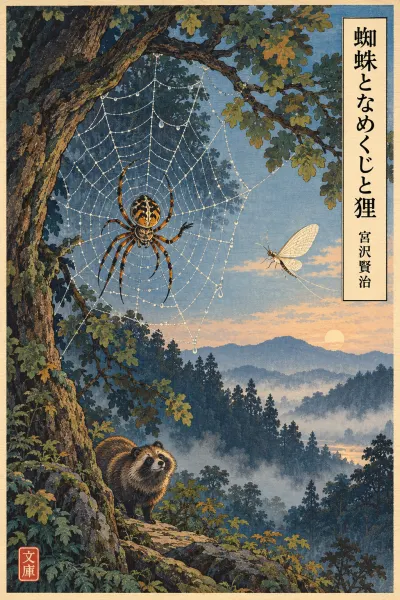
Part 1 of 6 · JLPT N2
蜘蛛となめくじと狸 Kumo to Namekuji to Tanuki, part 1: Three Rivals and a Hungry Spider
In this part
The narrator introduces three rivals, a spider, a silver slug and a tanuki, who all died in successive years, and begins with the spider's life. Blown onto an oak at the edge of a wood, the starving spider spins a tiny web and eats a mosquito. When a blind mayfly wanders up asking where it is, the spider tells it the web is an inn, seizes it, and impatiently lets it sing, as its last words, a sad song about a father who died on a journey.
AI translation · independently checked
蜘蛛と、銀色のなめくじとそれから顔を洗ったことのない狸とはみんな立派な選手でした。The spider, the silver slug, and the tanuki who had never once washed his face were all splendid competitors.
けれども一体何の選手だったのか私はよく知りません。But just what they competed in, I don't really know.
山猫が申しましたが三人はそれはそれは実に本気の競争をしていたのだそうです。According to the wildcat, the three of them were locked in a truly, deadly serious race.
一体何の競争をしていたのか、私は三人がならんでかける所も見ませんし学校の試験で一番二番三番ときめられたことも聞きません。What sort of race it was, I can't say; I never saw the three of them running side by side, and I never heard of them being ranked first, second and third in a school exam.
一体何の競争をしていたのでしょう、蜘蛛は手も足も赤くて長く、胸には「ナンペ」と書いた蜘蛛文字のマークをつけていましたしなめくじはいつも銀いろのゴムの靴をはいていました。Whatever could the race have been? The spider had long red arms and legs and wore a badge on his chest that said "Nanpe" in spider letters, and the slug always wore silver rubber shoes.
又狸は少しこわれてはいましたが運動シャッポをかぶっていました。And the tanuki wore a sports cap, though it was a little battered.
けれどもとにかく三人とも死にました。At any rate, all three of them died.
蜘蛛は蜘蛛暦三千八百年の五月に没くなり銀色のなめくじがその次の年、狸が又その次の年死にました。The spider passed away in the fifth month of the year 3800 of the spider calendar, the silver slug died the following year, and the tanuki the year after that.
三人の伝記をすこしよく調べて見ましょう。Let's look a little more closely into the lives of the three.
一、赤い手長の蜘蛛One: The Long-Armed Red Spider
蜘蛛の伝記のわかっているのは、おしまいの一ヶ年間だけです。Of the spider's life, only the final year is known.
蜘蛛は森の入口の楢の木に、どこからかある晩、ふっと風に飛ばされて来てひっかかりました。One night the spider came from who knows where, suddenly blown along by the wind, and got caught on an oak tree at the entrance to the wood.
蜘蛛はひもじいのを我慢して、早速お月様の光をさいわいに、網をかけはじめました。Putting up with his hunger, the spider took advantage of the moonlight and at once began to spin a web.
あんまりひもじくておなかの中にはもう糸がない位でした。He was so hungry that there was hardly any thread left in his belly.
けれども蜘蛛はBut the spider,
「うんとこせうんとこせ」と云いながら、一生けん命糸をたぐり出して、それはそれは小さな二銭銅貨位の網をかけました。grunting "Heave-ho, heave-ho," pulled out the thread with all his might and spun a web, oh, ever so small, about the size of a two-sen copper coin.
夜あけごろ、遠くから蚊がくうんとうなってやって来て網につきあたりました。Around dawn, a mosquito came whining from far away and bumped into the web.
けれどもあんまりひもじいときかけた網なので、糸に少しもねばりがなくて、蚊はすぐ糸を切って飛んで行こうとしました。But because the web had been spun when the spider was so very hungry, the thread had no stickiness at all, and the mosquito tried to break it at once and fly away.
蜘蛛はまるできちがいのように、葉のかげから飛び出してむんずと蚊に食いつきました。Like a madman, the spider sprang out from behind a leaf and seized the mosquito in his jaws.
蚊は「ごめんなさい。ごめんなさい。ごめんなさい。」と哀れな声で泣きましたが、蜘蛛は物も云わずに頭から羽からあしまで、みんな食ってしまいました。The mosquito wept in a pitiful voice, "I'm sorry! I'm sorry! I'm sorry!" but without a word the spider ate it all up, from head to wings to legs.
そしてホッと息をついてしばらくそらを向いて腹をこすってから、又少し糸をはきました。Then he heaved a sigh of relief, gazed up at the sky for a while rubbing his belly, and spun out a little more thread.
そして網が一まわり大きくなりました。And the web grew one round bigger.
蜘蛛はそして葉のかげに戻って、六つの眼をギラギラ光らせてじっと網をみつめて居りました。Then the spider went back behind the leaf and sat staring fixedly at the web, his six eyes glittering.
「ここはどこでござりまするな。」と云いながらめくらのかげろうが杖をついてやって参りました。"Pray, what place might this be?" said a blind mayfly, coming along leaning on a staff.
「ここは宿屋ですよ。」と蜘蛛が六つの眼を別々にパチパチさせて云いました。"This is an inn, you know," said the spider, blinking each of his six eyes separately.
かげろうはやれやれというように、巣へ腰をかけました。With an air of "Well, at last," the mayfly sat down on the web.
蜘蛛は走って出ました。The spider ran out.
そしてAnd,
「さあ、お茶をおあがりなさい。」と云いながらかげろうの胴中にむんずと噛みつきました。saying, "Come now, do have some tea," he sank his teeth into the mayfly's middle.
かげろうはお茶をとろうとして出した手を空にあげて、バタバタもがきながら、The mayfly, raising into the air the hand it had held out to take the tea, struggled and flailed,
「あわれやむすめ、父親が、"Alas, my daughter, should she hear
旅で果てたと聞いたなら」her father perished on his journey"
と哀れな声で歌い出しました。and began to sing in a pitiful voice.
「えい。やかましい。じたばたするな。」と蜘蛛が云いました。"Oi! Shut it! Quit thrashing about!" said the spider.
するとかげろうは手を合せてAt that the mayfly pressed its hands together
「お慈悲でございます。遺言のあいだ、ほんのしばらくお待ちなされて下されませ。」とねがいました。and pleaded, "Have mercy, I beseech thee. Pray, tarry but a little while, that I may speak my last words."
蜘蛛もすこし哀れになってFeeling a bit sorry for it, the spider
「よし早くやれ。」といってかげろうの足をつかんで待っていました。said, "Fine, get on with it," and waited, holding the mayfly by the leg.
かげろうはほんとうにあわれな細い声ではじめから歌い直しました。In a truly pitiful, thin voice, the mayfly sang it again from the beginning.
「あわれやむすめちちおやが、"Alas, my daughter, should she hear
旅ではてたと聞いたなら、her father perished on his journey,
Vocabulary
| Word | Meaning | JLPT |
|---|---|---|
| 選手せんしゅ | athlete; competitorUsually a sports player chosen to compete; here it is used with mock seriousness. | N3 |
| 競争きょうそう | competition; race; rivalry | N4 |
| 没くなりなくなる | to pass awaydictionary form: 没くなるNormally written 亡くなる; a polite way to say someone died. | — |
| 伝記でんき | biography; life story | N2 |
| ひもじいひもじい | starving; very hungrySomewhat old-fashioned; stronger than お腹がすいた. | — |
| 我慢がまんする | to endure; to put up withdictionary form: 我慢する | — |
| さいわいにさいわい | taking advantage of; thanks todictionary form: 幸い〜をさいわいに means using some lucky circumstance as an opportunity. | N3 |
| たぐり出してたぐりだす | to pull out (thread or rope) hand over handdictionary form: たぐり出す | — |
| ねばりねばり | stickinessdictionary form: 粘りFrom 粘る (to be sticky); also used figuratively for tenacity. | N1 |
| むんずとむんずと | (grabbing or biting) firmly and forcefullyOnomatopoeic adverb for a sudden, powerful grip. | — |
| めくらめくら | blind (now considered offensive)Now considered offensive; the modern word is 目の不自由な or 盲目. | — |
| かげろうかげろう | mayflydictionary form: 蜉蝣A symbol of short, fragile life in Japanese tradition. | — |
| 慈悲じひ | mercy; compassionA Buddhist-flavoured word; お慈悲でございます is a set plea for mercy. | — |
| 遺言ゆいごん | last words; dying wish | — |
Grammar
〜たことのない N4 who has never (done)
The past form plus ことがない means 'have never done'. Before a noun, が becomes の, so the phrase describes the tanuki as one who has never washed his face.
顔を洗ったことのない狸
the tanuki who had never washed his face
〜のだそうです N4 I hear that; reportedly
The plain form plus そうです reports information heard from someone else, here from the wildcat. The added の adds an explanatory nuance.
三人はそれはそれは実に本気の競争をしていたのだそうです。
Reportedly the three were in a truly, deadly serious race.
〜ながら N4 while (doing)
Attached to the verb stem, ながら shows that two actions happen at the same time by the same subject. The spider grunts while he pulls out his thread.
「うんとこせうんとこせ」と云いながら、一生けん命糸をたぐり出して
grunting "Heave-ho, heave-ho," he pulled out the thread with all his might
〜ずに / 〜てしまう N3 without (doing) / completely (done)
〜ずに is a written form of 〜ないで, meaning 'without doing'. 〜てしまう stresses that the action is completed, here that the mosquito is eaten entirely.
蜘蛛は物も云わずに頭から羽からあしまで、みんな食ってしまいました。
without a word the spider ate it all up, from head to wings to legs.
お〜なされて下されませ N1 please be so kind as to (archaic, very humble)
An archaic, very polite request: お + verb stem + なされて (the te-form of honorific なさる) followed by 下されませ (下さる/下される with the old imperative-like ending ませ). It sounds like courtly speech from an old drama and gives the mayfly its antique voice.
ほんのしばらくお待ちなされて下されませ。
Pray, tarry but a little while.