 N4 · easy
Simplified retelling · JLPT N4
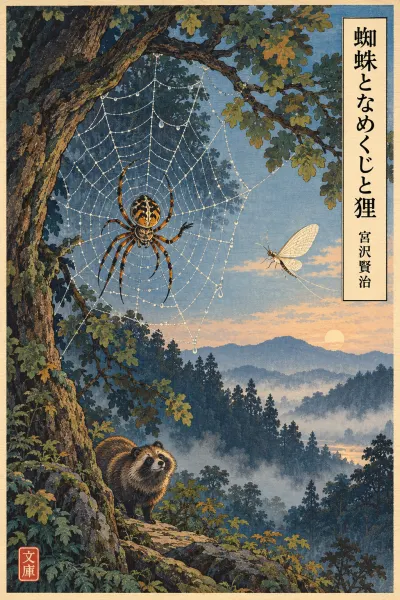
蜘蛛となめくじと狸 Kumo to Namekuji to Tanuki in easy Japanese (N4)
This is our own simplified retelling of A Spider, a Slug and a Tanuki, written for N4 learners and checked word by word against the N4 vocabulary list. A few story words and grammar patterns go beyond N4; the notes below give each one's level. It keeps the characters, events and ending of the original. When it feels easy, move on to the N3 version or the original text.
The story in brief
A spider, a slug and a tanuki are in a mysterious race. The spider grows proud of its web, but its family falls sick from spoiled food and melts away. The slug and the tanuki pretend to be kind and pious so they can eat other animals, until a frog eats the slug. Finally the tanuki swells up, turns black and dies of fever, crying out that it had been in a race to Hell, just like the other two.
AI translation · independently checked
くもと、なめくじと、かおをあらわないたぬきがいました。There were a spider, a slug, and a tanuki who never washed its face.
三人は、何かのきょうそうをしていたそうです。The three of them, so they say, were having some sort of race.
でも、何のきょうそうか、だれも知りませんでした。But nobody knew what kind of race it was.
そして、三人とも死にました。And all three of them died.
一、赤いくもOne: The Red Spider
ある夜、手の長い赤いくもが、風といっしょに、もりの入り口の木に来ました。One night a long-armed red spider came riding on the wind to a tree at the entrance of the wood.
くもはおなかがとてもすいていました。The spider was terribly hungry.
でも、がんばって、小さなあみを作りました。But it worked hard and made a little web.
朝、小さい虫があみに来ました。In the morning a small insect came to the web.
くもはその虫を食べて、あみを少し大きくしました。The spider ate that insect and made its web a little bigger.
つぎに、目の見えない虫が来ました。Next came an insect that could not see.
「ここはどこですか。」「ここはホテルですよ。」とくもは答えました。"Where am I?" "This is a hotel," the spider answered.
虫があみにすわると、くもはその虫をかんで、食べました。When the insect sat down on the web, the spider bit it and ate it.
あみは大きくなりました。The web grew bigger.
きれいな女のくもが来て、二人はけっこんしました。A pretty lady spider came along, and the two of them got married.
子供が二百人生まれました。Two hundred children were born.
ある日、なめくじが来て、「くもの子供はとても小さいね。」と歌いました。One day the slug came by and sang, "My, my, the spider's children are awfully tiny, aren't they!"
くものおくさんはなきました。The spider's wife cried.
でも、くもはわらって、「ぼくはもうすぐ、虫たちのそうだんをきく大切な仕事をするんだぞ。おまえにはできないだろう。」といいました。But the spider laughed and said, "Soon I'll be doing an important job, listening to all the insects' troubles. You couldn't do that, could you?"
なめくじはとてもおこって、病気になりました。The slug got so angry that it fell ill.
くもの子供は、ほとんど死にました。Almost all of the spider's children died.
でも、くもはすぐにわすれました。But the spider soon forgot about them.
ある日、たぬきが来て、「くものあみは下手だから、虫も来ないよ。」と歌いました。One day the tanuki came and sang, "The spider's webs are so clumsy that not even a bug comes near, you know."
くもはおこって、あみを十も作りました。The spider got angry and made as many as ten webs.
夜もねないで、虫を待ちました。It went without sleep even at night and waited for insects.
でも、食べ物がたくさんのこって、わるくなりました。But a lot of the food was left over and went bad.
くもの家族も、体がわるくなって、だんだんとけました。The spider's family fell sick too, and little by little they melted away.
そして、雨の日に、雨といっしょにきえました。Then, on a rainy day, they vanished along with the rain.
二、なめくじTwo: The Slug
なめくじは、もりでいちばん親切だと思われていました。The slug was thought to be the kindest creature in the wood.
ある日、かたつむりが来ました。One day a snail came along.
「何も食べていません。水をください。」なめくじは「どうぞ、どうぞ。わたしたちは兄弟ですよ。」と、水と食べ物をあげました。"I haven't eaten a thing. Please give me some water." "Of course, of course! Why, we're brothers, you and I," said the slug, and it gave the snail water and food.
それから、「どちらが強いか、くらべましょう。」といいました。Then it said, "Let's see which of us is stronger, shall we?"
かたつむりは弱いのに、なめくじは、かたつむりを強くなげました。Even though the snail was weak, the slug threw it down hard.
またなげました。It threw it again.
またなげました。And it threw it again.
かたつむりは死にました。The snail died.
なめくじは、かたつむりを食べました。The slug ate the snail.
つぎに、足にけがをしたとかげが来ました。Next came a lizard that had hurt its leg.
「くすりをください。」なめくじは「わたしの口でなおしてあげますよ。」といいました。"Please give me some medicine." "I'll heal it for you with my mouth," said the slug.
とかげは「足がとけたようです。」「体がはんぶんとけました。」といいました。The lizard said, "My leg seems to have melted," and then, "Half my body has melted."
なめくじは「だいじょうぶ。もう少しです。」と答えました。The slug answered, "Don't you worry. Just a little longer."
そして、なめくじはとかげを食べて、とても大きくなりました。And then the slug ate the lizard and grew very big.
みんなは「なめくじは、くもより悪い。」と思いました。Everyone thought, "The slug is worse than the spider."
つぎの年、かえるが来て、水をのみました。The next year a frog came and drank some water.
かえるは「どちらが強いか、くらべましょう。」といいました。The frog said, "Let's see which of us is stronger."
なめくじはよろこびました。The slug was delighted.
なげられると、かえるはしおを出して、下に少しおきました。Whenever it was thrown, the frog took out some salt and put a little on the ground.
なめくじがもう一度なげると、かえるはうごきませんでした。When the slug threw it once more, the frog lay still.
なめくじはかえるを食べようとしました。The slug tried to eat the frog.
でも、足がうごきません。But its feet would not move.
足がしおでとけていたのです。Its feet had melted in the salt.
かえるはおきて、大きな口をあけてわらいました。The frog got up, opened its big mouth wide and laughed.
そして、なめくじを食べました。And it ate the slug.
三、たぬきThree: The Tanuki
たぬきは、かおをあらいませんでした。The tanuki never washed its face.
ある日、おなかがすいたうさぎが来ました。One day a hungry rabbit came along.
たぬきは「みんな山ねこさまがきめることだ。なまねこ、なまねこ。」といのりました。The tanuki prayed, "It is all for the Lord Wildcat to decide. Namaneko, namaneko."
うさぎもいっしょにいのりました。The rabbit prayed along with it.
たぬきはいのりながら、うさぎのみみを食べました。While it prayed, the tanuki ate the rabbit's ears.
それから手も食べました。Then it ate its paws as well.
うさぎはよろこんでいました。The rabbit was overjoyed.
でも、たぬきのおなかの中で、「たぬきの心は黒い。うそだった。」といいました。But inside the tanuki's belly it said, "The tanuki's heart is black. It was all a lie."
しばらくして、おおかみがおこめを持って来ました。A while later a wolf came, bringing some rice.
「どうしたらいいですか。」たぬきは「山ねこさまはこわいかたですよ。うごかないでください。」といって、おおかみの目、みみ、あたま、足、せなかを食べました。"What should I do?" "The Lord Wildcat is a fearsome one, you know. Please don't move," said the tanuki, and it ate the wolf's eyes, ears, head, legs and back.
おおかみはおなかの中で、「ここはくらい。あ、うさぎもここにいる。」といいました。Inside the belly the wolf said, "It's dark in here. Oh, the rabbit's here too."
その後、たぬきは病気になりました。After that, the tanuki fell ill.
体の中に水や土が入って、体がどんどん大きく、まるくなりました。Water and earth got inside its body, and it grew bigger and bigger and rounder and rounder.
そして、黒くなって、ねつが出ました。Then it turned black and came down with a fever.
「こわい、こわい。ぼくはじごくへ行くきょうそうをしていたのだ。」といって、たぬきは死にました。"I'm scared, I'm scared! I was in a race to get to Hell!" said the tanuki, and it died.
そうです。That's right.
三人は、じごくへ行くきょうそうをしていたのです。The three of them had been racing to Hell.
Vocabulary
| Word | Meaning | JLPT |
|---|---|---|
| きょうそうきょうそう | race, competitiondictionary form: 競争The key word of the story: the 'race' turns out to be a race to Hell. | N4 |
| すいてすく | to become empty; (おなかが〜) to be hungrydictionary form: 空くおなかがすく = 'to get hungry'; おなかがすいた means 'hungry'. | N4 |
| あみあみ | net; (spider's) webdictionary form: 網A spider's web is also called くものす (蜘蛛の巣). | N1 |
| そうだんそうだん | consultation; asking for advicedictionary form: 相談そうだんをきく = to listen to someone's problems and give advice. | N4 |
| おこっておこる | to get angrydictionary form: 怒る | N4 |
| とけましたとける | to melt, dissolvedictionary form: 溶けるA repeated image in the story: the spider family, the lizard and the slug all 'melt'. | N2 |
| 親切しんせつ | kind, helpfulA な-adjective. | N4 |
| くらべましょうくらべる | to compare; to test (who is stronger)dictionary form: 比べるどちらが強いかくらべる = to see which one is stronger, i.e. a wrestling match. | N4 |
| なげましたなげる | to throw (down)dictionary form: 投げる | N4 |
| なおしてなおす | to heal, curedictionary form: 治す治す is for illness or injury; 直す (same reading) is for repairing things. | N2 |
| しおしお | saltdictionary form: 塩Salt really does dry out and kill slugs, which is the frog's trick. | N5 |
| いのりましたいのる | to praydictionary form: 祈る | N4 |
| なまねこなまねこ | Namaneko (the tanuki's prayer chant)A pun on the Buddhist chant なむあみだぶつ (namu amida butsu), twisted to include ねこ 'cat' for the Lord Wildcat (山ねこさま). | — |
| じごくじごく | Helldictionary form: 地獄The opposite is 極楽 (ごくらく), Paradise. | N1 |
Grammar
〜そうです (hearsay) N4 I hear that…; they say that…
Attached to the plain form of a verb, そうです reports something the speaker heard rather than saw. Here the narrator passes on the story as something people say.
三人は、何かのきょうそうをしていたそうです。
The three of them, so they say, were having some sort of race.
〜ないで N4 without doing…
The ない-form plus で describes doing the next action without doing the first one. The spider waits for insects without sleeping.
夜もねないで、虫を待ちました。
It went without sleep even at night and waited for insects.
〜と思われる (passive) N3 to be thought to be…
思われる is the passive of 思う. Together with ていました it means the slug was generally thought to be kind, which hints that it really was not.
なめくじは、もりでいちばん親切だと思われていました。
The slug was thought to be the kindest creature in the wood.
〜のに N4 even though…
のに joins two facts where the second is unexpected or unfair given the first. The snail is weak, yet the slug throws it hard anyway.
かたつむりは弱いのに、なめくじは、かたつむりを強くなげました。
Even though the snail was weak, the slug threw it down hard.
〜ようとする N3 to try to…; to be about to…
The volitional form plus とする shows an attempt that often does not succeed. Here the slug tries to eat the frog, but its feet won't move.
なめくじはかえるを食べようとしました。
The slug tried to eat the frog.
〜ながら N4 while doing…
The verb stem plus ながら shows two actions done by the same subject at the same time. The tanuki prays and eats the rabbit at once, which shows its hypocrisy.
たぬきはいのりながら、うさぎのみみを食べました。
While it prayed, the tanuki ate the rabbit's ears.