 N5 · easy
Simplified retelling · JLPT N5
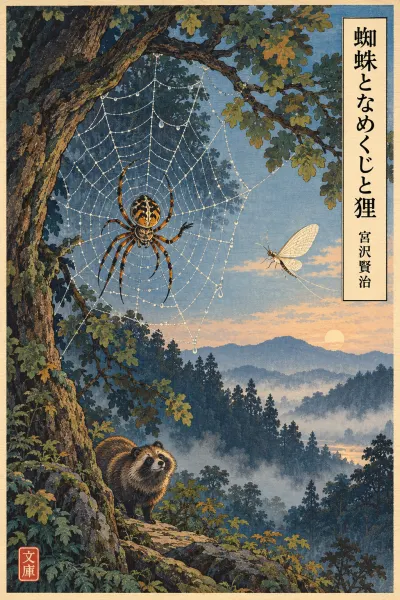
蜘蛛となめくじと狸 Kumo to Namekuji to Tanuki in easy Japanese (N5)
This is our own simplified retelling of A Spider, a Slug and a Tanuki, written for N5 learners and checked word by word against the N5 vocabulary list. A few story words and grammar patterns go beyond N5; the notes below give each one's level. It keeps the characters, events and ending of the original. When it feels easy, move on to the N4 version or the original text.
The story in brief
A red spider's webs and family grow bigger as he catches more prey, but the food spoils, the family falls dirty and sick, and they vanish on a rainy night. A slug seems kind but eats a snail and a lizard, until a frog beats him with salt and eats him. A tanuki chants a fake prayer while he eats a rabbit and a wolf, then swells up, turns black and dies. All three were really racing one another to hell.
AI translation · independently checked
くもと、なめくじと、たぬきがいました。There was a spider, a slug and a tanuki.
三人は、みんなしにました。All three of them died.
どうしてでしょう。Why do you suppose that was?
一、あかいくもOne: The Red Spider
ある晩、くもは かぜに とばされて、木に来ました。One night the spider was blown along by the wind and landed on a tree.
くもは なにも食べていませんでした。The spider had not eaten anything.
でも、小さな あみを つくりました。Even so, he spun a little web.
あさ、かが来ました。In the morning a mosquito came.
くもは かを食べました。The spider ate the mosquito.
あみは 大きくなりました。His web grew bigger.
それから、ほかの小さいものも食べました。After that, he ate other little creatures too.
あみは もっと大きくなりました。His web grew bigger still.
女のくもが来て、二人は けっこんしました。A lady spider came along, and the two of them got married.
子どもが たくさん生まれました。Lots of babies were born.
なめくじが来て、うたいました。A slug came by and sang.
「くもの子どもは、とても小さいね。」"My, my, your little ones are ever so tiny, aren't they!"
くもは いいました。The spider said:
「おれは、みんなの中で いちばん大せつな人になるんだ。」なめくじは びょう気になりました。"I'm going to be the most important one of all!" The slug fell sick.
たぬきも来て、「あみが へたですね。」と いいました。The tanuki came too and said, "Your webs are poorly made, I'm afraid."
くもは「いつか、おれが上だと見せるぞ。」と いいました。The spider said, "Someday I'll show you I'm the top dog!"
くもは あみを十も つくりました。The spider made as many as ten webs.
食べものが たくさんあって、ふるくなりました。There was so much food that it went stale.
くものかぞくは きたなくなって、びょう気になりました。The spider's family grew filthy and fell sick.
ある雨の晩、くもたちは 雨といっしょに きえました。One rainy night, the spiders vanished along with the rain.
二、なめくじTwo: The Slug
みんなは、なめくじは やさしいと いいました。Everyone said the slug was kind.
ある朝、かたつむりが来ました。One morning a snail came.
「水がほしいです。」なめくじは 水をあげました。"I would like some water." The slug gave him water.
そして「すもうをしましょう。」と いいました。Then he said, "Let's have a wrestling match!"
もう一度、もう一度と、すもうをしました。"One more time! One more time!" And so they wrestled again and again.
かたつむりは つかれて、しにました。The snail grew tired and died.
なめくじは かたつむりを食べました。The slug ate the snail.
つぎに、とかげが来ました。Next, a lizard came.
「あしが いたいです。」なめくじは「わたしが くちで きれいにしてあげましょう。」と いいました。"My leg hurts." The slug said, "Let me clean it for you with my mouth."
とかげは だんだん小さくなりました。Little by little, the lizard got smaller.
「もう やめて!」でも、なめくじは やめません。"Stop it now!" But the slug did not stop.
とかげは ぜんぶ食べられました。The lizard was eaten up completely.
みんなは、なめくじは わるいと 知りました。Everyone learned that the slug was wicked.
つぎの年、かえるが来ました。The next year, a frog came.
かえるは 水をのんで、「すもうをしましょう。」と いいました。The frog drank some water and said, "Let's have a wrestling match."
すもうのとき、かえるは しおを出しました。During the match, the frog brought out some salt.
なめくじのあしは、しおで きえていきました。The slug's foot melted away in the salt.
もう あるけません。He could no longer walk.
かえるは 大きなくちを開けて、なめくじを食べました。The frog opened his big mouth and ate the slug.
三、たぬきThree: The Tanuki
たぬきも、なにも食べていませんでした。The tanuki had not eaten anything either.
うさぎが来て、「食べものが ありません。」と いいました。A rabbit came and said, "I have no food."
たぬきは やさしいこえで「なまねこ、なまねこ。」と うたいました。In a gentle voice, the tanuki chanted, "Namaneko, namaneko."
そして、うさぎのみみを食べました。And then he ate the rabbit's ears.
うさぎは「いたい。でも、これは いいことです。」と いいました。The rabbit said, "Ow, it hurts! But this is a good deed."
たぬきは てもあしも食べました。The tanuki ate his paws and his legs too.
うさぎは、たぬきのおなかの中で いいました。From inside the tanuki's belly, the rabbit spoke.
「あなたは わるいたぬきだ!」"You are a wicked tanuki!"
それから少しあとで、おおかみが 食べものをもって来ました。A little while after that, a wolf came carrying some food.
「わたしは わるいことをしました。どうしたら いいですか。」たぬきは「しずかに まっていなさい。なまねこ、なまねこ。」と いいました。"I have done bad things. What should I do?" The tanuki said, "Wait quietly. Namaneko, namaneko."
そして、おおかみの目も、みみも、あたまも、あしも、ぜんぶ食べました。And then he ate the wolf's eyes, ears, head and legs — every bit of him.
それから、たぬきは びょう気になりました。After that, the tanuki fell sick.
おなかは だんだん大きくなって、まるくなりました。His belly grew bigger and bigger until it was round.
からだは くろくなりました。His body turned black.
たぬきは「ああ、いたい、いたい。」と いって、しにました。The tanuki said, "Oh, it hurts, it hurts!" and died.
三人は、だれが いちばんはやく じごくへ行くか、はしっていたのです。You see, the three of them had been racing to find out who could get to hell the fastest.
Vocabulary
| Word | Meaning | JLPT |
|---|---|---|
| とばされてとばす | to blow away, to send flyingdictionary form: とばすHere in the passive: とばされる 'to be blown away'. Kanji: 飛ばす. | N3 |
| あみあみ | web, netKanji: 網. Used for spider webs and fishing nets. | N1 |
| けっこんけっこん | marriageけっこんする = to get married. Kanji: 結婚. | N5 |
| びょう気びょうき | illness, sicknessdictionary form: 病気びょう気になる = to get sick. | N5 |
| へたへた | bad at, clumsydictionary form: 下手Opposite of じょうず. A な-adjective. | N5 |
| きえましたきえる | to disappear, to vanishdictionary form: 消えるAlso 'to go out' for a light or fire. | N5 |
| すもうすもう | sumo wrestling, a wrestling matchdictionary form: 相撲Traditional Japanese wrestling; in the story, just a pushing contest between animals. | N2 |
| つかれてつかれる | to get tired (te-form here: 'got tired and…')dictionary form: 疲れるつかれました = I'm tired (literally 'I have become tired'). | N5 |
| とかげとかげ | lizard | — |
| しおしお | saltdictionary form: 塩Salt dries out and 'melts' slugs, which is the frog's trick. | N5 |
| なまねこなまねこ | Namaneko (the tanuki's fake prayer)A pun on the Buddhist chant なむあみだぶつ (namu amida butsu). ねこ means 'cat', so the holy words become nonsense. | — |
| だんだんだんだん | little by little, graduallydictionary form: 段々Often used with 〜くなる: だんだん小さくなる 'gradually get smaller'. | N1 |
| じごくじごく | helldictionary form: 地獄The Buddhist underworld of punishment; the opposite of 極楽 (Paradise). | N1 |
Grammar
〜くなる N5 to become (adjective)
An い-adjective drops い and adds くなる to show change. 大きい becomes 大きくなる, 'to become big'.
あみは 大きくなりました。
His web grew bigger.
〜ていませんでした N4 had not (done)
The negative past of 〜ている describes a state that continued up to a point in the past. Here it means the spider had gone without food.
くもは なにも食べていませんでした。
The spider had not eaten anything.
〜ましょう N5 let's (do)
The ます-stem plus ましょう makes a suggestion or invitation. The slug and the frog both use it to start a wrestling match.
「すもうをしましょう。」と いいました。
He said, "Let's have a wrestling match!"
〜てあげましょう N4 let me (do) for you
て-form plus あげる means doing something as a favour for someone. With ましょう it becomes a kind offer, which the slug makes in a falsely friendly way.
わたしが くちで きれいにしてあげましょう。
Let me clean it for you with my mouth.
Passive 〜られる N4 to be (done) by someone
食べる becomes 食べられる, 'to be eaten'. The lizard becomes the subject, so the sentence focuses on what happened to it.
とかげは ぜんぶ食べられました。
The lizard was eaten up completely.
Question word + 〜か (embedded question) N4 who / what / whether…
A question with だれ ending in か can sit inside a longer sentence as 'who…'. The final のです gives the explanation behind the whole story.
三人は、だれが いちばんはやく じごくへ行くか、はしっていたのです。
You see, the three of them had been racing to find out who could get to hell the fastest.