 N4 · easy
Simplified retelling · JLPT N4
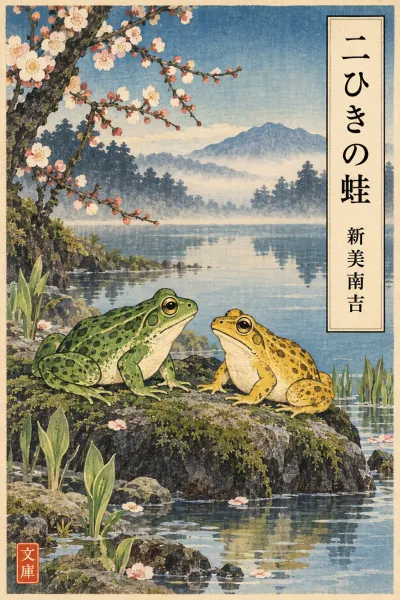
二ひきの蛙 Nihiki no Kaeru in easy Japanese (N4)
This is our own simplified retelling of The Green Frog and the Yellow Frog, written for N4 learners and checked word by word against the N4 vocabulary list. A few story words and grammar patterns go beyond N4; the notes below give each one's level. It keeps the characters, events and ending of the original. When it feels easy, move on to the N3 version or the original text.
The story in brief
A green frog and a yellow frog meet in a field and start fighting because each insults the other's colour. A cold wind reminds them that winter is coming, so they promise to finish the fight in spring and burrow underground to sleep. In spring they wash in the fresh water of a pond, and, feeling refreshed after their long sleep, they praise each other's colours and agree to stop fighting.
AI translation · independently checked
みどりのかえると、きいろのかえるが、はたけの真ん中で会いました。A green frog and a yellow frog met in the middle of a field.
「やあ、きみはきいろだね。きたない色だ。」"Hey, so you're yellow. What a dirty colour."
と、みどりのかえるが話しました。So said the green frog.
「きみはみどりだね。きみは、その色がうつくしいと思っているのかい。」"And you're green. Do you really think that colour of yours is beautiful?"
と、きいろのかえるが答えました。So answered the yellow frog.
こんな話し方をしていると、いいことはありません。Nothing good ever comes of talking like that.
二ひきのかえるは、とうとうけんかを始めました。In the end, the two frogs started a fight.
みどりのかえるは、きいろのかえるにとびかかりました。The green frog sprang at the yellow frog.
このかえるは、とびかかるのが上手でした。This frog was very good at springing on others.
きいろのかえるは、後ろの足ですなをけりました。The yellow frog kicked up sand with its back legs.
すなが目に入るので、みどりのかえるは、時々目からすなをおとさなければなりませんでした。The sand got into the green frog's eyes, so every now and then it had to shake the sand out of them.
すると、そこへつめたい風がふいてきました。Just then, a cold wind came blowing their way.
二ひきのかえるは、冬が近いことを思い出しました。The two frogs remembered that winter was near.
かえるは、土の中にもぐって、冬の間ねむらなければなりません。Frogs must burrow into the earth and sleep all through the winter.
「春になったら、またけんかをしよう。」"When spring comes, let's fight again."
と話して、みどりのかえるは土の中にもぐりました。With these words, the green frog burrowed down into the earth.
「今のことばをわすれるなよ。」"Don't you forget what you just said!"
と話して、きいろのかえるももぐりました。With these words, the yellow frog burrowed down too.
さむい冬が来ました。The cold winter came.
かえるたちがねむっている土の上に、つめたい風がふきました。A cold wind blew over the earth where the frogs lay sleeping.
土はとてもつめたくなりました。The earth grew very cold.
それから、春が来ました。Then spring came.
土の中でねむっていたかえるたちは、せなかの上の土があたたかくなったので、春が来たことがわかりました。The frogs sleeping in the earth felt the soil on their backs grow warm, and so they knew that spring had come.
はじめに、みどりのかえるが起きました。The green frog woke up first.
土の上に出てみましたが、ほかのかえるはまだ出ていません。It climbed up out of the earth to take a look, but the other frog had not come out yet.
「さあ、起きなさい。もう春だよ。」"Come on, wake up! It's spring already!"
と、みどりのかえるは土の中にむかってよびました。So the green frog called down into the earth.
すると、きいろのかえるが、Then the yellow frog,
「ああ、春になったか。」"Ah, so it's spring, is it?"
と話しながら、土から出てきました。said, as it came climbing out of the earth.
「去年のけんかをわすれたか。」"Have you forgotten our fight from last year?"
と、みどりのかえるが聞きました。asked the green frog.
「待て待て。体の土をあらってからにしよう。」"Hold on, hold on. Let's wash the dirt off ourselves first."
と、きいろのかえるが答えました。answered the yellow frog.
二ひきのかえるは、体の土をおとすために、いけのほうへ行きました。The two frogs went over to the pond to wash the dirt off their bodies.
いけには、新しくわいてきた、つめたくてきれいな水がいっぱいありました。The pond was brimming with cold, clear water that had newly welled up.
かえるたちは、その中へ元気よくとびこみました。The frogs dived into it with great energy.
体をあらってから、みどりのかえるは目を大きく開けて、After washing, the green frog opened its eyes wide
「やあ、きみのきいろはうつくしいね。」"Why, your yellow is beautiful!"
と話しました。and said so.
「きみのみどりも、とてもすばらしいよ。」"Your green is really wonderful too."
と、きいろのかえるが答えました。answered the yellow frog.
そして二ひきのかえるは、And then the two frogs
「もうけんかはやめよう。」"Let's not fight anymore."
と話しました。said to each other.
よくねむった後は、人でもかえるでも、気分がよくなるものなのです。After a good sleep, you see, people and frogs alike are bound to feel better.
Vocabulary
| Word | Meaning | JLPT |
|---|---|---|
| はたけはたけ | field (for growing vegetables)dictionary form: 畑A dry field; a wet rice field is 田 (た). | N3 |
| きたないきたない | dirty, uglydictionary form: 汚いThe opposite of きれい. | N5 |
| うつくしいうつくしい | beautifuldictionary form: 美しいA more literary word than きれい. | N4 |
| けんかけんか | fight, quarreldictionary form: 喧嘩Used with する. It can mean an argument or a physical fight. | N4 |
| とびかかりましたとびかかる | to spring at, to pounce ondictionary form: 飛びかかるMade from 飛ぶ (jump) + かかる. The target takes に. | — |
| けりましたける | to kickdictionary form: 蹴るA godan verb even though it ends in -eru: けります, けった. | N2 |
| つめたいつめたい | cold (to the touch)dictionary form: 冷たいUsed for things and wind you feel. For weather or air temperature, use さむい. | N5 |
| もぐってもぐる | to burrow into, to dive underdictionary form: 潜るUsed for going under earth, water or a blanket. | N2 |
| わすれるなわすれる | to forgetdictionary form: 忘れる | N5 |
| よびましたよぶ | to call (out to someone)dictionary form: 呼ぶ | N5 |
| いけいけ | ponddictionary form: 池 | N5 |
| わいてきたわく | (of water) to well up, to spring outdictionary form: 湧くUsed for spring water coming up from the ground. | N2 |
| すばらしいすばらしい | wonderful, splendiddictionary form: 素晴らしい | N4 |
| 気分きぶん | mood, how one feels気分がいい means "to feel good". | N4 |
Grammar
〜なければなりません N4 must, have to
The ない-form changes to なければ and is followed by なりません. Here it states something frogs must always do: sleep underground in winter.
冬の間ねむらなければなりません。
They must sleep through the winter.
〜たら N4 when / once (something happens)
The past-tense form + ら describes what will happen after a condition is met. Spring coming is certain, so here it means "when" rather than "if".
春になったら、またけんかをしよう。
When spring comes, let's fight again.
Verb (dictionary form) + な N4 don't ~! (strong prohibition)
Adding な to the dictionary form makes a blunt, casual order not to do something. It is typical of rough, boyish speech, and よ makes it more emphatic.
今のことばをわすれるなよ。
Don't you forget what you just said!
〜ながら N4 while doing ~
The ます-stem + ながら shows two actions done at the same time by the same subject. The yellow frog talks while it climbs out.
と話しながら、土から出てきました。
it said, as it came out of the earth.
〜てから N5 after doing ~, first ~ and then
The て-form + から means "after ~". In てからにしよう the actual action is left out: "let's make it after washing", which means "let's fight after we wash".
体の土をあらってからにしよう。
Let's wash the dirt off ourselves first.
〜ために N4 in order to ~
The dictionary form + ために gives the purpose of an action. The frogs go to the pond so that they can wash off the dirt.
体の土をおとすために、いけのほうへ行きました。
They went to the pond to wash the dirt off their bodies.