 N4 · easy
Simplified retelling · JLPT N4
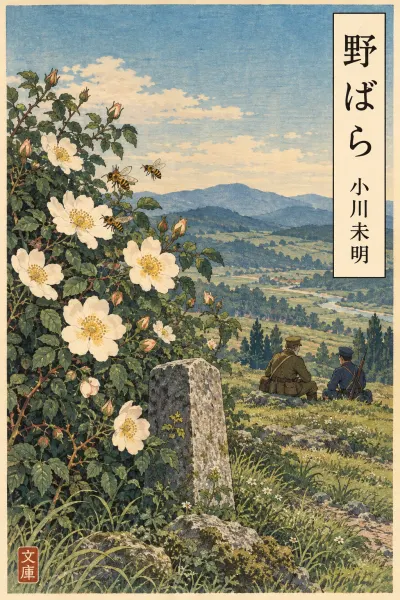
野ばら Nobara in easy Japanese (N4)
This is our own simplified retelling of A Wild Rose on the Border, written for N4 learners and checked word by word against the N4 vocabulary list. A few story words and grammar patterns go beyond N4; the notes below give each one's level. It keeps the characters, events and ending of the original. When it feels easy, move on to the original text.
The story in brief
An old soldier from a large country and a young soldier from a smaller one guard a lonely mountain border and become close friends over games of shogi. When war breaks out, the old man tells the young soldier to kill him and take his head for glory, but the young man refuses to fight his friend and goes north to the battle. Later the old man hears that the small country has lost. He dreams that the young soldier passes by with a silent army and bows to him. The wild rose then withers, and in autumn the old man goes home to the south.
AI translation · independently checked
大きな国と、それより少し小さな国が、となりどうしでした。A large country and a slightly smaller country were neighbours.
二つの国の間には、何も問題がありませんでした。There were no problems at all between the two countries.
二つの国の間の山に、こっきょうがありました。The border lay in the mountains between the two countries.
そこには大きないしが立っていました。A large stone stood there.
二つの国から、へいたいが一人ずつ来て、そのいしをまもっていました。One soldier came from each of the two countries, and they guarded that stone.
大きな国のへいたいは、おじいさんでした。The soldier from the large country was an old man.
小さな国のへいたいは、わかい男でした。The soldier from the small country was a young man.
そこは、とてもさびしい山でした。It was a very lonely place in the mountains.
人はほとんど通りませんでした。Hardly anyone ever passed that way.
初めは、二人はあまり話しませんでした。At first, the two of them did not talk much.
でも、ほかに話す人がいません。But there was no one else to talk to.
春の日は長くて、暖かいです。The spring days were long and warm.
二人はだんだんなかよくなりました。Little by little, the two became good friends.
こっきょうには、白い野ばらが一本ありました。At the border there grew a single white wild rose.
毎朝早く、みつばちがたくさん花に集まりました。Early every morning, many honeybees gathered on the flowers.
その音を聞いて、二人は起きました。The two men woke up when they heard the sound.
そして、水でかおをあらいに行きました。Then they went to wash their faces in the water.
「おはよう。いい天気ですね。」"Good morning. Fine weather, isn't it?"
「ほんとうにいい天気です。気持ちがいいですね。」"Truly fine weather. It feels wonderful, doesn't it?"
二人は、まわりの山を見ました。The two men looked at the mountains all around them.
毎日見ているけしきでも、いつも新しい気持ちになりました。Even though it was a view they saw every day, it always made them feel fresh and new.
おじいさんは、わかいへいたいにしょうぎを教えました。The old man taught the young soldier how to play shogi.
二人は毎日、昼にしょうぎをしました。Every day at noon, the two of them played shogi.
初めは、おじいさんのほうがずっと強かったです。At first, the old man was far stronger.
でも、そのうちに、わかいへいたいがかつこともありました。But before long, there were times when the young soldier won.
「これは私のまけですね。」と、おじいさんは大きな口を開けてわらいました。"This is my loss, isn't it?" said the old man, laughing with his mouth wide open.
二人とも、しょうじきで、しんせつな人でした。Both of them were honest and kind men.
小鳥は木の上で歌っていました。Little birds were singing up in the trees.
冬になりました。Winter came.
さむくなると、おじいさんは南の国に帰りたくなりました。When it grew cold, the old man began to long to go home to his country in the south.
そこには、むすこや、まごが住んでいました。His son and his grandchildren lived there.
「早く家に帰りたいなあ。」"Oh, how I'd like to get home soon."
わかいへいたいは言いました。The young soldier said:
「あなたが帰ったら、知らない人が来るでしょう。その人が私をてきだと思ったら、こまります。もう少しいてください。もうすぐ春が来ます。」"If you go home, someone I don't know will come. If that person thinks I'm an enemy, I'll be in trouble. Please stay a little longer. Spring will be here soon."
冬が終わって、春になりました。Winter ended, and spring came.
そのころ、二つの国はせんそうを始めました。Around that time, the two countries went to war.
なかがよかった二人は、てきどうしになりました。The two men who had been such good friends became enemies.
おじいさんは言いました。The old man said:
「今日から、私たちはてきです。私はこんなに年をとっていますが、上のほうのへいたいです。私のくびを持っていけば、あなたは国でほめられます。だから、私をころしてください。」"From today, we are enemies. Old as I am, I am a soldier of high rank. If you take my head back with you, you will be praised in your country. So please, kill me."
わかいへいたいは、びっくりしました。The young soldier was astonished.
「何を言うのですか。あなたは私のてきではありません。せんそうは、ずっと北のほうでしています。私はそこへ行きます。」そして、行ってしまいました。"What are you saying? You are not my enemy. The war is being fought far away to the north. I will go there." And with that, he went away.
おじいさんは一人になりました。The old man was left all alone.
野ばらの花がさいて、みつばちが集まりました。The wild rose bloomed, and the honeybees gathered.
せんそうはとおいので、何も聞こえません。The war was far away, so nothing could be heard.
おじいさんは毎日、わかいへいたいのことをしんぱいしていました。Every day, the old man worried about the young soldier.
ある日、旅をしている人が通りました。One day, a traveller passed by.
おじいさんは、せんそうのことを聞きました。The old man asked him about the war.
「小さな国がまけました。へいたいはみんな死にました。せんそうは終わりました。」"The small country has lost. All its soldiers are dead. The war is over."
おじいさんは、「あのわかいへいたいも死んだのだろうか」と思いました。The old man wondered, "Could that young soldier be dead too?"
いしのそばにすわって、考えているうちに、ねむってしまいました。He sat down beside the stone, and while he was thinking, he fell asleep.
むこうから、たくさんの人が来ました。From over there, a great many people came.
ぐんたいでした。It was an army.
うまにのって前にいるのは、あのわかいへいたいでした。The one riding a horse at the front was that young soldier.
ぐんたいはとてもしずかで、だれも何も言いません。The army was very quiet; no one said a word.
おじいさんの前を通るとき、わかいへいたいは何も言わないで、あたまを下げました。As he passed in front of the old man, the young soldier bowed his head without saying anything.
そして、野ばらの花のにおいをすいました。And he breathed in the scent of the wild rose.
おじいさんが何か言おうとしたとき、目が開きました。Just as the old man was about to say something, his eyes opened.
それは、ゆめでした。It had been a dream.
それからひと月ぐらいたつと、野ばらはかれてしまいました。About a month after that, the wild rose withered away.
その年の秋、おじいさんは南の国の家に帰りました。In the autumn of that year, the old man went home to his house in the country to the south.
Vocabulary
| Word | Meaning | JLPT |
|---|---|---|
| となりどうしとなりどうし | neighbours (to each other)dictionary form: 隣同士〜どうし means "mutual, fellow ~"; compare てきどうし (enemies of each other). | — |
| こっきょうこっきょう | border between countriesdictionary form: 国境Kanji: 国 (country) + 境 (boundary). | N3 |
| へいたいへいたい | soldierdictionary form: 兵隊 | N2 |
| まもってまもる | to guard, to protectdictionary form: 守る | N3 |
| けしきけしき | scenery, viewdictionary form: 景色 | N4 |
| しょうぎしょうぎ | shogi (Japanese chess)dictionary form: 将棋Used with する or さす: しょうぎをする. | N2 |
| てきてき | enemydictionary form: 敵 | N3 |
| せんそうせんそう | wardictionary form: 戦争せんそうを始める = to start a war, go to war. | N4 |
| ほめられますほめる | to praise (here passive: to be praised)dictionary form: 褒める | N4 |
| しんぱいしんぱい | worry, concerndictionary form: 心配〜のことを心配する = to worry about someone. | N4 |
| ぐんたいぐんたい | army, troopsdictionary form: 軍隊 | N3 |
| においにおい | scent, smelldictionary form: 匂いにおいをすう = to breathe in a scent. | N4 |
| かれてかれる | to wither, to die (of plants)dictionary form: 枯れる | N2 |
Grammar
〜ずつ N4 each; ~ at a time
ずつ after a number or amount shows the same quantity for each person or thing. 一人ずつ means one soldier from each country.
二つの国から、へいたいが一人ずつ来て
One soldier came from each of the two countries
〜たら N4 if / when ~
The past form + ら makes a condition: once the first thing happens, the second follows. The young soldier uses it twice to explain what he fears.
あなたが帰ったら、知らない人が来るでしょう。
If you go home, someone I don't know will come.
Passive 〜られる N4 to be ~ed
ほめる becomes ほめられる, "to be praised". The person who receives the action (あなた) is the subject.
あなたは国でほめられます。
You will be praised in your country.
〜てしまう N4 to do completely; (often with regret)
〜てしまう shows an action is finished and cannot be undone, often with a sad or regretful feeling. It appears for the young man leaving, the old man falling asleep, and the rose withering.
そして、行ってしまいました。
And with that, he went away.
〜ているうちに N3 while ~ (something else happens)
While one action continues, another change happens, often without the person noticing. Here he falls asleep while thinking.
考えているうちに、ねむってしまいました。
While he was thinking, he fell asleep.
〜(よ)うとする N3 to try to ~; to be about to ~
The volitional form + とする shows someone is just about to do something. With とき it means "just as he was about to ~", and the action is interrupted.
おじいさんが何か言おうとしたとき、目が開きました。
Just as the old man was about to say something, his eyes opened.