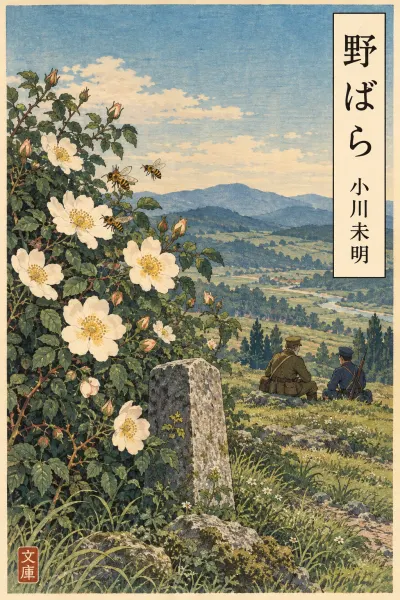
 N5 · easy
Simplified retelling · JLPT N5
野ばら Nobara in easy Japanese (N5)
This is our own simplified retelling of A Wild Rose on the Border, written for N5 learners and checked word by word against the N5 vocabulary list. A few story words and grammar patterns go beyond N5; the notes below give each one's level. It keeps the characters, events and ending of the original. When it feels easy, move on to the N4 version or the original text.
The story in brief
An old soldier from a large country and a young soldier from a small country guard a lonely mountain border. They become friends, play shogi every day, and wake to the bees at the wild rose. When the two countries go to war, the young man leaves for the northern front. Later the old man learns that all the small country's soldiers have died, dreams of his friend bowing to him, and returns home in the autumn.
AI translation · independently checked
大きな国と、小さな国が となりに ありました。A large country and a small country lay side by side.
二つの国は しずかで、何も ありませんでした。The two countries were peaceful, and nothing happened there.
とおい 山の 中に、二つの国の こっきょうが ありました。Deep in the faraway mountains was the border between the two countries.
そこに 大きな いしが たって いました。A large stone stood there.
いしの 右と 左に、へいたいが 一人ずつ いました。On the right and on the left of the stone there was one soldier each.
大きな国の へいたいは おじいさんでした。The soldier of the large country was an old man.
小さな国の へいたいは わかい男でした。The soldier of the small country was a young man.
山は とても しずかで、人は あまり 来ませんでした。The mountains were very quiet, and hardly anyone came.
はじめ、二人は あまり 話しませんでした。At first, the two of them did not talk much.
でも、ほかに 話す 人が いません。But there was no one else to talk to.
だんだん 二人は 友だちに なりました。Little by little, the two became friends.
こっきょうには、白い のばらが ありました。At the border there grew a white wild rose.
はるの あさ、みつばちが たくさん 来ました。One spring morning, many honeybees came.
二人は その おとで おきました。The two woke up at the sound of them.
「おはよう。いい 天気ですね。」"Good morning. Fine weather, isn't it?"
「ほんとうに いい 天気ですね。」"It truly is fine weather."
おじいさんは わかい男に しょうぎを おしえました。The old man taught the young man to play shogi.
ひるに なると、二人は 毎日 しょうぎを しました。When noon came, the two played shogi every day.
はじめは おじいさんが つよかったです。At first, the old man was the stronger player.
でも、だんだん わかい男も つよく なりました。But little by little, the young man grew strong too.
二人とも やさしい、いい人でした。Both of them were kind, good people.
ふゆに なりました。Winter came.
おじいさんは いいました。The old man said,
「南の いえに かえりたいです。かぞくが いますから。」"I want to go back to my home in the south. My family is there, you see."
わかい男は いいました。The young man said,
「あなたが かえると、しらない人が 来ます。やさしくない 人だと こまります。もう すこし いて ください。すぐに はるが 来ますよ。」"If you go home, a stranger will come. It would be hard for me if he were not a kind man. Please stay a little longer. Spring will be here soon."
はるに なりました。Spring came.
そのとき、二つの国は せんそうを はじめました。At that time, the two countries started a war.
二人は てきに なりました。The two men became enemies.
「今日から わたしたちは てきです。わたしを ころして ください。」と、おじいさんは いいました。"From today, we are enemies. Please kill me," said the old man.
「何を いいますか。あなたは わたしの てきでは ありません。せんそうは 北の ほうで しています。わたしは そこへ 行きます。」"What are you saying? You are not my enemy. The war is being fought up in the north. I will go there."
わかい男は そう いって、山を 出て いきました。Saying this, the young man left the mountains.
おじいさんは 一人に なりました。The old man was left alone.
のばらが さいて、みつばちが 来ました。The wild rose bloomed, and the honeybees came.
せんそうは とおい 所なので、何も 聞こえません。Because the war was far away, he could hear nothing of it.
おじいさんは 毎日「あの人は げんきだろうか。」と いいました。Every day the old man said, "I wonder if that young man is well."
ある日、山を あるいて いる 人が 来ました。One day, a traveller walking through the mountains came by.
「せんそうは どう なりましたか。」"What happened in the war?"
「大きな国が つよかったです。小さな国の へいたいは みんな しにました。」"The large country was stronger. The soldiers of the small country all died."
おじいさんは いしの 下に すわって、ねて しまいました。The old man sat down beneath the stone and fell asleep.
そして、ゆめを 見ました。And he had a dream.
とおくから、たくさんの へいたいが 来ました。From far away, many soldiers came.
うまに のって いる 人は、あの わかい男でした。The man riding on a horse was that young man.
へいたいたちは 何も いいません。The soldiers said nothing at all.
とても しずかでした。Everything was very quiet.
わかい男は おじいさんの 前で しずかに あたまを 下げて、のばらの 花を 見ました。In front of the old man, the young man quietly bowed his head, and then he looked at the wild rose's flowers.
おじいさんは 何か いおうと しました。The old man tried to say something.
そのとき、おきました。Just then, he woke up.
それは ゆめでした。It had been a dream.
一か月 ぐらい して、のばらは かれて しまいました。About a month later, the wild rose withered away.
その 年の あき、おじいさんは 南の いえへ かえりました。In the autumn of that year, the old man went back to his home in the south.
Vocabulary
| Word | Meaning | JLPT |
|---|---|---|
| こっきょうこっきょう | border between countriesdictionary form: 国境Kanji: 国 (country) + 境 (boundary). | N3 |
| へいたいへいたい | soldierdictionary form: 兵隊 | N2 |
| ずつずつ | each; apieceComes after a number: 一人ずつ = one person each. | — |
| わかいわかい | youngdictionary form: 若い | N5 |
| だんだんだんだん | little by little; gradually | N1 |
| のばらのばら | wild rosedictionary form: 野ばら野 (field, wild) + ばら (rose). This is the story's title. | — |
| みつばちみつばち | honeybeedictionary form: 蜜蜂 | — |
| しょうぎしょうぎ | shogi (Japanese chess)dictionary form: 将棋 | N2 |
| かぞくかぞく | familydictionary form: 家族 | N5 |
| こまりますこまる | to be troubled; to be a problemdictionary form: 困る〜とこまります = it would be a problem if ~. | N5 |
| せんそうせんそう | wardictionary form: 戦争 | N4 |
| てきてき | enemydictionary form: 敵 | N3 |
| ゆめゆめ | dreamdictionary form: 夢ゆめを見る = to have a dream (literally 'see a dream'). | N4 |
| かれてかれる | to wither; to die (of plants)dictionary form: 枯れる | N2 |
Grammar
〜たいです N5 want to do
Attach たい to the verb's ます-stem (かえります → かえりたい) to say what you want to do. Adding です makes it polite.
南の いえに かえりたいです。
I want to go back to my home in the south.
〜て ください N5 please do
Use the て-form of a verb + ください to make a polite request. Here the young man asks the old man to stay (いる → いて).
もう すこし いて ください。
Please stay a little longer.
Verb (plain) + と N4 if / when ~, then ~
The plain form + と means that the second thing naturally happens when the first thing happens. If the old man goes home, a new soldier will come.
あなたが かえると、しらない人が 来ます。
If you go home, a stranger will come.
Noun + なので N5 because (it is) ~
ので gives a reason. After a noun, use なので. The war is far away, so he can hear nothing.
せんそうは とおい 所なので、何も 聞こえません。
Because the war was far away, he could hear nothing of it.
〜て しまう N4 end up doing; do completely
The て-form + しまう shows that something is finished, often with a feeling of sadness or of not meaning to. The old man fell asleep before he knew it, and the rose withered away.
のばらは かれて しまいました。
The wild rose withered away.
〜ようと する N3 try to do; be about to do
The volitional form (いう → いおう) + とする means someone tries or is just about to do something. Here the old man starts to speak, but he wakes up before he can.
おじいさんは 何か いおうと しました。
The old man tried to say something.