 N3 · easy
Simplified retelling · JLPT N3
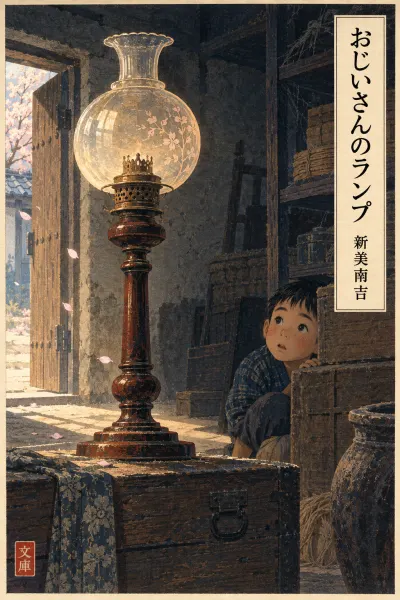
おじいさんのランプ Ojiisan no Ranpu in easy Japanese (N3)
This is our own simplified retelling of The Lamp in Grandfather's Storehouse, written for N3 learners and checked word by word against the N3 vocabulary list. A few story words and grammar patterns go beyond N3; the notes below give each one's level. It keeps the characters, events and ending of the original. When it feels easy, move on to the original text.
The story in brief
Tōichi finds an old lamp in the storehouse, and his grandfather tells him the story of Minosuke, an orphan boy who became a lamp seller and brought light to his village. When electricity arrives, Minosuke first wants revenge, but then he sees that his trade has had its day. He hangs his lamps by a pond, smashes them, and starts a new life as a bookseller. At the end the grandfather reveals that he himself is Minosuke.
AI translation · independently checked
かくれんぼをしていたとき、東一くんがくらのすみから古いランプを持って出てきました。During a game of hide-and-seek, Tōichi came out of a corner of the storehouse carrying an old lamp.
とても変わった形だったので、子供たちは昔のぶきだと思いました。It was such a strange shape that the children thought it was a weapon from long ago.
おじいさんも、はじめは何か分かりませんでした。At first, even Grandfather could not tell what it was.
めがねでよく見て、やっとランプだと分かりました。He looked at it closely through his spectacles, and at last he saw that it was a lamp.
おじいさんは「何を持ち出すんだ。それはここに置いて、外で遊んできなさい」とおこりました。"What do you think you're doing, bringing that out? Leave it here and go and play outside," Grandfather said angrily.
子供たちは外に出て、すぐにランプのことを忘れてしまいました。The children went outside and soon forgot all about the lamp.
夜、東一くんは部屋のすみにあるランプを、こっそりさわっていました。That night Tōichi was quietly touching the lamp that stood in a corner of the room.
またおじいさんに見つかりましたが、今度はおこりませんでした。Grandfather caught him again, but this time he was not angry.
「このランプは、おじいさんにはとてもなつかしい物だ。昔の話をしてあげよう」"This lamp brings back many memories for your grandfather. Let me tell you a story from long ago."
五十年ぐらい前、ある村に、みのすけという十三歳の少年がいました。About fifty years ago, in a certain village, there lived a thirteen-year-old boy called Minosuke.
両親も兄弟もいなくて、村の人の手伝いをして生活していました。He had no parents and no brothers or sisters, and he got by doing odd jobs for the people of the village.
でも、みのすけはこんな生活がいやでした。But Minosuke hated living like this.
いつか立派な人になりたいと思っていました。He hoped that some day he would become a man of standing.
ある夏の日、みのすけは人力車を引く仕事をたのまれて、とうげの向こうの町へ行きました。One summer's day, Minosuke was asked to pull a rickshaw, and he went to the town on the other side of the pass.
初めて村の外に出たみのすけは、町の店のランプにおどろきました。It was the first time Minosuke had ever left his village, and he was amazed by the lamps in the shops of the town.
花のように明るかったからです。It was because they were as bright as flowers.
みのすけの村では、夜はほとんど明かりがありませんでした。In Minosuke's village there was hardly any light at night.
みのすけはランプの店に入って、「安く売ってください」とたのみました。Minosuke went into the lamp shop and asked, "Please sell me one cheap."
店の人は「だめだ。ランプ屋になら安く売るがね」と言いました。The shopkeeper said, "Can't do it. Now, if you were a lamp dealer, I'd sell to you cheap."
「じゃあ、おれはランプ屋になります」店の人は笑いましたが、みのすけがまじめなので感心して、安く売ってくれました。"Then I'll be a lamp dealer." The shopkeeper laughed, but he was impressed by how serious Minosuke was, and he sold him lamps cheaply.
村では、はじめは誰もランプを買いませんでした。In the village, nobody bought a lamp at first.
新しい物を信じないからです。They did not trust new things.
そこで、みのすけは村に一つしかない店のおばあさんに、ランプをただで貸しました。So Minosuke lent a lamp free of charge to the old woman who ran the village's only shop.
五日後、おばあさんは「明るくて便利だから買います」と言いました。Five days later the old woman said, "It's bright and handy, so I'll buy it."
ほかの村人からも注文が三つありました。Three orders came from other villagers as well.
それから、みのすけの仕事はうまくいくようになりました。From then on, Minosuke's business began to do well.
暗い家が一つずつ明るくなるのが、とてもうれしかったです。It made him very happy to see the dark houses grow bright, one by one.
みのすけは大人になって、家を建てて、結婚しました。Minosuke grew up, built a house and married.
ある日、ランプの下なら新聞の字がよく見えると分かりました。One day he found that under a lamp he could see the characters in the newspaper clearly.
でも、みのすけは字が読めませんでした。But Minosuke could not read.
そこで毎晩くちょうさんの家へ行って字を習い、本が読めるようになりました。So every evening he went to the district headman's house to learn his letters, until he could read books.
ある日、町へ行くと、道に高いはしらがたくさん立っていました。One day, when he went to town, he saw many tall poles standing along the road.
電気が来るのです。Electricity was coming.
夜になると、知り合いの店がとつぜん昼のように明るくなりました。When night fell, a shop he knew suddenly became as bright as day.
みのすけは、長い間こわい顔で電気を見ていました。Minosuke stared at the electric light for a long time with a fierce look on his face.
しばらくして、村の会議で、村にも電気を引くことが決まりました。Some time later, it was decided at a village meeting that electricity would be brought to the village too.
みのすけは仕事がなくなると思って、とても怒りました。Minosuke thought he would lose his trade, and he was furious.
そして、会議のときの長だったくちょうさんをうらむようになりました。And he came to bear a grudge against the headman, who had led the meeting.
ある夜、みのすけはくちょうさんの牛小屋に火をつけに行きました。One night Minosuke went to set fire to the headman's cowshed.
マッチが見つからなかったので、古い火打ち石を持っていきました。He could not find any matches, so he took an old flint along instead.
でも、火はなかなかつきません。But the fire would not catch.
「古い物は、大事なときに役に立たないなあ」と言って、みのすけはハッとしました。"Old things are no use just when you need them," he said, and suddenly Minosuke stopped short.
ランプも、もう古い道具なのです。Lamps, too, were old-fashioned things now.
世の中が進んだのです。The world had moved on.
みのすけは自分がまちがっていたと気づいて、家へ帰りました。Minosuke realised that he had been wrong, and went home.
みのすけは奥さんを起こして、家にある五十ぐらいのランプに全部せきゆを入れさせました。He woke his wife and had her fill every one of the fifty or so lamps in the house with kerosene.
それを車にのせて、大きないけへ行きました。He loaded them onto a cart and went to a large pond.
そして、いけのそばの木にランプを全部かけて、火をつけました。Then he hung all the lamps in the trees beside the pond and lit them.
あたりは昼のように明るくなり、水の上にもランプが映りました。All around became as bright as day, and the lamps were reflected on the water as well.
「これが、わしの仕事のやめ方だ」"This is how I give up my trade."
みのすけは石をひろって、いちばん大きいランプに投げました。Minosuke picked up a stone and threw it at the biggest lamp.
ランプは音を立てて割れました。The lamp broke with a crash.
「世の中は進んだ。電気の時代になった」三つ目を割ったとき、なみだが出て、もう投げられませんでした。"The world has moved on. The age of electricity has come." When he broke the third lamp, tears came to his eyes, and he could throw no more.
その後、みのすけは町で本屋を始めました。After that, Minosuke opened a bookshop in the town.
「そのみのすけが、わしだよ。今は息子が店をやっているがね」と、おじいさんは言いました。"That Minosuke was me. Mind you, my son runs the shop these days," said Grandfather.
東一くんはびっくりしました。Tōichi was astonished.
「残りのランプは?」「知らない。旅の人が持っていったかもしれない」「そんをしたね。ばかなことをしたね」と、まごの東一くんは言いました。"What about the rest of the lamps?" "I don't know. Perhaps some passing traveller took them." "You lost out, didn't you? That was a silly thing to do," said Tōichi, his grandson.
「うん、ばかだった。でもね、わしのやめ方は立派だったと思うよ。世の中が進んで、古い仕事が役に立たなくなったら、すぐにやめるのだ。昔の方がよかったなどとは、決して言わないのだ」"Yes, it was silly. But you know, I think the way I gave up my trade was a fine one. When the world moves on and your old work is no longer any use, you must give it up at once. You must never say that things were better in the old days."
東一くんは、長い間おじいさんの顔を見ていました。Tōichi looked into his grandfather's face for a long time.
そして「おじいさんはえらかったんだね」と言って、そばの古いランプを見ました。Then he said, "Grandfather, you were really something," and looked at the old lamp beside them.
Vocabulary
| Word | Meaning | JLPT |
|---|---|---|
| くらくら | storehouse (a thick-walled building for keeping valuables)dictionary form: 蔵Traditional houses kept things they did not use every day in a separate fireproof storehouse. | N1 |
| こっそりこっそり | secretly, on the quietUsed for doing something so that nobody notices. | N2 |
| なつかしいなつかしい | dear, bringing back fond memoriesdictionary form: 懐かしいEnglish has no single word for this. It describes a warm feeling towards something from your past. | N2 |
| 立派りっぱ | fine, respectable, admirableA na-adjective. 立派な人 is someone who has made something of himself. | N5 |
| とうげとうげ | mountain passdictionary form: 峠The kanji 峠 was made in Japan from 山 + 上 + 下: the place where a road goes up and then down. | N2 |
| 感心かんしんする | to be impressed, to admiredictionary form: 感心するOften used for admiring someone's attitude or effort. | — |
| ただただ | free (of charge)ただで means 'for nothing'. Compare 無料 (むりょう), which is more formal. | N3 |
| 注文ちゅうもん | order (for goods)注文する = to order something. | N3 |
| くちょうさんくちょう | district headmandictionary form: 区長The head of a local district. さん is added to the title as a mark of respect. | — |
| うらむうらむ | to hold a grudge against, to resentdictionary form: 恨むTakes を: 人をうらむ. | N2 |
| 火打ち石ひうちいし | flint (stone struck to make sparks)An old way of starting a fire, used before matches. | — |
| ハッとはっとする | to be startled, to suddenly realisedictionary form: はっとするDescribes the moment when a sudden thought or surprise hits you. | — |
| 世の中よのなか | the world, society世の中が進む = the world makes progress. | N3 |
| そんそん | lossdictionary form: 損そんをする = to lose out. The opposite is 得 (とく). | N3 |
Grammar
〜てしまう N4 do completely; do (something regrettable)
Attached to the te-form, しまう shows that an action is finished completely. Here it stresses how quickly and totally the children forgot the lamp.
すぐにランプのことを忘れてしまいました。
They soon forgot all about the lamp.
〜ようになる N4 come to (do / be)
Dictionary form or potential form + ようになる shows a gradual change in a situation or ability. The passage uses it for business going well, for learning to read (読めるようになりました) and for starting to hold a grudge.
みのすけの仕事はうまくいくようになりました。
Minosuke's business began to do well.
〜させる (causative) N4 make / have someone do
The causative form shows that one person makes or has another person do something. Minosuke has his wife do the work of filling the lamps.
家にある五十ぐらいのランプに全部せきゆを入れさせました。
He had her fill all fifty or so lamps in the house with kerosene.
〜のです / 〜のだ N4 explaining or stressing a situation
の(ん)です adds the sense of 'the fact is that…'. The narrator uses it here to show Minosuke's sudden understanding. In the grandfather's words (すぐにやめるのだ) it becomes a firm statement of how things should be.
ランプも、もう古い道具なのです。
Lamps, too, were old-fashioned things now.
〜なら N4 if it's…; in the case of…
Noun + なら sets a condition or picks out one case. In the shopkeeper's words, ランプ屋になら means 'to a lamp dealer, though (but not to you)'.
ランプの下なら新聞の字がよく見えると分かりました。
He found that under a lamp he could see the characters in the newspaper clearly.
〜かもしれない N4 might, perhaps
Plain form + かもしれない expresses a possibility the speaker is not sure about. The grandfather is only guessing what happened to the lamps.
旅の人が持っていったかもしれない
Perhaps some passing traveller took them.