 N5 · easy
Simplified retelling · JLPT N5
おじいさんのランプ Ojiisan no Ranpu in easy Japanese (N5)
This is our own simplified retelling of The Lamp in Grandfather's Storehouse, written for N5 learners and checked word by word against the N5 vocabulary list. A few story words and grammar patterns go beyond N5; the notes below give each one's level. It keeps the characters, events and ending of the original. When it feels easy, move on to the N4 version or the original text.
The story in brief
Tōichi finds an old lamp in the storehouse, and his grandfather tells him the story of Minosuke, an orphan boy who became a lamp seller. When electricity came, Minosuke was troubled and, blaming the village head, even set out to burn his house, but he realised that old things must give way to new ones. At a pond he hung up his lamps, lit them, and threw stones at a few of them until tears stopped him. He then became a bookseller, and the grandfather reveals that he himself was Minosuke.
AI translation · independently checked
東一くんは、友だちとあそんでいました。Tōichi was playing with his friends.
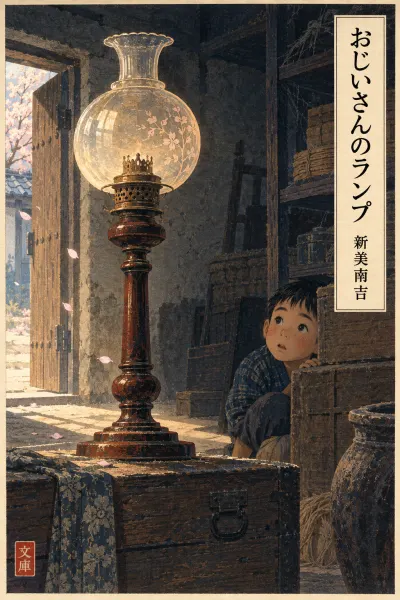
東一くんは、くらの中から、ふるいランプを出しました。Tōichi took an old lamp out of the storehouse.
おじいさんは大きなこえでいいました。Grandfather spoke in a loud voice.
「何を出しているんだ。外であそべ。」"What are you getting out of there? Go and play outside!"
ばんに、東一くんはそのランプを見ていました。That evening, Tōichi was looking at the lamp.
おじいさんが来て、しずかにいいました。Grandfather came in and spoke quietly.
「このランプは、わたしのたいせつなものだ。ふるい話をしよう。」"This lamp is something very precious to me. Let me tell you an old story."
五十年前、むらに、みのすけという男の子がいました。Fifty years ago, in a village, there was a boy called Minosuke.
年は十三でした。He was thirteen years old.
父も母もいませんでした。He had neither a father nor a mother.
むらの人のしごとをして、ごはんを食べていました。He did work for the village people and so earned his meals.
あるなつのゆうがた、みのすけは大きなまちへ行きました。One summer evening, Minosuke went to a big town.
まちのみせには、ランプがたくさんありました。In the shops of the town there were many lamps.
とてもあかるくて、きれいでした。They were very bright and beautiful.
みのすけのむらは、よるはくらかったです。In Minosuke's village, the nights were dark.
みのすけはランプのみせに入りました。Minosuke went into the lamp shop.
「わたしはランプやになります。やすくうってください。」みせの人はみのすけの話を聞いて、ランプを一つやすくうりました。"I'm going to be a lamp seller. Please sell to me cheaply." The shopkeeper listened to Minosuke's story and sold him one lamp at a low price.
はじめは、むらの人はだれもランプをかいませんでした。At first, nobody in the village bought a lamp.
みのすけは、むらの小さなみせにランプをかしました。Minosuke lent a lamp to a little shop in the village.
みせのおばあさんは「あかるくて、べんりだ」といって、それをかいました。The old woman at the shop said, "It's bright, and it's handy," and bought it.
それから、むらの人もたくさんかいました。After that, the village people bought many lamps too.
みのすけはランプやになりました。Minosuke became a lamp seller.
けっこんして、子どもも生まれました。He married, and children were born to him as well.
じもならって、本を読みました。He learned his letters, too, and read books.
でも、何年か後、大きなまちに電気が来ました。But some years later, electricity came to the big town.
電気はランプよりもっとあかるかったです。Electric light was even brighter than the lamps.
そして、そんちょうさんたちが、むらにも電気を入れるといいました。And then the village head and the others said they would bring electricity to the village as well.
みのすけはとてもこまりました。Minosuke was deeply troubled.
「そんちょうさんがわるい」とおもいました。"The village head is to blame," he thought.
月のよる、みのすけはそんちょうさんのいえをもやしに行きました。One moonlit night, Minosuke went to set fire to the village head's house.
マッチがなかったから、ふるいどうぐをもって行きました。He had no matches, so he took an old tool with him.
でも、そのどうぐはつかえませんでした。But the tool would not work.
みのすけは「ふるいものは、もうつかえない」といいました。Minosuke said, "Old things are no use any more."
そして、わかりました。And then he understood.
ランプも、もうふるいものです。Lamps, too, were old things now.
これからは電気のほうがいいです。From now on, electricity was the better thing.
みのすけはいえにかえりました。Minosuke went back home.
そして、五十のランプをもって、大きないけへ行きました。Then he took fifty lamps and went to a big pond.
ランプをぜんぶつけて、いけのそばの木にかけました。He lit every one of the lamps and hung them on the trees beside the pond.
いけの水の中にも、ランプがたくさんありました。In the water of the pond, too, there were many lamps.
みのすけは長い間、ランプを見ていました。For a long time, Minosuke gazed at the lamps.
それから、いしを一つとって、いちばん大きいランプになげました。Then he picked up a stone and threw it at the biggest lamp.
ランプはきえました。The lamp went out.
「ランプはもういらない。これからは電気だ。」二つめのランプもきえました。"I don't need lamps any more. From now on, it's electricity." The second lamp went out as well.
三つめのランプの後、めになみだが出て、もうなげられませんでした。After the third lamp, tears came to his eyes, and he could throw no more.
こうして、みのすけはもうランプをうりませんでした。And so Minosuke sold lamps no longer.
まちへ出て、本やになりました。He went out to the town and became a bookseller.
「そのみのすけは、わたしだよ。」とおじいさんはいいました。"That Minosuke was me," said Grandfather.
東一くんは、おじいさんを見ました。Tōichi looked at his grandfather.
「ほかの四十七のランプは、どうなったの。」"What happened to the other forty-seven lamps?"
「わからない。だれかがもって行ったかな。」"I don't know. Perhaps somebody took them away."
「それは、よくなかったね。」"That wasn't very good, was it?"
「うん。でも、国があたらしくなって、ふるいしごとがいらなくなったら、そのしごとをすてて、あたらしいしごとをする。わたしは、それができたんだ。」"True. But when the country becomes new and the old work isn't needed any more, you throw that work away and take up new work. I was able to do that."
東一くんは「おじいさんは、りっぱだったんだね。」といって、ふるいランプを見ました。"Grandfather, you were a fine man, weren't you," said Tōichi, and he looked at the old lamp.
Vocabulary
| Word | Meaning | JLPT |
|---|---|---|
| くらくら | storehouse (a thick-walled building for keeping valuables)dictionary form: 蔵Often written 蔵. Traditional Japanese houses had one beside the main house. | N1 |
| しずかにしずか | quietly, calmlydictionary form: 静かな-adjective; add に to use it as an adverb. | N5 |
| たいせつたいせつ | precious, importantdictionary form: 大切な-adjective: たいせつなもの = a precious thing. | N5 |
| くらかったくらい | darkdictionary form: 暗いOpposite of あかるい (bright). Past form: くらかった. | N5 |
| かしましたかす | to lenddictionary form: 貸すDo not confuse with かりる (to borrow). | N5 |
| べんりべんり | convenient, handydictionary form: 便利 | N5 |
| 電気でんき | electricity; electric light | N5 |
| こまりましたこまる | to be troubled, to be at a lossdictionary form: 困る | N5 |
| もやしもやす | to burn, to set fire todictionary form: 燃やすHere in the ます-stem form before に行く. | N2 |
| どうぐどうぐ | tooldictionary form: 道具 | N4 |
| つけてつける | to light (a lamp), to switch ondictionary form: つける | N4 |
| なげましたなげる | to throwdictionary form: 投げる | N4 |
| なみだなみだ | tearsdictionary form: 涙なみだが出る = tears come out, to cry. | N3 |
| りっぱりっぱ | fine, admirable, splendiddictionary form: 立派Used to praise a person's character or actions. | N5 |
Grammar
〜ていました N5 was doing (continuing action in the past)
The て-form plus いました shows an action that was going on at a certain time in the past. Here it sets the scene of Tōichi playing.
東一くんは、友だちとあそんでいました。
Tōichi was playing with his friends.
〜くて N5 and (joining い-adjectives)
Change the final い of an い-adjective to くて to join it to another description. あかるい becomes あかるくて.
とてもあかるくて、きれいでした。
They were very bright and beautiful.
〜という + noun N4 a (noun) called ~
Used to introduce a name the listener does not know yet. みのすけという男の子 means 'a boy called Minosuke'.
むらに、みのすけという男の子がいました。
In a village, there was a boy called Minosuke.
AはBより〜 N5 A is more ~ than B
より marks the thing being compared against. もっと adds 'even more'.
電気はランプよりもっとあかるかったです。
Electric light was even brighter than the lamps.
ます-stem + に行く N5 to go (in order) to do ~
The ます-stem of a verb plus に行く shows the purpose of going. もやします → もやし + に行きました.
みのすけはそんちょうさんのいえをもやしに行きました。
Minosuke went to set fire to the village head's house.