 N5 · easy
Simplified retelling · JLPT N5
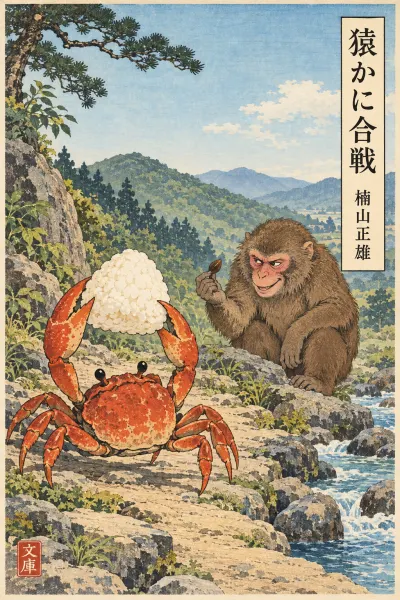
猿かに合戦 Saru ka ni Kassen in easy Japanese (N5)
This is our own simplified retelling of A Persimmon Seed for a Rice Ball, written for N5 learners and checked word by word against the N5 vocabulary list. A few story words and grammar patterns go beyond N5; the notes below give each one's level. It keeps the characters, events and ending of the original. When it feels easy, move on to the N4 version or the original text.
The story in brief
A monkey trades a persimmon seed for a crab's rice ball. The crab grows a tree full of persimmons, but the monkey climbs it, eats the ripe fruit and kills the crab with a hard green one. The crab's child, helped by a chestnut, a bee, a strip of kelp and a mortar, ambushes the monkey at his house and punishes him.
AI translation · independently checked
ずっと 前の 話です。This is a story from a long, long time ago.
さると かにが いました。There once were a monkey and a crab.
天気の いい 朝、二人は 一緒に 出かけました。One fine morning, the two of them went out together.
さるは 山の 道で かきの たねを 取りました。On a mountain path, the monkey picked up a persimmon seed.
かには 川の そばで 大きな おにぎりを 取りました。By the river, the crab picked up a big rice ball.
さるは おにぎりが 食べたかったです。The monkey wanted to eat that rice ball.
「この たねを あげます。その おにぎりを ください。」と いいました。'I'll give you this seed. Give me that rice ball,' he said.
「でも、おにぎりの 方が 大きいです。」'But the rice ball is bigger.'
「たねから 木が 出て、おいしい かきが たくさん なりますよ。」'A tree will grow from the seed, and lots of tasty persimmons will grow on it, you know.'
かには たねが ほしく なりました。The crab began to want the seed.
かには おにぎりを さるに あげました。The crab gave the rice ball to the monkey.
さるは おにぎりを 食べて、いえに かえりました。The monkey ate the rice ball and went home.
かには たねを にわの 土に 入れました。The crab put the seed into the soil in its garden.
「はやく 出て。出ないと、はさみで きるよ。」すると、小さな 木が 出ました。'Hurry up and sprout. If you don't, I'll snip you with my claws!' And then a little tree came up.
かには 毎日 いいました。Every day the crab said:
「はやく 大きく なって。」木は 大きく なって、花が さきました。'Hurry up and grow big.' The tree grew big, and flowers bloomed.
「はやく かきが なって。」すると、あかい かきが たくさん なりました。'Hurry up and make persimmons.' And then lots of red persimmons grew.
かには かきが 食べたかったです。The crab wanted to eat the persimmons.
でも、せが ひくくて、とれません。But the crab was too short and couldn't reach them.
木にも のぼれません。It couldn't climb the tree, either.
そこへ さるが 来ました。Just then, the monkey came along.
かには「さるさん、かきを とって ください。少し あげます。」と いいました。The crab said, 'Mr. Monkey, please pick the persimmons for me. I'll give you some.'
さるは 木に のぼりました。The monkey climbed the tree.
そして、あかい かきを 食べました。And then he ate the red persimmons.
「おいしい、おいしい。」'Yum, yum!'
「わたしにも ください。」と かには いいました。'Give me some too,' said the crab.
さるは あおい かきを なげました。The monkey threw down a green persimmon.
かには 食べました。The crab ate it.
でも、まずかったです。But it tasted awful.
「あまいのを ください。」'Give me a sweet one.'
さるは いちばん あおい かきを、かにの あたまに 強く なげました。The monkey threw the greenest persimmon of all, hard, at the crab's head.
かには しにました。The crab died.
さるは かきを たくさん 持って、いえに かえりました。The monkey took lots of persimmons and went home.
そこへ 子どもの かにが 来ました。Just then, the crab's child came along.
お母さんが しんで いました。Its mother was dead.
木には あおい かきしか ありません。There was nothing on the tree but green persimmons.
「さるだ。」子どもの かには 大きな こえで なきました。'It was the monkey!' The little crab cried in a loud voice.
くりが 来ました。A chestnut came by.
「どうして ないて いるの。」話を 聞いて、くりは いいました。'Why are you crying?' After hearing the story, the chestnut spoke.
「わるい さるだ。わたしも 一緒に 行くよ。」はちも、こんぶも、うすも 来て、「わたしも 行くよ。」と いいました。'What a wicked monkey! I'll go with you too.' A bee, a strip of kelp and a mortar came as well and said, 'I'll go too!'
みんなで さるの いえに 行きました。They all went to the monkey's house together.
さるは いませんでした。The monkey wasn't home.
くりは だいどころの あつい ところに 入りました。The chestnut went into the hot place in the kitchen.
はちは 水の そばに いました。The bee waited by the water.
こんぶは 戸の 下に ながく ねました。The kelp lay stretched out long under the door.
うすは 上に のぼりました。The mortar climbed up high.
ゆうがた、さるが かえりました。In the evening, the monkey came home.
だいどころに 来た 時、くりが とんで 来ました。When he came into the kitchen, the chestnut came flying out at him.
さるの はなは とても あつく なりました。The monkey's nose got very hot.
「あつい。」'Hot!'
さるは 水の ところへ 行きました。The monkey went over to the water.
すると、はちが 出て 来ました。And then the bee came out.
さるの めの 上が とても いたく なりました。The spot above the monkey's eye began to hurt terribly.
「いたい。」'Ouch!'
さるは 外へ はしりました。The monkey ran outside.
でも、こんぶの 上で ころびました。But he slipped and fell on the kelp.
うすが 上から さるの 上に おりました。The mortar came down from above, right on top of the monkey.
うすは とても おもいです。The mortar is very heavy.
さるは 立てません。The monkey can't get up.
そこへ 子どもの かにが 来ました。Just then, the little crab came along.
「お母さんを わすれましたか。」そして、はさみで さるを きりました。'Did you forget my mother?' And then it snipped the monkey with its claws.
Vocabulary
| Word | Meaning | JLPT |
|---|---|---|
| かきかき | persimmondictionary form: 柿An orange autumn fruit; unripe green ones are very bitter. | — |
| たねたね | seeddictionary form: 種 | N3 |
| おにぎりおにぎり | rice ballCooked rice pressed into a ball or triangle. | — |
| なりますなる | (of fruit) to grow, to bear fruitdictionary form: なるWritten 生る in this sense; different from なる meaning to become. | N5 |
| はさみはさみ | claws (of a crab); also scissors | N3 |
| せせ | height (of a body)dictionary form: 背せが ひくい means short; せが たかい means tall. | N5 |
| のぼれませんのぼる | to climbdictionary form: 登るUsed with に: 木に のぼる. | N5 |
| なげましたなげる | to throwdictionary form: 投げる | N4 |
| まずかったまずい | tasting baddictionary form: まずいOpposite of おいしい. | N5 |
| あまいあまい | sweetdictionary form: 甘い | N5 |
| くりくり | chestnutdictionary form: 栗 | — |
| うすうす | mortardictionary form: 臼A big, heavy wooden or stone bowl used for pounding rice into mochi. | — |
| だいどころだいどころ | kitchendictionary form: 台所 | N5 |
| ころびましたころぶ | to fall over, to tripdictionary form: 転ぶ | N3 |
Grammar
〜たい N5 want to do
Add たい to the verb stem (食べ) to say what someone wants to do. It changes like an い-adjective, so the past form is 食べたかった. The thing wanted is often marked with が.
さるは おにぎりが 食べたかったです。
The monkey wanted to eat the rice ball.
〜く なる N5 to become, to get
Change the final い of an い-adjective to く and add なる to show a change. ほしい becomes ほしく なる, meaning the crab started to want the seed.
かには たねが ほしく なりました。
The crab began to want the seed.
〜て ください N5 please do
The て-form of a verb plus ください makes a polite request. とって ください asks the monkey to pick the fruit.
さるさん、かきを とって ください。
Mr. Monkey, please pick the persimmons for me.
〜ないと N4 if (you) don't
The negative form plus と means if not, and is often used for warnings. The next part tells what will happen.
出ないと、はさみで きるよ。
If you don't, I'll snip you with my claws!
Potential form (〜れる / 〜える) N4 can do
のぼる becomes のぼれる and とる becomes とれる, meaning can climb and can take. Here they are negative: のぼれません, とれません.
木にも のぼれません。
It couldn't climb the tree, either.
〜しか〜ない N4 nothing but, only
しか after a noun always goes with a negative verb, and means only that thing. There were only green persimmons left.
木には あおい かきしか ありません。
There was nothing on the tree but green persimmons.