 N5 · easy
Simplified retelling · JLPT N5
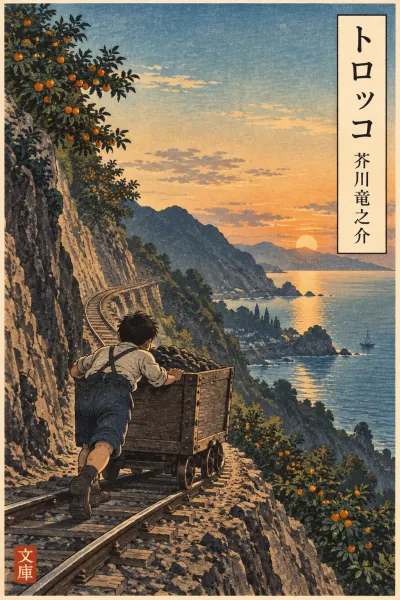
トロッコ Torokko in easy Japanese (N5)
This is our own simplified retelling of The Rail Cart, written for N5 learners and checked word by word against the N5 vocabulary list. A few story words and grammar patterns go beyond N5; the notes below give each one's level. It keeps the characters, events and ending of the original. When it feels easy, move on to the N4 version or the original text.
The story in brief
Eight-year-old Ryōhei longs to ride the carts at the railway construction site near his village. One day two young workers let him help push, and he rides far from home, but at dusk they tell him to go back alone. He runs the long dark road home and bursts into tears only when he reaches his house, and even as an adult in Tokyo he still remembers that road.
AI translation · independently checked
りょうへいが八つの年に、むらの外でこうじがはじまりました。In the year Ryōhei turned eight, construction work began outside the village.
トロッコにつちを入れて、男の人が山からおして来ます。Men loaded earth into rail carts and pushed them down from the mountain.
りょうへいは毎日、それを見に行きました。Every day, Ryōhei went to watch.
りょうへいはトロッコにのりたかったです。Ryōhei wanted to ride on a cart.
おしたかったです。He wanted to push one, too.
ある日、くらくなる前に、りょうへいはおとうとと、となりのこどもと三人で、トロッコのところへ行きました。One day, before it got dark, Ryōhei went to the carts with his younger brother and the boy from next door, the three of them together.
こうじの人はいませんでした。None of the workers were there.
三人はトロッコをおしました。The three of them pushed a cart.
トロッコは少し前へ行きました。The cart moved forward a little.
さかが高くなって、トロッコは前へ行かなくなりました。The slope grew steeper, and the cart would not go forward any more.
「さあ、のりましょう。」三人はトロッコにのりました。"Come on, let's get on." The three of them climbed onto the cart.
トロッコははやくはしりました。The cart ran fast.
風がつめたかったです。The wind was cold.
りょうへいはとてもたのしかったです。Ryōhei was having a wonderful time.
三人はまたトロッコをおしました。The three of them pushed the cart again.
すると、後ろから大きなこえがしました。Just then, a loud voice came from behind them.
「こら!だれだ!」黄色いぼうしの、せの高い男の人でした。"Hey! Who's that?" It was a tall man in a yellow hat.
三人ははしってかえりました。The three of them ran home.
それから、りょうへいはトロッコにのりませんでした。After that, Ryōhei did not ride the carts.
十日ぐらい後、りょうへいは一人でこうじのところにいました。About ten days later, Ryōhei was at the construction site on his own.
わかい男の人が二人、トロッコをおしていました。Two young men were pushing a cart.
いい人たちでした。They were good people.
「おじさん、おしましょうか。」"Mister, shall I help you push?"
「おお、たのむよ。」"Oh, yeah, go on then."
りょうへいはいっしょにおしました。Ryōhei pushed along with them.
「きみはつよいね。」"You're a strong one, eh?"
トロッコはみかんの木がたくさんある山にのぼりました。The cart climbed a hill covered in mandarin orange trees.
それから、さかをはやくはしりました。Then it ran fast down the slope.
三人はトロッコにのりました。The three of them rode on the cart.
りょうへいはとてもたのしかったです。Ryōhei was having a wonderful time.
でも、トロッコはまだとまりません。But the cart still did not stop.
うみも見ました。He even saw the sea.
りょうへいは、むらからとおいところへ来ました。Ryōhei had come to a place far from his village.
はやくかえりたくなりました。He began to want to go home quickly.
男の人たちはみせに入って、おちゃをのみました。The men went into a shop and drank tea.
りょうへいはトロッコの横でまちました。Ryōhei waited beside the cart.
男の人はりょうへいにおかしをわたしました。One of the men handed Ryōhei some sweets.
りょうへいは「ありがとう」といいましたが、あまりたのしくなかったです。Ryōhei said "Thank you," but he was not having much fun.
ほかのみせでも、二人はおちゃをのみました。At another shop, too, the two men drank tea.
そらがだんだんくらくなりました。Little by little, the sky grew dark.
男の人たちはいいました。The men said:
「きみはもうかえって。ぼくたちは今日は向こうにとまるから。」「おそくなると、いえの人がこまるよ。」"You head on home now. We're stopping over there tonight." "If you're late, your folks'll be worried."
りょうへいはなきそうになりました。Ryōhei was on the verge of tears.
みちはとても長いです。The road was very long.
でも、なかないで、せんろの横をはしってかえりました。But he did not cry, and he ran home alongside the rails.
おかしも、ぞうりも、みちにおいていきました。He left the sweets and his straw sandals behind on the road.
あついので、はおりもぬぎました。He was hot, so he took off his short coat as well.
あしがいたかったです。His feet hurt.
くらいみちを一人ではしりました。He ran alone along the dark road.
なきたくなりましたが、なきませんでした。He felt like crying, but he did not cry.
むらにつくと、いえはあかるかったです。When he reached the village, the houses were lit up.
いえのもんに入ると、りょうへいは大きなこえでなきました。As soon as he went through the gate of his house, Ryōhei cried out loud.
おとうさんとおかあさんが来て、「どうしたの」と聞きました。His father and mother came and asked, "What happened?"
でも、りょうへいはなにもいわないで、たくさんなきました。But Ryōhei said nothing and just cried and cried.
りょうへいは二十六の年に、とうきょうに来ました。In the year he turned twenty-six, Ryōhei came to Tokyo.
今は、ざっしのかいしゃではたらいています。Now he works at a magazine company.
今も、しごとでつかれると、りょうへいはときどき、あたまの中で、あの夜のくらい長いみちを、また見ます。Even now, when he is tired from work, Ryōhei sometimes sees that long, dark road from that night again in his mind.
Vocabulary
| Word | Meaning | JLPT |
|---|---|---|
| こうじこうじ | construction workdictionary form: 工事Here, the work of building a small railway. | N2 |
| トロッコとろっこ | rail cart; small open cart pushed along narrow railsFrom English "truck"; used to carry earth at building sites. | — |
| おしておす | to pushdictionary form: 押すて-form of おす. | N5 |
| さかさか | slope; hill (on a road)dictionary form: 坂 | N4 |
| つめたかったつめたい | cold (to the touch, of wind or water)dictionary form: 冷たいPast form of an い-adjective: つめたい → つめたかった. | N5 |
| わたしましたわたす | to hand (something to someone)dictionary form: 渡す | N5 |
| だんだんだんだん | little by little; gradually | N1 |
| とまるとまる | to stay the nightdictionary form: 泊まるSame sound as 止まる (to stop) in sentence 31; the kanji are different. | N4 |
| せんろせんろ | railway track; railsdictionary form: 線路 | N2 |
| ぞうりぞうり | straw sandalsdictionary form: 草履Traditional flat Japanese sandals with a thong between the toes. | N2 |
| はおりはおり | short coat worn over a kimonodictionary form: 羽織A traditional jacket; here translated as "short coat". | — |
| ぬぎましたぬぐ | to take off (clothes, shoes)dictionary form: 脱ぐ | N5 |
| もんもん | gate (of a house)dictionary form: 門 | N5 |
| ざっしざっし | magazinedictionary form: 雑誌 | N5 |
Grammar
〜たい N5 want to do
Add たい to the verb's ます-stem (のり → のりたい). It works like an い-adjective, so the past is 〜たかったです.
りょうへいはトロッコにのりたかったです。
Ryōhei wanted to ride on a cart.
〜ましょうか N5 shall I …?; let's …
〜ましょうか offers to do something for someone. 〜ましょう without か, as in 「のりましょう」, invites others to do something together.
「おじさん、おしましょうか。」
"Mister, shall I help you push?"
〜ている N5 be doing; action in progress or ongoing state
Verb て-form + いる shows an action happening at that time. 「はたらいています」 shows someone's regular, ongoing work.
わかい男の人が二人、トロッコをおしていました。
Two young men were pushing a cart.
〜ないで N4 without doing; not doing …, (but) …
Verb ない-form + で means the first action does not happen and the second one does. Here Ryōhei does not cry and runs home instead.
でも、なかないで、せんろの横をはしってかえりました。
But he did not cry, and he ran home alongside the rails.
〜と (when) N4 when …; as soon as …
Dictionary form + と links two events: when the first happens, the second follows or is noticed. In a story it often means "when he did X, (he found that) Y".
いえのもんに入ると、りょうへいは大きなこえでなきました。
As soon as he went through the gate of his house, Ryōhei cried out loud.