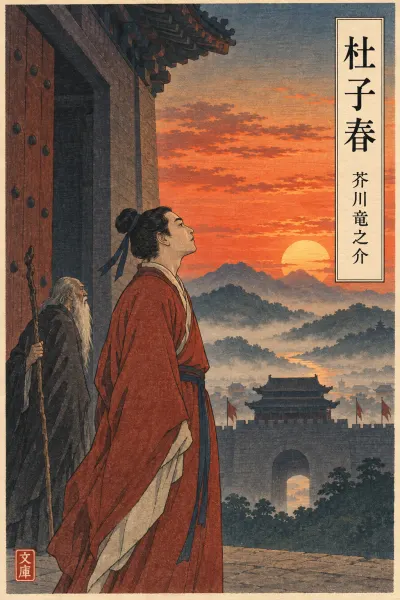
 N3 · easy
Simplified retelling · JLPT N3
杜子春 Toshishun in easy Japanese (N3)
This is our own simplified retelling of Toshishun and the Hermit of Mount Gabi, written for N3 learners and checked word by word against the N3 vocabulary list. A few story words and grammar patterns go beyond N3; the notes below give each one's level. It keeps the characters, events and ending of the original. When it feels easy, move on to the original text.
The story in brief
Toshishun, a poor young man, twice becomes rich with gold that a mysterious old man shows him how to find, and twice spends it all. He then asks to become a hermit-sage, and the old man, Tekkanshi, tests him on Mount Gabi, where he must not speak no matter what happens. In Hell he stays silent until he hears his mother's loving voice from the body of a beaten horse. He cries out to her, fails the test, and is glad he did. Tekkanshi then offers him a house and fields so he can live an honest, human life.
AI translation · independently checked
ある春の夕方です。It was an evening in spring.
ラクヨウという町の西のもんの下に、一人の若い男が立っていました。Beneath the west gate of a city called Rakuyō, a young man was standing.
名前はトシシュンです。His name was Toshishun.
昔は金持ちの息子でしたが、今はお金を全部使ってしまって、とても貧しくなっていました。Once he had been the son of a rich man, but now he had spent all his money and had become very poor.
「今夜はとまる所もないし、おなかもすいた。こんな生活なら、死んだほうがいいかもしれない」"Tonight I have nowhere to stay, and I'm hungry too. If life is going to be like this, perhaps I'd be better off dead."
トシシュンがそう考えていると、一人の老人が来て、「何を考えているのだ」と聞きました。While Toshishun was thinking this, an old man came up and asked, "What are you thinking about?"
「今夜寝る所がないので、困っているのです」"I have nowhere to sleep tonight, so I don't know what to do."
「そうか。では、いいことを教えてやろう。夕方の光の中に立って、自分のかげを見なさい。そのかげの頭の所を、夜中にほってみなさい。きっと金がたくさんあるはずだ」"I see. Well then, I'll tell you something good. Stand in the evening light and look at your shadow. At midnight, try digging where the head of that shadow falls. You're sure to find plenty of gold there."
トシシュンがおどろいて前を見ると、老人はもういませんでした。When Toshishun looked in front of him in surprise, the old man was already gone.
夜中にほってみると、本当に金がたくさん出てきました。When he dug at midnight, a great deal of gold really did come out of the ground.
トシシュンはすぐに町でいちばんの金持ちになりました。Toshishun at once became the richest man in the city.
りっぱな家を買って、きれいな花を庭にうえて、毎日お酒を飲んで遊びました。He bought a splendid house, planted beautiful flowers in the garden, and spent every day drinking and enjoying himself.
すると、前はあいさつもしなかった友達が、毎日家に来るようになりました。Then friends who had never even greeted him before began to visit his house every day.
しかし、お金はだんだん無くなって、三年後には、また一円もなくなりました。But little by little his money ran out, and three years later he had not a single coin left again.
すると、友達はだれも来なくなりました。Then not one of his friends came anymore.
水を一杯くれる人もいません。There was no one who would give him so much as a cup of water.
トシシュンはまた西のもんの下に立っていました。Toshishun was standing beneath the west gate once more.
すると、あの老人がまた来て、同じことを言いました。Then that same old man came again and said the same thing.
今度はかげのむねの所をほると、また金がたくさん出てきました。This time he dug where the chest of his shadow fell, and again a great deal of gold came out.
でも、トシシュンはまた三年でお金を全部使ってしまいました。But once again Toshishun spent all the money in three years.
三回目に老人が来た時、トシシュンは言いました。When the old man came for the third time, Toshishun said:
「お金はもういりません。人はみんな冷たいです。金持ちの時はやさしいですが、貧しくなると、あいさつもしません」"I don't want money anymore. People are all cold. When you are rich they are kind, but when you become poor they won't even greet you."
「そうか。おもしろいことを言う男だ」と、老人は笑いました。"Is that so? You're a man who says interesting things," the old man laughed.
「あなたはせんにんでしょう。わたしもせんにんになりたいです。どうか教えてください」"You are a hermit-sage, aren't you? I want to become one too. Please, I beg you, teach me."
「そうだ。わたしはガビサンに住むテッカンシというせんにんだ。では、いっしょに来なさい」"That's right. I am a hermit-sage called Tekkanshi, and I live on Mount Gabi. Very well, come with me."
テッカンシは一本のたけをひろって、トシシュンといっしょにそれに乗りました。Tekkanshi picked up a stick of bamboo, and he and Toshishun climbed onto it together.
たけは空へ飛んで、ガビサンまで行きました。The bamboo flew up into the sky and carried them all the way to Mount Gabi.
ガビサンの高いいわの上で、テッカンシは言いました。On top of a high rock on Mount Gabi, Tekkanshi spoke.
「わたしは空の上へ行ってくる。いろいろなおそろしいことが起こるだろう。でも、決して声を出してはいけない。一言でも話したら、せんにんにはなれないぞ」"I'm going up into the sky and will be back. All sorts of terrible things will probably happen. But you must never make a sound. If you say even one word, you cannot become a hermit-sage, mind you."
「大丈夫です。死んでも話しません」"I'll be all right. Even if I die, I won't speak."
テッカンシがいなくなると、空から「そこにいるのはだれだ」という声が聞こえました。When Tekkanshi had gone, a voice came from the sky: "Who is that there?"
トシシュンは答えませんでした。Toshishun did not answer.
次に、大きなとらと白いへびが出てきて、トシシュンのほうへ来ました。Next, a huge tiger and a white snake appeared and came toward Toshishun.
でも、トシシュンは静かに座っていました。But Toshishun sat quietly.
すると、とらとへびは消えました。Then the tiger and the snake vanished.
それから、強い風が吹いて、雨が降って、大きなかみなりが鳴りました。After that a strong wind blew, rain fell, and great claps of thunder roared.
でも、それもすぐに止みました。But that, too, soon stopped.
次に、おそろしい神が出てきました。Next, a terrifying god appeared.
「答えないと、殺すぞ」と言いました。"If you do not answer, I shall kill you!" he said.
空には、かたなを持ったぐんたいがたくさんいました。In the sky there were many soldiers holding swords.
それでもトシシュンは何も言いませんでした。Even so, Toshishun said nothing.
神は怒って、トシシュンを殺してしまいました。The god grew angry and killed Toshishun.
死んだトシシュンは、じごくへ行きました。Having died, Toshishun went to Hell.
えんま大王が「なぜ山の上に座っていたのか」と聞きました。King Enma asked, "Why were you sitting on top of that mountain?"
トシシュンはテッカンシの言葉を思い出して、答えませんでした。Toshishun remembered Tekkanshi's words and did not answer.
おにたちは、トシシュンをじごくのいろいろな所に入れて、ひどく痛い目にあわせました。The demons put Toshishun into all the different places of Hell and made him suffer terrible pain.
それでもトシシュンは一言も話しませんでした。Even so, Toshishun did not speak a single word.
えんま大王は、おにに言いました。King Enma spoke to the demons.
「この男の両親を連れて来い」"Bring this man's parents here!"
おにが連れて来たのは、二頭のやせた馬でした。What the demons brought were two thin horses.
でも、その馬は死んだ父と母でした。But those horses were his dead father and mother.
「答えないと、両親を打つぞ」"If you do not answer, I shall have your parents beaten!"
トシシュンはやはり答えませんでした。Still Toshishun did not answer.
おにたちはむちで馬を強く打ちました。The demons beat the horses hard with whips.
馬はちのなみだを流して、苦しそうに鳴きました。The horses shed tears of blood and cried out as if in agony.
トシシュンは目を閉じて、がまんしていました。Toshishun closed his eyes and endured it.
すると、小さな声が聞こえました。Then he heard a small voice.
「心配しないで。お前が幸せになれるなら、私たちはどうなってもいいのだよ。言いたくないことは、言わなくていいからね」"Don't worry. As long as you can be happy, it doesn't matter what becomes of us. You don't have to say anything you don't want to say."
それは、よく知っている母の声でした。It was the voice of his mother, the voice he knew so well.
母は、こんなに苦しくても、息子のことを思っていたのです。Even in such pain, his mother had been thinking of her son.
トシシュンは走って行って、馬を抱いて、なみだを流して「お母さん」とさけびました。Toshishun ran to her, threw his arms around the horse, and with tears streaming down cried out, "Mother!"
気がつくと、トシシュンはまた夕方の西のもんの下に立っていました。When he came to his senses, Toshishun was once again standing beneath the west gate in the evening.
前にはテッカンシがいました。Tekkanshi was there in front of him.
「どうだ。せんにんにはなれなかっただろう」"Well? You couldn't become a hermit-sage, could you?"
「はい、なれませんでした。でも、なれなくてうれしいです。両親が打たれているのを見て、黙っていることはできません」"No, I couldn't. But I'm glad I couldn't. When I see my parents being beaten, I cannot stay silent."
「もしお前が黙っていたら、わたしはお前を殺すつもりだった。これから何になりたいか」"If you had stayed silent, I meant to kill you. What do you want to become from now on?"
「何になっても、正直に、人間らしく生きるつもりです」"Whatever I become, I mean to live honestly, as a human being should."
「その言葉を忘れるなよ。わたしはもうお前に会わない」"Don't forget those words. I won't be seeing you again."
テッカンシは歩き出しましたが、足を止めて、トシシュンの方を向きました。Tekkanshi started to walk away, but then he stopped and turned toward Toshishun.
「そうだ、わたしはある山の南に家を一けん持っている。その家とはたけをお前にやろう。今は家のまわりに、ももの花がたくさんさいているだろう」"Ah, yes. I own a house on the south side of a certain mountain. I'll give you that house and its fields. About now, peach blossoms must be blooming all around it."
Vocabulary
| Word | Meaning | JLPT |
|---|---|---|
| もんもん | gate (of a city)dictionary form: 門Usually written 門. Old Chinese cities were surrounded by walls with large gates. | N5 |
| 貧しくまずしい | poordictionary form: 貧しいA more formal and written word than お金がない. The opposite is 金持ち (a rich person). | N3 |
| あいさつあいさつ | greeting; saying hellodictionary form: 挨拶あいさつもしない means 'not even say hello', which shows how cold people were. | N4 |
| せんにんせんにん | hermit-sage; an immortal with magic powersdictionary form: 仙人A figure from Chinese Taoist legend who lives in the mountains, can fly, and never grows old. English has no exact equivalent. | — |
| おそろしいおそろしい | terrifying, dreadfuldictionary form: 恐ろしいStronger than こわい and more common in writing. | N3 |
| 決してけっして | never, by no meansAlways used with a negative: 決して〜ない / 決して〜てはいけない. | N4 |
| かみなりかみなり | thunder; lightningdictionary form: 雷The verb is 鳴る: かみなりが鳴る = it thunders. | N3 |
| じごくじごく | Helldictionary form: 地獄The opposite is 天国 or 極楽 (Paradise). | N1 |
| おにおに | demon, ogredictionary form: 鬼In Buddhist stories, oni guard Hell and punish the dead. | N3 |
| 痛い目にあわせましたいたいめにあわせる | to make someone suffer; to hurt someone badlydictionary form: 痛い目にあわせる痛い目にあう = to have a painful experience; あわせる is the causative (make someone go through it). | — |
| がまんしてがまんする | to endure, to bear (pain, feelings)dictionary form: 我慢するA very common word for holding back pain or emotion. | — |
| 気がつくきがつく | to come to one's senses; to notice気がつくと at the start of a sentence means 'when he came to / suddenly he realised'. | — |
| 黙ってだまる | to be silent, to say nothingdictionary form: 黙る黙っている = to stay silent (a continuing state). | N3 |
| 正直しょうじき | honest; honestlyA な-adjective: 正直な人, 正直に生きる. | N3 |
Grammar
〜てしまう N4 to do completely; to end up doing (with regret)
It shows that an action is finished and often that the result is unfortunate. Here Toshishun has spent all his money and cannot undo it.
今はお金を全部使ってしまって、とても貧しくなっていました
now he had spent all his money and had become very poor
〜はずだ N4 should be; is expected to be
The speaker is sure about something based on what he knows. With きっと it sounds very confident, as if the old man already knows the gold is there.
きっと金がたくさんあるはずだ
You're sure to find plenty of gold there.
〜ようになる N4 to come to do; to start doing (a change)
Dictionary form + ようになる describes a change in habit or situation. The friends, who before had not even greeted him, started coming to his house every day after he became rich.
前はあいさつもしなかった友達が、毎日家に来るようになりました
friends who had never even greeted him before began to visit his house every day
〜ても N4 even if
The て-form + も means the result will not change even in that case. Toshishun promises that not even death will make him speak.
死んでも話しません
Even if I die, I won't speak.
〜ぞ N3 sentence-ending particle for strong warnings
ぞ is a rough, masculine particle that makes a statement forceful. With 〜ないと it becomes a threat: 'if you don't…, I will…'.
答えないと、殺すぞ
If you do not answer, I shall kill you!
〜らしく N3 like a true…; as a … should
Noun + らしい means having the typical good qualities of that thing; らしく is the adverb form. 人間らしく生きる means to live as a real human being, with feelings and kindness.
何になっても、正直に、人間らしく生きるつもりです
Whatever I become, I mean to live honestly, as a human being should.