 N4 · easy
Simplified retelling · JLPT N4
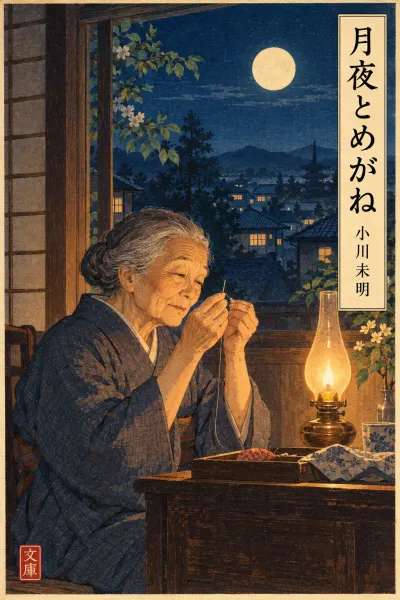
月夜とめがね Tsukiyo to Megane in easy Japanese (N4)
This is our own simplified retelling of Glasses by Moonlight, written for N4 learners and checked word by word against the N4 vocabulary list. A few story words and grammar patterns go beyond N4; the notes below give each one's level. It keeps the characters, events and ending of the original. When it feels easy, move on to the original text.
The story in brief
On a quiet, moonlit early-summer night, an old woman who can no longer see well enough to thread her needle buys a wonderful pair of glasses from a strange seller at her window. Later a young girl with a cut finger knocks at her door, but when the old woman puts on the new glasses, she sees that the girl is really a butterfly with an injured leg. She leads the girl into her back garden, but when she turns around, the girl has silently vanished.
AI translation · independently checked
夏のはじめの、しずかな夜でした。It was a quiet night at the beginning of summer.
町の木も、花も、みどりのはでいっぱいでした。The trees and flowers of the town were full of green leaves.
空には、きれいな月が出ていました。In the sky, a beautiful moon had come out.
しずかな町の小さな家に、おばあさんが一人で住んでいました。In a small house in the quiet town, an old woman lived all by herself.
おばあさんは、まどのそばにすわって、はりしごとをしていました。The old woman was sitting by the window, doing her needlework.
へやの中では、ランプの火がやさしくついていました。Inside the room, the flame of the lamp was burning softly.
おばあさんは、もう年をとっていました。The old woman had already grown old.
目がよく見えないので、はりのあなに、いとがなかなか入りません。Because her eyes could not see well, the thread just would not go through the eye of the needle.
何度もランプの近くで見ながら、いとを入れようとしました。Again and again she tried to put the thread through, looking closely near the lamp.
月のひかりは、うすい青い色でした。The moonlight was a pale blue colour.
町も木も家も、青いひかりの中にありました。The town, the trees and the houses all lay in the blue light.
おばあさんは、手を動かしながら、いろいろなことを考えていました。Keeping her hands busy at her work, the old woman was thinking about many things.
わかかった日のことや、とおくに住んでいる家族のことや、べつの町に住んでいるまごのことです。About the days when she was young, about her family living far away, and about her grandchild living in another town.
へやの中は、とてもしずかでした。It was very quiet in the room.
たなの上の時計の音だけが聞こえました。Only the sound of the clock on the shelf could be heard.
時々、にぎやかな町のほうから、物を売る人のこえや、きしゃの音が小さく聞こえてきました。Now and then, from the direction of the busy part of town, the faint voices of people selling things and the sound of trains drifted over.
すると、外から小さな音が聞こえました。Then a small sound came from outside.
こんなにおそく、だれも来るはずがありません。At such a late hour, there was no way anyone could be coming.
「きっと風の音だろう」と、おばあさんは思いました。"It must be the wind," the old woman thought.
つぎに、まどのすぐ外で、だれかが歩く音がしました。Next, just outside the window, there was the sound of someone walking.
「おばあさん、おばあさん。」"Grandmother, Grandmother."
だれかがよんでいます。Someone was calling her.
おばあさんは、手を止めました。The old woman stopped her hands.
「おばあさん、まどを開けてください。」"Grandmother, please open the window."
おばあさんは立って、まどを開けました。The old woman stood up and opened the window.
外は、月のひかりで、昼のようでした。Outside, the moonlight made it as bright as day.
まどの外に、せのあまり高くない男が立っていました。A man, not very tall, was standing outside the window.
男は黒いめがねをかけて、ひげがありました。The man wore dark glasses and had a beard.
「あなたはだれですか。わたしはあなたを知りませんよ。」"Who are you? I don't know you, you know."
「わたしは、めがね売りです。いろいろなめがねを、たくさん持っています。この町ははじめてですが、とてもきれいな町ですね。今夜は月がきれいなので、売りながら歩いているんです。」"I am a seller of spectacles. I carry a great many glasses of all kinds. This is my first time in this town, but what a lovely town it is. The moon is so beautiful tonight that I am walking about as I sell."
おばあさんは、ちょうど目のことでこまっていました。As it happened, the old woman had been troubled about her eyes.
「わたしの目に合う、よく見えるめがねはありますか。」"Have you any glasses that would suit my eyes and help me see well?"
男ははこを開けて、中から大きなめがねを一つ出しました。The man opened his box and took out a large pair of glasses.
そして、おばあさんにわたしました。Then he handed them to the old woman.
「これなら、何でもよく見えますよ。」"With these, you will see anything clearly."
男の足のそばには、白や赤や青の花がさいていて、いいにおいがしていました。Near the man's feet, white, red and blue flowers were blooming, giving off a sweet scent.
おばあさんは、めがねをかけてみました。The old woman tried the glasses on.
たなの上の時計や、カレンダーの字を読んでみました。She tried reading the clock on the shelf and the letters on the calendar.
一つ一つの字が、はっきり見えました。She could see each and every letter clearly.
わかいむすめだった日のように、何でもよく見えます。She could see everything well, just as in the days when she was a young girl.
おばあさんは、とてもよろこびました。The old woman was overjoyed.
「これをください。」と、すぐに買いました。"I'll take these," she said, and bought them at once.
お金をわたすと、男は帰って行きました。When she handed over the money, the man went away.
男が見えなくなっても、花はまだいいにおいをさせていました。Even after the man could no longer be seen, the flowers were still giving off their sweet scent.
おばあさんは、まどをしめて、前と同じように、まどのそばにすわりました。The old woman shut the window and sat down by it, just as before.
今度は、かんたんに、はりのあなにいとを入れることができました。This time she was able to put the thread through the eye of the needle easily.
おばあさんは、めがねをかけたり、取ったりしました。The old woman put the glasses on and took them off, again and again.
子どものように、めずらしくて、楽しかったのです。Like a child, she found them so new and so much fun.
それから、めがねをたなの上の時計のそばにおきました。After that, she set the glasses down beside the clock on the shelf.
もうおそいので、ねようと思って、しごとをかたづけ始めました。As it was already late, she thought she would go to bed, and began putting her work away.
すると、また入口のドアで、小さな音がしました。Then, once again, there was a small sound, this time at the front door.
「ふしぎな夜だね。また、だれか来たようだ。」"What a strange night this is. It seems someone has come again."
時計を見ると、もうとてもおそい時間でした。When she looked at the clock, it was already very late.
おばあさんは入口まで行って、ドアを開けました。The old woman went to the front door and opened it.
そこには、十二、三さいのきれいな女の子が、なきそうなかおで立っていました。There stood a pretty girl of twelve or thirteen, looking as if she were about to cry.
「どこの子ですか。どうして、こんなにおそく来たのですか。」"Whose child are you? Why have you come so late?"
「わたしは、町のこうすい工場ではたらいています。毎日、白いばらの花から、こうすいを作っています。"I work at the perfume factory in town. Every day I make perfume from white roses.
そして、夜おそく家に帰ります。今夜は月がきれいなので、一人で歩いていました。すると、いしでゆびを切りました。And I go home late at night. Tonight the moon was so beautiful that I was walking alone. Then I cut my finger on a stone.
とてもいたいです。ちが止まりません。もう、どの家の人もねています。でも、この家では、まだおばあさんが起きていました。It hurts very much. The bleeding will not stop. The people in every house are already asleep. But in this house, you, Grandmother, were still awake.
わたしは、おばあさんがやさしい人だと知っています。それで、来ました。」I know that you are a kind person. And so I came."
かみの長い、きれいな女の子でした。She was a pretty girl with long hair.
女の子の体から、いいこうすいのにおいがしました。A lovely scent of perfume came from the girl.
「わたしを知っているのですか。」"You know me?"
「はい。この家の前を、何度も通りました。おばあさんが、まどのそばで、はりしごとをしているのを見ていました。」"Yes. I have passed in front of this house many times. I used to watch you, Grandmother, doing your needlework by the window."
「そうですか。いい子だね。けがをしたゆびを見せなさい。くすりをつけてあげよう。」"Is that so? There's a good girl. Show me the finger you hurt. I'll put some medicine on it for you."
おばあさんは、女の子をランプの近くにつれて来ました。The old woman brought the girl over near the lamp.
女の子は、小さなゆびを出しました。The girl held out her tiny finger.
白いゆびから、赤いちが出ていました。Red blood was coming from the white finger.
でも、おばあさんの目では、どこからちが出ているのか、よく分かりません。But with the old woman's eyes, she could not quite tell where the blood was coming from.
「さっきのめがねはどこかな。」"Now, where are those glasses from earlier?"
おばあさんは、たなの上をさがしました。The old woman searched the top of the shelf.
めがねは、時計のそばにありました。The glasses were beside the clock.
おばあさんはめがねをかけて、女の子のかおをよく見ました。The old woman put on the glasses and took a good look at the girl's face.
そして、とてもびっくりしました。And she was very much astonished.
そこにいたのは、女の子ではありません。The one standing there was not a girl.
きれいなちょうでした。It was a beautiful butterfly.
月がきれいな、しずかな夜には、ちょうが人のかたちになって、おそくまで起きている家に来ることがあります。On quiet nights when the moon is beautiful, butterflies sometimes take human form and visit houses where people stay up late.
おばあさんは、むかし、そんな話を聞いたことがありました。Long ago, the old woman had heard such a tale.
このちょうは、足にけがをしていたのです。This butterfly had hurt its leg.
「いい子だね。こっちへ来なさい。」"There's a good girl. Come this way."
おばあさんは先に立って、家のうらのにわへ行きました。The old woman went ahead and walked out to the garden at the back of the house.
女の子は、何も話さないで、後ろからついて来ました。Without saying a word, the girl followed behind her.
にわには、いろいろな花がきれいにさいていました。In the garden, all kinds of flowers were blooming beautifully.
昼は、ちょうや小さなむしがたくさん来て、にぎやかです。In the daytime, many butterflies and little insects come, and it is lively.
でも今は、みんな木のはの中で、楽しいゆめを見ながら休んでいるようでした。But now they all seemed to be resting among the leaves, dreaming happy dreams.
とてもしずかでした。It was very quiet.
月のひかりが、水のようにやわらかく光っていました。The moonlight was shining softly, like water.
むこうには、白いばらの花が、ゆきのようにたくさんさいていました。Over on the far side, white roses were blooming in great numbers, like snow.
「あの子はどこへ行った?」"Where has that child gone?"
おばあさんは止まって、後ろを見ました。The old woman stopped and looked behind her.
もう、女の子はいませんでした。The girl was no longer there.
何の音もしないで、どこかへきえていました。Without making a single sound, she had vanished somewhere.
「みんな、ゆっくり休みなさい。さあ、わたしもねよう。」"Rest well, all of you. Well now, I'll go to bed too."
おばあさんは、家の中に入りました。The old woman went back into the house.
本当に、月のきれいな、いい夜でした。It truly was a fine night, with a beautiful moon.
Vocabulary
| Word | Meaning | JLPT |
|---|---|---|
| はりしごとはりしごと | needlework, sewingdictionary form: 針仕事はり (needle) + しごと (work); the sound changes to じ? No — it stays しごと here. | — |
| 年をとってとしをとる | to grow old, to agedictionary form: 年をとるSet phrase; 年をとっている describes someone who is now old. | — |
| なかなかなかなか | (with a negative) just won't, not easilyなかなか〜ない shows something will not happen despite effort. | N4 |
| きしゃきしゃ | (steam) traindictionary form: 汽車Old-fashioned word; today 電車 is more common. | N4 |
| めがねをかけてめがねをかける | to wear / put on glassesdictionary form: めがねをかけるGlasses take かける, not きる or はく. | — |
| めがね売りめがねうり | spectacle-sellerNoun + 売り (stem of 売る) = a person who sells that item. | — |
| はっきりはっきり | clearly, distinctly | N4 |
| かたづけかたづける | to tidy up, put awaydictionary form: 片付ける | N4 |
| ふしぎふしぎ | strange, mysteriousdictionary form: 不思議A な-adjective: ふしぎな夜. | N3 |
| こうすいこうすい | perfumedictionary form: 香水香 (fragrance) + 水 (water). | N2 |
| けがけが | injury, wounddictionary form: 怪我けがをする = to get hurt. | N4 |
| ちょうちょう | butterflydictionary form: 蝶Also ちょうちょ in children's speech. | N1 |
| うらうら | back, rear (of a house)dictionary form: 裏家のうらのにわ = the back garden. | N4 |
| きえてきえる | to vanish, disappeardictionary form: 消える | N5 |
Grammar
〜はずがない N3 there is no way that…, cannot possibly
Attached to the dictionary form of a verb, はずがない expresses the speaker's strong belief that something cannot be the case. Here the old woman is sure nobody would visit so late.
こんなにおそく、だれも来るはずがありません。
At such a late hour, there was no way anyone could be coming.
〜ようとする N3 to try to do, to attempt
The volitional form (入れよう) + とする describes an attempt, often one that is difficult or unsuccessful. The old woman keeps trying to thread the needle.
何度もランプの近くで見ながら、いとを入れようとしました。
Again and again she tried to put the thread through, looking closely near the lamp.
〜ながら N4 while doing
The verb stem + ながら shows two actions done by the same person at the same time. The main action comes at the end of the sentence.
おばあさんは、手を動かしながら、いろいろなことを考えていました。
Keeping her hands busy at her work, the old woman was thinking about many things.
〜そうな N4 looking as if about to…
The verb stem + そう means something looks like it is about to happen; with な it describes a noun. なきそうなかお is a face that looks ready to cry.
十二、三さいのきれいな女の子が、なきそうなかおで立っていました。
There stood a pretty girl of twelve or thirteen, looking as if she were about to cry.
〜ことがある N4 sometimes …, there are times when…
With the dictionary form of a verb, ことがある means something happens on occasion. Compare 〜たことがある, which talks about past experience.
ちょうが人のかたちになって、おそくまで起きている家に来ることがあります。
Butterflies sometimes take human form and visit houses where people stay up late.
〜たり〜たりする N4 do things like A and B; do A and B repeatedly
Two verbs in た-form + り, followed by する, list actions as examples or show actions going back and forth. Here she keeps putting the glasses on and taking them off.
おばあさんは、めがねをかけたり、取ったりしました。
The old woman put the glasses on and took them off, again and again.