 N5 · easy
Simplified retelling · JLPT N5
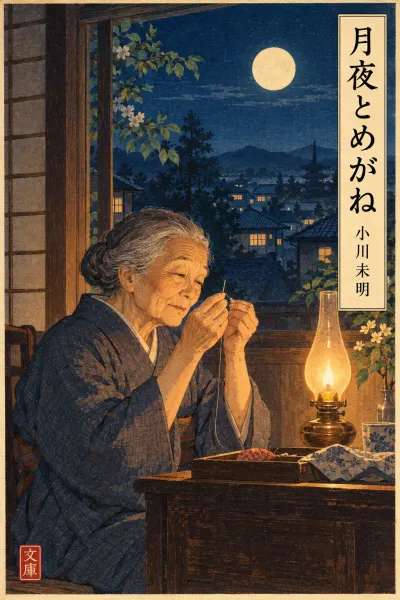
月夜とめがね Tsukiyo to Megane in easy Japanese (N5)
This is our own simplified retelling of Glasses by Moonlight, written for N5 learners and checked word by word against the N5 vocabulary list. A few story words and grammar patterns go beyond N5; the notes below give each one's level. It keeps the characters, events and ending of the original. When it feels easy, move on to the N4 version or the original text.
The story in brief
On a quiet early-summer night, an old woman with weak eyes buys a pair of glasses from a man who calls at her house. Later a lovely girl comes with a cut finger, but through the new glasses the old woman sees that she is really a butterfly. She leads the girl to her back garden full of white roses, and when she looks round, the girl is gone.
AI translation · independently checked
なつのはじめの、しずかなばんでした。It was a quiet evening at the beginning of summer.
そらには、きれいなつきが出ていました。A beautiful moon had come out in the sky.
まちの外に、おばあさんが一人ですんでいました。On the edge of the town, an old woman lived all by herself.
まどのそばで、はりのしごとをしています。She was doing her needlework beside the window.
でも、もう年なので、めがよくありません。But she was old now, and her eyes were not good.
はりに、いとが入りません。She could not get the thread through the needle.
すると、だれかが外の戸をたたきました。Just then, someone knocked on the outside door.
まどの外で、こえがしました。A voice sounded outside the window.
「おばあさん、まどをあけてください。」"Granny, please open the window."
おばあさんは、まどをあけました。The old woman opened the window.
まどの前に、男が一人たっていました。In front of the window stood a man.
くろいめがねをかけていました。He was wearing dark glasses.
「わたしは、めがねをうっています。」"I sell spectacles."
「はりのしごとができるめがねは、ありますか。」男は、はこから大きなめがねを出しました。"Have you got any spectacles I could do my needlework with?" The man took a large pair of glasses out of his box.
「これなら、何でもよくわかりますよ。」"With these, you will see anything at all quite clearly."
おばあさんは、めがねをかけて、とけいを見ました。The old woman put on the glasses and looked at the clock.
小さいものも、ぜんぶよくわかりました。She could see even the small things, every one of them, quite clearly.
「いいめがねですね。これをください。」おばあさんは、めがねをかいました。"What fine glasses these are. I'll take them." The old woman bought the glasses.
男はかえっていきました。The man went back home.
おばあさんは、まどをしめて、すわりました。The old woman closed the window and sat down.
今は、はりにいとが入りました。Now the thread went through the needle.
めがねは、とけいのそばにおきました。She put the glasses down beside the clock.
すると、また、だれかが戸をたたきました。Just then, someone knocked on the door again.
戸をあけると、十二、三さいのきれいな女の子が、たっていました。When she opened the door, there stood a pretty girl of about twelve or thirteen.
「どうして、こんなにおそく来ましたか。」"Why have you come so late?"
「わたしは、まちで、白いばらのこうすいをつくっています。今日、みちでゆびをきりました。ちが出て、とてもいたいです。わたしは、よくこのいえの前をあるいていました。おばあさんはやさしい人です。」"I make white-rose perfume in the town. Today I cut my finger on the road. It is bleeding, and it hurts very much. I have often walked past this house. You are a kind person, ma'am."
「ゆびを見せてください。くすりをつけましょう。」でも、めがよくありません。"Please show me your finger. Let's put some medicine on it." But her eyes were not good.
おばあさんは、とけいのそばのめがねをかけて、女の子を見ました。The old woman put on the glasses from beside the clock and looked at the girl.
そこにいたのは、女の子ではありません。The one standing there was not a girl.
きれいなちょうでした。It was a beautiful butterfly.
ちょうが、人になって来たのです。The butterfly had become a person and come to her.
このちょうは、あしがいたかったのです。This butterfly's leg had been hurting, you see.
「こちらへ来てください。」おばあさんは、いえの後ろのにわへ行きました。"Please come this way." The old woman went to the garden behind the house.
女の子も来ました。The girl came too.
にわには、はなが、たくさんさいていました。Many flowers were blooming in the garden.
白いばらは、ゆきとおなじぐらい白かったです。The white roses were as white as snow.
おばあさんは、後ろを見ました。The old woman looked behind her.
女の子は、もういませんでした。The girl was no longer there.
「みんな、よく休んでね。」おばあさんは、いえの中へ入りました。"Rest well, all of you." The old woman went back into the house.
ほんとうに、いいつきのよるでした。It was truly a lovely moonlit night.
Vocabulary
| Word | Meaning | JLPT |
|---|---|---|
| はりはり | needledictionary form: 針はりのしごと means needlework, sewing. | N3 |
| いといと | threaddictionary form: 糸はりにいとが入る: the thread goes through the needle's eye. | N4 |
| たたきましたたたく | to knock; to tapdictionary form: たたく戸をたたく = to knock on a door. | N3 |
| 戸と | door (especially a sliding or outer door)Read と when alone; compare ドア for a Western-style door. | N5 |
| めがねめがね | glasses, spectaclesdictionary form: 眼鏡Literally 'eye mirror'. | N5 |
| かけていましたかける | to wear, put on (glasses)dictionary form: かけるGlasses use かける, not きる or はく. | N5 |
| はこはこ | boxdictionary form: 箱 | N5 |
| こうすいこうすい | perfumedictionary form: 香水Kanji: 香 'fragrance' + 水 'water'. | N2 |
| ばらばら | rosedictionary form: 薔薇Usually written in kana or katakana (バラ). | — |
| ゆびゆび | fingerdictionary form: 指 | N4 |
| くすりをつけましょうくすりをつける | to put medicine on, apply ointmentdictionary form: 薬をつけるMedicine you swallow is のむ; on the skin it is つける. | — |
| ちょうちょう | butterflydictionary form: 蝶Also ちょうちょ / ちょうちょう in children's speech. | N1 |
| さいていましたさく | to bloom, to flowerdictionary form: 咲くさいている = is in bloom (a state). | N5 |
| ゆきゆき | snowdictionary form: 雪 | N5 |
Grammar
〜ています N5 is doing; ongoing action or state
The て-form plus いる shows an action in progress. Here it describes what the old woman is busy doing at that moment.
まどのそばで、はりのしごとをしています。
She was doing her needlework beside the window.
〜なら N4 if it is ~; as for ~
なら after a noun picks out that thing as a condition. The seller is saying 'if it's these glasses (and not others), then...'.
「これなら、何でもよくわかりますよ。」
"With these, you will see anything at all quite clearly."
Verb (dictionary form) + と N4 when ~ (then something happened)
と after a plain verb links an action to what follows naturally or is discovered right after. Opening the door led to finding the girl standing there.
戸をあけると、十二、三さいのきれいな女の子が、たっていました。
When she opened the door, there stood a pretty girl of about twelve or thirteen.
〜になる N5 to become ~
A noun plus に plus なる means turning into something. Here the butterfly turns into a person.
ちょうが、人になって来たのです。
The butterfly had become a person and come to her.
〜のです / 〜んです N4 explanation; 'you see, it was that ~'
Adding のです to a plain form gives a reason or reveals the truth behind what came before. The narrator explains why the butterfly came.
このちょうは、あしがいたかったのです。
This butterfly's leg had been hurting, you see.
AとおなじぐらいB N4 as B as A
おなじぐらい after と compares two things as equal in some quality. The roses are compared with snow for whiteness.
白いばらは、ゆきとおなじぐらい白かったです。
The white roses were as white as snow.