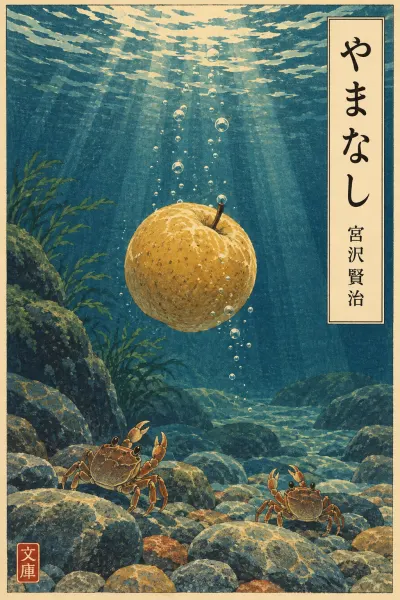
 N4 · easy
Simplified retelling · JLPT N4
やまなし Yamanashi in easy Japanese (N4)
This is our own simplified retelling of The Wild Pear in the Stream, written for N4 learners and checked word by word against the N4 vocabulary list. A few story words and grammar patterns go beyond N4; the notes below give each one's level. It keeps the characters, events and ending of the original. When it feels easy, move on to the original text.
The story in brief
In May, two crab brothers at the bottom of a stream chatter about the mysterious Kuramubon while a fish swims back and forth, until a kingfisher plunges in and the fish vanishes, and their father comforts them. In December, the now bigger brothers argue about whose bubbles are bigger when something round drops into the water. It turns out to be a fragrant wild pear, and the father says that in a couple of days it will sink down and turn into delicious sake on its own.
AI translation · independently checked
一、五月One: May
小さな川のそこで、二ひきのかにの子どもが話していました。At the bottom of a little stream, two crab children were talking.
「クラムボンはわらったよ。」"Kuramubon laughed."
「クラムボンはわらったよ。」"Kuramubon laughed."
「どうしてクラムボンはわらったの。」"Why did Kuramubon laugh?"
「知らない。」"Dunno."
水の上の方は、青くて暗く見えます。Up above, the water looks blue and dark.
小さなあわが、たくさんながれて行きます。Lots of tiny bubbles go drifting past.
かにの子どもも、あわを五つ六つ出しました。The crab children blew out five or six bubbles too.
あわはゆれながら、上の方へのぼって行きました。Wobbling and swaying, the bubbles rose up and up.
一ぴきの魚が、あたまの上を通って行きました。A fish passed by over their heads.
「クラムボンは死んだよ。」"Kuramubon died."
「どうして死んだの。」"Why did it die?"
お兄さんのかにが、足を弟のあたまの上に置いて聞きました。The older crab asked this, resting his leg on his little brother's head.
「わからない。」"I don't know."
魚は戻って、川の下の方へ行きました。The fish turned back and went off downstream.
「クラムボンはわらったよ。」"Kuramubon laughed."
急に、日のひかりが水の中にたくさん入って来ました。Suddenly sunlight came pouring down into the water.
そこの白いいしの上で、ひかりがきれいにゆれました。On the white stones at the bottom, the light shimmered and danced beautifully.
魚が今度は、川の上の方へ行きました。This time the fish went off upstream.
「お魚は、どうして行ったり来たりするの。」"Why does the fish keep going back and forth?"
弟のかにが聞きました。asked the younger crab.
「何か悪いことをしているんだよ。何かをとっているんだよ。」"It's doing something bad. It's catching something."
その魚が、また戻って来ました。The fish came back again.
今度はゆっくり、口をまるくして、ながれて来ました。This time it came drifting along slowly, with its mouth made round.
「お魚は……。」"The fish is..."
すると急に、水の上から、青くひかる物が入って来ました。Then all at once, something shining blue plunged in from above the water.
その先は黒くて細くなっていました。Its tip was black and tapered thin.
魚の白いおなかがひかって、魚は上の方へ行きました。The fish's white belly flashed, and the fish went upward.
それから、青い物も魚も、もう見えませんでした。After that, neither the blue thing nor the fish could be seen anymore.
二ひきはこわくて、こえも出ませんでした。The two were so frightened that they couldn't even make a sound.
お父さんのかにが出て来ました。Father Crab came out.
「どうした。こわかったのか。」"What's the matter? Did you get scared?"
「お父さん、今へんな物が来たよ。青くてひかって、先が黒いの。それが来たら、お魚が上へ行ったよ。」"Dad, a weird thing just came! It was blue and shiny, and its tip was black. When it came, the fish went up!"
「それはかわせみだ。鳥だよ。だいじょうぶ、安心しなさい。わたしたちはとられないから。」"That was a kingfisher. It's a bird. It's all right, don't worry. It won't catch us."
「お父さん、お魚はどこへ行ったの。」"Dad, where did the fish go?"
「魚はこわい所へ行った。」"The fish went to a frightening place."
「こわいよ、お父さん。」"I'm scared, Dad."
「だいじょうぶだ。しんぱいするな。見てごらん、白い花がながれて来た。きれいだろう。」"It's all right. Don't worry. Look, white flowers are drifting down. Pretty, aren't they?"
あわといっしょに、白い花がたくさんながれて来ました。Along with the bubbles, lots of white flowers came floating down.
「こわいよ、お父さん。」弟のかにも話しました。"I'm scared, Dad," said the younger crab too.
二、十二月Two: December
かにの子どもたちは、もうずいぶん大きくなりました。The crab children had grown quite big by now.
夏から秋の間に、川のそこのけしきもすっかりかわりました。Between summer and autumn, the scenery at the bottom of the stream had changed completely.
十二月の夜です。It is a December night.
月のひかりが、つめたい水のそこまで入っています。Moonlight reaches all the way down to the bottom of the cold water.
まわりはとてもしずかです。All around, it is very quiet.
月がとてもきれいなので、子どもたちはねないで外に出ました。The moon was so beautiful that the children stayed up and went outside.
そして、あわを出して遊びました。And they played at blowing bubbles.
「やっぱり、ぼくのあわは大きいね。」"See, my bubbles are big after all."
「お兄さん、ぼくだってもっと大きく出せるよ。」"Big brother, I can blow them even bigger!"
「出してごらん。あれ、それだけかい。」"Go on, then. Huh? Is that all?"
「同じだよ。」"They're the same!"
「じゃあ、いっしょに出してみよう。」"Okay, let's blow them together."
「やっぱり、ぼくの方が大きいよ。」"See, mine's bigger."
お父さんのかにが出て来ました。Father Crab came out.
「もうねなさい。おそいぞ。明日イサドへつれて行かないぞ。」"Go to sleep now. It's late. Or I won't take you to Isado tomorrow."
「お父さん、ぼくたちのあわは、どっちが大きいの。」"Dad, whose bubbles are bigger?"
「それはお兄さんの方だろう。」"Well, your big brother's, I'd say."
「ちがうよ。ぼくの方が大きいんだよ。」弟は泣きそうになりました。"No way! Mine are bigger!" The younger brother was almost in tears.
すると、黒くてまるい大きな物が、上から落ちて来ました。Just then, a big, black, round thing came dropping down from above.
一度下の方へ来て、もう一度上の方へのぼって行きました。It sank down once, then rose back up again.
黄色くひかりました。It glinted yellow.
「かわせみだ。」子どもたちは、こわくなりました。"A kingfisher!" The children grew frightened.
お父さんは両方の目をできるだけ長くして、よく見ました。Father stretched out both his eyes as far as they would go and took a good look.
「ちがう。あれはやまなしだ。ながれて行くぞ。ついて行ってみよう。ああ、いいにおいだな。」"No. That's a wild pear. It's floating away. Let's follow it. Ah, what a lovely smell."
本当に、水の中はやまなしのいいにおいでいっぱいでした。Truly, the water was filled with the sweet smell of the wild pear.
三びきは、おどるように横に歩いて、やまなしについて行きました。The three of them walked sideways as if dancing, following the wild pear.
しばらくすると、やまなしは木のえだに止まりました。After a while, the wild pear stopped against a branch.
その上に、月のひかりが集まっていました。On it, the moonlight had gathered.
「どうだ、やっぱりやまなしだよ。いいにおいだろう。」"There, see? It's a wild pear after all. Smells good, doesn't it?"
「おいしそうだね、お父さん。」"It looks delicious, Dad."
「待て待て。もう二日ぐらい待つと、これは下へ落ちて来る。それから、じぶんでおいしいおさけになるんだ。さあ、もう帰ってねよう。おいで。」"Wait, wait. In about two more days, it'll sink down here. Then it'll turn into delicious wine all by itself. Come on, let's go home and sleep now. Come along."
三びきのかには、じぶんたちの家へ帰って行きました。The three crabs went back home.
水の上では、青いひかりがゆれていました。On the surface of the water, a blue light was swaying.
私の話は、これで終わりです。And that is the end of my story.
Vocabulary
| Word | Meaning | JLPT |
|---|---|---|
| そこそこ | bottom (of a river, sea, etc.)dictionary form: 底Written in kana here; don't confuse it with the pronoun そこ 'there'. | N3 |
| あわあわ | bubble; foamdictionary form: 泡あわを出す = to blow bubbles. | N3 |
| ながれてながれる | to flow; to drift along with the currentdictionary form: 流れる | N3 |
| ゆれましたゆれる | to sway; to shake; to flickerdictionary form: 揺れる | N4 |
| 戻ってもどる | to go back; to returndictionary form: 戻る | N4 |
| ひかるひかる | to shine; to glitterdictionary form: 光るThe noun is ひかり (light). | N4 |
| かわせみかわせみ | kingfisherdictionary form: 翡翠A small blue river bird that dives to catch fish. | — |
| 安心あんしん | relief; feeling safe安心しなさい = don't worry, you're safe. | N4 |
| ずいぶんずいぶん | quite; very muchdictionary form: 随分 | N4 |
| けしきけしき | scenery; viewdictionary form: 景色 | N4 |
| すっかりすっかり | completely; totally | N4 |
| においにおい | smell; scentdictionary form: 匂い | N4 |
| しばらくしばらく | for a whiledictionary form: 暫くしばらくすると = after a while. | N4 |
| おさけおさけ | sake; alcoholic drink (here: the pear will ferment into a delicious liquor by itself)dictionary form: お酒Ripe fruit ferments in the water and turns into something like sweet wine. | N5 |
Grammar
〜ながら N4 while doing ~
Attached to the verb stem (ゆれ), it shows two actions happening at the same time. The main action is the one at the end of the sentence (のぼって行きました).
あわはゆれながら、上の方へのぼって行きました。
Wobbling and swaying, the bubbles rose up and up.
〜たり〜たりする N4 doing things like ~ and ~; going back and forth
Two verbs in た-form + り, followed by する, list actions. With opposite verbs like 行く and 来る, it describes repeated movement back and forth.
お魚は、どうして行ったり来たりするの。
Why does the fish keep going back and forth?
〜てごらん N4 try doing ~; go on and ~
A gentle command made from the て-form + ごらん, used by parents or older people toward children. 見てごらん means 'look'.
見てごらん、白い花がながれて来た。
Look, white flowers are drifting down.
〜ないで N4 without doing ~; instead of doing ~
The ない-form + で connects to the next action and means that the first action was not done. Here the children don't sleep; they go out instead.
子どもたちはねないで外に出ました。
The children stayed up and went outside.
〜そうになる N4 to be about to ~; to almost ~
Verb stem + そうになる means something nearly happens. 泣きそうになりました = he almost cried.
弟は泣きそうになりました。
The younger brother was almost in tears.
〜と (condition) N4 when ~ / if ~, then (naturally)
Dictionary form + と shows that the second event follows naturally or automatically from the first. After two days of waiting, the pear will sink.
もう二日ぐらい待つと、これは下へ落ちて来る。
In about two more days, it'll sink down here.