Part 1 of 5 · JLPT N2
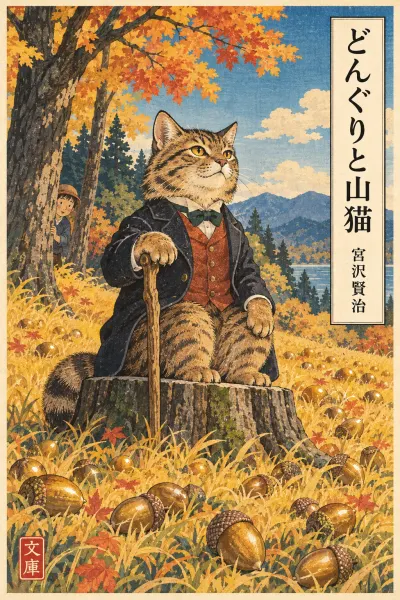
どんぐりと山猫 Donguri to Yamaneko, part 1: A Strange Postcard and a Search
In this part
One Saturday evening, Ichirō receives a badly written postcard from a wildcat inviting him to a troublesome trial the next day. The next morning he sets off up a valley stream and asks a chestnut tree, a waterfall, some mushrooms and a squirrel whether the wildcat passed by. Their answers do not agree: the chestnut tree says east, the waterfall says west, and the mushrooms and the squirrel both say south.
AI translation · independently checked
おかしなはがきが、ある土曜日の夕がた、一郎のうちにきました。One Saturday evening, a very odd postcard arrived at Ichirō's house.
かねた一郎さま 九月十九日To Mister Kaneta Ichirō. September 19th.
あなたは、ごきげんよろしいほで、けっこです。I am glad to heer you are in good helth.
あした、めんどなさいばんしますから、おいでTomorro I am holding a trublesome trial, so pleez
んなさい。cum.
とびどぐもたないでくなさい。Pleez do not bring any fire-arms.
山ねこ 拝Respektfully yours, Wildcat
こんなのです。That was what it said.
字はまるでへたで、墨もがさがさして指につくくらいでした。The handwriting was dreadful, and the ink was so rough and blotchy that it came off on your fingers.
けれども一郎はうれしくてうれしくてたまりませんでした。But Ichirō was so happy, so very happy, that he could hardly stand it.
はがきをそっと学校のかばんにしまって、うちじゅうとんだりはねたりしました。He tucked the postcard carefully away in his school bag and went hopping and jumping all over the house.
ね床にもぐってからも、山猫のにゃあとした顔や、そのめんどうだという裁判のけしきなどを考えて、おそくまでねむりませんでした。Even after he had crawled into bed, he kept thinking about the wildcat's grinning, meowing face and about what this troublesome trial might look like, and he did not fall asleep until late.
けれども、一郎が眼をさましたときは、もうすっかり明るくなっていました。Yet when Ichirō woke up, it was already broad daylight.
おもてにでてみると、まわりの山は、みんなたったいまできたばかりのようにうるうるもりあがって、まっ青なそらのしたにならんでいました。When he stepped outside, the mountains all around swelled up fresh and glistening, as if they had only just been made, and stood in a row beneath the deep blue sky.
一郎はいそいでごはんをたべて、ひとり谷川に沿ったこみちを、かみの方へのぼって行きました。Ichirō gulped down his breakfast and set off alone up the little path that ran along the valley stream, climbing toward its source.
すきとおった風がざあっと吹くと、栗の木はばらばらと実をおとしました。When a clear, crisp wind blew with a whoosh, the chestnut trees dropped their nuts, patter, patter, patter.
一郎は栗の木をみあげて、Ichirō looked up at a chestnut tree
「栗の木、栗の木、やまねこがここを通らなかったかい。」とききました。and asked, "Chestnut tree, chestnut tree, did a wildcat pass by here?"
栗の木はちょっとしずかになって、The chestnut tree went quiet for a moment,
「やまねこなら、けさはやく、馬車でひがしの方へ飛んで行きましたよ。」と答えました。then answered, "The wildcat? Early this morning he flew off to the east in a carriage."
「東ならぼくのいく方だねえ、おかしいな、とにかくもっといってみよう。栗の木ありがとう。」"East is the way I'm going. That's funny. Well, anyway, I'll go on a bit further and see. Thank you, chestnut tree."
栗の木はだまってまた実をばらばらとおとしました。The chestnut tree said nothing, and again dropped its nuts, patter, patter.
一郎がすこし行きますと、そこはもう笛ふきの滝でした。When Ichirō had gone a little further, he came to Fuefuki Falls, the Flute-Player Falls.
笛ふきの滝というのは、まっ白な岩の崖のなかほどに、小さな穴があいていて、そこから水が笛のように鳴って飛び出し、すぐ滝になって、ごうごう谷におちているのをいうのでした。Fuefuki Falls was what they called a place where a small hole opened halfway up a pure white rock cliff, and the water shot out of it whistling like a flute, then turned straight into a waterfall and went roaring down into the valley.
一郎は滝に向いて叫びました。Ichirō turned toward the falls and shouted.
「おいおい、笛ふき、やまねこがここを通らなかったかい。」"Hey there, Flute-Player! Did a wildcat pass by here?"
滝がぴーぴー答えました。The falls answered with a peep-peep whistle.
「やまねこは、さっき、馬車で西の方へ飛んで行きましたよ。」"The wildcat? A little while ago he flew off to the west in a carriage."
「おかしいな、西ならぼくのうちの方だ。けれども、まあも少し行ってみよう。ふえふき、ありがとう。」"That's funny. West is the way to my house. Still, I'll go on a bit further and see. Thank you, Flute-Player."
滝はまたもとのように笛を吹きつづけました。The falls went on playing its flute just as before.
一郎がまたすこし行きますと、一本のぶなの木のしたに、たくさんの白いきのこが、どってこどってこどってこと、変な楽隊をやっていました。When Ichirō had gone a little further again, he found a crowd of white mushrooms under a beech tree, playing in a strange band: dottekodotteko, dottekodotteko, dottekodotteko.
一郎はからだをかがめて、Ichirō bent down
「おい、きのこ、やまねこが、ここを通らなかったかい。」"Hey, mushrooms, did a wildcat pass by here?"
とききました。and asked them.
するときのこはAt that the mushrooms
「やまねこなら、けさはやく、馬車で南の方へ飛んで行きましたよ。」とこたえました。answered, "The wildcat? Early this morning he flew off to the south in a carriage."
一郎は首をひねりました。Ichirō tilted his head, puzzled.
「みなみならあっちの山のなかだ。おかしいな。まあもすこし行ってみよう。きのこ、ありがとう。」"South is up in those mountains over there. That's funny. Well, I'll go on a bit further and see. Thank you, mushrooms."
きのこはみんないそがしそうに、どってこどってこと、あのへんな楽隊をつづけました。The mushrooms all went busily on with their strange band music, dottekodotteko, dottekodotteko.
一郎はまたすこし行きました。Ichirō went on a little further again.
すると一本のくるみの木の梢を、栗鼠がぴょんととんでいました。Then he saw a squirrel hopping, boing, through the top branches of a walnut tree.
一郎はすぐ手まねぎしてそれをとめて、Ichirō at once waved it over and stopped it,
「おい、りす、やまねこがここを通らなかったかい。」とたずねました。and asked, "Hey, squirrel, did a wildcat pass by here?"
するとりすは、木の上から、額に手をかざして、一郎を見ながらこたえました。The squirrel, up in the tree, shaded its eyes with its paw, looked at Ichirō, and answered.
「やまねこなら、けさまだくらいうちに馬車でみなみの方へ飛んで行きましたよ。」"The wildcat? This morning, while it was still dark, he flew off to the south in a carriage."
Vocabulary
| Word | Meaning | JLPT |
|---|---|---|
| はがきはがき | postcarddictionary form: 葉書Usually written in kana or as 葉書. | N5 |
| 墨すみ | ink (for brush writing)Traditional ink made from soot and ground on an inkstone. | N2 |
| がさがさがさがさ | rough, dry, scratchyOnomatopoeia for a coarse texture, used here for poorly ground, blotchy ink. | — |
| しまってしまう | to put away, to tuck awaydictionary form: しまうThis is the main verb, not the auxiliary 〜てしまう. | N3 |
| ね床ねどこ | bed, beddingdictionary form: 寝床床 is read どこ here because of rendaku. | — |
| もぐってもぐる | to crawl into, to dive underdictionary form: 潜るUsed for burrowing under the covers. | N2 |
| 裁判さいばん | trial, court caseThe postcard writes it in kana, さいばん. | N3 |
| 谷川たにがわ | mountain stream, valley stream川 becomes がわ by rendaku. | — |
| 沿ったそう | to run along, to follow (a river, road)dictionary form: 沿うOften seen as 〜に沿って, 'along ~'. | N1 |
| すきとおったすきとおる | clear, transparentdictionary form: 透き通るA favourite word of Miyazawa Kenji for pure, clean air and light. | N2 |
| 楽隊がくたい | band (of musicians)A slightly old-fashioned word, suggesting a brass band or marching band. | — |
| 首をひねりましたくびをひねる | to tilt one's head in puzzlementdictionary form: 首をひねるIdiom for being puzzled or doubtful. | — |
| 梢こずえ | treetop, top branches | N1 |
| 手まねぎてまねき | beckoning with the handdictionary form: 手招きIn Japan this is done palm down, fingers waving toward oneself. | — |
Grammar
〜てたまらない N3 unbearably ~, so ~ one can't stand it
Te-form of an adjective + たまらない expresses a feeling too strong to contain. Here the polite past negative is used, and repeating うれしくて adds to the childlike excitement.
一郎はうれしくてうれしくてたまりませんでした。
Ichirō was so happy, so very happy, that he could hardly stand it.
〜たり〜たりする N4 doing things like ~ and ~
This pattern lists typical or repeated actions. Here it describes Ichirō hopping and jumping around again and again.
うちじゅうとんだりはねたりしました。
He went hopping and jumping all over the house.
〜たばかりのように N4 as if having just ~
Past form + ばかり means 'just did'. Adding のように turns it into a simile, so the mountains look as if they have only just been made.
みんなたったいまできたばかりのようにうるうるもりあがって
all swelled up fresh and glistening, as if they had only just been made
〜なら N4 as for ~, if it's ~ you mean
なら picks up a topic someone else has just raised and gives information about it. Each creature answers with やまねこなら, 'the wildcat? well…'.
やまねこなら、けさはやく、馬車でひがしの方へ飛んで行きましたよ。
The wildcat? Early this morning he flew off to the east in a carriage.
〜てみる N4 to try doing ~, to do ~ and see
Te-form + みる means doing something to find out the result. The volitional みよう gives 'let's go and see'.
とにかくもっといってみよう。
Anyway, I'll go on a bit further and see.
〜というのは〜をいう N3 what is called ~ refers to ~
This pattern is used to define or explain a name. The whole long clause before のをいう describes what 'Fuefuki Falls' means.
笛ふきの滝というのは、まっ白な岩の崖のなかほどに、小さな穴があいていて、そこから水が笛のように鳴って飛び出し、すぐ滝になって、ごうごう谷におちているのをいうのでした。
Fuefuki Falls was what they called a place where a small hole opened halfway up a white rock cliff, and the water shot out whistling like a flute, then became a waterfall roaring down into the valley.