Part 1 of 1 · JLPT N3
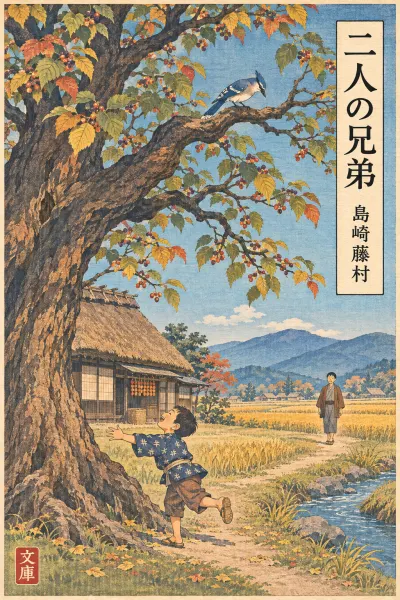
二人の兄弟 Futari no Kyōdai, part 1: The Right Time, Learned Twice
In this part
Two brothers long to gather hackberries. The impatient younger brother goes too early, and the easygoing older brother goes too late, until a kind old servant tells them the right moment and a jay rewards them with a feather. Later the old man makes them fishing rods and lines, but they catch nothing: one brother is too slow and the other too hasty, and the old man laughs that tools alone do not catch fish.
AI translation · independently checked
一 榎木の実One: Hackberries
皆さんは榎木の実を拾ったことがありますか。Have you ever picked up hackberries, everyone?
あの実の落ちて居る木の下へ行ったことがありますか。Have you ever gone under a tree where those berries have fallen?
あの香ばしい木の実を集めたり食べたりして遊んだことがありますか。Have you ever played at gathering and eating those fragrant berries?
そろそろあの榎木の実が落ちる時分でした。It was almost the time of year when the hackberries fall.
二人の兄弟はそれを拾うのを楽みにして、まだあの実が青くて食べられない時分から、早く紅くなれ早く紅くなれと言って待って居ました。Two brothers were looking forward to picking them up, and ever since the berries were still green and not yet good to eat, they had been waiting and saying, "Turn red soon! Turn red soon!"
二人の兄弟の家には奉公して働いて居る正直な好いお爺さんがありました。In the brothers' house there was a good, honest old man who worked there as a servant.
このお爺さんは山へも木を伐りに行くし畠へも野菜をつくりに行って、何でもよく知って居ました。This old man went to the mountains to cut wood and to the fields to grow vegetables, and he knew all sorts of things.
このお爺さんが兄弟の子供に申しました。This old man spoke to the two boys.
「まだ榎木の実は渋くて食べられません。もう少しお待ちなさい。」とそう申しました。"The hackberries are still too bitter to eat. Wait a little longer," he said.
弟は気の短い子供で、榎木の実の紅くなるのが待って居られませんでした。The younger brother was an impatient child, and he could not wait for the hackberries to turn red.
お爺さんが止めるのも聞かずに、馳出して行きました。Without listening to the old man, who tried to stop him, he ran off.
この子供が木の実を拾いに行きますと、高い枝の上に居た一羽の橿鳥が大きな声を出しまして、When this boy went to pick up the berries, a jay that was sitting up on a high branch called out in a loud voice,
「早過ぎた。早過ぎた。」と鳴きました。"Too early! Too early!"
気の短い弟は、枝に生って居るのを打ち落すつもりで、石ころや棒を拾っては投げつけました。Meaning to knock down the berries still growing on the branches, the impatient younger brother kept picking up pebbles and sticks and throwing them at the tree.
その度に、榎木の実が葉と一緒になって、パラパラパラパラ落ちて来ましたが、どれもこれも、まだ青くて食べられないのばかりでした。Each time, hackberries came pattering down together with the leaves, patter, patter, patter, but every single one was still green and not good to eat.
そのうちに今度は兄の子供が出掛けて行きました。After a while, it was the older brother's turn to set off.
兄は弟と違って気長な子供でしたから「大丈夫、榎木の実はもう紅くなって居る。」と安心して、ゆっくり構えて出掛けて行きました。Unlike his younger brother, the older brother was a patient child, so he thought with relief, "It's all right, the hackberries are red by now," and set off taking his time.
兄の子供が木の実を拾いに行きますと、高い枝の上に居た橿鳥がまた大きな声を出しまして、When the older boy went to pick up the berries, the jay up on the high branch again called out in a loud voice,
「遅過ぎた。遅過ぎた。」と鳴きました。"Too late! Too late!"
気長な兄は、しきりと木の下を探し廻りましたが、紅い榎木の実は一つも見つかりませんでした。The patient older brother searched all around under the tree again and again, but he could not find a single red hackberry.
この子供がゆっくり出掛けて行くうちに、木の下に落ちて居たのを皆な他の子供に拾われてしまいました。While this boy had been taking his time getting there, the other children had picked up every berry that had fallen under the tree.
二人の兄弟がこの話をお爺さんにしましたら、お爺さんがそう申しました。When the two brothers told the old man about this, the old man said:
「一人はあんまり早過ぎたし、一人はあんまり遅過ぎました。丁度好い時を知らなければ、好い榎木の実は拾われません。私がその丁度好い時を教えてあげます。」と申しました。"One of you was far too early, and the other far too late. Unless you know just the right time, you can't pick up good hackberries. I will tell you what that just-right time is," he said.
ある朝、お爺さんが二人の子供に、「さあ、早く拾いにお出なさい、丁度好い時が来ました。」と教えました。One morning the old man told the two boys, "Now then, hurry and go pick them up. Just the right time has come."
その朝は風が吹いて、榎木の枝が揺れるような日でした。That morning the wind was blowing, the kind of day when the branches of the hackberry tree sway.
二人の兄弟が急いで木の下へ行きますと、橿鳥が高い枝の上からそれを見て居まして、When the two brothers hurried to the foot of the tree, the jay was watching them from up on a high branch,
「丁度好い。丁度好い。」と鳴きました。and it called, "Just right! Just right!"
榎木の下には、紅い小さな球のような実が、そこにも、ここにも、一ぱい落ちこぼれて居ました。Under the hackberry tree, berries like little red beads lay fallen and scattered everywhere, here and there and all around.
二人の兄弟は木の周囲を廻って、拾っても、拾っても、拾いきれないほど、それを集めて楽みました。The two brothers went round and round the tree and had great fun gathering the berries; no matter how many they picked up, there were always more than they could pick.
橿鳥は首を傾げて、このありさまを見て居ましたが、The jay tilted its head and watched the scene,
「なんとこの榎木の下には好い実が落ちて居ましょう。沢山お拾いなさい。序に、私も一つ御褒美を出しますから、それも拾って行って下さい。」と言いながら青い斑の入った小さな羽を高い枝の上から落してよこしました。and saying, "What fine berries have fallen under this hackberry tree! Pick up plenty of them. And while you're at it, I will give you a reward as well, so please pick that up and take it with you," it let a small feather marked with blue spots drop down from the high branch.
二人の兄弟は榎木の実ばかりでなく、橿鳥の美しい羽を拾い、おまけにその大きな榎木の下で、「丁度好い時」までも覚えて帰って来ました。The two brothers came home having picked up not only hackberries but also the jay's beautiful feather, and on top of that, under that great hackberry tree they had even learned "just the right time."
二 釣りの話Two: A Story about Fishing
ある日、お爺さんは二人の兄弟に釣りの道具を造って呉れると言いました。One day the old man said he would make fishing tackle for the two brothers.
いかにお爺さんでも釣りの道具は、むずかしかろう、と二人の子供がそう思って見て居ました。"Even the old man will find fishing tackle hard to make," the two boys thought as they watched.
この兄弟の家の周囲には釣竿一本売る店がありませんでしたから。For there was not a single shop anywhere around the brothers' house that sold so much as one fishing rod.
お爺さんは何処からか釣針を探して来ました。The old man found some fishhooks somewhere and brought them back.
それから細い竹を切って来まして、それで二本の釣竿を造りました。Then he cut some thin bamboo, brought it home, and made two fishing rods out of it.
「針と竿が出来ました。今度は糸の番です。」とお爺さんは言って、栗の木に住む栗虫から糸を取りました。"The hooks and the rods are done. Now it's the line's turn," said the old man, and he took thread from the chestnut caterpillars that live in chestnut trees.
丁度お蚕さまのように、その栗虫からも白い糸が取れるのです。Just as from silkworms, white thread can be drawn from those chestnut caterpillars too.
お爺さんは栗虫から取れた糸を酢に浸けまして、それを長く引延しました。The old man soaked the thread from the chestnut caterpillars in vinegar and stretched it out long.
その糸が日に乾いて堅くなる頃には、兄弟の子供の力で引いても切れないほど丈夫で立派なものが出来上りました。By the time the thread had dried in the sun and grown stiff, it had become a fine, strong line that would not break even when the boys pulled on it with all their strength.
「さあ、釣りの道具が揃いました。」と言って兄弟に呉れました。"There, the fishing tackle is all ready," he said, and gave it to the brothers.
二人の子供はお爺さんが造った釣竿を手に提げまして、大喜びで小川の方へ出掛けて行きました。Carrying the rods the old man had made in their hands, the two boys set off for the stream, overjoyed.
小川の岸には胡桃の木の生えて居る場所がありました。On the bank of the stream there was a spot where walnut trees grew.
兄弟は鰍の居そうな石の間を見立てまして、胡桃の木のかげに腰を掛けて釣りました。The brothers picked out a place between the stones where sculpins seemed likely to be, sat down in the shade of the walnut trees, and fished.
半日ばかり、この二人の子供が小川の岸で遊んで家の方へ帰って行きますと、丁度お爺さんも木を一ぱい背負って山の方から帰って来たところでした。After the two boys had played on the bank of the stream for about half a day and were heading home, the old man was just coming back from the mountains too, with a big load of wood on his back.
「釣れましたか。」とお爺さんが聞きますと、兄弟の子供はがっかりしたように首を振りました。When the old man asked, "Did you catch anything?" the boys shook their heads, looking disappointed.
賢いお魚は一匹も二人の釣針に掛りませんでした。Not one of the clever fish had taken the two boys' hooks.
その時、兄弟の子供はお爺さんに釣りの話をしました。Then the brothers told the old man the story of their fishing.
兄はゆっくり構えて釣って居たものですから釣針にさした餌は皆な鰍に食られてしまいました。The older brother had been fishing in such a leisurely way that the sculpins ate all the bait on his hook.
弟はまたお魚の釣れるのが待遠しくて、ほんとに釣れるまで待って居られませんでした。The younger brother, on the other hand, was so eager to catch a fish that he simply could not wait until one really bit.
つい水の中を掻廻すと、鰍は皆な驚いて石の下へ隠れてしまいました。Unable to help himself, he stirred up the water, and the sculpins all took fright and hid under the stones.
お爺さんは子供の釣りの話を聞いて、正直な人の好さそうな声で笑いました。Hearing the boys' fishing story, the old man laughed in an honest, good-natured voice.
そして二人の兄弟にこう申しました。And he said this to the two brothers:
「一人はあんまり気が長過ぎたし、また、一人はあんまり気が短過ぎました。釣りの道具ばかりでお魚は釣れません。」"One of you was far too patient, and the other was far too impatient. You can't catch fish with fishing tackle alone."
Vocabulary
| Word | Meaning | JLPT |
|---|---|---|
| 榎木えのき | Chinese hackberry treedictionary form: 榎A large shade tree with small berries that ripen red-orange in autumn. Here it is written with an extra 木. | — |
| 時分じぶん | time; season (when something happens)Slightly old-fashioned; close to 頃. Not to be confused with 自分. | — |
| 奉公してほうこうする | to work in service (in a household)dictionary form: 奉公するAn older word for living and working as a servant or apprentice. | — |
| 渋くてしぶい | astringent, bitter (unripe fruit)dictionary form: 渋いDescribes the mouth-puckering taste of unripe fruit; it can also mean 'tasteful, understated'. | N1 |
| 気の短いきがみじかい | impatient, quick-tempereddictionary form: 気が短いIts opposite is 気が長い / 気長 (patient, easygoing), which describes the older brother. | — |
| 橿鳥かしどり | jay (Eurasian jay)Another name for カケス, a bird known for its blue-patterned wing feathers. | — |
| 構えてかまえる | to take (a certain attitude)dictionary form: 構えるゆっくり構える means 'to take things easy, to take one's time'. | N1 |
| 序ついで | while one is at it; on the occasiondictionary form: 序でUsually written ついでに today. | N2 |
| 御褒美ほうび | reward, prizedictionary form: 褒美Usually used with the polite prefix ご. | N1 |
| 斑ふ | spots, speckles, mottled markings斑が入る means 'to have spots or markings'. | N1 |
| 栗虫くりむし | chestnut caterpillar (a silk-spinning moth larva)Its silk was once made into fishing line (てぐす). | — |
| 鰍かじか | sculpin (small freshwater fish)A small bottom-dwelling fish of clear streams that likes to hide under stones. | — |
| 待遠しくてまちどおしい | long-awaited; can hardly waitdictionary form: 待ち遠しいExpresses impatience for something to come. | N1 |
| 掻廻すかきまわす | to stir up, churndictionary form: 掻き回すModern spelling: かき回す. | N1 |
Grammar
〜たことがある N4 have (ever) done
The past form plus ことがある asks about or states past experience. The narrator repeats it to draw the child reader into the story.
皆さんは榎木の実を拾ったことがありますか。
Have you ever picked up hackberries, everyone?
〜ずに N3 without doing
ず is the written negative stem, and に links it to the next action. 聞かずに means 'without listening' (= 聞かないで).
お爺さんが止めるのも聞かずに、馳出して行きました。
Without listening to the old man, who tried to stop him, he ran off.
〜過ぎる N4 too much / too ...
Attached to an adjective stem, 過ぎる means 'excessively'. 早過ぎた and 遅過ぎた are 'too early' and 'too late', and 気が長過ぎた is 'too patient'.
「早過ぎた。早過ぎた。」と鳴きました。
"Too early! Too early!"
〜うちに N3 while; in the course of
Something happens during a period, often without the subject noticing. While the older boy dawdled, the berries were taken.
この子供がゆっくり出掛けて行くうちに、木の下に落ちて居たのを皆な他の子供に拾われてしまいました。
While this boy had been taking his time getting there, the other children had picked up every berry that had fallen under the tree.
〜きれないほど N2 so much that one cannot finish doing
The potential negative of 〜きる (to do completely) plus ほど shows a huge amount. Repeating 拾っても、拾っても adds 'no matter how much they picked'.
拾っても、拾っても、拾いきれないほど、それを集めて楽みました。
No matter how many they picked up, there were always more than they could pick, and they had great fun gathering them.
〜かろう / いかに〜でも N1 probably ~ / however ~ one may be
むずかしかろう is a literary volitional-conjectural form of an い-adjective (= むずかしいだろう). いかに〜でも means 'even someone as capable as'.
いかにお爺さんでも釣りの道具は、むずかしかろう
Even the old man will find fishing tackle hard to make.