Part 2 of 6 · JLPT N2
雁の童子 Kari no Dōji, part 2: Fire Among the Geese, and an Orphan from Heaven
In this part
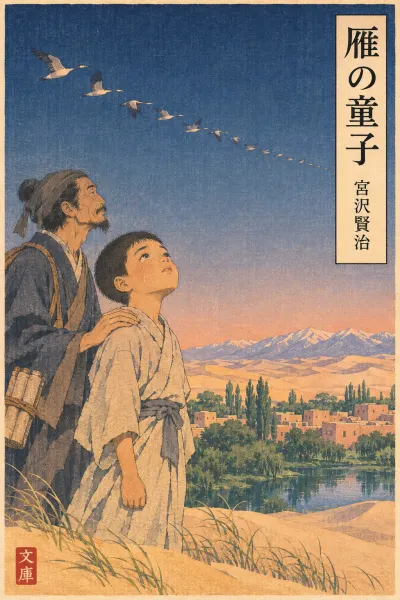
As Suriya watches a line of wild geese, bullets rise from across the way and strike them one after another, setting them ablaze. The geese turn into heavenly beings, and a dying old man begs Suriya to raise his grandson, the one child left unharmed. Suriya agrees, takes the boy home, and all of Sasha soon calls him the Wild Goose Child.
AI translation · independently checked
須利耶さまは、その大きな黒い雁の列を、じっと眺めて立たれました。Suriya stood still and gazed at that great black line of wild geese.
そのとき俄かに向うから、黒い尖った弾丸が昇って、まっ先きの雁の胸を射ました。At that moment, quite suddenly, a black, pointed bullet rose from across the way and struck the breast of the leading goose.
雁は二、三べん揺らぎました。The goose wavered two or three times.
見る見るからだに火が燃え出し、世にも悲しく叫びながら、落ちて参ったのでございます。Before his very eyes, fire broke out over its body, and it came falling down, crying out more sorrowfully than anything in this world.
弾丸がまた昇って次の雁の胸をつらぬきました。Another bullet rose and pierced the breast of the next goose.
それでもどの雁も、遁げはいたしませんでした。Even so, not one of the geese tried to flee.
却って泣き叫びながらも、落ちて来る雁に随いました。Instead, though they wept and cried out, they followed the geese that were falling.
第三の弾丸が昇り、A third bullet rose,
第四の弾丸がまた昇りました。and a fourth bullet rose as well.
六発の弾丸が六疋の雁を傷つけまして、一ばんしまいの小さな一疋だけが、傷つかずに残っていたのでございます。Six bullets wounded six geese, and only the small one at the very end remained unhurt.
燃え叫ぶ六疋は、悶えながら空を沈み、しまいの一疋は泣いて随い、それでも雁の正しい列は、決して乱れはいたしません。The six, burning and crying out, sank through the sky in agony, and the last one followed them, weeping; and yet the orderly line of the geese never once broke.
そのとき須利耶さまの愕ろきには、いつか雁がみな空を飛ぶ人の形に変っておりました。Then, to Suriya's astonishment, the geese had all, before he knew it, changed into the forms of people flying through the sky.
赤い焔に包まれて、歎き叫んで手足をもだえ、落ちて参る五人、それからしまいに只一人、完いものは可愛らしい天の子供でございました。Five came falling, wrapped in red flames, lamenting and crying out and writhing hand and foot; and last of all, the only one left whole was a lovely child of heaven.
そして須利耶さまは、たしかにその子供に見覚えがございました。And Suriya was certain that he had seen that child somewhere before.
最初のものは、もはや地面に達しまする。The first of them was already reaching the ground.
それは白い鬚の老人で、倒れて燃えながら、骨立った両手を合せ、須利耶さまを拝むようにして、切なく叫びますのには、It was an old man with a white beard, and as he lay fallen and burning, he pressed his bony hands together, as if praying to Suriya, and cried out piteously:
(須利耶さま、須利耶さま、おねがいでございます。どうか私の孫をお連れ下さいませ。)"Suriya, Suriya, I beg of you. Please take my grandson with you."
もちろん須利耶さまは、馳せ寄って申されました。Of course Suriya ran to him and said:
(いいとも、いいとも、確かにおれが引き取ってやろう。しかし一体お前らは、どうしたのだ。)そのとき次々に雁が地面に落ちて来て燃えました。"Yes, of course, of course. I'll surely take him in. But what on earth has happened to you all?" Just then, one after another, the geese came falling to the ground and burned.
大人もあれば美しい瓔珞をかけた女子もございました。There were grown men among them, and also a woman wearing a beautiful jewelled necklace.
その女子はまっかな焔に燃えながら、手をあのおしまいの子にのばし、子供は泣いてそのまわりをはせめぐったと申しまする。That woman, burning in bright red flames, stretched out her hand toward the last child, and the child, weeping, ran round and round her, so they say.
雁の老人が重ねて申しますには、The old goose spoke again, saying:
(私共は天の眷属でございます。罪があってただいままで雁の形を受けておりました。只今報いを果しました。私共は天に帰ります。ただ私の一人の孫はまだ帰れません。これはあなたとは縁のあるものでございます。どうぞあなたの子にしてお育てを願います。おねがいでございます。)と斯うでございます。"We are of the family of heaven. Because of a sin, we have until now been given the form of wild geese. Just now we have paid our penance in full. We are returning to heaven. Only my one grandson cannot return yet. He is one bound to you by fate. Please, I ask you to raise him as your own child. I beg of you." That is what he said.
須利耶さまが申されました。Suriya said:
(いいとも。すっかり判った。引き受けた。安心してくれ。)"Very well. I understand completely. I'll take care of him. Rest easy."
すると老人は手を擦って地面に頭を垂れたと思うと、もう燃えつきて、影もかたちもございませんでした。Then the old man rubbed his hands together and bowed his head to the ground, and the next moment he had burned away, leaving neither shadow nor shape behind.
須利耶さまも従弟さまも鉄砲をもったままぼんやりと立っていられましたそうでいったい二人いっしょに夢を見たのかとも思われましたそうですがあとで従弟さまの申されますにはその鉄砲はまだ熱く弾丸は減っておりそのみんなのひざまずいた所の草はたしかに倒れておったそうでございます。It is said that Suriya and his cousin stood there in a daze, still holding their guns, and they wondered whether the two of them had dreamed the same dream together; but afterwards the cousin told how the gun was still hot, the bullets had been used up, and the grass where they had all knelt was indeed flattened.
そしてもちろんそこにはその童子が立っていられましたのです。And of course, there stood the boy.
須利耶さまはわれにかえって童子に向って云われました。Suriya came to himself and spoke to the boy.
(お前は今日からおれの子供だ。もう泣かないでいい。お前の前のお母さんや兄さんたちは、立派な国に昇って行かれた。さあおいで。)"From today on you are my child. You needn't cry any more. Your mother and your brothers from before have risen to a glorious land. Come along now."
須利耶さまはごじぶんのうちへ戻られました。Suriya returned to his home.
途中の野原は青い石でしんとして子供は泣きながら随いて参りました。The fields along the way lay silent with blue stones, and the child followed him, weeping.
須利耶さまは奥さまとご相談で、何と名前をつけようか、三、四日お考えでございましたが、そのうち、話はもう沙車全体にひろがり、みんなは子供を雁の童子と呼びましたので、須利耶さまも仕方なくそう呼んでおいででございました。」Suriya talked it over with his wife and spent three or four days thinking about what to name him; but in the meantime the story had already spread all over Sasha, and everyone called the child the Wild Goose Child, so Suriya, having no choice, called him that too."
Vocabulary
| Word | Meaning | JLPT |
|---|---|---|
| 眺めてながめる | to gaze at, look out overdictionary form: 眺めるSuggests looking steadily at something at a distance. | N3 |
| 俄かににわか | suddenly, all at oncedictionary form: 俄かLiterary; everyday speech uses 急に. | N2 |
| 弾丸だんがん | bullet, shot | — |
| つらぬきましたつらぬく | to pierce, go right throughdictionary form: 貫くAlso used figuratively: to carry something through to the end. | N1 |
| 遁げにげる | to flee, escapedictionary form: 遁げるOlder kanji for 逃げる. | N4 |
| 随いましたしたがう | to follow, go along withdictionary form: 随うUsually written 従う today; in 随いて the same kanji is read つ(いて). | N3 |
| 悶えもだえる | to writhe, be in agonydictionary form: 悶える | — |
| 見覚えみおぼえ | recognition; having seen beforeCommon in 見覚えがある 'to look familiar'. | — |
| 拝むおがむ | to pray to with palms pressed together; to beg humbly | N2 |
| 瓔珞ようらく | jewelled necklace or ornamentBuddhist word for the strings of jewels worn by heavenly beings and on statues. | — |
| 眷属けんぞく | family, kin; retinue天の眷属 here means beings belonging to heaven's household. | — |
| 報いむくい | retribution, consequence of one's deeds報いを果たす: to finish paying the price for a past sin. | — |
| 縁えん | karmic bond, fated connectionA key Buddhist idea: ties carried over from past lives. | N1 |
| われにかえってわれにかえる | to come to one's senses, snap out of a dazedictionary form: 我に返る | — |
Grammar
〜れる/〜られる (honorific) N3 respectful form of a verb
The passive form is used here to show respect for the person doing the action, not passive meaning. The storyteller uses it throughout for Suriya: 立たれました, 申されました, 云われました.
じっと眺めて立たれました。
stood still and gazed.
見る見る N2 before one's eyes; rapidly
Describes a change happening so fast you can watch it take place. Here the fire spreads over the goose in an instant.
見る見るからだに火が燃え出し
before his very eyes, fire broke out over its body
〜はいたしません N2 (emphatic) did not do at all
Inserting は into the verb (逃げはしない) stresses the negation, and いたす makes it humble and polite in the storyteller's voice. It stresses that, whatever happened, the geese never fled and the line never broke.
それでもどの雁も、遁げはいたしませんでした。
Even so, not one of the geese tried to flee.
〜ながらも N2 although, while (contrast)
ながら normally means 'while doing'; with も it adds contrast: in spite of weeping and crying, they still followed.
却って泣き叫びながらも、落ちて来る雁に随いました。
Instead, though they wept and cried out, they followed the geese that were falling.
〜たと思うと N2 no sooner had … than
Shows that a second event follows the first almost immediately. The old man bows, and at once he has burned away.
地面に頭を垂れたと思うと、もう燃えつきて
bowed his head to the ground, and the next moment he had burned away
〜たまま N4 while still in the state of …
Means that a state continues unchanged while something else happens. The two men are still gripping their guns as they stand dazed.
鉄砲をもったままぼんやりと立っていられました
stood there in a daze, still holding their guns