 N4 · easy
Simplified retelling · JLPT N4
待つ Matsu in easy Japanese (N4)
This is our own simplified retelling of Every Day at the Little Station, written for N4 learners and checked word by word against the N4 vocabulary list. A few story words and grammar patterns go beyond N4; the notes below give each one's level. It keeps the characters, events and ending of the original. When it feels easy, move on to the original text.
The story in brief
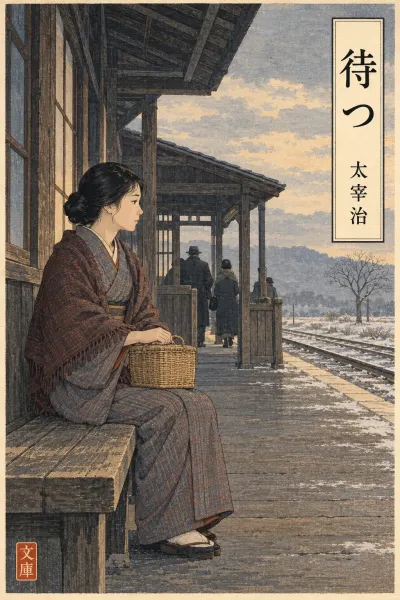
Every day after shopping, a twenty-year-old woman sits on a cold bench at a small station and watches the passengers, waiting for someone she cannot name. She is afraid of people and the false greetings they exchange. When a great war begins she wants to be useful but has nowhere to go, so she sits at the station. She tries to name what she is waiting for, rejects every guess, and asks the reader not to forget her or laugh at her.
AI translation · independently checked
小さな駅に、私は毎日、人をむかえに行きます。Every day I go to the little station to meet someone.
だれだか分からない人を、むかえに行くのです。I go to meet someone, though I do not know who it is.
買い物の帰りに、私はかならず駅によります。On my way home from shopping, I always stop at the station.
そして、つめたいベンチにすわります。And I sit down on the cold bench.
かごをひざの上において、かいさつ口をぼんやり見ています。I set my basket on my lap and gaze absently at the ticket gate.
電車が着くと、たくさんの人が出てきます。When a train comes in, a great many people come out.
みんな、おこっているようなかおです。They all look as if they were angry.
きっぷをわたして、急いで私の前を通ります。They hand over their tickets and hurry past in front of me.
そして、いろいろな方へ行ってしまいます。And then off they go, every which way.
だれかが一人、わらって私にこえをかけたら。If someone, just one person, were to smile and speak to me...
ああ、こわい。Oh, how frightening.
こまる。What would I do?
むねがどきどきします。My heart pounds.
でも、私はやっぱりだれかを待っているのです。And yet, all the same, I am waiting for someone.
私はだれを待っているのでしょう。Whom am I waiting for, I wonder?
人間ではないかもしれません。Perhaps it is not a human being at all.
私は人間がこわいのです。You see, I am afraid of people.
人に会うと、言いたくないあいさつをします。When I meet someone, I make greetings I do not want to make.
すると、自ぶんが世界でいちばんのうそつきのような気がして、死にたくなります。And then I feel as though I were the biggest liar in the world, and I want to die.
あい手も私に気をつけて、うその話をします。The other person, too, is guarded with me and tells me lies.
それを聞くと、かなしくなります。When I hear that, I grow sad.
だから私は、友だちの家へあそびに行きませんでした。That is why I did not go to visit my friends at their homes.
家で母と二人で、しずかにぬいものをするのが、いちばん楽でした。Sewing quietly at home, just my mother and I, was the most comfortable thing of all.
けれども、大きなせんそうが始まりました。But then a great war began.
私だけが家でぼんやりしているのは、悪いことのような気がしました。I felt it was somehow wrong for me alone to sit idly at home.
はたらいて、人のやくに立ちたいと思いました。I wanted to work, to be of use to others.
でも、外に出ても、行くところがありません。But even when I go out, there is nowhere for me to go.
それで、駅のベンチにすわっているのです。And so I sit on the bench at the station.
だれかが来たらいいな、と思います。How nice it would be if someone came, I think.
でも、来たらどうしよう、とこわくなります。But then I grow afraid: what would I do if they did come?
来たら、その人に私のいのちをあげよう、とも思います。If they come, I will give that person my life. I think that, too.
いろいろな気持ちがまざって、むねがくるしくなります。All these feelings mingle together, and my chest grows tight.
昼間にゆめを見ているようです。It is like dreaming in broad daylight.
駅前の人たちが、小さく、とおく見えます。The people in front of the station look small and far away.
世界がしずかになります。The world goes quiet.
もしかしたら、私はよくない女かもしれません。Perhaps I am not a good woman.
「やくに立ちたい」というのはうそで、ほんとうは、へんなゆめのために何かを待っているのかもしれません。Perhaps "I want to be useful" is a lie, and the truth is that I am waiting for something for the sake of some strange dream.
はっきりしたかたちは、ありません。It has no clear shape.
でも、私は待っています。But I am waiting.
私が待っているのは、あなたではありません。The one I am waiting for is not you.
おっと。A husband?
ちがいます。No.
こいびと。A sweetheart?
ちがいます。No.
友だち。A friend?
いやです。I would not want that.
お金。Money?
まさか。Surely not.
ゆうれい。A ghost?
ああ、いやです。Oh, how horrid.
もっとやさしくて、明るくて、すばらしいもの。Something gentler, brighter, more wonderful.
たとえば、春のようなもの。Something like spring, for instance.
いいえ、ちがいます。No, that is not it.
五月の青い木。Green trees in May.
むぎばたけのそばのきれいな水。Clear water beside a field of wheat.
やっぱり、ちがいます。No, it is not that either.
けれども、私は待っています。And yet I am waiting.
目の前を、たくさんの人が通って行きます。Before my eyes, a great many people go by.
あの人でもない、この人でもない。Not that one, not this one.
私はかごを持って、少しふるえながら、一生けんめい待っているのです。Holding my basket and trembling a little, I wait with all my heart.
どうか、私をわすれないでください。Please, do not forget me.
毎日駅へむかえに行って、ひとりで家へ帰ってくる二十さいのむすめを、わらわないでください。Please do not laugh at the twenty-year-old girl who goes to the station every day to meet someone and comes home alone.
その駅の名前は、教えません。I will not tell you the name of that station.
教えなくても、あなたはいつか、私を見かけるでしょう。Even without my telling you, someday you will catch sight of me.
Vocabulary
| Word | Meaning | JLPT |
|---|---|---|
| むかえむかえる | to meet, to go and pick someone updictionary form: 迎えるむかえに行く: 'go to meet' someone arriving. The masu-stem + に shows the purpose of going. | N4 |
| かいさつ口かいさつぐち | ticket gate, ticket barrierdictionary form: 改札口口 becomes ぐち here (rendaku), as in 出口 でぐち. | — |
| ぼんやりぼんやり | absently, vacantly; idlyぼんやり見る means to stare without focus. ぼんやりする means to sit idle and daydream. | N3 |
| こえをかけたらこえをかける | to speak to someone, to call out to someonedictionary form: 声をかける | — |
| うそつきうそつき | liardictionary form: 嘘つきFrom うそをつく 'to tell a lie'. | N1 |
| 気をつけてきをつける | to be careful; here, to be cautious and guarded with someonedictionary form: 気をつける | N2 |
| ぬいものぬいもの | sewing, needleworkdictionary form: 縫い物From 縫う ぬう 'to sew' + 物 もの. | — |
| せんそうせんそう | wardictionary form: 戦争 | N4 |
| やくに立ちたいやくにたつ | to be useful, to be of helpdictionary form: 役に立つ人のやくに立つ means to be useful to other people. | N4 |
| まざってまざる | to be mixed, to mingledictionary form: 混ざる | N2 |
| いのちいのち | life (one's own life)dictionary form: 命 | N3 |
| ゆうれいゆうれい | ghostdictionary form: 幽霊 | N1 |
| 一生けんめいいっしょうけんめい | with all one's might, as hard as one candictionary form: 一生懸命 | N4 |
| 見かけるみかける | to catch sight of, to happen to see | N1 |
Grammar
〜のです N4 explanatory 'it is that…'
Adding のです to a plain-form verb gives an explanation or emphasis. The speaker is explaining her own strange situation, as if confiding it to the listener.
だれだか分からない人を、むかえに行くのです。
I go to meet someone, though I do not know who it is.
〜たら N4 if / when
The た-form + ら sets up a condition. Here the main clause is left unsaid, so the sentence trails off as an anxious 'What if…?'.
だれかが一人、わらって私にこえをかけたら。
If someone, just one person, were to smile and speak to me...
〜ような気がする N3 to feel as if, to have a feeling that
Noun + のような気がする expresses a vague personal impression rather than a fact. The narrator feels like a liar without being sure that she is one.
自ぶんが世界でいちばんのうそつきのような気がして、死にたくなります。
I feel as though I were the biggest liar in the world, and I want to die.
〜てしまう N4 to go and do; completely (often with regret)
て-form + しまう stresses that an action is completed. Here it adds a feeling of loss as the passengers disappear one after another.
そして、いろいろな方へ行ってしまいます。
And then off they go, every which way.
〜かもしれません N4 might, perhaps
This pattern follows a plain form or a noun and marks an uncertain guess. The narrator uses it again and again as she questions her own motives.
もしかしたら、私はよくない女かもしれません。
Perhaps I am not a good woman.
〜ながら N4 while doing
A verb's masu-stem + ながら shows two actions done at the same time by the same person. Here she trembles while she waits.
私はかごを持って、少しふるえながら、一生けんめい待っているのです。
Holding my basket and trembling a little, I wait with all my heart.