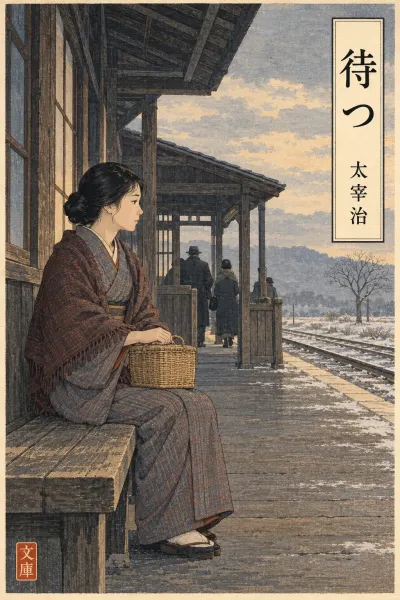
 N5 · easy
Simplified retelling · JLPT N5
待つ Matsu in easy Japanese (N5)
This is our own simplified retelling of Every Day at the Little Station, written for N5 learners and checked word by word against the N5 vocabulary list. A few story words and grammar patterns go beyond N5; the notes below give each one's level. It keeps the characters, events and ending of the original. When it feels easy, move on to the N4 version or the original text.
The story in brief
Every day after her shopping, a young woman sits on a bench at a small station and watches the people who come off the trains. She is waiting for someone, but she cannot say who or what. She is afraid of people and of empty greetings, and she feels guilty staying at home now that a great war has begun. At the end she asks the reader not to laugh at her, to remember her, and says that one day you will see her.
AI translation · independently checked
小さな えきが あります。There is a little station.
わたしは 毎日、その えきへ 行きます。Every day I go to that station.
だれかを まって いるのです。I am waiting for someone, you see.
でも、だれを まって いるか、わかりません。And yet I do not know whom I am waiting for.
わたしは まちで かいものを します。I do my shopping in town.
そして、いえに かえる 前に、いつも えきへ 行きます。And then, before I go home, I always go to the station.
えきの つめたい ベンチに すわります。I sit down on the cold bench at the station.
かいものの かごを もって、でぐちを 見て います。Holding my shopping basket, I watch the exit.
電車が つくと、たくさんの 人が 出て きます。When a train comes in, a great many people come out.
みんな こわい 目を して います。They all have frightening eyes.
はやく あるいて、わたしの 前を 行きます。They walk quickly and pass in front of me.
そして、えきの 外へ 出て、いろいろな ほうへ 行きます。Then they leave the station and go off in all directions.
だれか 一人が わらって、わたしに こえを かけます。Someone, just one person, smiles and speaks to me.
おお、こわい。Oh, how frightening.
こまります。I don't know what to do.
むねが どきどき します。My heart pounds and pounds.
でも、わたしは まって いるのです。But still, I am waiting.
わたしは 人が すきでは ありません。I do not like people.
いいえ、人が こわいのです。No, the truth is that I am afraid of people.
人に あって、「おげんきですか。さむく なりましたね。」と いいます。I meet someone and say, "How are you? It has turned cold, hasn't it?"
いいたく ない あいさつです。A greeting I do not want to say.
わたしは うそを いって います。I am telling lies.
とても いやです。I hate it so.
しにたく なります。It makes me want to die.
ほかの 人も、わたしに うそを いいます。Other people tell me lies too.
みんな あいさつを して、毎日 つかれて いるのでしょうか。Are they all worn out every day from greeting one another, I wonder?
だから、わたしは 友だちの いえへ 行きませんでした。That is why I did not go to my friends' houses.
いえで、お母さんと 二人で、しずかに ふくを つくって いました。I stayed at home with my mother, the two of us quietly sewing clothes.
それが いちばん よかったです。That was the best of all.
でも、大きな せんそうが はじまりました。But then a great war began.
まちの 人は みんな 大へんです。Everyone in town is having a hard time.
わたしだけ いえで しずかに して います。Only I stay quietly at home.
それは わるいでしょう。Surely that is wrong.
わたしも 外で たくさん はたらきたいです。I want to go out and work hard too.
でも、わたしには 行く ところが ありません。But I have nowhere to go.
だから、かいものの 後で、えきの ベンチに すわるのです。And so, after my shopping, I sit on the bench at the station.
だれかが 来たら いいです。It would be good if someone came.
でも、来たら こまります。But if someone came, I would not know what to do.
来たら、その 人に わたしの ぜんぶを あげましょう。If someone comes, I will give that person all of myself.
あたまの 中が いろいろで、とても つかれます。My head is so full of everything at once that I grow very tired.
えきの 前の 人も、小さく、とおく 見えます。Even the people in front of the station look small and far away.
そして、ぜんぶ しずかに なります。And then everything grows quiet.
わたしは わるい 女でしょうか。Am I a wicked woman?
「はたらきたい」は ほんとうでしょうか。Is "I want to work" the truth?
うそでしょうか。Or is it a lie?
わかりません。I don't know.
わたしは だれを まって いるのでしょう。Whom am I waiting for, I wonder?
けっこんする 人。The person I will marry?
ちがいます。No, that's not it.
すきな 人。Someone I love?
ちがいます。No, that's not it.
友だち。A friend?
いやです。Oh, I don't want that.
お金。Money?
ちがいます。No, that's not it.
しんだ 人。Someone who has died?
おお、いやです。Oh, no, how horrible.
もっと あかるくて、あたたかい ものです。It is something brighter, something warmer.
はるですか。Is it spring?
いいえ、ちがいます。No, it isn't.
みどりの 木。Green trees.
山の きれいな 水。Clear water in the mountains.
ちがいます。No, that's not it.
でも、わたしは まって います。And yet I am waiting.
むねを どきどき させて、まって います。With my heart pounding, I wait.
人が たくさん 前を あるいて 行きます。So many people walk past in front of me.
あの 人でも ない。It isn't that one.
この 人でも ない。It isn't this one either.
わたしは かごを もって、すこし ふるえながら、まって います。Holding my basket, trembling a little, I wait.
わたしを わすれないで ください。Please do not forget me.
毎日 えきへ 行って、また いえへ かえる はたちの 女を、わらわないで ください。Please do not laugh at a woman of twenty who goes to the station every day and then goes home again.
おぼえて いて ください。Please remember me.
えきの 名前は おしえません。I will not tell you the name of the station.
でも、あなたは いつか わたしを 見るでしょう。But someday, I think, you will see me.
Vocabulary
| Word | Meaning | JLPT |
|---|---|---|
| えきえき | station (railway)dictionary form: 駅Usually written 駅 in kanji. | N5 |
| まってまつ | to wait (for)dictionary form: 待つThe title of the story. The thing waited for takes を: だれかを まつ. | N5 |
| かいものかいもの | shoppingdictionary form: 買い物かいものを する = to go shopping. Literally 'buying things'. | N5 |
| つめたいつめたい | cold (to the touch)dictionary form: 冷たいUsed for things you touch, like a bench or water. For cold weather, use さむい. | N5 |
| かごかご | basketdictionary form: 籠Here a shopping basket carried on the arm. | N3 |
| でぐちでぐち | exitdictionary form: 出口出る (to go out) + 口 (mouth, opening). The entrance is いりぐち (入口). | N5 |
| こえを かけますこえをかける | to speak to (someone), to call out todictionary form: 声をかけるLiterally 'to put a voice on someone'. The person spoken to takes に. | — |
| どきどきどきどき | thump-thump; (heart) poundingA sound word for a racing heart from fear, nerves or excitement. Used with する. | N2 |
| あいさつあいさつ | greetingdictionary form: 挨拶Polite set phrases such as おげんきですか. | N4 |
| うそうそ | liedictionary form: 嘘うそを いう = to tell a lie. | N4 |
| せんそうせんそう | wardictionary form: 戦争 | N4 |
| はたらきたいはたらく | to workdictionary form: 働くはたらく + たい = 'want to work'. | N5 |
| ふるえながらふるえる | to tremble, to shakedictionary form: 震える | N3 |
| はたちはたち | twenty years olddictionary form: 二十歳A special reading. Age 20 is はたち, not にじゅっさい. | N5 |
Grammar
〜る 前に N5 before doing ~
The dictionary form of a verb + 前に means 'before (doing)'. The verb stays in the dictionary form even when the sentence is about the past.
いえに かえる 前に、いつも えきへ 行きます
before I go home, I always go to the station
〜ているのです N4 the fact is that ~; you see, ~
〜て いる shows an action that is still going on. Adding のです gives an explanation or makes the statement feel personal and emphatic, as if she is confiding in the reader.
だれかを まって いるのです。
I am waiting for someone, you see.
〜たい N5 want to ~
Verb stem + たい expresses the speaker's own wish. In the negative form, 〜たく ない means 'don't want to'. With なる, as in しにたく なります, it means 'start to want to'.
わたしも 外で たくさん はたらきたいです。
I want to go out and work hard too.
〜たら N4 if / when ~
The past form + ら makes a condition. The narrator repeats 来たら three times, and each time a different, conflicting feeling follows.
でも、来たら こまります。
But if someone came, I would not know what to do.
〜ながら N4 while ~ing
Verb stem + ながら shows two actions done by the same person at the same time. The main action, まって います, comes at the end.
すこし ふるえながら、まって います
trembling a little, I wait
〜ないで ください N5 please don't ~
The negative ない form + で ください is a polite request not to do something. Here the narrator addresses the reader directly.
わたしを わすれないで ください。
Please do not forget me.