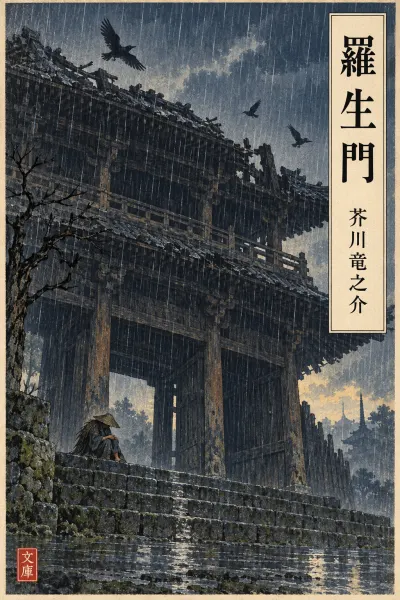
Part 3 of 4 · JLPT N2
羅生門 Rashōmon, part 3: The Servant Seizes the Old Woman
In this part
As the servant watches the old woman pull hair from a corpse, his fear turns into a burning hatred of all evil, and he forgets that he meant to become a thief himself. He leaps up, blocks her escape, wrestles her to the floor and threatens her with his sword. Realising her life is entirely in his hands, his anger cools into a calm sense of mastery, and he gently demands to know what she was doing. She stares at him with sharp, bird-like eyes and begins to speak in a croaking voice.
AI translation · independently checked
その髪の毛が、一本ずつ抜けるのに従って、下人の心からは、恐怖が少しずつ消えて行った。As the hairs came out one by one, the fear gradually faded from the servant's heart.
そうして、それと同時に、この老婆に対するはげしい憎悪が、少しずつ動いて来た。And at the same time, a fierce hatred of this old woman slowly began to stir within him.
――いや、この老婆に対すると云っては、語弊があるかも知れない。No, perhaps it is misleading to say it was hatred of this old woman.
むしろ、あらゆる悪に対する反感が、一分毎に強さを増して来たのである。Rather, it was a revulsion against every kind of evil that grew stronger with each passing minute.
この時、誰かがこの下人に、さっき門の下でこの男が考えていた、饑死をするか盗人になるかと云う問題を、改めて持出したら、恐らく下人は、何の未練もなく、饑死を選んだ事であろう。Had someone at that moment put to the servant once again the question he had been pondering beneath the gate a little earlier, whether to starve to death or become a thief, he would very likely have chosen starvation without the least hesitation.
それほど、この男の悪を憎む心は、老婆の床に挿した松の木片のように、勢いよく燃え上り出していたのである。So fiercely had his hatred of evil begun to blaze up, like the piece of pine wood the old woman had stuck in the floor.
下人には、勿論、何故老婆が死人の髪の毛を抜くかわからなかった。The servant, of course, did not know why the old woman was pulling out the dead woman's hair.
従って、合理的には、それを善悪のいずれに片づけてよいか知らなかった。Accordingly, he could not have said on rational grounds whether to class it as good or as evil.
しかし下人にとっては、この雨の夜に、この羅生門の上で、死人の髪の毛を抜くと云う事が、それだけで既に許すべからざる悪であった。But to the servant, pulling out a dead person's hair on this rainy night, on top of this Rashōmon, was in itself already an unforgivable evil.
勿論、下人は、さっきまで自分が、盗人になる気でいた事なぞは、とうに忘れていたのである。Needless to say, he had long since forgotten that, only moments before, he himself had been intending to become a thief.
そこで、下人は、両足に力を入れて、いきなり、梯子から上へ飛び上った。And so the servant braced both legs and suddenly sprang up from the ladder.
そうして聖柄の太刀に手をかけながら、大股に老婆の前へ歩みよった。Then, with his hand on his wooden-hilted sword, he strode up to the old woman.
老婆が驚いたのは云うまでもない。It goes without saying that the old woman was startled.
老婆は、一目下人を見ると、まるで弩にでも弾かれたように、飛び上った。The moment she caught sight of the servant, she leapt up as though flung from a crossbow.
「おのれ、どこへ行く。」"You! Where do you think you're going?"
下人は、老婆が死骸につまずきながら、慌てふためいて逃げようとする行手を塞いで、こう罵った。The servant barred the way as the old woman, stumbling over corpses, tried to flee in a panic, and he hurled these words at her.
老婆は、それでも下人をつきのけて行こうとする。Even so, the old woman tried to thrust him aside and get past.
下人はまた、それを行かすまいとして、押しもどす。The servant, determined not to let her go, pushed her back again.
二人は死骸の中で、しばらく、無言のまま、つかみ合った。Among the corpses the two of them grappled for a while in silence.
しかし勝敗は、はじめからわかっている。But the outcome had been clear from the start.
下人はとうとう、老婆の腕をつかんで、無理にそこへ扭じ倒した。At last the servant seized the old woman by the arm and forcibly twisted her down to the floor.
丁度、鶏の脚のような、骨と皮ばかりの腕である。It was an arm of nothing but skin and bone, just like a chicken's leg.
「何をしていた。云え。云わぬと、これだぞよ。」"What were you doing? Speak. If you don't, this is what you'll get!"
下人は、老婆をつき放すと、いきなり、太刀の鞘を払って、白い鋼の色をその眼の前へつきつけた。The servant flung the old woman away from him, and at once, stripping the scabbard from his sword, thrust the white gleam of steel before her eyes.
けれども、老婆は黙っている。But the old woman said nothing.
両手をわなわなふるわせて、肩で息を切りながら、眼を、眼球が眶の外へ出そうになるほど、見開いて、唖のように執拗く黙っている。Her hands trembling, gasping for breath with heaving shoulders, her eyes opened so wide that the eyeballs seemed about to pop out past the lids, she kept a stubborn silence, as if she were mute.
これを見ると、下人は始めて明白にこの老婆の生死が、全然、自分の意志に支配されていると云う事を意識した。Seeing this, the servant became clearly aware for the first time that the old woman's life or death lay wholly in the power of his own will.
そうしてこの意識は、今までけわしく燃えていた憎悪の心を、いつの間にか冷ましてしまった。And this awareness, before he knew it, had cooled the hatred that until then had been burning so fiercely.
後に残ったのは、ただ、ある仕事をして、それが円満に成就した時の、安らかな得意と満足とがあるばかりである。All that remained was the tranquil pride and satisfaction one feels upon carrying out some task and seeing it brought to a successful end.
そこで、下人は、老婆を見下しながら、少し声を柔らげてこう云った。So the servant, looking down at the old woman, softened his voice a little and said:
「己は検非違使の庁の役人などではない。今し方この門の下を通りかかった旅の者だ。だからお前に縄をかけて、どうしようと云うような事はない。ただ、今時分この門の上で、何をして居たのだか、それを己に話しさえすればいいのだ。」"I'm no officer of the Police Commission. I'm a traveller who happened to be passing beneath this gate just now. So I've no intention of tying you up or doing anything to you. All you have to do is tell me what you were doing up here on this gate at this hour."
すると、老婆は、見開いていた眼を、一層大きくして、じっとその下人の顔を見守った。At this the old woman opened her already wide eyes wider still and stared steadily into the servant's face.
眶の赤くなった、肉食鳥のような、鋭い眼で見たのである。She looked at him with sharp, red-rimmed eyes, like those of a bird of prey.
それから、皺で、ほとんど、鼻と一つになった唇を、何か物でも噛んでいるように動かした。Then she moved her lips, which the wrinkles had all but joined to her nose, as though she were chewing on something.
細い喉で、尖った喉仏の動いているのが見える。In her thin throat, the pointed Adam's apple could be seen moving.
その時、その喉から、鴉の啼くような声が、喘ぎ喘ぎ、下人の耳へ伝わって来た。Then from that throat, in gasp after gasp, a voice like the cawing of a crow reached the servant's ears.
Vocabulary
| Word | Meaning | JLPT |
|---|---|---|
| 憎悪ぞうお | hatred, loathingA strong literary word; stronger than 憎しみ. | — |
| 語弊ごへい | misleading expressionAlmost always in 語弊がある, 'that may be misleading / not quite the right way to put it'. | — |
| 反感はんかん | antipathy, revulsion | N1 |
| 盗人ぬすびと | thiefOlder word for 泥棒 (どろぼう). | — |
| 未練みれん | lingering attachment, regret何の未練もなく = without the slightest hesitation or regret. | N1 |
| 太刀たち | long swordA long sword worn slung from the belt; 聖柄 means its hilt is plain wood, not wrapped. | — |
| 罵ったののしる | to shout abuse at, reviledictionary form: 罵る | N1 |
| つかみ合ったつかみあう | to grapple, wrestledictionary form: つかみ合う〜合う adds 'each other'. | — |
| 勝敗しょうはい | victory or defeat, outcome | N2 |
| 鞘さや | scabbard, sheath鞘を払う = to draw a sword by stripping off its scabbard. | — |
| 執拗くしゅうねい | stubborn, persistent, tenacious (adverbial 執拗く: stubbornly)dictionary form: 執拗いOld reading; the modern reading of 執拗 is しつよう. | N2 |
| 成就じょうじゅ | accomplishment, fulfilmentBuddhist-flavoured reading じょう for 成. | — |
| 検非違使けびいし | the Police Commission (Heian-period police and judicial office) | — |
| 喉仏のどぼとけ | Adam's appleLiterally 'throat Buddha'. | — |
Grammar
〜に従って N3 as ~, in step with ~
Shows that one change happens in proportion to another. Here, each hair coming out goes with the servant's fear fading a little more.
その髪の毛が、一本ずつ抜けるのに従って、下人の心からは、恐怖が少しずつ消えて行った。
As the hairs came out one by one, the fear gradually faded from the servant's heart.
〜たら、〜た事であろう N2 if ~ had happened, ~ would surely have ~
A hypothetical condition followed by a conjecture about the past. であろう is the literary form of だろう, and 事 adds a formal, narrative tone.
恐らく下人は、何の未練もなく、饑死を選んだ事であろう。
He would very likely have chosen starvation without the least hesitation.
〜べからざる N1 must not be ~, un~able
A classical negative of べし used to modify a noun. 許すべからざる悪 means 'an evil that must not be forgiven', that is, an unforgivable evil.
それだけで既に許すべからざる悪であった。
It was in itself already an unforgivable evil.
〜まいとして N2 trying not to ~, determined not to ~
まい is a literary negative of intention. With として it expresses an effort to prevent something. 行かす is a causative form of 行く, 'to let go'.
下人はまた、それを行かすまいとして、押しもどす。
The servant, determined not to let her go, pushed her back again.
〜ばかりである N3 there is nothing but ~
ばかり after a verb or noun means 'only'. ただ〜があるばかり stresses that nothing else remains except the feeling described.
安らかな得意と満足とがあるばかりである。
There was nothing but tranquil pride and satisfaction.
〜さえ〜ばいい N3 all you have to do is ~
さえ plus a conditional form and いい shows that one condition is enough. Here さえ attaches to the verb stem 話し.
それを己に話しさえすればいいのだ。
All you have to do is tell me that.