Part 4 of 4 · JLPT N2
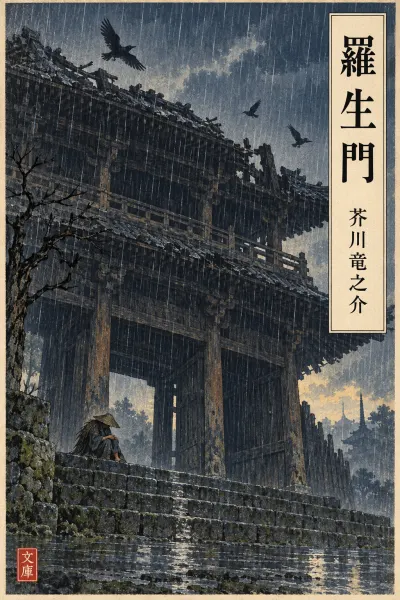
羅生門 Rashōmon, part 4: The Servant Makes His Choice
In this part
The old woman explains that she pulls hair from the corpses to make wigs, and says the dead woman was a cheat who would forgive her because everyone must do something to survive. Hearing her reasoning, the servant finds the courage to become a thief: he strips the old woman of her robe, kicks her down among the corpses, and escapes into the night. The old woman crawls to the top of the ladder and peers down, but there is only darkness, and no one knows where the servant went.
AI translation · independently checked
「この髪を抜いてな、この髪を抜いてな、鬘にしようと思うたのじゃ。」"I was pulling out this hair, you see, pulling out this hair, and I thought I'd make it into a wig."
下人は、老婆の答が存外、平凡なのに失望した。The servant was disappointed that the old woman's answer was, unexpectedly, so commonplace.
そうして失望すると同時に、また前の憎悪が、冷やかな侮蔑と一しょに、心の中へはいって来た。And at the same moment as his disappointment, the hatred of before came back into his heart, together with a cold contempt.
すると、その気色が、先方へも通じたのであろう。Then, it seems, his feelings got through to the other party.
老婆は、片手に、まだ死骸の頭から奪った長い抜け毛を持ったなり、蟇のつぶやくような声で、口ごもりながら、こんな事を云った。Still holding in one hand the long hairs she had snatched from the dead woman's head, the old woman mumbled the following, in a voice like the croaking of a toad.
「成程な、死人の髪の毛を抜くと云う事は、何ぼう悪い事かも知れぬ。じゃが、ここにいる死人どもは、皆、そのくらいな事を、されてもいい人間ばかりだぞよ。"True enough, pulling the hair from dead folk may be a wicked thing indeed. But these dead ones here, every one of them, they're all folk who deserve to have that much done to them.
現在、わしが今、髪を抜いた女などはな、蛇を四寸ばかりずつに切って干したのを、干魚だと云うて、太刀帯の陣へ売りに往んだわ。Why, the very woman whose hair I was pulling just now used to cut snakes into strips about four inches long, dry them, and go off to sell them at the guards' barracks, calling them dried fish.
疫病にかかって死ななんだら、今でも売りに往んでいた事であろ。それもよ、この女の売る干魚は、味がよいと云うて、太刀帯どもが、欠かさず菜料に買っていたそうな。If she hadn't caught the plague and died, she'd be off selling them even now, I'll wager. And what's more, they say the guards bought her dried fish for their meals without fail, because it tasted so good.
わしは、この女のした事が悪いとは思うていぬ。せねば、饑死をするのじゃて、仕方がなくした事であろ。I don't think what this woman did was wicked. If she hadn't done it, she'd have starved to death, so she did it because there was nothing else for it.
されば、今また、わしのしていた事も悪い事とは思わぬぞよ。これとてもやはりせねば、饑死をするじゃて、仕方がなくする事じゃわいの。And so I don't think what I was doing just now is wicked either. This too, if I don't do it, I'll starve to death, so I do it because there's nothing else for it.
じゃて、その仕方がない事を、よく知っていたこの女は、大方わしのする事も大目に見てくれるであろ。」So this woman, who knew full well how there's nothing else for it, will most likely turn a blind eye to what I do."
老婆は、大体こんな意味の事を云った。That was roughly the sense of what the old woman said.
下人は、太刀を鞘におさめて、その太刀の柄を左の手でおさえながら、冷然として、この話を聞いていた。The servant had returned his sword to its scabbard and, pressing on its hilt with his left hand, listened to her story coldly.
勿論、右の手では、赤く頬に膿を持った大きな面皰を気にしながら、聞いているのである。All the while, of course, his right hand was fretting at the large pimple on his cheek, red and full of pus, as he listened.
しかし、これを聞いている中に、下人の心には、ある勇気が生まれて来た。But as he listened, a certain courage was born in the servant's heart.
それは、さっき門の下で、この男には欠けていた勇気である。It was the courage this man had lacked a little earlier, beneath the gate.
そうして、またさっきこの門の上へ上って、この老婆を捕えた時の勇気とは、全然、反対な方向に動こうとする勇気である。And it was a courage that sought to move in the exact opposite direction from the courage he had felt a little earlier, when he climbed to the top of this gate and seized the old woman.
下人は、饑死をするか盗人になるかに、迷わなかったばかりではない。It was not merely that the servant no longer hesitated between starving to death and becoming a thief.
その時のこの男の心もちから云えば、饑死などと云う事は、ほとんど、考える事さえ出来ないほど、意識の外に追い出されていた。As for this man's state of mind at that moment, the very idea of starving to death had been driven so far out of his awareness that he could scarcely even think of it.
「きっと、そうか。」"You're sure of that, are you?"
老婆の話が完ると、下人は嘲るような声で念を押した。When the old woman's story was finished, the servant pressed her for confirmation in a mocking voice.
そうして、一足前へ出ると、不意に右の手を面皰から離して、老婆の襟上をつかみながら、噛みつくようにこう云った。Then he took a step forward, suddenly pulled his right hand away from the pimple, seized the old woman by the collar, and snarled these words as if he would bite her:
「では、己が引剥をしようと恨むまいな。己もそうしなければ、饑死をする体なのだ。」"Then you won't hold it against me if I strip you. I'm a man who'll starve to death too, unless I do the same."
下人は、すばやく、老婆の着物を剥ぎとった。Swiftly, the servant tore the robe off the old woman.
それから、足にしがみつこうとする老婆を、手荒く死骸の上へ蹴倒した。Then, as she tried to cling to his legs, he roughly kicked her down onto the corpses.
梯子の口までは、僅に五歩を数えるばかりである。It was barely five paces to the top of the ladder.
下人は、剥ぎとった檜皮色の着物をわきにかかえて、またたく間に急な梯子を夜の底へかけ下りた。With the stripped, bark-brown robe tucked under his arm, the servant ran down the steep ladder into the depths of the night in the blink of an eye.
しばらく、死んだように倒れていた老婆が、死骸の中から、その裸の体を起したのは、それから間もなくの事である。It was not long afterward that the old woman, who had lain for a while as though dead, raised her naked body from among the corpses.
老婆はつぶやくような、うめくような声を立てながら、まだ燃えている火の光をたよりに、梯子の口まで、這って行った。Letting out a sound somewhere between a mutter and a moan, she crawled to the top of the ladder by the light of the still-burning fire.
そうして、そこから、短い白髪を倒にして、門の下を覗きこんだ。And from there, her short white hair hanging upside down, she peered below the gate.
外には、ただ、黒洞々たる夜があるばかりである。Outside there was nothing but the night, black as a bottomless pit.
下人の行方は、誰も知らない。No one knows where the servant went.
(大正四年九月)(September 1915)
Vocabulary
| Word | Meaning | JLPT |
|---|---|---|
| 鬘かずら | wig; hairpieceOld word; modern Japanese usually says かつら. | — |
| 存外ぞんがい | unexpectedly; contrary to expectationLiterary synonym of 意外に / 思いのほか. | — |
| 侮蔑ぶべつ | contempt; scornStronger and more literary than 軽蔑. | — |
| 口ごもりながらくちごもる | to mumble; to speak indistinctlydictionary form: 口ごもる | — |
| 疫病えやみ | plague; epidemicえやみ is an old native reading; the modern reading is えきびょう. | — |
| 饑死うえじに | death by starvationUsually written 飢え死に today; 餓死 (がし) is the Sino-Japanese equivalent. | — |
| 大目に見ておおめにみる | to overlook; to let something passdictionary form: 大目に見るIdiom: to judge leniently, to turn a blind eye. | — |
| 冷然れいぜん | coldly; with indifference〜として makes it an adverb: 冷然として. | — |
| 面皰にきび | pimpleUsually written in kana today; the servant's pimple is a recurring detail in the story. | N1 |
| 盗人ぬすびと | thiefOld-fashioned; modern Japanese uses 泥棒 or ぬすっと. | — |
| 念を押したねんをおす | to make sure; to press for confirmationdictionary form: 念を押す | — |
| 引剥ひはぎ | highway robbery by stripping victims of their clothesHistorical term; 追い剥ぎ is the more familiar word. | — |
| 手荒くてあらい | rough; violent (in handling)dictionary form: 手荒い | — |
| 行方ゆくえ | whereabouts; where someone has goneIrregular reading; compare 行方不明 (missing). | — |
Grammar
〜たなり N1 while still ~; remaining in the state of having ~
After a past verb, なり means the state continues unchanged while something else happens. Here the old woman is still gripping the hairs as she speaks.
まだ死骸の頭から奪った長い抜け毛を持ったなり
still holding the long hairs she had snatched from the dead woman's head
〜なんだら N1 if (one) had not ~
なんだ is an old or dialect past negative, equivalent to modern なかった, so 死ななんだら means 死ななかったら. It marks the old woman's rustic, old-fashioned speech.
疫病にかかって死ななんだら、今でも売りに往んでいた事であろ。
If she hadn't caught the plague and died, she'd be off selling them even now, I'll wager.
〜ねば N2 if (one) does not ~
ねば is the literary conditional of the negative ぬ, meaning the same as なければ. せねば is the form for する: 'if one doesn't do it'.
せねば、饑死をするのじゃて
if she hadn't done it, she'd have starved to death
〜ばかりではない N3 it is not only that ~
This introduces a point and signals that something stronger follows. The next sentence goes further: starvation had vanished from his mind altogether.
饑死をするか盗人になるかに、迷わなかったばかりではない。
It was not merely that he no longer hesitated between starving to death and becoming a thief.
〜まい N2 surely will not ~; probably won't ~
まい is a negative volitional or conjecture ending. Combined with the sentence-final な, it pushes the old woman to agree: 'you won't hold a grudge, will you?'
では、己が引剥をしようと恨むまいな。
Then you won't hold it against me if I strip you.
〜たる N1 attributive form of literary たり: 'which is ~'
Kanbun-style descriptive words take たる before a noun where modern Japanese would use な or とした. 黒洞々たる夜 is a solemn way of saying a night that is pitch-black and cavernous.
外には、ただ、黒洞々たる夜があるばかりである。
Outside there was nothing but the night, black as a bottomless pit.