Part 4 of 4 · JLPT N1
山月記 Sangetsuki, part 4: Farewell and the Last Roar
In this part
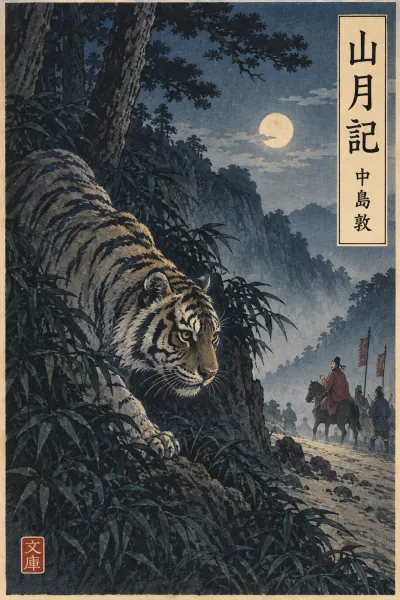
As dawn approaches, Ri Chō asks En San to tell his wife and child that he is dead and to keep them from want. He bitterly notes that he should have asked this before asking about his poems, and warns En San never to return by this road. From a hilltop, En San's party sees a tiger leap onto the road, roar at the fading moon, and vanish back into the thicket for ever.
AI translation · independently checked
漸く四辺の暗さが薄らいで来た。At last the darkness all around began to thin.
木の間を伝って、何処からか、暁角が哀しげに響き始めた。Filtering through the trees from somewhere, the dawn horn began to sound mournfully.
最早、別れを告げねばならぬ。Now I must bid you farewell.
酔わねばならぬ時が、(虎に還らねばならぬ時が)近づいたから、と、李徴の声が言った。"For the hour when I must grow drunk (the hour when I must return to being a tiger) draws near," said Ri Chō's voice.
だが、お別れする前にもう一つ頼みがある。"But before we part, I have one more request.
それは我が妻子のことだ。It concerns my wife and child.
彼等は未だ虢略にいる。They are still in Kakuryaku.
固より、己の運命に就いては知る筈がない。Naturally, they can know nothing of my fate.
君が南から帰ったら、己は既に死んだと彼等に告げて貰えないだろうか。When you return from the south, would you tell them that I am already dead?
決して今日のことだけは明かさないで欲しい。Above all, I beg you never to reveal what happened today.
厚かましいお願だが、彼等の孤弱を憐れんで、今後とも道塗に飢凍することのないように計らって戴けるならば、自分にとって、恩倖、これに過ぎたるは莫い。It is a shameless thing to ask, but if you would take pity on them, alone and helpless as they are, and see to it that they never starve or freeze by the roadside in the years to come, no greater kindness could be done me."
言終って、叢中から慟哭の声が聞えた。When he had finished speaking, a sound of bitter weeping came from within the thicket.
袁もまた涙を泛べ、欣んで李徴の意に副いたい旨を答えた。En San too was moved to tears, and answered that he would gladly do as Ri Chō wished.
李徴の声はしかし忽ち又先刻の自嘲的な調子に戻って、言った。Yet Ri Chō's voice at once returned to its earlier tone of self-mockery, and said:
本当は、先ず、この事の方を先にお願いすべきだったのだ、己が人間だったなら。"In truth, I ought to have made this request first of all, had I still been a man.
飢え凍えようとする妻子のことよりも、己の乏しい詩業の方を気にかけているような男だから、こんな獣に身を堕すのだ。It is because I am the kind of man who cares more for his meagre poetry than for a wife and child on the verge of hunger and cold that I have sunk to become such a beast.
そうして、附加えて言うことに、袁傪が嶺南からの帰途には決してこの途を通らないで欲しい、その時には自分が酔っていて故人を認めずに襲いかかるかも知れないから。Then he added a further request: that on his way back from Reinan, En San should on no account take this road, for by then he might be drunk, fail to recognise his old friend, and fall upon him.
又、今別れてから、前方百歩の所にある、あの丘に上ったら、此方を振りかえって見て貰いたい。Also, once they had parted, when En San reached that hill a hundred paces ahead, he wished him to turn and look back this way.
自分は今の姿をもう一度お目に掛けよう。He would show him his present form one more time.
勇に誇ろうとしてではない。It would not be to boast of his prowess.
我が醜悪な姿を示して、以て、再び此処を過ぎて自分に会おうとの気持を君に起させない為であると。It would be to show his hideous form, and so ensure that En San would never again feel any wish to pass this way to see him.
袁傪は叢に向って、懇ろに別れの言葉を述べ、馬に上った。En San turned toward the thicket, spoke warm words of farewell, and mounted his horse.
叢の中からは、又、堪え得ざるが如き悲泣の声が洩れた。From within the thicket again came a sound of sobbing, as if beyond all bearing.
袁傪も幾度か叢を振返りながら、涙の中に出発した。En San, too, looking back at the thicket again and again, set off in tears.
一行が丘の上についた時、彼等は、言われた通りに振返って、先程の林間の草地を眺めた。When the party reached the top of the hill, they turned back as they had been told and gazed at the grassy clearing in the woods where they had been a little earlier.
忽ち、一匹の虎が草の茂みから道の上に躍り出たのを彼等は見た。Suddenly they saw a tiger leap out of the undergrowth onto the road.
虎は、既に白く光を失った月を仰いで、二声三声咆哮したかと思うと、又、元の叢に躍り入って、再びその姿を見なかった。The tiger looked up at the moon, which had already paled and lost its light, and roared two or three times; then it sprang back into the thicket it had come from, and they never saw it again.
Vocabulary
| Word | Meaning | JLPT |
|---|---|---|
| 漸くようやく | gradually, little by little (also: at last)Implies something long awaited or gradual. | N2 |
| 暁角ぎょうかく | dawn horn (a horn blown at daybreak)Literary Chinese compound: 暁 'dawn' + 角 'horn'. | — |
| 最早もはや | now, already (no longer possible to delay)Written/literary; often with a sense of resignation. | N1 |
| 厚かましいあつかましい | shameless, presumptuousHere used humbly of one's own request. | N2 |
| 叢中そうちゅう | inside the thicket叢 alone is read くさむら 'thicket, clump of grass', as in later sentences. | — |
| 慟哭どうこく | wailing, bitter weepingMuch stronger than 泣く; loud, grief-stricken crying. | — |
| 自嘲じちょう | self-mockery自嘲的 = self-mocking. | — |
| 堕すおとす | to let fall, to sink, to degrade oneself (身を堕とす: to fall into a wretched state)身を堕す: to sink/fall into a lowly state; 堕 suggests moral fall. | — |
| 帰途きと | the way home, return journeyFormal equivalent of 帰り道. | — |
| 襲いかかるおそいかかる | to pounce on, to attackdictionary form: 襲い掛かる | — |
| 醜悪しゅうあく | hideous, repulsive | — |
| 懇ろねんごろ | cordial, courteous and warm懇ろに = with heartfelt care. | — |
| 咆哮ほうこう | roar (of a beast)咆哮する = to roar. | — |
Grammar
〜ねばならぬ N2 must, have to
Literary form of 〜なければならない: the negative ず/ぬ + ば + ならぬ. It gives Ri Chō's speech a formal, fated tone.
最早、別れを告げねばならぬ。
Now I must bid you farewell.
〜筈がない N3 there is no way that…, cannot possibly
Attached to a plain verb, はずがない expresses the speaker's certainty that something is impossible. His family cannot possibly know what became of him.
固より、己の運命に就いては知る筈がない。
Naturally, they can know nothing of my fate.
〜に過ぎたるは莫い N1 nothing surpasses…, there could be no greater…
Classical construction: 過ぎ (continuative form of classical 過ぐ) + たる (attributive of the perfective auxiliary たり) + は + 莫い 'there is none'. これに過ぎたるは莫い means 'nothing exceeds this', expressing the highest gratitude.
自分にとって、恩倖、これに過ぎたるは莫い。
No greater kindness could be done me.
〜ざるが如き N1 as if not able to…, as though…
ざる is the classical negative (= ない), and 如き (= ような) marks likeness. 堪え得ざるが如き means 'as though unable to bear it', describing the sobbing.
堪え得ざるが如き悲泣の声が洩れた。
A sound of sobbing escaped, as if beyond all bearing.
〜たかと思うと N2 no sooner had… than…
Links two actions in quick succession: the second follows almost immediately after the first. The tiger roars and at once springs back into the thicket.
二声三声咆哮したかと思うと、又、元の叢に躍り入って
It roared two or three times, and then at once sprang back into the thicket it had come from.