 N5 · easy
Simplified retelling · JLPT N5
ぶくぶく長々火の目小僧 Bukubuku Naganaga Hi no Mekozō in easy Japanese (N5)
This is our own simplified retelling of Puff, Stretch and Fire-Eyes, written for N5 learners and checked word by word against the N5 vocabulary list. A few story words and grammar patterns go beyond N5; the notes below give each one's level. It keeps the characters, events and ending of the original. When it feels easy, move on to the N4 version or the original text.
The story in brief
A princess will marry only a man who can watch her for three nights without sleeping, and every suitor who fails dies. A young prince sets out and gathers three men with special powers. They stop the princess from escaping when she turns into a dove, a fly and a fish. When her father refuses the marriage, the three men defeat his army, and in the end the prince and princess are married.
AI translation · independently checked
これは とても 古い 話です。This is a very old story.
ある 国に、きれいな おうじょが いました。In a certain kingdom there lived a beautiful princess.
たくさんの 人が おうじょと けっこんしたいと いいました。Many people said they wanted to marry the princess.
おうじょは いいました。The princess said:
「三つの よる、ねないで わたしを 見て ください。わたしが へやから 出なかったら、その 人と けっこんします。」おうさまも いいました。"Watch me for three nights without sleeping. If I do not get out of my room, I will marry that person." The king also said:
「ねたら、しにますよ。」"If you fall asleep, you will die."
たくさんの 人が 来ました。Many people came.
でも、みんな よるに ねて、しにました。But they all fell asleep in the night, and they died.
ある 国の わかい おうじが この 話を 聞きました。A young prince of a certain kingdom heard this story.
「わたしは ねません。」おうじは お金を 持って、一人で 出かけました。"I will not sleep." The prince took some money and set out all by himself.
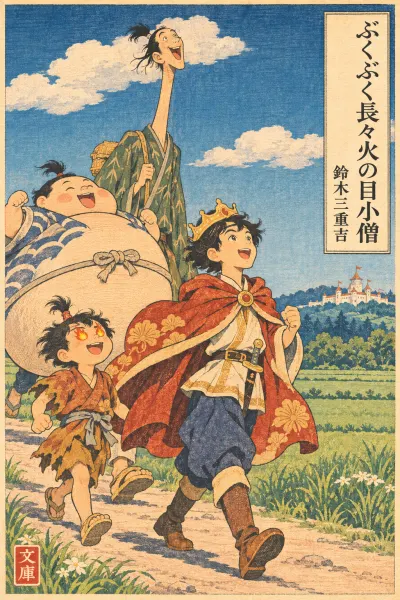
みちで、太い 男に 会いました。On the road he met a fat man.
名前は ぶくぶくです。His name was Bukubuku.
からだが 山のように 大きく なります。His body could grow as big as a mountain.
つぎに、細くて 背が 高い 男に 会いました。Next he met a thin, tall man.
名前は 長々です。His name was Naganaga.
からだが そらまで 長く なって、とても 速く 歩きます。His body could stretch all the way up to the sky, and he walked very fast.
それから、木の 中で 男に 会いました。After that, he met a man among the trees.
名前は ひのめこぞうです。His name was Hinome Kozō.
めから 火を 出して、たくさんの 木を なくしました。Fire came out of his eyes, and he burned away a great many trees.
三人は おうじと いっしょに 行きました。The three of them went along with the prince.
よる、おうじは おうじょの へやに 入りました。At night, the prince went into the princess's room.
三人は そとで まちました。The three men waited outside.
おうじょは ねました。The princess went to sleep.
でも、本当は ねて いませんでした。But really, she was not asleep at all.
おうじも 三人も ねました。The prince and the three servants all fell asleep.
おうじょは 小さな はとに なって、まどから 出ました。The princess turned into a little dove and flew out of the window.
長々が おきて、「だれか 出ました。」と いいました。Naganaga woke up and said, "Someone has gone out."
ひのめこぞうの めから 火が 出て、はとは 黒く なりました。Fire shot out of Hinome Kozō's eyes, and the dove was scorched black.
はとは 高い 木の 上に 止まりました。The dove landed at the top of a tall tree.
長々は からだを 長く して、はとを 手で 取りました。Naganaga stretched his body long and caught the dove in his hand.
二つめの よるも 同じでした。The second night was just the same.
三つめの よる、おうさまは おうじょに いいました。On the third night, the king spoke to the princess.
「こんばんは 出て ください。」"Please get out tonight."
おうじょは 小さな はえに なりました。The princess turned into a tiny fly.
ひのめこぞうが 火を 出すと、はえは 小さな さかなに なって、いずみに 入りました。When Hinome Kozō shot out fire, the fly turned into a little fish and slipped into a spring.
長々は からだを 長く しましたが、さかなを 取りませんでした。Naganaga stretched his body long, but he could not catch the fish.
ぶくぶくは いずみの 中で 大きく なりました。Bukubuku swelled up big inside the spring.
水が そとに 出ましたが、さかなは いませんでした。The water spilled out, but the fish was not there.
おわりに、ひのめこぞうが 水を 見て、火を 出しました。At last, Hinome Kozō looked at the water and shot fire at it.
水は とても あつく なりました。The water became very hot.
さかなは 外へ 出て、おうじょに なりました。The fish came out and turned back into the princess.
おうじは いいました。The prince said:
「三つの よる、あなたは 出る ことが 出来ませんでした。わたしと けっこんして ください。」おうじが ほかの 国の おうじだと 聞いて、おうじょは おうじが 大すきに なりました。"For three nights you could not get out. Please marry me." When she heard that he was the prince of another kingdom, the princess came to love him very much.
でも、おうさまは 「いいえ。」と いいました。But the king said, "No."
おうじたちは おうじょと いっしょに はしって 出ました。The prince and the others ran out together with the princess.
おうさまの へいたいが たくさん あとから 来ました。A great many of the king's soldiers came after them.
おうじょは まほうを つかって、木を たくさん 出しました。The princess used magic and made lots of trees appear.
つぎに、めから 水を 出して、大きな 川を つくりました。Next, she let water pour from her eyes and made a big river.
でも、へいたいは まだ 来ます。But the soldiers still kept coming.
長々は そらまで 高く なって、ぼうしを おひさまの 半ぶんに かけました。Naganaga grew tall, right up to the sky, and hung his hat over half of the sun.
へいたいの 方は よるのように くらく なりました。On the soldiers' side it became as dark as night.
まちの ちかくで、へいたいが また 来ました。Near the town, the soldiers came again.
ぶくぶくは 山のように 大きく なって、くちを あけました。Bukubuku grew as big as a mountain and opened his mouth wide.
へいたいは わかりませんでした。The soldiers did not notice.
みんな くちの 中に 入りました。They all went right into his mouth.
ぶくぶくは まちの 広い 所で、くちから へいたいを 十人ずつ 出しました。In a wide open place in the town, Bukubuku let the soldiers out of his mouth ten at a time.
へいたいは はしって 国へ かえりました。The soldiers ran all the way back to their own country.
長々が おうじょの 父の おうさまを よびに 行きました。Naganaga went to fetch the king, the princess's father.
おうさまも 来て、おうじと おうじょは けっこんしました。The king came too, and the prince and the princess were married.
おうじは 三人に たくさん お金を 上げました。The prince gave the three men a lot of money.
Vocabulary
| Word | Meaning | JLPT |
|---|---|---|
| おうじょおうじょ | princessdictionary form: 王女王 (king) + 女 (woman). Its partner word is おうじ (王子), prince. | N2 |
| けっこんしたいけっこんする | to marrydictionary form: 結婚するThe person you marry is marked with と: おうじょと けっこんする. | — |
| しにますよしぬ | to diedictionary form: 死ぬThis is the only common verb ending in -ぬ. Its te-form is しんで. | N5 |
| 細くてほそい | thin, slenderdictionary form: 細いThis is the opposite of 太い (ふとい, fat or thick). | N5 |
| 背が 高いせがたかい | tall (of a person)dictionary form: 背が高いUse this for people. Use 高い alone for buildings and trees. | — |
| はとはと | dove, pigeondictionary form: 鳩 | — |
| 止まりましたとまる | to land, to perch (of a bird)dictionary form: 止まるThe basic meaning is 'to stop'. For birds and insects it means 'to come to rest on something'. | N5 |
| はえはえ | fly (the insect)dictionary form: 蠅 | — |
| いずみいずみ | spring, fountain (natural water source)dictionary form: 泉 | N3 |
| へいたいへいたい | soldier(s)dictionary form: 兵隊 | N2 |
| まほうまほう | magicdictionary form: 魔法まほうを つかう means 'to use magic'. | — |
| おひさまおひさま | the sundictionary form: お日様This is a warm, child-friendly word for the sun. The neutral word is 太陽 (たいよう). | — |
| かけましたかける | to hang (something) over or ondictionary form: 掛けるThe place it hangs on is marked with に. | N5 |
| よびによぶ | to call, to fetch (someone)dictionary form: 呼ぶ | N5 |
Grammar
〜ないで N4 without doing ~
Add で to the negative ない-form to describe the way an action is done, which is 'without doing X'. Here the princess asks the suitors to watch her without sleeping.
三つの よる、ねないで わたしを 見て ください。
Watch me for three nights without sleeping.
〜たら N4 if / when ~
Add ら to the past た-form to make a condition. If the first thing happens, the second follows. The king uses it as a warning.
ねたら、しにますよ。
If you fall asleep, you will die.
Nのように N4 like N, as ~ as N
This pattern compares something to a noun. Here it shows how big Bukubuku's body gets.
からだが 山のように 大きく なります。
His body could grow as big as a mountain.
い-adj (〜く) / Nに + なる N5 to become ~
Change the final い of an adjective to く, or put に after a noun, and then add なる. This shows a change of state, and the story uses it again and again: the body becomes long, the dove turns into a fish, and so on.
水は とても あつく なりました。
The water became very hot.
〜ことが 出来る N4 can / be able to do ~
Put a verb in its dictionary form, then add ことが できる to say someone is able to do it. The negative できませんでした means 'could not'.
三つの よる、あなたは 出る ことが 出来ませんでした。
For three nights you could not get out.
〜ずつ N4 ~ at a time, ~ each
Put ずつ after a number to show that the same amount happens again and again. Here Bukubuku lets the soldiers out in groups of ten.
くちから へいたいを 十人ずつ 出しました。
He let the soldiers out of his mouth ten at a time.