Part 1 of 5 · JLPT N3
港に着いた黒んぼ Minato ni Tsuita Kuronbo, part 1: The Blind Flute Player and His Sister
In this part
A blind boy of about ten plays the flute beautifully in an open square near the harbour while his gentle older sister sings and dances barefoot on the sand. The two are orphans with no one else to rely on, and they come every fine day to earn money from the crowds. The shy sister forgets her shyness and her tiredness whenever she listens to her brother's flute.
AI translation · independently checked
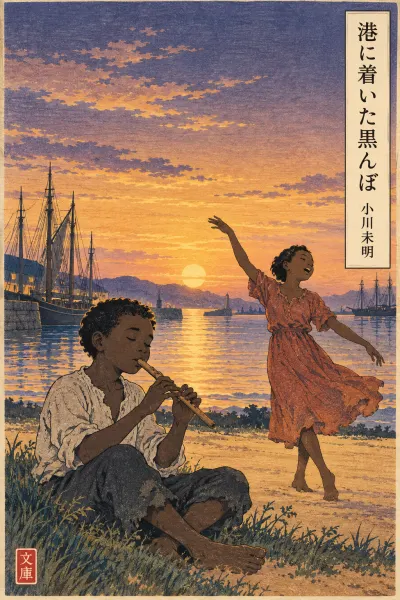
やっと、十ばかりになったかと思われるほどの、男の子が笛を吹いています。A boy who looked as if he could barely have reached the age of ten was playing a flute.
その笛は、ちょうど秋風が、枯れた木の葉を鳴らすように、哀れな音をたてるかと思うと、春のうららかな日に、緑の色の美しい、森の中でなく小鳥の声のように、かわいらしい音をたてていました。One moment the flute would make a mournful sound, just like the autumn wind rattling the withered leaves on the trees, and the next it would make a sweet sound, like the voices of little birds singing in a beautiful green forest on a bright, mild spring day.
その笛の音を聞いた人々は、だれがこんなに上手に、また哀れに笛を吹いているのかと思って、そのまわりに寄ってきました。The people who heard the sound of the flute wondered who could be playing so skilfully, and so sadly, and they gathered around.
するとそれは、十ばかりの男の子で、しかもその子供は、弱々しく見えたうえに、盲目であったのであります。And they found that the player was a boy of about ten; what is more, the child looked frail, and he was blind.
人々は、これを見て、ふたたびあっけにとられていました。When the people saw this, they were astonished once again.
「なんという、不憫な子供だろう?」と、心に思わぬものはなかった。There was no one who did not think in their heart, "What a pitiful child!"
しかし、そこには、ただその子供が、一人いたのではありません。But the child was not there all on his own.
その子供の姉さんとも見える十六、七の美しい娘が、子供の吹く笛の音につれて、唄をうたって、踊っていたのでありました。A beautiful girl of sixteen or seventeen, who seemed to be his older sister, was singing and dancing along to the sound of the flute the child played.
娘は、水色の着物をきていました。The girl was wearing a pale blue kimono.
髪は、長く、目は星のように輝いて澄んでいました。Her hair was long, and her eyes were clear and shining like stars.
そして、はだしで砂の上に、軽やかに踊っている姿は、ちょうど、花弁の風に舞うようであり、また、こちょうの野に飛んでいる姿のようでありました。And as she danced lightly and barefoot on the sand, she looked just like a flower petal dancing in the wind, or like a butterfly flying over a meadow.
娘は、人恥ずかしそうに低い声でうたっていました。The girl sang in a low voice, as though shy of all the people.
その唄は、なんという唄であるか、あまり声が低いので聞きとることは、みんなにできなかったけれど、ただ、その唄をきいていると、心は遠い、かなたの空を馳せ、また、さびしい風の吹く、深い森林を彷徨っているように頼りなさと、悲しさを感じたのであります。Her voice was so low that no one could make out what song it was, but simply listening to it made their hearts feel as though they were racing across a far-off sky, or wandering through a deep forest where a lonely wind was blowing, and they felt forlorn and sad.
人々は、この姉と弟が、毎日どこから、ここにやってきて、こうして唄をうたい、笛を吹いてお金をもらっているのか知りませんでした。The people did not know where this sister and brother came from each day to sing songs and play the flute here like this, and receive money.
それは、どこにもこんな哀れな、美しい、またやさしい、乞食を見たことがなかったからであります。That was because nowhere had they ever seen beggars so pitiful, so beautiful and so gentle.
この二人は、まったく親もなければ、他に頼るものもなかった。The two of them had no parents at all, and no one else to depend on.
この広い世界に、二人は両親に残されて、こうしていろいろとつらいめをみなければならなかったが、中にも弱々しい、盲目の弟は、ただ姉を命とも、綱とも、頼らなければならなかったのです。Left behind by their parents in this wide world, the two had to suffer many hardships, and above all the frail, blind brother had to depend on his sister alone, as his very life and his lifeline.
やさしい姉は、不幸な弟を心から憫れみました。The kind sister pitied her unfortunate brother with all her heart.
自分の命に換えても、弟のために尽くそうと思いました。She resolved to do everything she could for her brother, even if it cost her own life.
この二人は、この世にも珍しい仲のよい姉弟でありました。The two were a sister and brother whose closeness was rare even in this world.
弟は、生まれつき笛が上手で、姉は、生まれつき声のいいところから、二人は、ついにこの港に近い、広場にきて、いつごろからともなく笛を吹き、唄をうたって、そこに集まる人々にこれを聞かせることになったのです。The brother had been gifted at the flute since birth, and the sister had been born with a lovely voice, and so in the end the two came to this square near the harbour, and, from a time nobody could say, they began playing the flute and singing songs for the people who gathered there.
朝日が上ると二人は、天気の日には、欠かさずに、ここへやってきました。When the morning sun rose, the two came here on every fine day without fail.
姉は、盲目の弟の手を引いてきました。The sister came leading her blind brother by the hand.
そして、終日、そこで笛を吹き、唄をうたって、日が暮れるころになると、どこへか、二人は帰ってゆきました。Then all day long they played the flute and sang songs there, and when the sun began to set, the two went home to somewhere or other.
日が輝いて、暖かな風が、柔らかな草の上を渡るときは、笛の音と唄の声は、もつれあって、明るい南の海の方に流れてゆきました。When the sun shone and a warm wind passed over the soft grass, the sound of the flute and the voice of the song twined together and drifted away towards the bright southern sea.
姉は、毎日のように、こうして踊ったり、唄をうたったりしましたけれど、弟の笛の音を聞くと、いつも、疲れるということをすこしも身に覚えませんでした。Although the sister danced and sang like this almost every day, whenever she heard the sound of her brother's flute she never felt the slightest bit tired.
元来内気なこの娘は、人々がまわりにたくさん集まって、みんなが目を自分の上に向けていると思うと恥ずかしくて、しぜん唄の声も滅入るように低くはなりましたけれど、そのとき、弟の吹く笛の音に耳を傾けると、もう、自分は、広い、広い、花の咲き乱れた野原の中で、独り自由に駆けているような心地がして、大胆に、身をこちょうのように軽く跳ね上げて、おもしろく踊っているのでした。This girl was shy by nature, and when she thought of the many people gathered around her, all with their eyes turned upon her, she felt so ashamed that her singing voice naturally sank low and faint; but then, when she listened to the sound of her brother's flute, she felt as though she were running freely all alone through a wide, wide meadow full of flowers in bloom, and she would leap up boldly, light as a butterfly, and dance with delight.
Vocabulary
| Word | Meaning | JLPT |
|---|---|---|
| 笛ふえ | flute; pipeThe sound of a flute is 笛の音 (ふえのね). 音 is read ね for musical or pleasant sounds. | N3 |
| 哀れなあわれ | sad, mournful; pitifuldictionary form: 哀れA na-adjective that means both 'moving and sad' and 'pitiable'. The verb 憫れむ (あわれむ, to pity) appears later. | N3 |
| うららかなうららか | bright and mild (of spring weather)dictionary form: うららかA literary word, typically used for calm, sunny spring days. | — |
| 盲目めくら | blindThe reading めくら is now considered discriminatory. Modern Japanese uses 盲目 (もうもく) in writing, or 目の見えない人. | — |
| あっけにとられてあっけにとられる | to be dumbfounded, astonisheddictionary form: あっけにとられるA set expression for being taken aback by something unexpected. | — |
| 不憫ふびん | pitiful, poor (deserving sympathy)Often used with a sense of tender pity for a child or a weaker person. | N1 |
| 乞食こじき | beggarConsidered derogatory today. Neutral alternatives are 物乞い (ものごい) or ホームレス, depending on the context. | — |
| 頼るたよる | to depend on, rely on頼りなさ (13) is the noun form of 頼りない and means 'helplessness, a forlorn feeling'. | N3 |
| 尽くそうつくす | to devote oneself to, do one's utmost fordictionary form: 尽くすUsed with 〜のために: 弟のために尽くす, 'to devote oneself to the brother'. | N1 |
| 生まれつきうまれつき | by nature, from birthUsed for innate talents or traits. | N1 |
| 欠かさずにかかす | (not) to miss, without faildictionary form: 欠かすIt is almost always used in the negative: 欠かさず(に) means 'without missing once'. | — |
| 終日しゅうじつ | all day longThis is a formal word; 一日中 is the everyday equivalent. | N1 |
| 内気うちき | shy, reserved by nature | — |
| 心地ここち | feeling, sensation〜ような心地がする means 'to feel as if…'. It also appears in 居心地 (いごこち, comfort). | N1 |
| こちょうこちょう | butterflydictionary form: 胡蝶A literary, poetic word for a butterfly. The everyday word is ちょう or ちょうちょ. | — |
Grammar
〜ばかり (with numbers) N3 about, approximately
After a number, ばかり means 'roughly' and works like ぐらい. Here 十ばかり means 'about ten (years old)'.
やっと、十ばかりになったかと思われるほどの、男の子が笛を吹いています。
A boy who looked as if he could barely have reached the age of ten was playing a flute.
〜かと思うと N2 no sooner… than; one moment… the next
This pattern describes a quick change from one state to a contrasting one. Here the flute shifts from a sad autumn sound to a cheerful spring sound.
哀れな音をたてるかと思うと、春のうららかな日に、緑の色の美しい、森の中でなく小鳥の声のように、かわいらしい音をたてていました。
one moment it would make a mournful sound, and the next it would make a sweet sound, like the voices of little birds singing in a beautiful green forest on a bright spring day.
〜うえに N3 on top of, besides
It adds a second fact to the first one, usually of the same kind. Here it adds blindness to frailty, and しかも ('moreover') strengthens the effect.
その子供は、弱々しく見えたうえに、盲目であったのであります。
the child looked frail, and on top of that he was blind.
〜ぬものはなかった N1 there was no one who did not…
ぬ is the literary form of the negative ない. The double negative gives a strong affirmative: everyone thought so.
「なんという、不憫な子供だろう?」と、心に思わぬものはなかった。
There was no one who did not think in their heart, "What a pitiful child!"
〜もなければ〜もない N2 neither… nor…
This pattern lists two things that are both absent, with emphasis. The two orphans have no parents and no one else to rely on.
この二人は、まったく親もなければ、他に頼るものもなかった。
The two of them had no parents at all, and no one else to depend on.
〜ことになる N4 to come about that…, end up…
It shows that a situation came about as a natural result of circumstances, not by a single decision. Their talents led them to perform in the square.
そこに集まる人々にこれを聞かせることになったのです。
it came about that they played and sang for the people who gathered there.