Part 3 of 5 · JLPT N3
港に着いた黒んぼ Minato ni Tsuita Kuronbo, part 3: The Carriage Takes the Sister Away
In this part
A messenger persuades the sister to ride to a rich man's mansion, assuring her it will not take long. She leaves her blind brother waiting on the grass, but night falls and she does not return. Alone and frightened, the boy plays his flute with all his heart, hoping the sound will call her back.
AI translation · independently checked
「弟さんのことは、聞いてきませんでした。大尽は、なんでもあなた一人に、お目にかかってお話をしたいようです。けれどけっして手間を取らせません。あすこへ馬車を持ってきています。それに、日も、まだまったく暮れるには間がありますから……。」と、その男はいいました。"I was told nothing about your brother. It seems the rich gentleman wishes to meet you alone and speak with you. But he will not keep you long, I assure you. I have brought a carriage, just over there. Besides, there is still some time before it gets completely dark..." said the man.
姉は、黙って、しばらく考えていましたが、なんと思ったか、The sister was silent and thought for a while; then, for whatever reason, she turned to the man
「そんなら、きっと一時間以内に、ここまで帰してくださいますか。」と、男に向かってたずねました。and asked, "Then will you promise to bring me back here within an hour?"
「おそらく、そんなには時間を取らせますまい。どうか、せっかく使いにまいった私の顔をたてて、あの馬車に乗って、一刻も早く大尽の御殿へいらしてください。いまごろ大尽は、あなたの見えるのをお待ちでございます。」と、男はいいました。"I doubt he will keep you even that long. Please, spare the face of one who was sent all this way to fetch you: get into that carriage and go to the rich gentleman's mansion without a moment's delay. By now he is waiting for you to arrive," said the man.
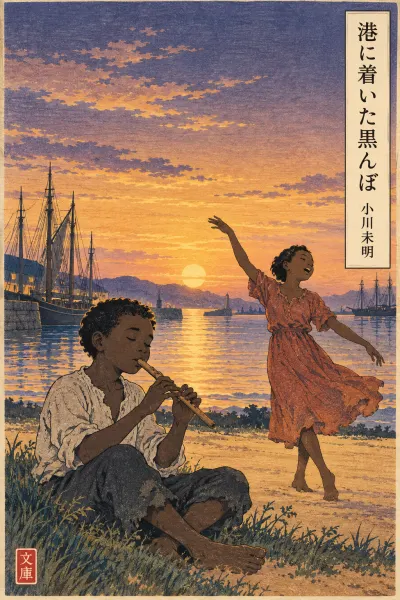
あちらに、草の上にすわって、手に笛を持っておとなしく、弟は、姉のくるのをまっていました。Over there, the brother sat quietly on the grass with his flute in his hand, waiting for his sister to come.
姉は、思案に沈んだ顔つきをして、着物のすそを夕風になぶらせながら弟のそばへ、はだしのまま近寄ってきました。The sister, her face deep in thought, came up to her brother, barefoot as she was, letting the evening breeze play with the hem of her kimono.
そして、目は見えぬながら微笑んで、姉を迎えた、弟に向かって、And to her brother, who greeted her with a smile though his eyes could not see, she
「姉さんは、ちょっと用事があっていってくるところがあるのよ。おまえは、どこへもいかずに、ここに待ってておくれ、すぐに姉さんは帰ってくるから。」と、やさしくいいました。said gently, "I have an errand, dear, and there is somewhere I must go. Don't go anywhere; wait for me right here. I'll be back very soon."
弟は、盲目の目を、姉の方に向けました。The boy turned his blind eyes toward his sister.
「姉さんは、もう帰ってこないのではないの。僕は、なんだかそんなような気がするんだもの。」といいました。"You won't come back again, will you? I just have that sort of feeling, that's all," he said.
「なぜ、そんな悲しいことをいうの。姉さんは、一時間とたたないうちに帰ってきてよ。」と、姉は、目に涙をためて答えました。"Why do you say such a sad thing? I'll be back before even an hour has passed," his sister answered, her eyes filling with tears.
弟は、やっと姉のいうことがわかったみえて、黙ってうなずきました。At last the boy seemed to understand what she was saying, and nodded without a word.
姉は、使いの男につれられて、いかめしい馬車に乗りました。Led by the messenger, the sister climbed into the stately carriage.
馬車は、ひづめの音を砂地の上にたてて、日暮れ方の空の下をかなたに去りました。The carriage drove off into the distance under the evening sky, its hoofbeats sounding on the sand.
弟は、そのひづめの音が遠く、かすかに、まったく聞こえなくなるまで、草の上にすわって、じっと耳を澄ましていました。The boy sat on the grass, listening intently, until the hoofbeats grew distant, then faint, and then could no longer be heard at all.
一時間はたち、二時間はたっても、ついに姉は帰ってきませんでした。One hour passed, and then two, but his sister never came back.
いつしか、日はまったく暮れてしまって、砂地の上は、しっとりと湿り気を含み、夜の空の色は、藍を流したようにこくなって、星の光がきらきらと瞬きました。Before long the sun had set completely; the sand grew soft and damp, the night sky deepened as if indigo had been poured across it, and the stars twinkled and glittered.
港の方は、ほんのりとして、人なつかしい明るみを空の色にたたえていたけれど、盲目の弟には、それを望むこともできませんでした。Toward the harbour, a faint, friendly glow warmed the colour of the sky, but the blind boy could not see it.
ただ、おりおり、生温かな風が沖の方から、闇のうちを旅してくるたびに、姉の帰るのを待っている弟の顔に当たりました。Only now and then a lukewarm wind, travelling through the darkness from the open sea, would brush against the face of the boy as he waited for his sister to return.
弟は、もはやたえられなくなって、泣いていました。No longer able to bear it, the boy was crying.
そして、姉は、どこへいったろう。And where could his sister have gone?
もうこれぎり帰ってこなかったらどうしようと心細くなって、涙が流れて止まらなかったのであります。What would he do if she never came back at all? The thought made him so forlorn that his tears flowed and would not stop.
いつも姉は、自分の吹く笛の音につれて、踊ったと思うと、弟は、もし自分の吹いた笛の音を聞きつけたら、きっと姉は、自分を思い出して帰ってきてくれるにちがいないと思いました。Remembering how his sister had always danced to the music of his flute, the boy thought that if she heard him playing, she would surely remember him and come back to him.
弟は、熱心に笛を吹き鳴らしました。The boy played his flute with all his heart.
かつて、こんなに心を入れて、笛を吹いたことはなかったのであります。Never before had he put so much heart into his playing.
姉は、この笛の音をどこかで聞きつけるであろう。Surely his sister would hear the sound of this flute somewhere.
聞きつけたら、きっと自分を思い出して帰ってきてくれるにちがいない、と、弟は思いました。And when she heard it, she would surely remember him and come back to him, the boy thought.
弟は、それで、熱心に笛を吹き鳴らしました。And so the boy played his flute with all his heart.
Vocabulary
| Word | Meaning | JLPT |
|---|---|---|
| 大尽だいじん | very rich man, wealthy gentlemanOld-fashioned; today mostly heard in お大尽 for someone spending lavishly. | — |
| 手間てま | time and trouble手間を取らせる: to take up someone's time, to keep someone long. | N3 |
| 一刻いっこく | a moment一刻も早く: as quickly as possible, without a moment's delay. | — |
| 御殿ごてん | palace, grand mansion | — |
| 思案しあん | deep thought, worried consideration思案に沈む: to be lost in anxious thought. | — |
| なぶらせなぶる | to toy with, play with (here causative: letting the evening breeze play with / ruffle her hem)dictionary form: なぶるHere causative: she lets the wind play with her hem. Also means to tease cruelly. | — |
| はだしはだし | barefootKanji 裸足. はだしのまま: still barefoot. | N1 |
| 盲目めくら | blind (read めくら here, a period usage now considered discriminatory; standard reading もうもく)Normally read もうもく. The reading めくら is now considered offensive; use 目が見えない or 目の不自由な instead. | — |
| ひづめひづめ | hoof (of a horse)Kanji 蹄. | — |
| 澄ましすます | to make clear; (耳を) to listen carefullydictionary form: 澄ます耳を澄ます: to strain one's ears. | N1 |
| 沖おき | the open sea, offshore | N3 |
| 心細くこころぼそい | forlorn, lonely and anxiousdictionary form: 心細いLiterally 'heart thin': feeling helpless without support. | N1 |
| 聞きつけたらききつける | to catch the sound of, to hear (and notice)dictionary form: 聞きつける | — |
Grammar
〜ますまい N2 probably will not; will surely not
まい after the polite ます stem expresses a negative conjecture ('probably will not') or negative intention in formal, old-fashioned speech. The messenger politely assures her the visit will not take long.
おそらく、そんなには時間を取らせますまい。
I doubt he will keep you even that long.
〜ぬながら N2 although (not)
ぬ is a literary negative (= ない), and ながら after it means 'although', not 'while'. He could not see, yet he smiled.
目は見えぬながら微笑んで
smiling, though he could not see
〜ないうちに N3 before (something happens)
Verb in the negative + うちに means 'before that happens'. With 一時間とたたない it means 'before even an hour passes'.
姉さんは、一時間とたたないうちに帰ってきてよ。
I'll be back before even an hour has passed.
〜(と)みえて N1 apparently, seemingly
From 見える 'to appear'; usually とみえて. It shows the narrator judging from outward signs: from his nod, he seemed to understand.
弟は、やっと姉のいうことがわかったみえて、黙ってうなずきました。
At last the boy seemed to understand what she was saying, and nodded without a word.
〜たらどうしよう N4 what will I do if ...?
A conditional followed by どうしよう expresses worry about a possible outcome. Here it shows the boy's fear that his sister will never return.
もうこれぎり帰ってこなかったらどうしよう
what would he do if she never came back at all
〜にちがいない N3 must be, surely
Expresses strong conviction. Together with きっと, it shows the boy clinging to his certainty that she will come back.
きっと姉は、自分を思い出して帰ってきてくれるにちがいないと思いました。
he thought that she would surely remember him and come back to him.