Part 4 of 5 · JLPT N2
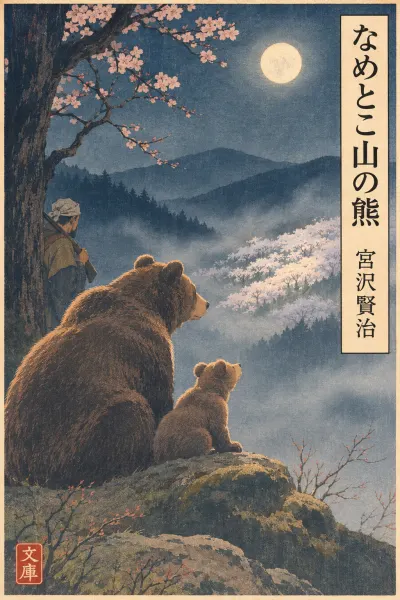
なめとこ山の熊 Nametokoyama no Kuma, part 4: The Bear Who Asked for Two Years
In this part
One summer, a bear Kojūrō has cornered asks him to wait two years so it can finish its unfinished work, promising to die in front of his house afterwards. Kojūrō lets it go, and exactly two years later he finds the bear dead by his hedge and bows to it in reverence. Then, one January morning, Kojūrō tells his aged mother that for the first time in his life he doesn't feel like going into the water, and he sets off up toward Shirozawa.
AI translation · independently checked
こんなふうだったから小十郎は熊どもは殺してはいても決してそれを憎んではいなかったのだ。That was the way things were, so although Kojūrō killed bears, he never once hated them.
ところがある年の夏こんなようなおかしなことが起ったのだ。But one summer, a strange thing happened, something like this.
小十郎が谷をばちゃばちゃ渉って一つの岩にのぼったらいきなりすぐ前の木に大きな熊が猫のようにせなかを円くしてよじ登っているのを見た。Kojūrō splashed across the valley stream and climbed up onto a rock, and suddenly he saw a big bear on the tree right in front of him, its back curved like a cat's as it clambered up.
小十郎はすぐ鉄砲をつきつけた。At once Kojūrō pointed his gun at it.
犬はもう大悦びで木の下に行って木のまわりを烈しく馳せめぐった。The dog, already overjoyed, ran to the foot of the tree and raced wildly round and round it.
すると樹の上の熊はしばらくの間おりて小十郎に飛びかかろうかそのまま射たれてやろうか思案しているらしかったがいきなり両手を樹からはなしてどたりと落ちて来たのだ。The bear up in the tree seemed to spend a while pondering whether to come down and spring at Kojūrō or to stay where it was and let itself be shot, but then all at once it let go of the tree with both paws and came tumbling down with a thud.
小十郎は油断なく銃を構えて打つばかりにして近寄って行ったら熊は両手をあげて叫んだ。Kojūrō kept his gun carefully levelled, ready to fire at any moment, and moved closer. The bear raised both paws and cried out.
「おまえは何がほしくておれを殺すんだ」"What is it you want, that you'd kill me for it?"
「ああ、おれはお前の毛皮と、胆のほかにはなんにもいらない。それも町へ持って行ってひどく高く売れるというのではないしほんとうに気の毒だけれどもやっぱり仕方ない。けれどもお前に今ごろそんなことを言われるともうおれなどは何か栗かしだのみでも食っていてそれで死ぬならおれも死んでもいいような気がするよ」"Ah, I don't want a thing from you but your fur and your gall. And it's not as if I can take them to town and sell them for much. I truly feel sorry for you, but still, it can't be helped. But when you say a thing like that to me now, I get to feeling that if I could live on chestnuts or fern seeds or some such and die of it, well, I wouldn't mind dying myself."
「もう二年ばかり待ってくれ、おれも死ぬのはもうかまわないようなもんだけれども少しし残した仕事もあるしただ二年だけ待ってくれ。二年目にはおれもおまえの家の前でちゃんと死んでいてやるから。毛皮も胃袋もやってしまうから」"Wait just two more years for me. I don't really mind dying now, I suppose, but I have a little work left unfinished, so wait just two years. When the second year comes, I'll be lying dead, properly, in front of your house. I'll give you my fur and my stomach and all."
小十郎は変な気がしてじっと考えて立ってしまいました。Kojūrō felt strange, and he stood there lost in thought.
熊はそのひまに足うらを全体地面につけてごくゆっくりと歩き出した。In the meantime the bear set the whole soles of its feet flat on the ground and began to walk away, very slowly.
小十郎はやっぱりぼんやり立っていた。Kojūrō went on standing there in a daze.
熊はもう小十郎がいきなりうしろから鉄砲を射ったり決してしないことがよくわかってるというふうでうしろも見ないでゆっくりゆっくり歩いて行った。The bear walked on slowly, slowly, never looking back, as if it knew perfectly well that Kojūrō would never suddenly shoot it from behind.
そしてその広い赤黒いせなかが木の枝の間から落ちた日光にちらっと光ったとき小十郎は、う、うとせつなそうにうなって谷をわたって帰りはじめた。And when its broad, dark red back flashed for a moment in the sunlight falling between the branches, Kojūrō let out a low, pained groan, crossed the stream and started for home.
それからちょうど二年目だったがある朝小十郎があんまり風が烈しくて木もかきねも倒れたろうと思って外へ出たらひのきのかきねはいつものようにかわりなくその下のところに始終見たことのある赤黒いものが横になっているのでした。It was exactly two years later. One morning the wind had blown so hard that Kojūrō thought the trees and the fence must surely have come down, but when he went outside, the cypress hedge stood there unchanged as always, and at its foot lay something dark red, something he had seen many times before.
ちょうど二年目だしあの熊がやって来るかと少し心配するようにしていたときでしたから小十郎はどきっとしてしまいました。It was exactly two years to the day, and he had been half worrying whether that bear would come, so Kojūrō's heart gave a jolt.
そばに寄って見ましたらちゃんとあのこの前の熊が口からいっぱいに血を吐いて倒れていた。He went up close to look, and there, sure enough, was that same bear from before, lying where it had fallen, blood pouring from its mouth.
小十郎は思わず拝むようにした。Without thinking, Kojūrō put his hands together as if in prayer.
一月のある日のことだった。It was a day in January.
小十郎は朝うちを出るときいままで言ったことのないことを言った。As he left the house that morning, Kojūrō said something he had never said before.
「婆さま、おれも年老ったでばな、今朝まず生れで始めで水へ入るの嫌んたよな気するじゃ」"Granny, I must be getting old. This morning, for the first time since I was born, I don't much feel like going into the water."
すると縁側の日なたで糸を紡いでいた九十になる小十郎の母はその見えないような眼をあげてちょっと小十郎を見て何か笑うか泣くかするような顔つきをした。Kojūrō's ninety-year-old mother, who had been spinning thread in the sun on the veranda, raised her eyes, which could hardly see, and looked at Kojūrō for a moment with a face as if she might laugh or might cry.
小十郎はわらじを結えてうんとこさと立ちあがって出かけた。Kojūrō tied on his straw sandals, heaved himself up with a grunt, and set off.
子供らはかわるがわる厩の前から顔を出して「爺さん、早ぐお出や」と言って笑った。The children took turns poking their heads out from in front of the stable, calling, "Grandpa, come back soon!" and laughing.
小十郎はまっ青なつるつるした空を見あげてそれから孫たちの方を向いて「行って来るじゃぃ」と言った。Kojūrō looked up at the deep blue, glassy-smooth sky, then turned to his grandchildren and said, "I'm off, then."
小十郎はまっ白な堅雪の上を白沢の方へのぼって行った。Kojūrō climbed up over the pure white crusted snow toward Shirozawa.
Vocabulary
| Word | Meaning | JLPT |
|---|---|---|
| 憎んでにくむ | to hate, to bear ill will towarddictionary form: 憎むKojūrō kills bears but holds no hatred for them, which is a central theme of the story. | N2 |
| 渉ってわたる | to wade across (a river)dictionary form: 渉るUsually written 渡る. The kanji 渉 suggests crossing water on foot. | N5 |
| 鉄砲てっぽう | gun, rifleOlder, everyday word. 銃 (じゅう) in the same passage is the more formal term. | N2 |
| 思案しあん | pondering, deliberatingUsed with する: 思案する, to think something over carefully. | — |
| 油断ゆだん | carelessness, letting one's guard down油断なく means 'without dropping one's guard'. | N2 |
| 胆きも | gall bladder (of a bear)Bear gall was a valuable traditional medicine and the hunter's main source of income. | — |
| 気の毒きのどく | pitiful; feeling sorry for someone | N3 |
| し残したしのこす | to leave unfinisheddictionary form: し残すThe verb stem し plus 残す. Compare 食べ残す, to leave food uneaten. | — |
| かきねかきね | fence, hedgedictionary form: 垣根 | N2 |
| 拝むおがむ | to put one's hands together in prayer; to worship | N2 |
| 紡いでつむぐ | to spin (thread)dictionary form: 紡ぐ | — |
| わらじわらじ | straw sandalsdictionary form: 草鞋Traditional footwear tied to the foot with cords. | — |
| 厩うまや | stable (for horses) | — |
| 堅雪かたゆき | hard-crusted snowSnow frozen hard enough to walk on, typical of late winter. | — |
Grammar
〜(よ)うか〜(よ)うか N3 whether to do A or B
Two volitional forms, each followed by か, list the options someone is weighing up. The verb that follows, here 思案する, describes the act of deciding.
おりて小十郎に飛びかかろうかそのまま射たれてやろうか思案しているらしかった
it seemed to be pondering whether to come down and spring at Kojūrō or just let itself be shot
〜てやる N4 to do something for someone (speaking down or firmly)
The bear uses てやる to present its own death as a favour it will do for Kojūrō. The same form appears in 射たれてやろうか, 'let itself be shot'.
二年目にはおれもおまえの家の前でちゃんと死んでいてやるから
When the second year comes, I'll be lying dead, properly, in front of your house.
V-るばかりにする N1 to be all set to do; on the point of doing
ばかり after the dictionary form means that only the action itself remains. Kojūrō holds his gun so that all he has left to do is fire.
銃を構えて打つばかりにして近寄って行った
keeping his gun raised, ready to fire, he crept closer
〜たろう N2 probably did (= 〜ただろう)
A shortened, somewhat literary form of 〜ただろう that expresses a guess about the past. Kojūrō assumes the fence must have fallen in the storm.
木もかきねも倒れたろうと思って外へ出たら
thinking the trees and the fence must have come down, he went outside
〜というふうで N2 in a manner that suggests…; as if…
This phrase describes someone's behaviour by saying what it seems to show. The bear walks as though it were sure Kojūrō won't shoot.
決してしないことがよくわかってるというふうでうしろも見ないでゆっくりゆっくり歩いて行った
walked on slowly, slowly, never looking back, as if it knew perfectly well he would never do that
Tōhoku dialect: 〜でばな / 〜じゃ / やんた N1 because (you see) / sentence-final emphasis / 'don't want to'
でばな works like standard だからね, giving a reason. じゃ is a sentence-ending particle much like だ or よ. やんた is the dialect form of いやだ, 'I don't want to'.
婆さま、おれも年老ったでばな、今朝まず生れで始めで水へ入るの嫌んたよな気するじゃ
Granny, I must be getting old. This morning, for the first time since I was born, I don't much feel like going into the water.