Part 1 of 5 · JLPT N3
伸び支度 Nobijitaku, part 1: Sodeko Outgrows Her Dolls
In this part
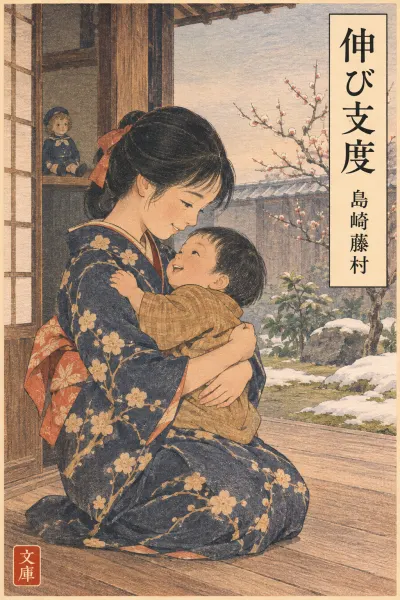
Now fourteen or fifteen, Sodeko has gradually forgotten the dolls she once loved, above all a foreign-looking boy doll her father bought her at Maruzen before the earthquake. She has also drifted away from Mitsuko, a lively little neighbour girl she used to play with. In their place she now dotes on Kinnosuke, a gentle toddler from the neighbourhood who was first brought to the house by the maid, O-Hatsu.
AI translation · independently checked
十四、五になる大概の家の娘がそうであるように、袖子もその年頃になってみたら、人形のことなぞは次第に忘れたようになった。Like most girls from most households at fourteen or fifteen, Sodeko too, once she reached that age, found that she had gradually all but forgotten about dolls.
人形に着せる着物だ襦袢だと言って大騒ぎした頃の袖子は、いくつそのために小さな着物を造り、いくつ小さな頭巾なぞを造って、それを幼い日の楽しみとしてきたか知れない。Back in the days when she would make a great fuss over kimonos and under-robes for her dolls to wear, who knows how many little kimonos, and how many little hoods, Sodeko had made for them, taking it as the joy of her younger days.
町の玩具屋から安物を買って来てすぐに首のとれたもの、顔が汚れ鼻が欠けするうちにオバケのように気味悪くなって捨ててしまったもの――袖子の古い人形にもいろいろあった。Cheap ones bought at the toyshop in town whose heads came off as soon as they were brought home; ones that, as their faces grew dirty and their noses chipped, turned as eerie as ghosts and ended up thrown away: Sodeko's old dolls had been of every sort.
その中でも、父さんに連れられて震災前の丸善へ行った時に買って貰って来た人形は、一番長くあった。Among them all, the doll that lasted longest was the one Father had bought her when he took her to Maruzen, before the earthquake.
あれは独逸の方から新荷が着いたばかりだという種々な玩具と一緒に、あの丸善の二階に並べてあったもので、異国の子供の風俗ながらに愛らしく、格安で、しかも丈夫に出来ていた。It had been set out on the upper floor of that Maruzen shop along with all kinds of toys said to have just arrived in a new shipment from Germany; though it was dressed as a child of a foreign land, it was lovable and inexpensive, and sturdily made besides.
茶色な髪をかぶったような男の児の人形で、それを寝かせば眼をつぶり、起こせばぱっちりと可愛い眼を見開いた。It was a boy doll that seemed to wear a wig of brown hair; when you laid it down it closed its eyes, and when you sat it up it opened its sweet eyes wide.
袖子があの人形に話しかけるのは、生きている子供に話しかけるのとほとんど変わりがないくらいであった。When Sodeko talked to that doll, it was hardly any different from talking to a living child.
それほどに好きで、抱き、擁え、撫で、持ち歩き、毎日のように着物を着せ直しなどして、あの人形のためには小さな蒲団や小さな枕までも造った。She loved it that much: she hugged it, held it in her arms, stroked it, carried it about, changed its clothes almost every day, and even made a little quilt and a little pillow just for it.
袖子が風邪でも引いて学校を休むような日には、彼女の枕もとに足を投げ出し、いつでも笑ったような顔をしながらお伽話の相手になっていたのも、あの人形だった。On days when Sodeko caught a cold or the like and stayed home from school, it was that doll, too, that sat by her pillow with its legs stretched out and, always wearing a smiling sort of face, kept her company through her fairy tales.
「袖子さん、お遊びなさいな。」"Miss Sodeko, do come and play!"
と言って、一頃はよく彼女のところへ遊びに通って来た近所の小娘もある。With those words, a little girl from the neighbourhood had, for a time, often come round to play with her.
光子さんといって、幼稚園へでもあがろうという年頃の小娘のように、額のところへ髪を切りさげている児だ。Her name was Mitsuko, and she wore her hair cut in a fringe across her forehead, like a little girl just about old enough to start kindergarten.
袖子の方でもよくその光子さんを見に行って、暇さえあれば一緒に折り紙を畳んだり、お手玉をついたりして遊んだものだ。Sodeko, for her part, often went to see Mitsuko too, and whenever she had a spare moment the two would play together, folding paper figures or tossing beanbags.
そういう時の二人の相手は、いつでもあの人形だった。At such times, the playmate of the two of them was always that doll.
そんなに抱愛の的であったものが、次第に袖子から忘れられたようになっていった。And yet the thing that had been the object of such tender love gradually came to be all but forgotten by Sodeko.
そればかりでなく、袖子が人形のことなぞを以前のように大騒ぎしなくなった頃には、光子さんともそう遊ばなくなった。Not only that: by the time Sodeko no longer made a fuss over dolls as she used to, she no longer played much with Mitsuko either.
しかし、袖子はまだ漸く高等小学の一学年を終わるか終わらないぐらいの年頃であった。Even so, Sodeko was still only at the age of just finishing, or not quite finishing, her first year of higher elementary school.
彼女とても何かなしにはいられなかった。Even she could not do without something to love.
子供の好きな袖子は、いつの間にか近所の家から別の子供を抱いて来て、自分の部屋で遊ばせるようになった。Sodeko, who was fond of children, had before long taken to carrying home another child from a house in the neighbourhood and letting him play in her room.
数え歳の二つにしかならない男の児であるが、あのきかない気の光子さんに比べたら、これはまた何というおとなしいものだろう。He was a boy only two years old by the old way of counting, yet compared with that headstrong Mitsuko, what a gentle little thing this one was!
金之助さんという名前からして男の子らしく、下ぶくれのしたその顔に笑みの浮かぶ時は、小さな靨があらわれて、愛らしかった。Even his name, Kinnosuke, sounded every inch a boy's, and when a smile came over his round, full-cheeked face, little dimples appeared, and he was lovely.
それに、この子の好いことには、袖子の言うなりになった。What was more, the good thing about this child was that he did just as Sodeko told him.
どうしてあの少しもじっとしていないで、どうかすると袖子の手におえないことが多かった光子さんを遊ばせるとは大違いだ。How very different it was from minding Mitsuko, who never kept still for a moment and was often more than Sodeko could manage!
袖子は人形を抱くように金之助さんを抱いて、どこへでも好きなところへ連れて行くことが出来た。Sodeko could carry Kinnosuke in her arms as she would a doll and take him anywhere she liked.
自分の側に置いて遊ばせたければ、それも出来た。If she wanted to keep him beside her to play, she could do that too.
この金之助さんは正月生まれの二つでも、まだいくらも人の言葉を知らない。This Kinnosuke, though he was two, having been born in the first month of the year, still knew hardly any words.
蕾のようなその脣からは「うまうま」ぐらいしか泄れて来ない。From those lips like a flower bud, little more than "yum-yum" ever slipped out.
母親以外の親しいものを呼ぶにも、「ちゃあちゃん」としかまだ言い得なかった。Even when calling to anyone dear to him other than his mother, all he could yet say was "chā-chan".
こんな幼い子供が袖子の家へ連れられて来てみると、袖子の父さんがいる、二人ある兄さん達もいる、しかし金之助さんはそういう人達までも「ちゃあちゃん」と言って呼ぶわけではなかった。When so small a child was brought to Sodeko's house, there was Sodeko's father, and there were her two elder brothers as well, yet Kinnosuke did not go so far as to call those people "chā-chan" too.
やはりこの幼い子供の呼びかける言葉は親しいものに限られていた。As one might expect, the words this little child called out were reserved for those he was close to.
もともと金之助さんを袖子の家へ、初めて抱いて来て見せたのは下女のお初で、お初の子煩悩ときたら、袖子に劣らなかった。It was the maid, O-Hatsu, who had first carried Kinnosuke over to Sodeko's house to show him, and when it came to doting on children, O-Hatsu was every bit Sodeko's match.
Vocabulary
| Word | Meaning | JLPT |
|---|---|---|
| 大概たいがい | most, the majority ofAlso used as an adverb meaning 'usually' or 'probably'. | N1 |
| 次第にしだいに | gradually, little by littleA key word for this passage, which describes slow change; more written in tone than だんだん. | — |
| 襦袢じゅばん | under-kimono, undergarment worn beneath a kimonoFrom Portuguese gibão. | — |
| 気味悪くきみわるい | creepy, eeriedictionary form: 気味悪いAlso written 気味が悪い. | — |
| 震災しんさい | earthquake disasterIn writing of this period it refers to the Great Kantō Earthquake of 1923. | — |
| 格安かくやす | inexpensive, a bargainStill common in advertising, e.g. 格安航空券 'cheap air tickets'. | — |
| 風俗なり | dress, appearance (dictionary reading ふうぞく, 'customs; manners; style of dress'; the author glosses it here as なり)Normally read ふうぞく ('customs, manners'); the author glosses it with なり, i.e. 'how one is dressed'. | N1 |
| 伽話おとぎばなし | fairy tale, children's storydictionary form: お伽話伽 originally meant keeping someone company, for example to pass a long night. | — |
| 一頃ひところ | for a while, at one time (in the past) | N1 |
| 漸くようやく | only just, barelyHere it stresses how young she still is, not 'finally'. | N2 |
| 数え歳かぞえどし | age by the traditional countA child is one at birth and gains a year every New Year, so a 'two-year-old' born in the first month may be only about one by Western reckoning. | — |
| きかない気きかないき | headstrong, unyielding temperamentLiterally 'a spirit that doesn't listen'. Also 'きかん気'. | — |
| 下ぶくれしもぶくれ | (a face) full and round in the lower cheeksdictionary form: 下膨れTraditionally seen as a sweet, chubby look. | — |
| 子煩悩こぼんのう | doting on children, devoted to children煩悩 is a Buddhist word for worldly attachment. | — |
Grammar
〜だ〜だと言って N2 saying 'this and that', fussing over X and Y
Listing nouns with だ…だ (like the more common 〜だの〜だの) gives typical examples of what someone keeps going on about. Here it pictures the girl busily fussing over doll clothes.
人形に着せる着物だ襦袢だと言って大騒ぎした頃の袖子
Sodeko, back when she made a great fuss over kimonos and under-robes for her dolls
いくつ〜か知れない N2 who knows how many…, countless
A question word followed by 〜か知れない ('cannot be known') emphasises a very large amount. It is similar to どれほど〜かわからない.
いくつ小さな頭巾なぞを造って、それを幼い日の楽しみとしてきたか知れない
who knows how many little hoods she had made, taking it as the joy of her younger days
〜ば〜、〜ば〜 N4 when (you do) X, Y happens
The ば-conditional shows a dependable result. Two contrasting ば-clauses side by side describe the doll's two reactions.
それを寝かせば眼をつぶり、起こせばぱっちりと可愛い眼を見開いた
when you laid it down it closed its eyes, and when you sat it up it opened its sweet eyes wide
〜たものだ N3 used to (do), would often (do)
The past tense plus ものだ looks back fondly on something that happened habitually in the past.
暇さえあれば一緒に折り紙を畳んだり、お手玉をついたりして遊んだものだ
whenever she had a spare moment, the two would play together, folding paper figures or tossing beanbags
〜なしにはいられない N2 cannot do without…
'cannot do without…'. 〜なしには means 'without…', and 〜いられない means 'cannot remain / cannot be'. Here 何かなしには means 'without something', so the sentence says she could not be without something to cherish. Unlike 〜ずにはいられない ('cannot help doing'), this pattern attaches to a noun, not a verb. 彼女とても (とて + も) means 'even she'.
彼女とても何かなしにはいられなかった。
Even she could not do without something to love.
〜ときたら N2 when it comes to…, as for…
This raises a topic in order to comment on it strongly, often with exasperation or amused emphasis. Here it stresses how much O-Hatsu adores children.
お初の子煩悩ときたら、袖子に劣らなかった
when it came to doting on children, O-Hatsu was every bit Sodeko's match